
Articles | Volume 19, issue 1
https://doi.org/10.5194/gmd-19-477-2026
© Author(s) 2026. This work is distributed under
the Creative Commons Attribution 4.0 License.
the Creative Commons Attribution 4.0 License.
https://doi.org/10.5194/gmd-19-477-2026
© Author(s) 2026. This work is distributed under
the Creative Commons Attribution 4.0 License.
the Creative Commons Attribution 4.0 License.
Development and technical paper
| 
15 Jan 2026
Development and technical paper |
| 15 Jan 2026
| 15 Jan 2026
HydroBlocks-MSSUBv0.1: a multiscale approach for simulating lateral subsurface flow dynamics in Land Surface Models
Daniel Guyumus
CORRESPONDING AUTHOR

Department of Civil and Environmental Engineering, Duke University, Durham, NC, USA
Laura Torres-Rojas
Program in Atmospheric and Oceanic Sciences, Princeton University, Princeton, NJ, USA
Luiz Bacelar
Department of Civil and Environmental Engineering, Duke University, Durham, NC, USA
Chengcheng Xu
Department of Civil and Environmental Engineering, Duke University, Durham, NC, USA
Nathaniel Chaney
Department of Civil and Environmental Engineering, Duke University, Durham, NC, USA
Related authors
Emma-Riikka Kokko, Nathaniel Chaney, Daniel Guyumus, Luiz Bacelar, Laura Torres-Rojas, and Jarkko Okkonen
Hydrol. Earth Syst. Sci., 30, 5049–5065, https://doi.org/10.5194/hess-30-5049-2026, https://doi.org/10.5194/hess-30-5049-2026, 2026
Short summary
Short summary
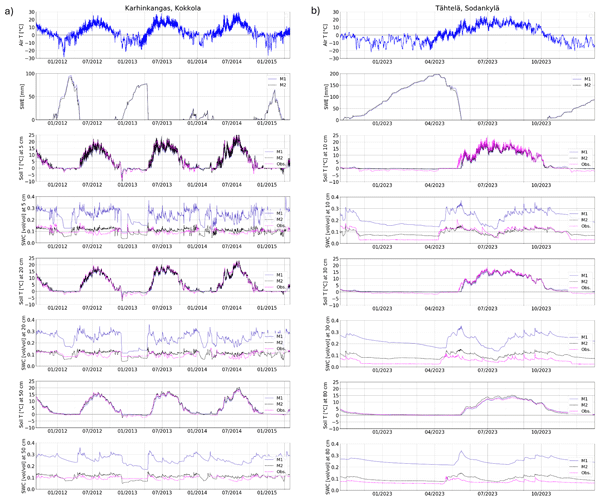
HydroBlocks model, was configured over Finland. Time series of snow water equivalent, soil temperature, soil water content and soil ice content were created. Observational data was used to evaluate the model performance. HydroBlocks can generally predict soil conditions in Finland with some uncertainty. The model performance is improved with using local soil data and local soil hydraulic parameters. In the future, the modelling outputs show potential to be used in environmental applications.
Emma-Riikka Kokko, Nathaniel Chaney, Daniel Guyumus, Luiz Bacelar, Laura Torres-Rojas, and Jarkko Okkonen
Hydrol. Earth Syst. Sci., 30, 5049–5065, https://doi.org/10.5194/hess-30-5049-2026, https://doi.org/10.5194/hess-30-5049-2026, 2026
Short summary
Short summary
HydroBlocks model, was configured over Finland. Time series of snow water equivalent, soil temperature, soil water content and soil ice content were created. Observational data was used to evaluate the model performance. HydroBlocks can generally predict soil conditions in Finland with some uncertainty. The model performance is improved with using local soil data and local soil hydraulic parameters. In the future, the modelling outputs show potential to be used in environmental applications.
Chengcheng Xu, Elia Scudiero, Ray Anderson, and Nathaniel Chaney
SOIL, 12, 665–687, https://doi.org/10.5194/soil-12-665-2026, https://doi.org/10.5194/soil-12-665-2026, 2026
Short summary
Short summary
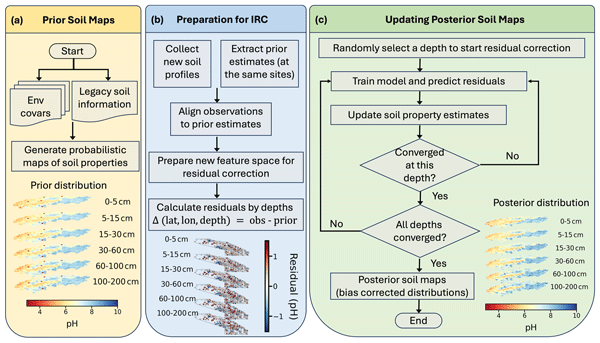
Accurate soil information is vital. This study developed a method to improve existing probabilistic soil maps, spatially continuous maps providing prior estimates, by correcting their probability distributions as new soil data emerges. By iteratively adjusting previous predictions, the method increases both accuracy and certainty of soil maps. Its application in California enhanced predictions for several soil properties. This method can be further used for more soil properties and regions.
Wouter J. M. Knoben, Cyril Thébault, Kasra Keshavarz, Laura Torres-Rojas, Nathaniel W. Chaney, Alain Pietroniro, and Martyn P. Clark
Hydrol. Earth Syst. Sci., 29, 5791–5833, https://doi.org/10.5194/hess-29-5791-2025, https://doi.org/10.5194/hess-29-5791-2025, 2025
Short summary
Short summary
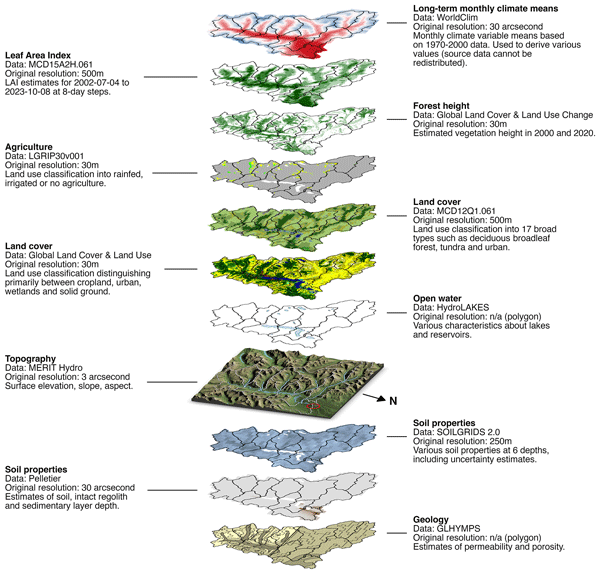
Many existing datasets for hydrologic analysis tend to treat catchments as single spatially homogeneous units focusing on daily data and typically do not support more complex models. This paper introduces a dataset that goes beyond this set-up by (1) providing data at a higher spatial and temporal resolution, (2) specifically considering the data requirements of all common hydrologic model types, and (3) using statistical summaries of the data aimed at quantifying spatial and temporal heterogeneity.
Minki Hong, Nathaniel Chaney, Sergey Malyshev, Enrico Zorzetto, Anthony Preucil, and Elena Shevliakova
Geosci. Model Dev., 18, 2275–2301, https://doi.org/10.5194/gmd-18-2275-2025, https://doi.org/10.5194/gmd-18-2275-2025, 2025
Short summary
Short summary
This study shows the significance of groundwater in resolving the coupled terrestrial water–energy cycle. LM4-SHARC (soil–hillslope aquifer–river continuum) describes the hillslope groundwater using its emergent properties, yielding noticeable improvements in soil moisture/temperature and groundwater discharge predictions. The implications of groundwater-mediated hydrologic interactions between hillslopes and streams need further exploration in the Earth system modeling community.
Rachael Lau, Carolina Seguí, Tyler Waterman, Nathaniel Chaney, and Manolis Veveakis
Nat. Hazards Earth Syst. Sci., 24, 3651–3661, https://doi.org/10.5194/nhess-24-3651-2024, https://doi.org/10.5194/nhess-24-3651-2024, 2024
Short summary
Short summary
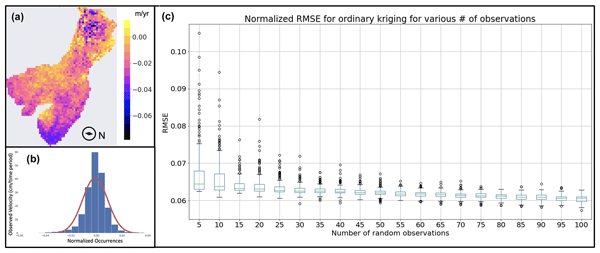
This work examines the use of interferometric synthetic-aperture radar (InSAR) alongside in situ borehole measurements to assess the stability of deep-seated landslides for the case study of El Forn (Andorra). Comparing InSAR with borehole data suggests a key trade-off between accuracy and precision for various InSAR resolutions. Spatial interpolation with InSAR informed how many remote observations are necessary to lower error in a remote sensing re-creation of ground motion over the landslide.
Kirsten L. Findell, Zun Yin, Eunkyo Seo, Paul A. Dirmeyer, Nathan P. Arnold, Nathaniel Chaney, Megan D. Fowler, Meng Huang, David M. Lawrence, Po-Lun Ma, and Joseph A. Santanello Jr.
Geosci. Model Dev., 17, 1869–1883, https://doi.org/10.5194/gmd-17-1869-2024, https://doi.org/10.5194/gmd-17-1869-2024, 2024
Short summary
Short summary
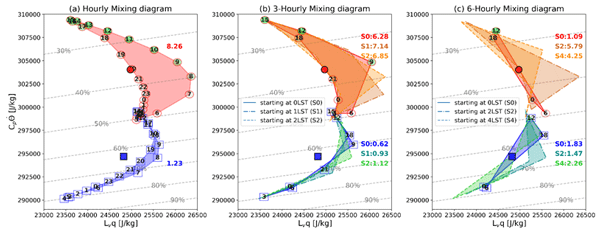
We outline a request for sub-daily data to accurately capture the process-level connections between land states, surface fluxes, and the boundary layer response. This high-frequency model output will allow for more direct comparison with observational field campaigns on process-relevant timescales, enable demonstration of inter-model spread in land–atmosphere coupling processes, and aid in targeted identification of sources of deficiencies and opportunities for improvement of the models.
Luiz Bacelar, Arezoo ReifeeiNasab, Nathaniel Chaney, and Ana Barros
EGUsphere, https://doi.org/10.5194/egusphere-2023-2088, https://doi.org/10.5194/egusphere-2023-2088, 2023
Preprint archived
Short summary
Short summary
The study explores a computationally efficient probabilistic precipitation forecast approach to generate multiple flood scenarios. It reveals the limitations in predicting flash floods accurately and the need for advanced ensemble methodologies to combine different sources of precipitation forecasts. It highlights the scale-dependency of flood predictions at higher spatial resolutions, shedding light on the relationship between river hydraulics and flood propagation in the river network.
Patricia Lawston-Parker, Joseph A. Santanello Jr., and Nathaniel W. Chaney
Hydrol. Earth Syst. Sci., 27, 2787–2805, https://doi.org/10.5194/hess-27-2787-2023, https://doi.org/10.5194/hess-27-2787-2023, 2023
Short summary
Short summary
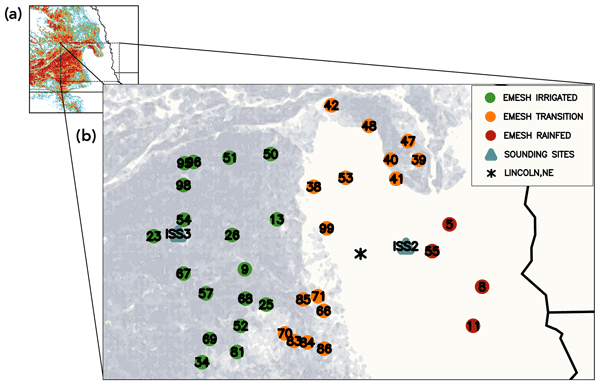
Irrigation has been shown to impact weather and climate, but it has only recently been considered in prediction models. Prescribing where (globally) irrigation takes place is important to accurately simulate its impacts on temperature, humidity, and precipitation. Here, we evaluated three different irrigation maps in a weather model and found that the extent and intensity of irrigated areas and their boundaries are important drivers of weather impacts resulting from human practices.
Enrico Zorzetto, Sergey Malyshev, Nathaniel Chaney, David Paynter, Raymond Menzel, and Elena Shevliakova
Geosci. Model Dev., 16, 1937–1960, https://doi.org/10.5194/gmd-16-1937-2023, https://doi.org/10.5194/gmd-16-1937-2023, 2023
Short summary
Short summary
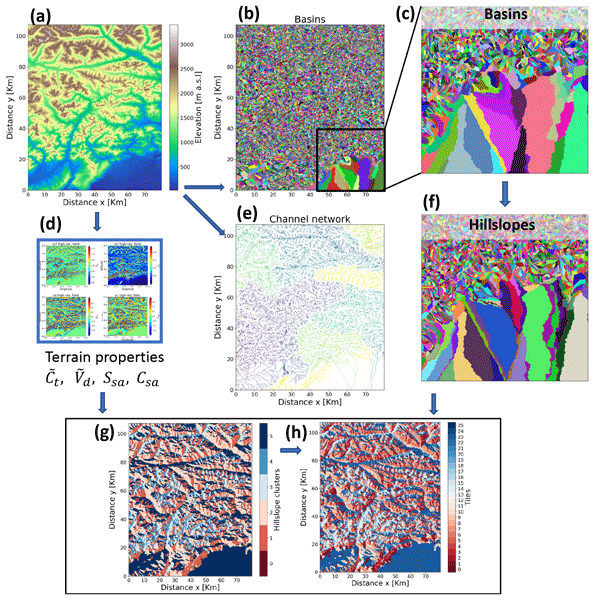
In this paper we develop a methodology to model the spatial distribution of solar radiation received by land over mountainous terrain. The approach is designed to be used in Earth system models, where coarse grid cells hinder the description of fine-scale land–atmosphere interactions. We adopt a clustering algorithm to partition the land domain into a set of homogeneous sub-grid
tiles, and for each tile we evaluate solar radiation received by land based on terrain properties.
Meng Huang, Po-Lun Ma, Nathaniel W. Chaney, Dalei Hao, Gautam Bisht, Megan D. Fowler, Vincent E. Larson, and L. Ruby Leung
Geosci. Model Dev., 15, 6371–6384, https://doi.org/10.5194/gmd-15-6371-2022, https://doi.org/10.5194/gmd-15-6371-2022, 2022
Short summary
Short summary
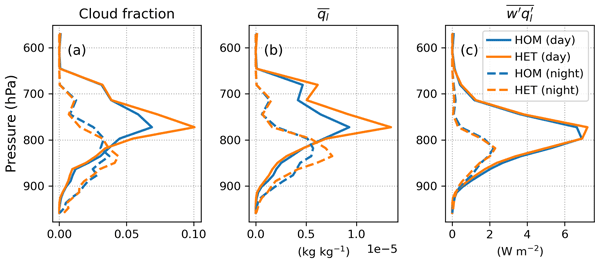
The land surface in one grid cell may be diverse in character. This study uses an explicit way to account for that subgrid diversity in a state-of-the-art Earth system model (ESM) and explores its implications for the overlying atmosphere. We find that the shallow clouds are increased significantly with the land surface diversity. Our work highlights the importance of accurately representing the land surface and its interaction with the atmosphere in next-generation ESMs.
Nathaniel W. Chaney, Laura Torres-Rojas, Noemi Vergopolan, and Colby K. Fisher
Geosci. Model Dev., 14, 6813–6832, https://doi.org/10.5194/gmd-14-6813-2021, https://doi.org/10.5194/gmd-14-6813-2021, 2021
Short summary
Short summary
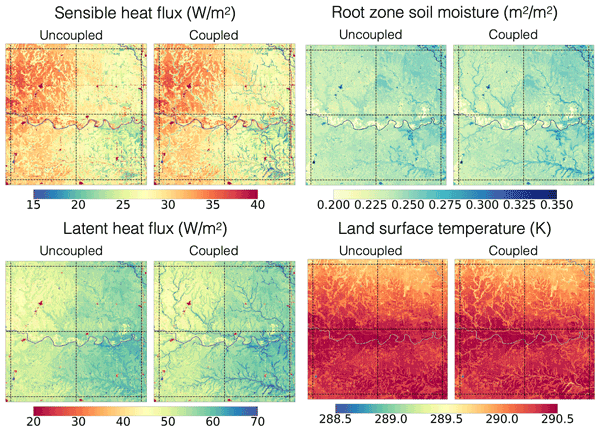
Although there have been significant advances in river routing and sub-grid heterogeneity (i.e., tiling) schemes in Earth system models over the past decades, there has yet to be a concerted effort to couple these two concepts. This paper aims to bridge this gap through the development of a two-way coupling between tiling schemes and river networks in the HydroBlocks land surface model. The scheme is implemented and tested over a 1 arc degree domain in Oklahoma, United States.
Cited articles
Barlage, M., Chen, F., Rasmussen, R., Zhang, Z., and Miguez‐Macho, G.: The Importance of Scale‐Dependent Groundwater Processes in Land‐Atmosphere Interactions Over the Central United States, Geophysical Research Letters, 48, e2020GL092171, https://doi.org/10.1029/2020GL092171, 2021.
Beven, K., Cloke, H., Pappenberger, F., Lamb, R., and Hunter, N.: Hyperresolution information and hyperresolution ignorance in modelling the hydrology of the land surface, Sci. China Earth Sci., 58, 25–35, https://doi.org/10.1007/s11430-014-5003-4, 2015.
Biancamaria, S., Lettenmaier, D. P., and Pavelsky, T. M.: The SWOT Mission and Its Capabilities for Land Hydrology, Surv. Geophys., 37, 307–337, https://doi.org/10.1007/s10712-015-9346-y, 2016.
Bierkens, M. F. P., Bell, V. A., Burek, P., Chaney, N., Condon, L. E., David, C. H., De Roo, A., Döll, P., Drost, N., Famiglietti, J. S., Flörke, M., Gochis, D. J., Houser, P., Hut, R., Keune, J., Kollet, S., Maxwell, R. M., Reager, J. T., Samaniego, L., Sudicky, E., Sutanudjaja, E. H., Van De Giesen, N., Winsemius, H., and Wood, E. F.: Hyper-resolution global hydrological modelling: what is next?: “Everywhere and locally relevant,” Hydrol. Process., 29, 310–320, https://doi.org/10.1002/hyp.10391, 2015.
Bisht, G., Riley, W. J., Hammond, G. E., and Lorenzetti, D. M.: Development and evaluation of a variably saturated flow model in the global E3SM Land Model (ELM) version 1.0, Geosci. Model Dev., 11, 4085–4102, https://doi.org/10.5194/gmd-11-4085-2018, 2018.
Blyth, E. M., Arora, V. K., Clark, D. B., Dadson, S. J., De Kauwe, M. G., Lawrence, D. M., Melton, J. R., Pongratz, J., Turton, R. H., Yoshimura, K., and Yuan, H.: Advances in Land Surface Modelling, Curr. Clim. Change Rep., 7, 45–71, https://doi.org/10.1007/s40641-021-00171-5, 2021.
Brandhorst, N., Erdal, D., and Neuweiler, I.: Coupling saturated and unsaturated flow: comparing the iterative and the non-iterative approach, Hydrol. Earth Syst. Sci., 25, 4041–4059, https://doi.org/10.5194/hess-25-4041-2021, 2021.
Campbell, G. S.: A Simple Method for Determining Unsaturated Conductivity from Moisture Retention Data, Soil Science, 117, 311–314, 1974.
Cardenas, M. B. and Jiang, X.: Groundwater flow, transport, and residence times through topography-driven basins with exponentially decreasing permeability and porosity, Water Resour. Res., 46, 2010WR009370, https://doi.org/10.1029/2010WR009370, 2010.
Chaney, N. W., Metcalfe, P., and Wood, E. F.: HydroBlocks: a field-scale resolving land surface model for application over continental extents, Hydrol. Process., 30, 3543–3559, https://doi.org/10.1002/hyp.10891, 2016.
Chaney, N. W., Van Huijgevoort, M. H. J., Shevliakova, E., Malyshev, S., Milly, P. C. D., Gauthier, P. P. G., and Sulman, B. N.: Harnessing big data to rethink land heterogeneity in Earth system models, Hydrol. Earth Syst. Sci., 22, 3311–3330, https://doi.org/10.5194/hess-22-3311-2018, 2018.
Chaney, N. W., Minasny, B., Herman, J. D., Nauman, T. W., Brungard, C. W., Morgan, C. L. S., McBratney, A. B., Wood, E. F., and Yimam, Y.: POLARIS Soil Properties: 30 m Probabilistic Maps of Soil Properties Over the Contiguous United States, Water Resour. Res., 55, 2916–2938, https://doi.org/10.1029/2018WR022797, 2019.
Chaney, N. W., Torres-Rojas, L., Vergopolan, N., and Fisher, C. K.: HydroBlocks v0.2: enabling a field-scale two-way coupling between the land surface and river networks in Earth system models, Geosci. Model Dev., 14, 6813–6832, https://doi.org/10.5194/gmd-14-6813-2021, 2021.
Chen, X. and Hu, Q.: Groundwater influences on soil moisture and surface evaporation, J. Hydrol., 297, 285–300, https://doi.org/10.1016/j.jhydrol.2004.04.019, 2004.
Choi, H.: Application of a Land Surface Model Using Remote Sensing Data for High Resolution Simulations of Terrestrial Processes, Remote Sens., 5, 6838–6856, https://doi.org/10.3390/rs5126838, 2013.
Choi, H. I., Kumar, P., and Liang, X.: Three-dimensional volume-averaged soil moisture transport model with a scalable parameterization of subgrid topographic variability, Water Resour. Res., 43, https://doi.org/10.1029/2006wr005134, 2007.
Clapp, R. B. and Hornberger, G. M.: Empirical equations for some soil hydraulic properties, Water Resour. Res., 14, 601–604, https://doi.org/10.1029/WR014i004p00601, 1978.
Clark, M. P., Fan, Y., Lawrence, D. M., Adam, J. C., Bolster, D., Gochis, D. J., Hooper, R. P., Kumar, M., Leung, L. R., Mackay, D. S., Maxwell, R. M., Shen, C., Swenson, S. C., and Zeng, X.: Improving the representation of hydrologic processes in Earth System Models: Representing Hydrologic Processes in Earth System Models, Water Resour. Res., 51, 5929–5956, https://doi.org/10.1002/2015WR017096, 2015.
Condon, L. E., Kollet, S., Bierkens, M. F. P., Fogg, G. E., Maxwell, R. M., Hill, M. C., Fransen, H. H., Verhoef, A., Van Loon, A. F., Sulis, M., and Abesser, C.: Global Groundwater Modeling and Monitoring: Opportunities and Challenges, Water Resour. Res., 57, https://doi.org/10.1029/2020WR029500, 2021.
Dai, Y., Zhang, S., Yuan, H., and Wei, N.: Modeling Variably Saturated Flow in Stratified Soils With Explicit Tracking of Wetting Front and Water Table Locations, Water Resour. Res., 55, 7939–7963, https://doi.org/10.1029/2019WR025368, 2019.
de Graaf, I. E. M., Sutanudjaja, E. H., van Beek, L. P. H., and Bierkens, M. F. P.: A high-resolution global-scale groundwater model, Hydrol. Earth Syst. Sci., 19, 823–837, https://doi.org/10.5194/hess-19-823-2015, 2015.
Fan, Y.: Groundwater in the Earth's critical zone: Relevance to large-scale patterns and processes: Groundwater at large scales, Water Resour. Res., 51, 3052–3069, https://doi.org/10.1002/2015WR017037, 2015.
Fan, Y. and Miguez-Macho, G.: A simple hydrologic framework for simulating wetlands in climate and earth system models, Clim. Dyn., 37, 253–278, https://doi.org/10.1007/s00382-010-0829-8, 2011.
Fan, Y., Miguez-Macho, G., Weaver, C. P., Walko, R., and Robock, A.: Incorporating water table dynamics in climate modeling: 1. Water table observations and equilibrium water table simulations: Water Table Observations, J. Geophys. Res. Atmospheres, 112, https://doi.org/10.1029/2006JD008111, 2007.
Fan, Y., Li, H., and Miguez-Macho, G.: Global Patterns of Groundwater Table Depth, Science, 339, 940–943, https://doi.org/10.1126/science.1229881, 2013.
Felfelani, F., Lawrence, D. M., and Pokhrel, Y.: Representing Intercell Lateral Groundwater Flow and Aquifer Pumping in the Community Land Model, Water Resour. Res., 57, e2020WR027531, https://doi.org/10.1029/2020WR027531, 2021.
Fisher, R. A. and Koven, C. D.: Perspectives on the Future of Land Surface Models and the Challenges of Representing Complex Terrestrial Systems, J. Adv. Model. Earth Syst., 12, https://doi.org/10.1029/2018MS001453, 2020.
Flügel, W.: Delineating hydrological response units by geographical information system analyses for regional hydrological modelling using PRMS/MMS in the drainage basin of the River Bröl, Germany, Hydrol. Process., 9, 423–436, https://doi.org/10.1002/hyp.3360090313, 1995.
Freeze, R. A. and Witherspoon, P. A.: Theoretical analysis of regional groundwater flow: 2. Effect of water-table configuration and subsurface permeability variation, Water Resour. Res., 3, 623–634, https://doi.org/10.1029/WR003i002p00623, 1967.
Gannon, J. P., McGuire, K. J., Bailey, S. W., Bourgault, R. R., and Ross, D. S.: Lateral water flux in the unsaturated zone: A mechanism for the formation of spatial soil heterogeneity in a headwater catchment, Hydrol. Process., 31, 3568–3579, https://doi.org/10.1002/hyp.11279, 2017.
Gąsiorowski, D. and Kolerski, T.: Numerical Solution of the Two-Dimensional Richards Equation Using Alternate Splitting Methods for Dimensional Decomposition, Water, 12, 1780, https://doi.org/10.3390/w12061780, 2020.
Gesch, D. B., Evans, G. A., Oimoen, M. J., and Arundel, S.: The National Elevation Dataset, American Society for Photogrammetry and Remote Sensing, 83–110, https://pubs.usgs.gov/publication/70201572 (last access: 3 January 2023), 2018.
Giorgi, F. and Avissar, R.: Representation of heterogeneity effects in Earth system modeling: Experience from land surface modeling, Rev. Geophys., 35, 413–437, https://doi.org/10.1029/97RG01754, 1997.
Gorelick, S. M. and Zheng, C.: Global change and the groundwater management challenge, Water Resour. Res., 51, 3031–3051, https://doi.org/10.1002/2014WR016825, 2015.
Guay, C., Nastev, M., Paniconi, C., and Sulis, M.: Comparison of two modeling approaches for groundwater–surface water interactions, Hydrol. Process., 27, 2258–2270, https://doi.org/10.1002/hyp.9323, 2013.
Guyumus, D. and Chaney, N.: Supporting Dataset HydroBlocks-MSSUBv0.1: A Multiscale Approach for Simulating Lateral Subsurface Flow Dynamics in Land Surface Models, Zenodo [data set and code], https://doi.org/10.5281/zenodo.14825442, 2025.
Harvey, J. W. and Bencala, K. E.: The Effect of streambed topography on surface-subsurface water exchange in mountain catchments, Water Resour. Res., 29, 89–98, https://doi.org/10.1029/92WR01960, 1993.
Hazenberg, P., Fang, Y., Broxton, P., Gochis, D., Niu, G.-Y., Pelletier, J. D., Troch, P. A., and Zeng, X.: A hybrid-3D hillslope hydrological model for use in Earth system models, Water Resour. Res., 51, 8218–8239, https://doi.org/10.1002/2014WR016842, 2015.
Hoch, J. M., Sutanudjaja, E. H., Wanders, N., van Beek, R. L. P. H., and Bierkens, M. F. P.: Hyper-resolution PCR-GLOBWB: opportunities and challenges from refining model spatial resolution to 1 km over the European continent, Hydrol. Earth Syst. Sci., 27, 1383–1401, https://doi.org/10.5194/hess-27-1383-2023, 2023.
Homer, C. G., Dewitz, J., Yang, L., Jin, S., Danielson, P., Xian, G. Z., Coulston, J., Herold, N., Wickham, J., and Megown, K.: Completion of the 2011 National Land Cover Database for the conterminous United States – Representing a decade of land cover change information, Photogramm. Eng. Remote Sens., 81, 345–354, https://www.sciencedirect.com/science/article/abs/pii/S0099111215301002 (last access: 3 January 2023), 2015.
Ji, P., Yuan, X., and Liang, X.-Z.: Do Lateral Flows Matter for the Hyperresolution Land Surface Modeling?: Do Lateral Flows Matter for Land Model?, J. Geophys. Res. Atmospheres, 122, 12077–12092, https://doi.org/10.1002/2017JD027366, 2017.
Jing, M., Heße, F., Kumar, R., Wang, W., Fischer, T., Walther, M., Zink, M., Zech, A., Samaniego, L., Kolditz, O., and Attinger, S.: Improved regional-scale groundwater representation by the coupling of the mesoscale Hydrologic Model (mHM v5.7) to the groundwater model OpenGeoSys (OGS), Geosci. Model Dev., 11, 1989–2007, https://doi.org/10.5194/gmd-11-1989-2018, 2018.
Kim, J. and Mohanty, B. P.: Influence of lateral subsurface flow and connectivity on soil water storage in land surface modeling, J. Geophys. Res. Atmospheres, 121, 704–721, https://doi.org/10.1002/2015JD024067, 2016.
Koch, J., Jensen, K. H., and Stisen, S.: Toward a true spatial model evaluation in distributed hydrological modeling: Kappa statistics, Fuzzy theory, and EOF-analysis benchmarked by the human perception and evaluated against a modeling case study, Water Resour. Res., 51, 1225–1246, https://doi.org/10.1002/2014WR016607, 2015.
Koch, J., Siemann, A., Stisen, S., and Sheffield, J.: Spatial validation of large-scale land surface models against monthly land surface temperature patterns using innovative performance metrics, J. Geophys. Res. Atmospheres, 121, 5430–5452, https://doi.org/10.1002/2015JD024482, 2016.
Kollet, S. J. and Maxwell, R. M.: Capturing the influence of groundwater dynamics on land surface processes using an integrated, distributed watershed model: Influence of Groundwater Dynamics on Land, Water Resour. Res., 44, https://doi.org/10.1029/2007WR006004, 2008.
Kong, J., Shen, C., Luo, Z., Hua, G., and Zhao, H.: Improvement of the hillslope-storage Boussinesq model by considering lateral flow in the unsaturated zone, Water Resour. Res., 52, 2965–2984, https://doi.org/10.1002/2015WR018054, 2016.
Kuznetsov, M., Yakirevich, A., Pachepsky, Y. A., Sorek, S., and Weisbrod, N.: Quasi 3D modeling of water flow in vadose zone and groundwater, J. Hydrol., 450–451, 140–149, https://doi.org/10.1016/j.jhydrol.2012.05.025, 2012.
Lam, A., Karssenberg, D., van den Hurk, B. J. J. M., and Bierkens, M. F. P.: Spatial and temporal connections in groundwater contribution to evaporation, Hydrol. Earth Syst. Sci., 15, 2621–2630, https://doi.org/10.5194/hess-15-2621-2011, 2011.
Liang, X., Zhan, H., Zhang, Y., and Schilling, K.: Base flow recession from unsaturated-saturated porous media considering lateral unsaturated discharge and aquifer compressibility, Water Resour. Res., 53, 7832–7852, https://doi.org/10.1002/2017WR020938, 2017.
Lu, N., Kaya, B. S., and Godt, J. W.: Direction of unsaturated flow in a homogeneous and isotropic hillslope, Water Resour. Res., 47, 2010WR010003, https://doi.org/10.1029/2010WR010003, 2011.
Luo, Z., Shen, C., Kong, J., Hua, G., Gao, X., Zhao, Z., Zhao, H., and Li, L.: Effects of Unsaturated Flow on Hillslope Recession Characteristics, Water Resour. Res., 54, 2037–2056, https://doi.org/10.1002/2017WR022257, 2018.
Manrique-Suñén, A., Nordbo, A., Balsamo, G., Beljaars, A., and Mammarella, I.: Representing Land Surface Heterogeneity: Offline Analysis of the Tiling Method, J. Hydrometeorol., 14, 850–867, https://doi.org/10.1175/JHM-D-12-0108.1, 2013.
Mao, W., Zhu, Y., Dai, H., Ye, M., Yang, J., and Wu, J.: A comprehensive quasi-3-D model for regional-scale unsaturated–saturated water flow, Hydrol. Earth Syst. Sci., 23, 3481–3502, https://doi.org/10.5194/hess-23-3481-2019, 2019.
Maxwell, R. M. and Condon, L. E.: Connections between groundwater flow and transpiration partitioning, Science, 353, 377–380, https://doi.org/10.1126/science.aaf7891, 2016.
Maxwell, R. M., Putti, M., Meyerhoff, S., Delfs, J., Ferguson, I. M., Ivanov, V., Kim, J., Kolditz, O., Kollet, S. J., Kumar, M., Lopez, S., Niu, J., Paniconi, C., Park, Y., Phanikumar, M. S., Shen, C., Sudicky, E. A., and Sulis, M.: Surface-subsurface model intercomparison: A first set of benchmark results to diagnose integrated hydrology and feedbacks, Water Resour. Res., 50, 1531–1549, https://doi.org/10.1002/2013WR013725, 2014.
Maxwell, R. M., Condon, L. E., and Kollet, S. J.: A high-resolution simulation of groundwater and surface water over most of the continental US with the integrated hydrologic model ParFlow v3, Geosci. Model Dev., 8, 923–937, https://doi.org/10.5194/gmd-8-923-2015, 2015.
Melton, J. R., Sospedra-Alfonso, R., and McCusker, K. E.: Tiling soil textures for terrestrial ecosystem modelling via clustering analysis: a case study with CLASS-CTEM (version 2.1), Geosci. Model Dev., 10, 2761–2783, https://doi.org/10.5194/gmd-10-2761-2017, 2017.
Mendoza, P. A., Clark, M. P., Barlage, M., Rajagopalan, B., Samaniego, L., Abramowitz, G., and Gupta, H.: Are we unnecessarily constraining the agility of complex process-based models?, Water Resour. Res., 51, 716–728, https://doi.org/10.1002/2014WR015820, 2015.
Miguez-Macho, G. and Fan, Y.: The role of groundwater in the Amazon water cycle: 1. Influence on seasonal streamflow, flooding and wetlands: Amazon Groundwater-Surface Water Link, J. Geophys. Res. Atmospheres, 117, https://doi.org/10.1029/2012JD017539, 2012a.
Miguez-Macho, G. and Fan, Y.: The role of groundwater in the Amazon water cycle: 2. Influence on seasonal soil moisture and evapotranspiration: Amazon Groundwater and Seasonal ET, J. Geophys. Res. Atmospheres, 117, https://doi.org/10.1029/2012JD017540, 2012b.
Miguez-Macho, G., Fan, Y., Weaver, C. P., Walko, R., and Robock, A.: Incorporating water table dynamics in climate modeling: 2. Formulation, validation, and soil moisture simulation, J. Geophys. Res. Atmospheres, 112, 2006JD008112, https://doi.org/10.1029/2006JD008112, 2007.
Naz, B. S., Sharples, W., Ma, Y., Goergen, K., and Kollet, S.: Continental-scale evaluation of a fully distributed coupled land surface and groundwater model, ParFlow-CLM (v3.6.0), over Europe, Geosci. Model Dev., 16, 1617–1639, https://doi.org/10.5194/gmd-16-1617-2023, 2023.
Niu, G.-Y., Yang, Z.-L., Dickinson, R. E., and Gulden, L. E.: A simple TOPMODEL-based runoff parameterization (SIMTOP) for use in global climate models, J. Geophys. Res., 110, D21106, https://doi.org/10.1029/2005JD006111, 2005.
Niu, G.-Y., Yang, Z.-L., Mitchell, K. E., Chen, F., Ek, M. B., Barlage, M., Kumar, A., Manning, K., Niyogi, D., Rosero, E., Tewari, M., and Xia, Y.: The community Noah land surface model with multiparameterization options (Noah-MP): 1. Model description and evaluation with local-scale measurements, J. Geophys. Res., 116, D12109, https://doi.org/10.1029/2010JD015139, 2011.
Pan, M., Cai, X., Chaney, N. W., Entekhabi, D., and Wood, E. F.: An initial assessment of SMAP soil moisture retrievals using high‐resolution model simulations and in situ observations, Geophysical Research Letters, 43, 9662–9668, https://doi.org/10.1002/2016GL069964, 2016.
Pedinotti, V., Boone, A., Ricci, S., Biancamaria, S., and Mognard, N.: Assimilation of satellite data to optimize large-scale hydrological model parameters: a case study for the SWOT mission, Hydrol. Earth Syst. Sci., 18, 4485–4507, https://doi.org/10.5194/hess-18-4485-2014, 2014.
Pilotto, I. L., Rodríguez, D. A., Chan Chou, S., Tomasella, J., Sampaio, G., and Gomes, J. L.: Effects of the surface heterogeneities on the local climate of a fragmented landscape in Amazonia using a tile approach in the Eta/Noah-MP model, Q. J. R. Meteorol. Soc., 143, 1565–1580, https://doi.org/10.1002/qj.3026, 2017.
Qiu, H., Bisht, G., Li, L., Hao, D., and Xu, D.: Development of inter-grid-cell lateral unsaturated and saturated flow model in the E3SM Land Model (v2.0), Geosci. Model Dev., 17, 143–167, https://doi.org/10.5194/gmd-17-143-2024, 2024.
Rihani, J. F., Maxwell, R. M., and Chow, F. K.: Coupling groundwater and land surface processes: Idealized simulations to identify effects of terrain and subsurface heterogeneity on land surface energy fluxes: Coupling Groundwater and Land Surface Processes, Water Resour. Res., 46, https://doi.org/10.1029/2010WR009111, 2010.
Shokri-Kuehni, S. M. S., Raaijmakers, B., Kurz, T., Or, D., Helmig, R., and Shokri, N.: Water Table Depth and Soil Salinization: From Pore-Scale Processes to Field-Scale Responses, Water Resour. Res., 56, https://doi.org/10.1029/2019wr026707, 2020.
Shrestha, P., Sulis, M., Simmer, C., and Kollet, S.: Impacts of grid resolution on surface energy fluxes simulated with an integrated surface-groundwater flow model, Hydrol. Earth Syst. Sci., 19, 4317–4326, https://doi.org/10.5194/hess-19-4317-2015, 2015.
Sulis, M., Meyerhoff, S. B., Paniconi, C., Maxwell, R. M., Putti, M., and Kollet, S. J.: A comparison of two physics-based numerical models for simulating surface water–groundwater interactions, Adv. Water Resour., 33, 456–467, https://doi.org/10.1016/j.advwatres.2010.01.010, 2010.
Swenson, S. C., Clark, M., Fan, Y., Lawrence, D. M., and Perket, J.: Representing Intrahillslope Lateral Subsurface Flow in the Community Land Model, J. Adv. Model. Earth Syst., 11, 4044–4065, https://doi.org/10.1029/2019MS001833, 2019.
Taylor, R. G., Scanlon, B., Döll, P., Rodell, M., Van Beek, R., Wada, Y., Longuevergne, L., Leblanc, M., Famiglietti, J. S., Edmunds, M., Konikow, L., Green, T. R., Chen, J., Taniguchi, M., Bierkens, M. F. P., MacDonald, A., Fan, Y., Maxwell, R. M., Yechieli, Y., Gurdak, J. J., Allen, D. M., Shamsudduha, M., Hiscock, K., Yeh, P. J.-F., Holman, I., and Treidel, H.: Ground water and climate change, Nat. Clim. Change, 3, 322–329, https://doi.org/10.1038/nclimate1744, 2013.
Torres-Rojas, L., Vergopolan, N., Herman, J. D., and Chaney, N. W.: Towards an Optimal Representation of Sub-Grid Heterogeneity in Land Surface Models, Water Resour. Res., 58, e2022WR032233, https://doi.org/10.1029/2022WR032233, 2022.
Torres-Rojas, L., Waterman, T., Cai, J., Zorzetto, E., Wainwright, H. M., and Chaney, N. W.: A Geostatistics-Based Tool to Characterize Spatio-Temporal Patterns of Remotely Sensed Land Surface Temperature Fields Over the Contiguous United States, J. Geophys. Res. Atmospheres, 129, e2023JD040679, https://doi.org/10.1029/2023JD040679, 2024.
Tóth, J.: A theoretical analysis of groundwater flow in small drainage basins, J. Geophys. Res., 68, 4795–4812, https://doi.org/10.1029/JZ068i016p04795, 1963.
Whittington, P. N. and Price, J. S.: The effects of water table draw-down (as a surrogate for climate change) on the hydrology of a fen peatland, Canada, Hydrol. Process., 20, 3589–3600, https://doi.org/10.1002/hyp.6376, 2006.
Xie, Z., Wang, L., Wang, Y., Liu, B., Li, R., Xie, J., Zeng, Y., Liu, S., Gao, J., Chen, S., Jia, B., and Qin, P.: Land Surface Model CAS-LSM: Model Description and Evaluation, J. Adv. Model. Earth Syst., 12, https://doi.org/10.1029/2020ms002339, 2020.
Zampieri, M., Serpetzoglou, E., Anagnostou, E. N., Nikolopoulos, E. I., and Papadopoulos, A.: Improving the representation of river–groundwater interactions in land surface modeling at the regional scale: Observational evidence and parameterization applied in the Community Land Model, J. Hydrol., 420–421, 72–86, https://doi.org/10.1016/j.jhydrol.2011.11.041, 2012.
Zeng, J., Yang, J., Zha, Y., and Shi, L.: Capturing soil-water and groundwater interactions with an iterative feedback coupling scheme: new HYDRUS package for MODFLOW, Hydrol. Earth Syst. Sci., 23, 637–655, https://doi.org/10.5194/hess-23-637-2019, 2019.
Zeng, Y., Xie, Z., Liu, S., Xie, J., Jia, B., Qin, P., and Gao, J.: Global Land Surface Modeling Including Lateral Groundwater Flow, J. Adv. Model. Earth Syst., 10, 1882–1900, https://doi.org/10.1029/2018MS001304, 2018.
Zhang, W. and Montgomery, D. R.: Digital elevation model grid size, landscape representation, and hydrologic simulations, Water Resour. Res., 30, 1019–1028, https://doi.org/10.1029/93WR03553, 1994.
Zhao, W. and Li, A.: A Review on Land Surface Processes Modelling over Complex Terrain, Adv. Meteorol., 2015, 607181, https://doi.org/10.1155/2015/607181, 2015.
Zhou, Y., Liang, X., Ma, E., Chen, K., Zhang, J., and Zhang, Y.-K.: Effect of unsaturated flow on groundwater-river interactions induced by flood event in riparian zone, J. Hydrol., 620, 129405, https://doi.org/10.1016/j.jhydrol.2023.129405, 2023.
Zink, M., Mai, J., Cuntz, M., and Samaniego, L.: Conditioning a Hydrologic Model Using Patterns of Remotely Sensed Land Surface Temperature, Water Resour. Res., 54, 2976–2998, https://doi.org/10.1002/2017WR021346, 2018.
Short summary
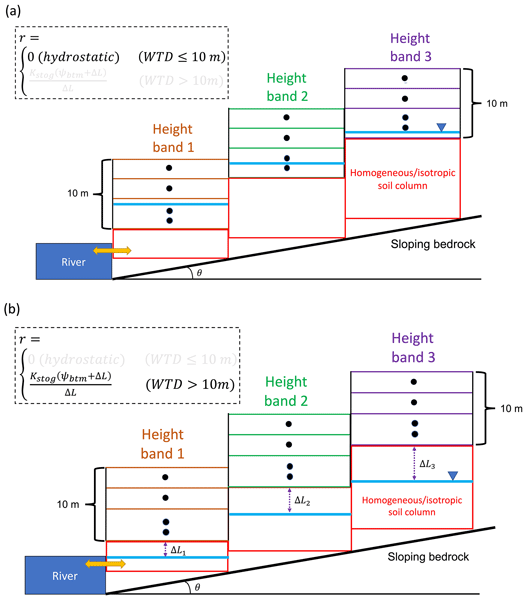
This study explores a new tiling scheme within the HydroBlocks Land Surface Model to represent local, regional and intermediate subsurface flow. Using high-resolution environmental data, the scheme defines parameterized flow units, enabling water and energy flux simulations. Compared against a benchmark simulation, the multiscale scheme demonstrates strong agreement in spatial mean, standard deviation, and temporal variability, showcasing its potential for large-scale hydrological simulation.
This study explores a new tiling scheme within the HydroBlocks Land Surface Model to represent...


