Articles | Volume 19, issue 8
https://doi.org/10.5194/gmd-19-3361-2026
© Author(s) 2026. This work is distributed under
the Creative Commons Attribution 4.0 License.
https://doi.org/10.5194/gmd-19-3361-2026
© Author(s) 2026. This work is distributed under
the Creative Commons Attribution 4.0 License.
Refining gravity anomaly data of coastal areas by combining XGM2019e-2159 and SRTM/GEBCO_2024 residual terrain model with forward modeling method
Yixiang Liu
College of Geodesy and Geomatics, Shandong University of Science and Technology, Qingdao 266590, China
Bin Guan
State Key Laboratory of Geoinformation Engineering, Xi'an Research Institute of Surveying and Mapping, Xi'an 710054, China
Shaofeng Bian
Key Laboratory of Geological Survey and Evaluation of Ministry of Education, China University of Geosciences, Wuhan 430074, China
Heping Sun
State Key Laboratory of Precision Geodesy, Innovation Academy for Precision Measurement Science and Technology, Chinese Academy of Sciences, Wuhan 430077, China
Xin Liu
College of Geodesy and Geomatics, Shandong University of Science and Technology, Qingdao 266590, China
Related authors
No articles found.
Mingtao Liu, Jinyun Guo, Yu Sun, Shaofeng Bian, Yongjun Jia, and Xin Liu
EGUsphere, https://doi.org/10.5194/egusphere-2025-4935, https://doi.org/10.5194/egusphere-2025-4935, 2025
Preprint archived
Short summary
Short summary
Sea ice is vital in the global climate system, ecological balance and polar navigation. Arctic sea ice concentration (SIC) exhibits significant spatial heterogeneity and complex evolutionary patterns. In response to address these challenges, this study proposes a predictive model named sea ice concentration U-Net (SICUNet). SICUNet is a data-driven U-Net model that integrates attention mechanisms and residual structures for short-term prediction of SIC in the Arctic region.
Ruichen Zhou, Jinyun Guo, Shaoshuai Ya, Heping Sun, and Xin Liu
Earth Syst. Sci. Data, 17, 817–836, https://doi.org/10.5194/essd-17-817-2025, https://doi.org/10.5194/essd-17-817-2025, 2025
Short summary
Short summary
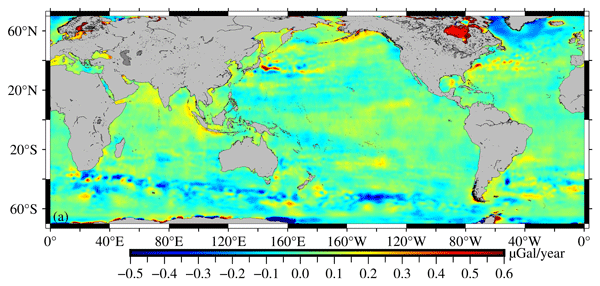
SDUST2023VGGA is a high-resolution (1' × 1') model developed to map the ocean's vertical gradient of gravity anomaly. By using multidirectional mean sea surface data, it reduces the impact of ocean dynamics and provides detailed global gravity anomaly change rates. This model provides critical insights into seafloor structures and ocean mass distribution, contributing to research in marine geophysics and oceanography. The dataset is freely available on Zenodo.
Xin Liu, Yang Yang, Menghao Song, Xiaofeng Dai, Yurong Ding, Gaoying Yin, and Jinyun Guo
Earth Syst. Sci. Data Discuss., https://doi.org/10.5194/essd-2025-2, https://doi.org/10.5194/essd-2025-2, 2025
Revised manuscript not accepted
Short summary
Short summary
This study tackles the challenge of measuring sea surface height in the Arctic Ocean, where ice coverage makes accurate modeling difficult. Using advanced satellite data and innovative methods, a new high-resolution mean sea surface model was created. It achieves greater precision than previous models and offers valuable insights into Arctic oceanography. This research provides an important tool for understanding changes in the Arctic environment and their global impacts.
Shuai Zhou, Jinyun Guo, Huiying Zhang, Yongjun Jia, Heping Sun, Xin Liu, and Dechao An
Earth Syst. Sci. Data, 17, 165–179, https://doi.org/10.5194/essd-17-165-2025, https://doi.org/10.5194/essd-17-165-2025, 2025
Short summary
Short summary
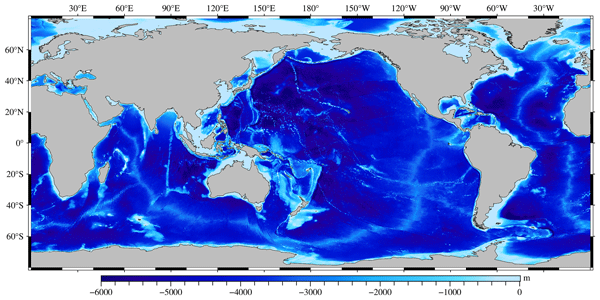
Our research focuses on using machine learning to enhance the accuracy and efficiency of bathymetric models. In this paper, a multi-layer perceptron (MLP) neural network is used to integrate multi-source marine geodetic data. And a new bathymetric model of the global ocean, spanning 0–360° E and 80° S–80° N, known as the Shandong University of Science and Technology 2023 Bathymetric Chart of the Oceans (SDUST2023BCO), has been constructed, with a grid size of 1′ × 1′.
Zhen Li, Jinyun Guo, Chengcheng Zhu, Xin Liu, Cheinway Hwang, Sergey Lebedev, Xiaotao Chang, Anatoly Soloviev, and Heping Sun
Earth Syst. Sci. Data, 16, 4119–4135, https://doi.org/10.5194/essd-16-4119-2024, https://doi.org/10.5194/essd-16-4119-2024, 2024
Short summary
Short summary
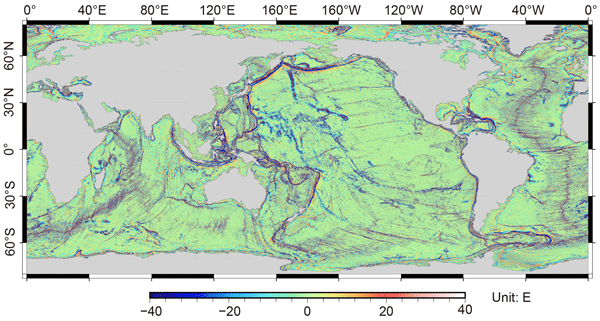
A new global marine gravity model, SDUST2022GRA, is recovered from radar and laser altimeter data. The accuracy of SDUST2022GRA is 4.43 mGal on a global scale, which is at least 0.22 mGal better than that of other models. The spatial resolution of SDUST2022GRA is approximately 20 km in a certain region, slightly superior to other models. These assessments suggest that SDUST2022GRA is a reliable global marine gravity anomaly model.
Fengshun Zhu, Jinyun Guo, Huiying Zhang, Lingyong Huang, Heping Sun, and Xin Liu
Earth Syst. Sci. Data, 16, 2281–2296, https://doi.org/10.5194/essd-16-2281-2024, https://doi.org/10.5194/essd-16-2281-2024, 2024
Short summary
Short summary
We used multi-satellite altimeter data to construct a high-resolution marine gravity change rate (MGCR) model on 5′×5′ grids, named SDUST2020MGCR. The spatial distribution of SDUST2020MGCR and GRACE MGCR are similar, such as in the eastern seas of Japan (dipole), western seas of the Nicobar Islands (rising), and southern seas of Greenland (falling). The SDUST2020MGCR can provide a detailed view of long-term marine gravity change, which will help to study the seawater mass migration.
Dechao An, Jinyun Guo, Xiaotao Chang, Zhenming Wang, Yongjun Jia, Xin Liu, Valery Bondur, and Heping Sun
Geosci. Model Dev., 17, 2039–2052, https://doi.org/10.5194/gmd-17-2039-2024, https://doi.org/10.5194/gmd-17-2039-2024, 2024
Short summary
Short summary
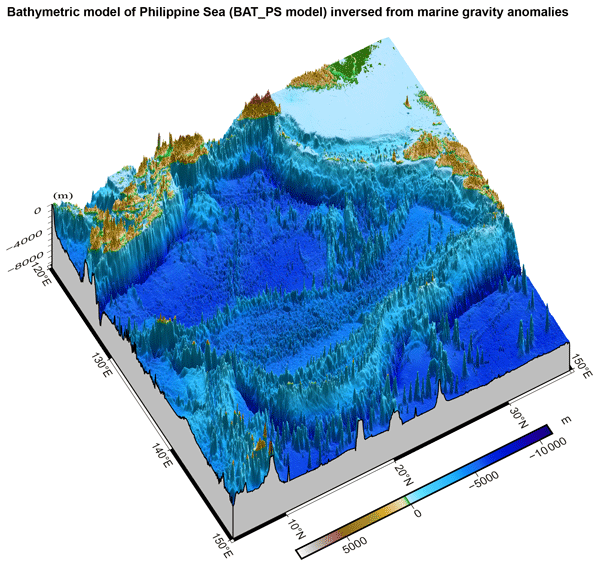
Seafloor topography, as fundamental geoinformation in marine surveying and mapping, plays a crucial role in numerous scientific studies. In this paper, we focus on constructing a high-precision seafloor topography and bathymetry model for the Philippine Sea (5° N–35° N, 120° E–150° E), based on shipborne bathymetric data and marine gravity anomalies, and evaluate the reliability of the model's accuracy.
Jiajia Yuan, Jinyun Guo, Chengcheng Zhu, Zhen Li, Xin Liu, and Jinyao Gao
Earth Syst. Sci. Data, 15, 155–169, https://doi.org/10.5194/essd-15-155-2023, https://doi.org/10.5194/essd-15-155-2023, 2023
Short summary
Short summary
The mean sea surface (MSS) is a relative steady-state sea level within a finite period with important applications in geodesy, oceanography, and other disciplines. In this study, the Shandong University of Science and Technology 2020 (SDUST2020), a new global MSS model, was established with a 19-year moving average method from multi-satellite altimetry data. Its global coverage is from 80 °S to 84 °N, the grid size is 1'×1', and the reference period is from January 1993 to December 2019.
Chengcheng Zhu, Jinyun Guo, Jiajia Yuan, Zhen Li, Xin Liu, and Jinyao Gao
Earth Syst. Sci. Data, 14, 4589–4606, https://doi.org/10.5194/essd-14-4589-2022, https://doi.org/10.5194/essd-14-4589-2022, 2022
Short summary
Short summary
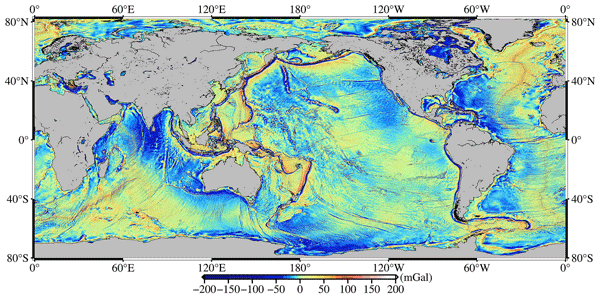
Accurate marine gravity anomalies play an important role in the fields of submarine topography, Earth structure, and submarine exploitation. With the launch of different altimetry satellites, the density of altimeter data can meet the requirements of inversion of high-resolution and high-precision gravity anomaly models. We construct the global marine gravity anomaly model (SDUST2021GRA) from altimeter data (including HY-2A). The accuracy of the model is high, especially in the offshore area.
Cited articles
Andersen, O. B., Knudsen, P., and Berry, P. A.: The DNSC08GRA global marine gravity field from double retracked satellite altimetry, J. Geodesy, 84, 191–199, https://doi.org/10.1007/s00190-009-0355-9, 2010.
Claessens, S. J.: Evaluation of gravity and altimetry data in Australian coastal regions, in: Geodesy for Planet Earth: Proceedings of the 2009 IAG Symposium, Buenos Aires, Argentina, 31 August–4 September 2009, edited by: Kenyon, S., Pacino, M., and Marti, U., Springer, Berlin, 435–442, https://doi.org/10.1007/978-3-642-20338-1_52, 2012.
Dubey, C. P. and Roy, A.: Joint inversion of gravity and gravity gradient and its application to mineral exploration, J. Ind. Geophys. Union, 27, 1–18, 2023.
Forsberg, R.: A study of terrain reductions, density anomalies and geophysical inversion methods in gravity field modelling, Report 355, Department of Geodetic Science and Surveying, Ohio State University, Columbus, https://earthsciences.osu.edu/sites/earthsciences.osu.edu/files/report-355.pdf (last access: 21 April 2026)., 1984.
Forsberg, R. and Tscherning, C. C.: The use of height data in gravity field approximation by collocation, J. Geophys. Res., 86, 7843–7854, https://doi.org/10.1029/JB086iB09p07843, 1981.
Gruber, T.: Evaluation of the EGM2008 gravity field by means of GPS-levelling and sea surface topography solutions, Technical Report, Institut für Astronomische und Physikalische Geodäsie, Munich, https://mediatum.ub.tum.de/doc/1368753/file.pdf (last access: 21 April 2026), 2009.
Guo, J., Gao, Y., Hwang, C., and Sun, J.: A multi-subwaveform parametric retracker of the radar satellite altimetric waveform and recovery of gravity anomalies over coastal oceans, Sci. China Earth Sci., 53, 610–616, https://doi.org/10.1007/s11430-009-0171-3 2010.
Han, S. C., Sauber, J., and Pollitz, F.: Coseismic compression/dilatation and viscoelastic uplift/subsidence following the 2012 Indian Ocean earthquakes quantified from satellite gravity observations, Geophys. Res. Lett., 42, 3764–3772, https://doi.org/10.1002/2015GL063819, 2015.
Hirt, C.: Prediction of vertical deflections from high-degree spherical harmonic synthesis and residual terrain model data, J. Geodesy, 84, 179–190, https://doi.org/10.1007/s00190-009-0354-x, 2010.
Hirt, C.: RTM gravity forward-modeling using topography/bathymetry data to improve high-degree global geopotential models in the coastal zone, Mar. Geod., 36, 183–202, https://doi.org/10.1080/01490419.2013.779334, 2013.
Hirt, C., Featherstone, W. E., and Marti, U.: Combining EGM2008 and SRTM/DTM2006.0 residual terrain model data to improve quasigeoid computations in mountainous areas devoid of gravity data, J. Geodesy, 84, 557–567, https://doi.org/10.1007/s00190-010-0395-1, 2010a.
Hirt, C., Marti, U., Bürki, B., and Featherstone, W. E.: Assessment of EGM2008 in Europe using accurate astrogeodetic vertical deflections and omission error estimates from SRTM/DTM2006.0 residual terrain model data, J. Geophys. Res., 115, B10404, https://doi.org/10.1029/2009JB007057, 2010b.
Hwang, C.: Analysis of some systematic errors affecting altimeter-derived sea surface gradient with application to geoid determination over Taiwan, J. Geodesy, 71, 113–130, https://doi.org/10.1007/s001900050080, 1997.
Ince, E. S., Abrykosov, O., Förste, C., and Flechtner, F.: Forward gravity modelling to augment high-resolution combined gravity field models, Surv. Geophys., 41, 767–804, https://doi.org/10.1007/s10712-020-09590-9, 2020.
Intergovernmental Oceanographic Commission of UNESCO (IOC): GEBCO 2024 Grid, IOC [data set], https://www.gebco.net/ (last access: 21 April 2026), 2024.
Ke, B., Zhang, L., Xu, J., Zhang, C., and Dang, Y.: Determination of the mean dynamic ocean topography model through combining multi-source gravity data and DTU15 MSS around China's coast, Adv. Space Res., 63, 203–212, https://doi.org/10.1016/j.asr.2018.10.040, 2019.
Kuhn, M. and Hirt, C.: Topographic gravitational potential up to second-order derivatives: an examination of approximation errors caused by rock-equivalent topography (RET), J. Geodesy, 90, 883–902, https://doi.org/10.1007/s00190-016-0917-6, 2016.
Li, X., Lin, M., Krcmaric, J., and Carignan, K.: Bathymetric effect on geoid modeling over the Great Lakes area, Earth Planets Space, 76, 14, https://doi.org/10.1186/s40623-024-01961-5, 2024.
Li, Z., Guo, J., Zhu, C., Liu, X., Hwang, C., Lebedev, S., Chang, X., Soloviev, A., and Sun, H.: The SDUST2022GRA global marine gravity anomalies recovered from radar and laser altimeter data: contribution of ICESat-2 laser altimetry, Earth Syst. Sci. Data, 16, 4119–4135, https://doi.org/10.5194/essd-16-4119-2024, 2024.
Liang, S., Wang, X., Xu, Z., Dai, Y., Wang, Y., Guo, J., Jiao, Y., and Li, F.: Steep subduction of the Indian continental mantle lithosphere beneath the eastern Himalaya revealed by gravity anomalies, Sci. China Earth Sci., 66, 1994–2010, https://doi.org/10.1007/s11430-022-1110-y, 2023.
Lin, M., Yang, M., and Zhu, J.: Experiences with the RTM method in local quasi-geoid modeling, Remote Sens., 15, 3594, https://doi.org/10.3390/rs15143594, 2023.
Liu, Y.: Refining gravity anomaly data of coastal areas by combining XGM2019e-2159 and SRTM/GEBCO_2024 residual terrain model with forward modeling method, Zenodo [code], https://doi.org/10.5281/zenodo.15300546, 2025.
Liu, Y., Guo, J., Lin, M., Chang, L., Chang, X., and Liu, X.: Refining regional gravity anomalies and vertical deflections of high-degree earth gravity model from residual terrains based on the spatial domain method, Earth, Planets Space, 77, 37, https://doi.org/10.1186/s40623-025-02168-y, 2025.
National Geodetic Survey (NOAA): NGS99 gravity anomaly data, NOAA [data set], https://www.ngs.noaa.gov/ (last access: 21 April 2026), 1999.
Parker, R. L.: Improved Fourier terrain correction. Part I, Geophysics, 60, 1007–1017, https://doi.org/10.1190/1.1443829, 1995.
Pavlis, N. K., Holmes, S. A., Kenyon, S. C., and Factor, J. K.: The development and evaluation of the Earth Gravitational Model 2008 (EGM2008), J. Geophys. Res.-Sol. Ea., 117, B04406, https://doi.org/10.1029/2011JB008916, 2012.
Reuter, H. I., Nelson, A., and Jarvis, A.: An evaluation of void-filling interpolation methods for SRTM data, Int. J. Geogr. Inf. Sci., 21, 983–1008, https://doi.org/10.1080/13658810601169899, 2007.
Smith, D. A.: The gravitational attraction of any polygonally shaped vertical prism with inclined top and bottom faces, J. Geodesy, 74, 414–420, https://doi.org/10.1007/s001900000102, 2000.
Tenzer, R.: Spectral domain of Newton's integral, Bollettino di Geodesia e Scienze Affini., 64, 61–73, 2005.
Tozer, B., Sandwell, D. T., Smith, W. H., Olson, C., Beale, J. R., and Wessel, P.: Global bathymetry and topography at 15 arc sec: SRTM15+, Earth Space Science, 6, 1847–1864, https://doi.org/10.1029/2019EA000658, 2019.
Tsoulis, D., Novák, P., and Kadlec, M.: Evaluation of precise terrain effects using high-resolution digital elevation models, J. Geophys. Res.-Sol. Ea.., 114, B02404, https://doi.org/10.1029/2008JB005639, 2009.
Wang, L., Yang, M., Huang, Z., Feng, W., Yan, X., and Zhong, M.: Impacts of digital elevation model elevation error on terrain gravity field calculations: a case study in the Wudalianchi airborne gravity gradiometer test site, China, Remote Sens., 16, 3948, https://doi.org/10.3390/rs16213948, 2024.
Wild-Pfeiffer, F.: A comparison of different mass elements for use in gravity gradiometry, J. Geodesy, 82, 637–653, https://doi.org/10.1007/s00190-008-0219-8, 2008.
Wu, L. and Chen, L.: Fast computation of terrain-induced gravitational and magnetic effects on arbitrary undulating surfaces, Surv. Geophys., 44, 1175–1210, https://doi.org/10.1007/s10712-023-09773-0, 2023.
Yang, M., Hirt, C., Rexer, M., Pail, R., and Yamazaki, D.: The tree-canopy effect in gravity forward modelling, Geophys. J. Int., 219, 271–289, https://doi.org/10.1093/gji/ggz264, 2019.
Zhou, R., Guo, J., Ya, S., Sun, H., and Liu, X.: SDUST2023VGGA: a global ocean vertical gradient of gravity anomaly model determined from multidirectional data from mean sea surface, Earth Syst. Sci. Data, 17, 817–836, https://doi.org/10.5194/essd-17-817-2025, 2025.
Zingerle, P., Pail, R., Gruber, T., and Oikonomidou, X.: The combined global gravity field model XGM2019e, J. Geodesy, 94, 66, https://doi.org/10.1007/s00190-020-01398-0, 2020.

Short summary
This study refines the coastal gravity anomaly model by constructing a residual terrain model using high-resolution topographic and bathymetric data. In the spatial domain, the RTM (residual terrain model) gravity forward modeling method is applied to effectively compensate for the missing high-frequency information in the XGM2019e-2159 gravity anomaly model. As a result, an RTM-corrected XGM2019e-2159 gravity anomaly model for the study area is obtained.
This study refines the coastal gravity anomaly model by constructing a residual terrain model...