
Articles | Volume 19, issue 1
https://doi.org/10.5194/gmd-19-327-2026
© Author(s) 2026. This work is distributed under
the Creative Commons Attribution 4.0 License.
the Creative Commons Attribution 4.0 License.
https://doi.org/10.5194/gmd-19-327-2026
© Author(s) 2026. This work is distributed under
the Creative Commons Attribution 4.0 License.
the Creative Commons Attribution 4.0 License.
Model description paper
| 
09 Jan 2026
Model description paper |
| 09 Jan 2026
| 09 Jan 2026
Development of CAS-ESM_MMF: improving East Asian summer precipitation simulation with a Multiscale Modeling Framework

College of Ocean and Earth Sciences, Xiamen University, Xiamen, 361005, China
International Center for Climate and Environmental Sciences, Institute of Atmospheric Physics, Chinese Academy of Sciences, Beijing, 100029, China
State Key Laboratory of Earth System Numerical Modeling and Application, Institute of Atmospheric Physics, Chinese Academy of Sciences, Beijing, 100029, China
College of Earth and Planetary Sciences, University of Chinese Academy of Sciences, Beijing, 100049, China
Zhaohui Lin
International Center for Climate and Environmental Sciences, Institute of Atmospheric Physics, Chinese Academy of Sciences, Beijing, 100029, China
College of Earth and Planetary Sciences, University of Chinese Academy of Sciences, Beijing, 100049, China
He Zhang
International Center for Climate and Environmental Sciences, Institute of Atmospheric Physics, Chinese Academy of Sciences, Beijing, 100029, China
State Key Laboratory of Earth System Numerical Modeling and Application, Institute of Atmospheric Physics, Chinese Academy of Sciences, Beijing, 100029, China
College of Earth and Planetary Sciences, University of Chinese Academy of Sciences, Beijing, 100049, China
Wenbin Kou
Frontiers Science Center for Deep Ocean Multispheres and Earth System (FDOMES) and Key Laboratory of Marine Environmental Science and Ecology (Ministry of Education), Ocean University of China, Qingdao, 266100, China
Xiaojie Guo
International Center for Climate and Environmental Sciences, Institute of Atmospheric Physics, Chinese Academy of Sciences, Beijing, 100029, China
State Key Laboratory of Earth System Numerical Modeling and Application, Institute of Atmospheric Physics, Chinese Academy of Sciences, Beijing, 100029, China
College of Earth and Planetary Sciences, University of Chinese Academy of Sciences, Beijing, 100049, China
Zhenghui Xie
State Key Laboratory of Earth System Numerical Modeling and Application, Institute of Atmospheric Physics, Chinese Academy of Sciences, Beijing, 100029, China
College of Earth and Planetary Sciences, University of Chinese Academy of Sciences, Beijing, 100049, China
Department of Atmospheric and Oceanic Sciences, School of Physics, Peking University, Beijing, 100871, China
Chenglai Wu
International Center for Climate and Environmental Sciences, Institute of Atmospheric Physics, Chinese Academy of Sciences, Beijing, 100029, China
State Key Laboratory of Earth System Numerical Modeling and Application, Institute of Atmospheric Physics, Chinese Academy of Sciences, Beijing, 100029, China
College of Earth and Planetary Sciences, University of Chinese Academy of Sciences, Beijing, 100049, China
Minghua Zhang
School of Marine and Atmospheric Sciences, Stony Brook University, Stony Brook, NY, 11794-5000, USA
Related authors
Hao Wang, Xiaohong Liu, Chenglai Wu, and Guangxing Lin
Atmos. Chem. Phys., 24, 3309–3328, https://doi.org/10.5194/acp-24-3309-2024, https://doi.org/10.5194/acp-24-3309-2024, 2024
Short summary
Short summary
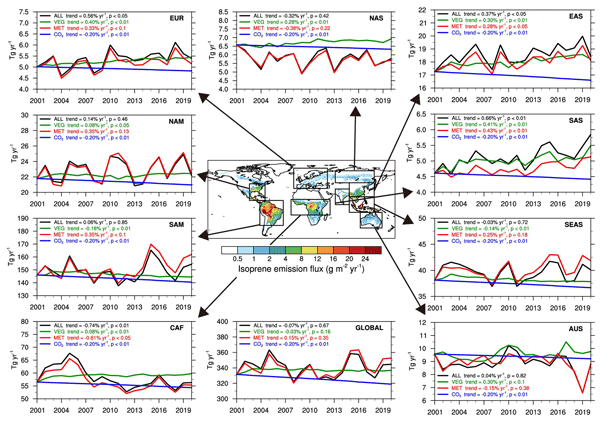
We quantified different global- and regional-scale drivers of biogenic volatile organic compound (BVOC) emission trends over the past 20 years. The results show that global greening trends significantly boost BVOC emissions and deforestation reduces BVOC emissions in South America and Southeast Asia. Elevated temperature in Europe and increased soil moisture in East and South Asia enhance BVOC emissions. The results deepen our understanding of long-term BVOC emission trends in hotspots.
Jiayou Chao, Guanchao Tong, Zhenhua Liu, Wuyin Lin, Minghua Zhang, Merry Ma, and Wei Zhu
EGUsphere, https://doi.org/10.5194/egusphere-2026-3398, https://doi.org/10.5194/egusphere-2026-3398, 2026
This preprint is open for discussion and under review for Geoscientific Model Development (GMD).
Short summary
Short summary
Weather forecasts require enormous computing power. We developed a new artificial intelligence system that learns patterns from historical atmospheric data to predict future weather. Using a more efficient method to process information, our system produced more accurate global forecasts while running substantially faster. This could help weather agencies generate better predictions more quickly or create larger forecast sets to assess uncertainty around extreme events.
Xuesong Bai, Zhaohui Lin, Zhengkun Qin, and Juan Li
Geosci. Model Dev., 19, 4977–4997, https://doi.org/10.5194/gmd-19-4977-2026, https://doi.org/10.5194/gmd-19-4977-2026, 2026
Short summary
Short summary
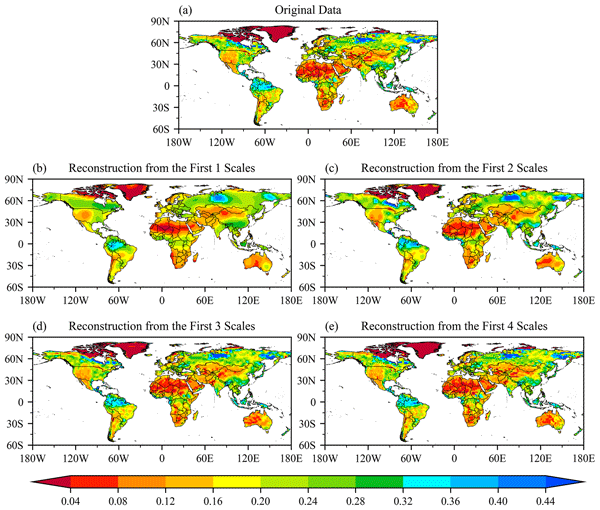
Accurate soil moisture is crucial for weather prediction, but traditional methods often miss correct spatial patterns. We addressed this by treating moisture data as cohesive images rather than isolated points. Using image processing, we optimized both the location and intensity of moisture anomalies. This approach doubled the accuracy of spatial patterns and reduced errors in China and the United States.
Didier Swingedouw, Laura Jackson, Aixue Hu, Anastasia Romanou, Nicole C. Laureanti, Wilbert Weijer, Sina Loriani, Bette Otto-Bliesner, Ayako Abe-Ouchi, Lucas Almeida, Alessio Bellucci, Reyk Börner, Gokhan Danabasoglu, Donovan P. Dennis, Marion Devilliers, Sybren Drijfhout, Jonathan Donges, Friederike Fröb, Thomas L. Frölicher, Guillaume Gastineau, Heiko Goelzer, Chuncheng Guo, Urs Hofmann, Anna Höse, Colin Jones, Torben Koenigk, Ann Kristin Klose, Valerio Lembo, Jose Licon-Salaiz, Ken Mankoff, Virna Meccia, Irina Melnikova, Oliver Mehling, Laurie Menviel, Juliette Mignot, Jon I. Robson, Gavin A. Schmidt, Robin Smith, Yuchen Sun, Irene Trombini, Matteo Willeit, Richard Wood, Fanghua Wu, Lin Zhaohui, and Ricarda Winkelmann
EGUsphere, https://doi.org/10.5194/egusphere-2026-1698, https://doi.org/10.5194/egusphere-2026-1698, 2026
Short summary
Short summary
This study presents a plan for climate model experiments to better understand how changes in freshwater in the North Atlantic affect major ocean currents. We designed coordinated simulations to test their response to warming, added freshwater, and possible recovery after weakening. Comparing results across models and past climate evidence helps improve confidence in projections and assess risks of large ocean circulation changes.
Xuesong Bai, Zhaohui Lin, Zhengkun Qin, and Juan Li
EGUsphere, https://doi.org/10.5194/egusphere-2025-5721, https://doi.org/10.5194/egusphere-2025-5721, 2026
Short summary
Short summary
Accurate soil moisture data is essential for predicting weather. This study examined how observations from three satellites can be combined to improve land-surface simulations. While each satellite helps, their value changes with vegetation type. Merging these data sources gives a more reliable estimate of soil wetness, especially in central and western China. This approach strengthens soil-water monitoring and supports more dependable climate forecasting.
Wenbin Kou, Yang Gao, Dan Tong, Xiaojie Guo, Xiadong An, Wenyu Liu, Mengshi Cui, Xiuwen Guo, Shaoqing Zhang, Huiwang Gao, and Lixin Wu
Atmos. Chem. Phys., 25, 3029–3048, https://doi.org/10.5194/acp-25-3029-2025, https://doi.org/10.5194/acp-25-3029-2025, 2025
Short summary
Short summary
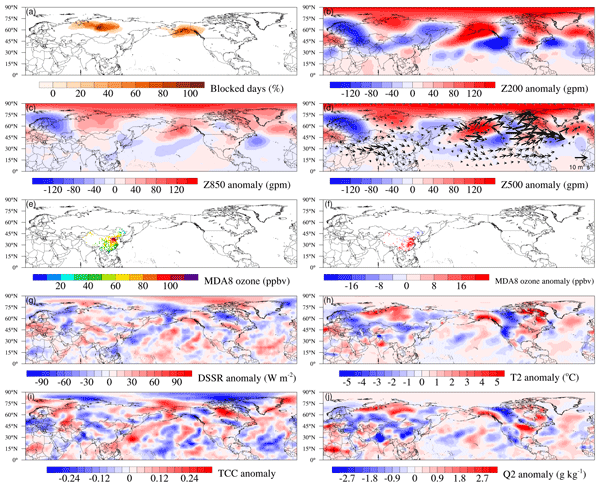
Unlike traditional numerical studies, we apply a high-resolution Earth system model, improving simulations of surface ozone and large-scale circulations such as atmospheric blocking. Besides local heat waves, we quantify the impact of atmospheric blocking on downstream ozone concentrations, which is closely associated with the blocking position. We identify three major pathways of Rossby wave propagation, stressing the critical role of large-scale circulation in regional air quality.
Wangbin Shen, Zhaohui Lin, Zhengkun Qin, and Juan Li
Geosci. Model Dev., 17, 3447–3465, https://doi.org/10.5194/gmd-17-3447-2024, https://doi.org/10.5194/gmd-17-3447-2024, 2024
Short summary
Short summary
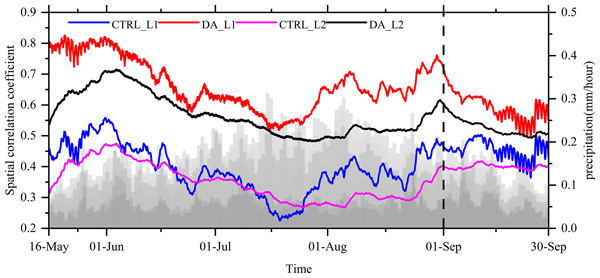
In this study, a land surface image assimilation system capable of optimizing the spatial structure of the background field is constructed by introducing the curvelet analysis method and taking the similarity of image structure as a weak constraint. The findings demonstrate that the assimilation of surface soil moisture observation images effectively and reasonably enhances the spatial structure of soil moisture analysis field.
Hao Wang, Xiaohong Liu, Chenglai Wu, and Guangxing Lin
Atmos. Chem. Phys., 24, 3309–3328, https://doi.org/10.5194/acp-24-3309-2024, https://doi.org/10.5194/acp-24-3309-2024, 2024
Short summary
Short summary
We quantified different global- and regional-scale drivers of biogenic volatile organic compound (BVOC) emission trends over the past 20 years. The results show that global greening trends significantly boost BVOC emissions and deforestation reduces BVOC emissions in South America and Southeast Asia. Elevated temperature in Europe and increased soil moisture in East and South Asia enhance BVOC emissions. The results deepen our understanding of long-term BVOC emission trends in hotspots.
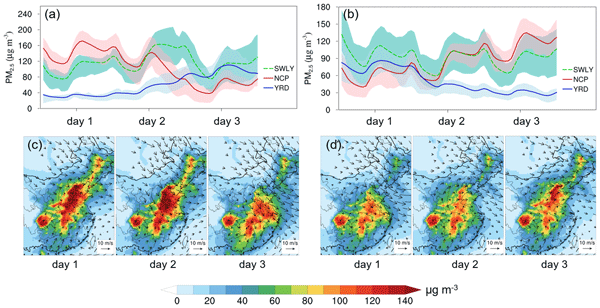
Feifan Yan, Hang Su, Yafang Cheng, Rujin Huang, Hong Liao, Ting Yang, Yuanyuan Zhu, Shaoqing Zhang, Lifang Sheng, Wenbin Kou, Xinran Zeng, Shengnan Xiang, Xiaohong Yao, Huiwang Gao, and Yang Gao
Atmos. Chem. Phys., 24, 2365–2376, https://doi.org/10.5194/acp-24-2365-2024, https://doi.org/10.5194/acp-24-2365-2024, 2024
Short summary
Short summary
PM2.5 pollution is a major air quality issue deteriorating human health, and previous studies mostly focus on regions like the North China Plain and Yangtze River Delta. However, the characteristics of PM2.5 concentrations between these two regions are studied less often. Focusing on the transport corridor region, we identify an interesting seesaw transport phenomenon with stagnant weather conditions, conducive to PM2.5 accumulation over this region, resulting in large health effects.
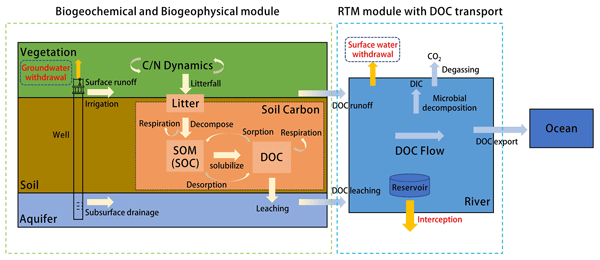
Yanbin You, Zhenghui Xie, Binghao Jia, Yan Wang, Longhuan Wang, Ruichao Li, Heng Yan, Yuhang Tian, and Si Chen
Earth Syst. Dynam., 14, 897–914, https://doi.org/10.5194/esd-14-897-2023, https://doi.org/10.5194/esd-14-897-2023, 2023
Short summary
Short summary
We investigate the impacts of anthropogenic water regulation on riverine DOC transport by the developed model. The results suggested that DOC transport in most rivers was mainly influenced by reservoir interception and surface water withdrawal. The impact of human water regulation on riverine DOC exports grew year by year. In general, this study developed an effective scheme to simulate DOC exports from terrestrial to aquatic systems, which is important for estimating global carbon budgets.
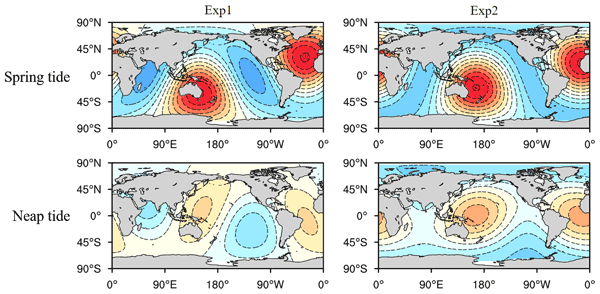
Jiangbo Jin, Run Guo, Minghua Zhang, Guangqing Zhou, and Qingcun Zeng
Geosci. Model Dev., 15, 4259–4273, https://doi.org/10.5194/gmd-15-4259-2022, https://doi.org/10.5194/gmd-15-4259-2022, 2022
Short summary
Short summary
In this paper, the inclusion of tides in a global model via the explicit calculation of the tide-generating force based on the positions of the sun and moon is proposed, rather than the traditional method of including about eight tidal constituents with empirical amplitudes and frequencies. The new scheme can better simulate the diurnal and spatial characteristics of the tidal potential of spring and neap tides as well as the spatial patterns and magnitudes of major tidal constituents.
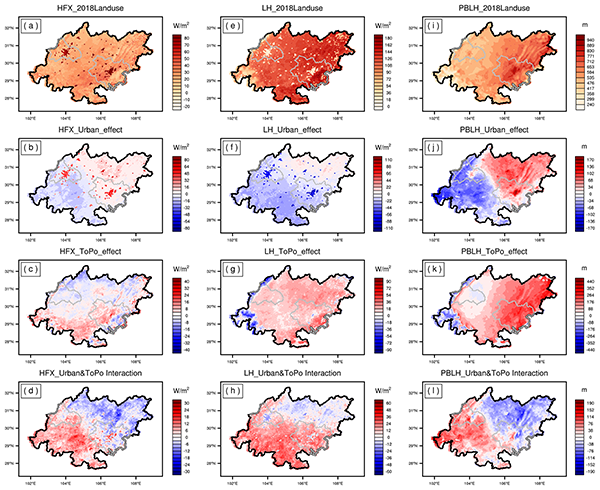
Si Chen, Zhenghui Xie, Jinbo Xie, Bin Liu, Binghao Jia, Peihua Qin, Longhuan Wang, Yan Wang, and Ruichao Li
Earth Syst. Dynam., 13, 341–356, https://doi.org/10.5194/esd-13-341-2022, https://doi.org/10.5194/esd-13-341-2022, 2022
Short summary
Short summary
This study discusses the changes in the summer thermal environment in the Chengdu–Chongqing urban agglomeration due to urban expansion in complex terrain conditions in the recent 40 years, using high-resolution simulations with the WRF model. We quantify the influence of a single urban expansion factor and a single complex terrain factor on the urban thermal environment. Under the joint influence of complex terrain and urban expansion, the heat island effect caused by urbanization was enhanced.
Cited articles
Adeniyi, M. O., Lin, Z., and Zhang, H.: Evaluation of the performance of IAP-AGCM4.1 in simulating the climate of West Africa, Theor Appl Climatol, 136, 1419–1434, https://doi.org/10.1007/s00704-018-2571-9, 2019.
Adler, R., Wang, J.-J., Sapiano, M., Huffman, G., Bolvin, D., Nelkin, E., and NOAA CDR Program: Global Precipitation Climatology Project (GPCP) Climate Data Record (CDR), Version 1.3 (Daily), NOAA National Centers for Environmental Information [data set], https://doi.org/10.7289/V5RX998Z, 2017a.
Adler, R., Wang, J.-J., Sapiano, M., Huffman, G., Chiu, L., Xie, P.-P., Ferraro, R., Schneider, U., Becker, A., Bolvin, D., Nelkin, E., Gu, G., and NOAA CDR Program: Global Precipitation Climatology Project (GPCP) Climate Data Record (CDR), Version 2.3 (Monthly), NOAA National Centers for Environmental Information [data set], https://doi.org/10.7289/V56971M6, 2017b.
Adler, R. F., Sapiano, M. R. P., Huffman, G. J., Wang, J.-J., Gu, G., Bolvin, D., Chiu, L., Schneider, U., Becker, A., Nelkin, E., Xie, P., Ferraro, R., and Shin, D.-B.: The Global Precipitation Climatology Project (GPCP) Monthly Analysis (New Version 2.3) and a Review of 2017 Global Precipitation, Atmosphere, 9, 138, https://doi.org/10.3390/atmos9040138, 2018.
Benedict, J. J. and Randall, D. A.: Structure of the Madden–Julian Oscillation in the Superparameterized CAM, Journal of the Atmospheric Sciences, 66, 3277–3296, https://doi.org/10.1175/2009JAS3030.1, 2009.
Bretherton, C. S. and Park, S.: A New Moist Turbulence Parameterization in the Community Atmosphere Model, Journal of Climate, 22, 3422–3448, https://doi.org/10.1175/2008JCLI2556.1, 2009.
Brient, F., Roehrig, R., and Voldoire, A.: Evaluating Marine Stratocumulus Clouds in the CNRM-CM6-1 Model Using Short-Term Hindcasts, Journal of Advances in Modeling Earth Systems, 11, 127–148, https://doi.org/10.1029/2018MS001461, 2019.
Cheedela, S. K. and Mapes, B. E.: Cumulus Friction in the Asian Monsoon of a Global Model with 7 km Mesh, in: Current Trends in the Representation of Physical Processes in Weather and Climate Models, edited by: Randall, D. A., Srinivasan, J., Nanjundiah, R. S., and Mukhopadhyay, P., Springer, Singapore, 197–205, https://doi.org/10.1007/978-981-13-3396-5_10, 2019.
Chen, L. and Frauenfeld, O. W.: A comprehensive evaluation of precipitation simulations over China based on CMIP5 multimodel ensemble projections, JGR Atmospheres, 119, 5767–5786, https://doi.org/10.1002/2013JD021190, 2014.
Cheng, A. and Xu, K.-M.: An explicit representation of vertical momentum transport in a multiscale modeling framework through its 2-D cloud-resolving model component, Journal of Geophysical Research: Atmospheres, 119, 2356–2374, https://doi.org/10.1002/2013JD021078, 2014.
Copernicus Climate Change Service: Complete ERA5 global atmospheric reanalysis, Climate Data Store [data set], https://doi.org/10.24381/CDS.143582CF, 2023.
Craig, G. C. and Cohen, B. G.: Fluctuations in an Equilibrium Convective Ensemble. Part I: Theoretical Formulation, Journal of the Atmospheric Sciences, 63, 1996–2004, https://doi.org/10.1175/JAS3709.1, 2006.
Cui, T., Li, C., and Tian, F.: Evaluation of Temperature and Precipitation Simulations in CMIP6 Models Over the Tibetan Plateau, Earth and Space Science, 8, e2020EA001620, https://doi.org/10.1029/2020EA001620, 2021.
Ding, Y.: Summer Monsoon Rainfalls in China, Journal of the Meteorological Society of Japan, 70, 373–396, https://doi.org/10.2151/jmsj1965.70.1b_373, 1992.
Feng, Z., Leung, L. R., Liu, N., Wang, J., Houze, R. A., Li, J., Hardin, J. C., Chen, D., and Guo, J.: A Global High-Resolution Mesoscale Convective System Database Using Satellite-Derived Cloud Tops, Surface Precipitation, and Tracking, JGR Atmospheres, 126, e2020JD034202, https://doi.org/10.1029/2020JD034202, 2021.
Gill, A. E.: Some simple solutions for heat‐induced tropical circulation, Quart. J. Royal Meteoro. Soc., 106, 447–462, https://doi.org/10.1002/qj.49710644905, 1980.
Goswami, B. B. and Goswami, B. N.: A road map for improving dry-bias in simulating the South Asian monsoon precipitation by climate models, Clim. Dyn., 49, 2025–2034, https://doi.org/10.1007/s00382-016-3439-2, 2017.
Grabowski, W. W.: Coupling Cloud Processes with the Large-Scale Dynamics Using the Cloud-Resolving Convection Parameterization (CRCP), J. Atmos. Sci., 58, 978–997, https://doi.org/10.1175/1520-0469(2001)058<0978:CCPWTL>2.0.CO;2, 2001.
Grabowski, W. W.: An Improved Framework for Superparameterization, J. Atmos. Sci., 61, 1940–1952, https://doi.org/10.1175/1520-0469(2004)061<1940:AIFFS>2.0.CO;2, 2004.
Hannah, W. M., Jones, C. R., Hillman, B. R., Norman, M. R., Bader, D. C., Taylor, M. A., Leung, L. R., Pritchard, M. S., Branson, M. D., Lin, G., Pressel, K. G., and Lee, J. M.: Initial Results From the Super-Parameterized E3SM, J. Adv. Model Earth Syst., 12, e2019MS001863, https://doi.org/10.1029/2019MS001863, 2020.
Hersbach, H., Bell, B., Berrisford, P., Hirahara, S., Horányi, A., Muñoz-Sabater, J., Nicolas, J., Peubey, C., Radu, R., Schepers, D., Simmons, A., Soci, C., Abdalla, S., Abellan, X., Balsamo, G., Bechtold, P., Biavati, G., Bidlot, J., Bonavita, M., De Chiara, G., Dahlgren, P., Dee, D., Diamantakis, M., Dragani, R., Flemming, J., Forbes, R., Fuentes, M., Geer, A., Haimberger, L., Healy, S., Hogan, R. J., Hólm, E., Janisková, M., Keeley, S., Laloyaux, P., Lopez, P., Lupu, C., Radnoti, G., de Rosnay, P., Rozum, I., Vamborg, F., Villaume, S., and Thépaut, J.-N.: The ERA5 global reanalysis, Quarterly Journal of the Royal Meteorological Society, 146, 1999–2049, https://doi.org/10.1002/qj.3803, 2020.
Huffman, G. J., Adler, R. F., Morrissey, M. M., Bolvin, D. T., Curtis, S., Joyce, R., McGavock, B., and Susskind, J.: Global Precipitation at One-Degree Daily Resolution from Multisatellite Observations, https://doi.org/10.1175/1525-7541(2001)002<0036:GPAODD>2.0.CO;2, 2001.
Huffman, G. J., Bolvin, D. T., Braithwaite, D., Hsu, K.-L., Joyce, R. J., Kidd, C., Nelkin, E. J., Sorooshian, S., Stocker, E. F., Tan, J., Wolff, D. B., and Xie, P.: Integrated Multi-satellite Retrievals for the Global Precipitation Measurement (GPM) Mission (IMERG), in: Satellite Precipitation Measurement: Volume 1, edited by: Levizzani, V., Kidd, C., Kirschbaum, D. B., Kummerow, C. D., Nakamura, K., and Turk, F. J., Springer International Publishing, Cham, 343–353, https://doi.org/10.1007/978-3-030-24568-9_19, 2020.
Iacono, M. J., Delamere, J. S., Mlawer, E. J., Shephard, M. W., Clough, S. A., and Collins, W. D.: Radiative forcing by long-lived greenhouse gases: Calculations with the AER radiative transfer models, Journal of Geophysical Research: Atmospheres, 113, https://doi.org/10.1029/2008JD009944, 2008.
Jin, Y. and Stan, C.: Simulation of East Asian Summer Monsoon (EASM) in SP-CCSM4: Part I – Seasonal mean state and intraseasonal variability, Journal of Geophysical Research: Atmospheres, 121, 7801–7818, https://doi.org/10.1002/2015JD024035, 2016.
Khairoutdinov, M. and Kogan, Y.: A New Cloud Physics Parameterization in a Large-Eddy Simulation Model of Marine Stratocumulus, Mon. Wea. Rev., 128, 229–243, https://doi.org/10.1175/1520-0493(2000)128<0229:ANCPPI>2.0.CO;2, 2000.
Khairoutdinov, M., Randall, D., and DeMott, C.: Simulations of the Atmospheric General Circulation Using a Cloud-Resolving Model as a Superparameterization of Physical Processes, Journal of the Atmospheric Sciences, 62, 2136–2154, https://doi.org/10.1175/JAS3453.1, 2005.
Khairoutdinov, M., DeMott, C., and Randall, D.: Evaluation of the Simulated Interannual and Subseasonal Variability in an AMIP-Style Simulation Using the CSU Multiscale Modeling Framework, Journal of Climate, 21, 413–431, https://doi.org/10.1175/2007JCLI1630.1, 2008.
Khairoutdinov, M. F. and Randall, D. A.: A cloud resolving model as a cloud parameterization in the NCAR Community Climate System Model: Preliminary results, Geophysical Research Letters, 28, 3617–3620, https://doi.org/10.1029/2001GL013552, 2001.
Khairoutdinov, M. F. and Randall, D. A.: Cloud Resolving Modeling of the ARM Summer 1997 IOP: Model Formulation, Results, Uncertainties, and Sensitivities, J. Atmos. Sci., 60, 607–625, https://doi.org/10.1175/1520-0469(2003)060<0607:CRMOTA>2.0.CO;2, 2003.
Kim, I.-W., Oh, J., Woo, S., and Kripalani, R. H.: Evaluation of precipitation extremes over the Asian domain: observation and modelling studies, Clim Dyn, 52, 1317–1342, https://doi.org/10.1007/s00382-018-4193-4, 2019.
Kusunoki, S. and Arakawa, O.: Are CMIP5 Models Better than CMIP3 Models in Simulating Precipitation over East Asia?, Journal of Climate, 28, 5601–5621, https://doi.org/10.1175/JCLI-D-14-00585.1, 2015.
Li, Y.-X., Masunaga, H., Takahashi, H., and Yu, J.-Y.: When, Where and to What Extent Do Temperature Perturbations Near Tropical Deep Convection Follow Convective Quasi Equilibrium?, Geophysical Research Letters, 51, e2024GL108233, https://doi.org/10.1029/2024GL108233, 2024.
Lin, G. and Liao, W.: CAS-ESM_MMF source code, part of model output, and plot scripts, Zenodo [code], https://doi.org/10.5281/zenodo.16910953, 2025.
Lin, G., Fan, J., Feng, Z., Gustafson, W. I., Ma, P., and Zhang, K.: Can the Multiscale Modeling Framework (MMF) Simulate the MCS-Associated Precipitation Over the Central United States?, J. Adv. Model Earth Syst., 11, 4669–4686, https://doi.org/10.1029/2019MS001849, 2019.
Lin, G., Jones, C. R., Leung, L. R., Feng, Z., and Ovchinnikov, M.: Mesoscale Convective Systems in a Superparameterized E3SM Simulation at High Resolution, J. Adv. Model Earth Syst., 14, e2021MS002660, https://doi.org/10.1029/2021MS002660, 2022.
Lin, Z., Zhang, H., Wei, N., Zhang, H., Lu, X., Wu, C., and Dai, Y.: Introducing Plant Hydraulic Parameterization Scheme into Model CAS-ESM2.0 and Its Impact on Simulation of Summer Precipitation over China, Chinese Journal of Atmospheric Sciences, 49, 969–985, https://doi.org/10.3878/j.issn.1006-9895.2504.25038, 2025 (in Chinese).
Liu, X., Easter, R. C., Ghan, S. J., Zaveri, R., Rasch, P., Shi, X., Lamarque, J.-F., Gettelman, A., Morrison, H., Vitt, F., Conley, A., Park, S., Neale, R., Hannay, C., Ekman, A. M. L., Hess, P., Mahowald, N., Collins, W., Iacono, M. J., Bretherton, C. S., Flanner, M. G., and Mitchell, D.: Toward a minimal representation of aerosols in climate models: description and evaluation in the Community Atmosphere Model CAM5, Geosci. Model Dev., 5, 709–739, https://doi.org/10.5194/gmd-5-709-2012, 2012.
Lu, R. and Dong, B.: Westward Extension of North Pacific Subtropical High in Summer, Journal of the Meteorological Society of Japan, Ser. II, 79, 1229–1241, https://doi.org/10.2151/jmsj.79.1229, 2001.
Luo, Z. and Stephens, G. L.: An enhanced convection-wind-evaporation feedback in a superparameterization GCM (SP-GCM) depiction of the Asian summer monsoon, Geophysical Research Letters, 33, 2005GL025060, https://doi.org/10.1029/2005GL025060, 2006.
Mlawer, E. J., Taubman, S. J., Brown, P. D., Iacono, M. J., and Clough, S. A.: Radiative transfer for inhomogeneous atmospheres: RRTM, a validated correlated-k model for the longwave, Journal of Geophysical Research: Atmospheres, 102, 16663–16682, https://doi.org/10.1029/97JD00237, 1997.
Moncrieff, M. W.: Organized Convective Systems: Archetypal Dynamical Models, Mass and Momentum Flux Theory, and Parametrization, Quarterly Journal of the Royal Meteorological Society, 118, 819–850, https://doi.org/10.1002/qj.49711850703, 1992.
Moncrieff, M. W., Liu, C., and Bogenschutz, P.: Simulation, Modeling, and Dynamically Based Parameterization of Organized Tropical Convection for Global Climate Models, Journal of the Atmospheric Sciences, 74, 1363–1380, https://doi.org/10.1175/jas-d-16-0166.1, 2017.
Morrison, H. and Gettelman, A.: A New Two-Moment Bulk Stratiform Cloud Microphysics Scheme in the Community Atmosphere Model, Version 3 (CAM3). Part I: Description and Numerical Tests, Journal of Climate, 21, 3642–3659, https://doi.org/10.1175/2008JCLI2105.1, 2008.
Morrison, H., Curry, J. A., and Khvorostyanov, V. I.: A New Double-Moment Microphysics Parameterization for Application in Cloud and Climate Models. Part I: Description, Journal of the Atmospheric Sciences, 62, 1665–1677, https://doi.org/10.1175/JAS3446.1, 2005.
Neale, R. B., Richter, J. H., and Jochum, M.: The Impact of Convection on ENSO: From a Delayed Oscillator to a Series of Events, Journal of Climate, 21, 5904–5924, https://doi.org/10.1175/2008JCLI2244.1, 2008.
Park, S. and Bretherton, C. S.: The University of Washington Shallow Convection and Moist Turbulence Schemes and Their Impact on Climate Simulations with the Community Atmosphere Model, Journal of Climate, 22, 3449–3469, https://doi.org/10.1175/2008JCLI2557.1, 2009.
Park, S., Bretherton, C. S., and Rasch, P. J.: Integrating Cloud Processes in the Community Atmosphere Model, Version 5, Journal of Climate, 27, 6821–6856, https://doi.org/10.1175/JCLI-D-14-00087.1, 2014.
Peng, D., Zhou, T., Hu, S., Zhang, L., Zheng, J., and Qu, J.: Temperature and Precipitation Change over South China in CMIP5 and CMIP6 Models: Historical Simulation and Future Projection, Adv. Atmos. Sci., 42, 1423–1441, https://doi.org/10.1007/s00376-024-4375-4, 2025.
Precipitation Processing System (PPS) At NASA GSFC: GPM IMERG Final Precipitation L3 Half Hourly 0.1 degree × 0.1 degree V06, EarthData [data set], https://doi.org/10.5067/GPM/IMERG/3B-HH/06, 2022.
Pritchard, M. S. and Somerville, R. C. J.: Assessing the Diurnal Cycle of Precipitation in a Multi-Scale Climate Model, J. Adv. Model Earth Syst., 1, JAMES.2009.1.12, https://doi.org/10.3894/JAMES.2009.1.12, 2009.
Randall, D., Khairoutdinov, M., Arakawa, A., and Grabowski, W.: Breaking the Cloud Parameterization Deadlock, Bulletin of the American Meteorological Society, 84, 1547–1564, https://doi.org/10.1175/BAMS-84-11-1547, 2003.
Randall, D., DeMott, C., Stan, C., Khairoutdinov, M., Benedict, J., McCrary, R., Thayer-Calder, K., and Branson, M.: Simulations of the Tropical General Circulation with a Multiscale Global Model, Meteorological Monographs, 56, 15.1–15.15, https://doi.org/10.1175/AMSMONOGRAPHS-D-15-0016.1, 2016.
Rayner, N. A., Parker, D. E., Horton, E. B., Folland, C. K., Alexander, L. V., Rowell, D. P., Kent, E. C., and Kaplan, A.: Global analyses of sea surface temperature, sea ice, and night marine air temperature since the late nineteenth century, J. Geophys. Res., 108, 2002JD002670, https://doi.org/10.1029/2002JD002670, 2003.
Richter, J. H. and Rasch, P. J.: Effects of Convective Momentum Transport on the Atmospheric Circulation in the Community Atmosphere Model, Version 3, Journal of Climate, 21, 1487–1499, https://doi.org/10.1175/2007JCLI1789.1, 2008.
Rodwell, M. J. and Hoskins, B. J.: Subtropical Anticyclones and Summer Monsoons, Journal of Climate, 14, 3192–3211, https://doi.org/10.1175/1520-0442(2001)014<3192:SAASM>2.0.CO;2, 2001.
Sampe, T. and Xie, S.-P.: Large-Scale Dynamics of the Meiyu-Baiu Rainband: Environmental Forcing by the Westerly Jet, Journal of Climate, 23, 113–134, https://doi.org/10.1175/2009JCLI3128.1, 2010.
Stephens, G. L., L'Ecuyer, T., Forbes, R., Gettelmen, A., Golaz, J., Bodas-Salcedo, A., Suzuki, K., Gabriel, P., and Haynes, J.: Dreary state of precipitation in global models, J. Geophys. Res., 115, 2010JD014532, https://doi.org/10.1029/2010JD014532, 2010.
Su, T., Xue, F., and Zhang, H.: Simulating the intraseasonal variation of the East Asian summer monsoon by IAP AGCM4.0, Adv. Atmos. Sci., 31, 570–580, https://doi.org/10.1007/s00376-013-3029-8, 2014.
Sun, Y., Solomon, S., Dai, A., and Portmann, R. W.: How Often Does It Rain?, Journal of Climate, 19, 916–934, https://doi.org/10.1175/JCLI3672.1, 2006.
Tao, W.-K., Chern, J.-D., Atlas, R., Randall, D., Khairoutdinov, M., Li, J.-L., Waliser, D. E., Hou, A., Lin, X., Peters-Lidard, C., Lau, W., Jiang, J., and Simpson, J.: A Multiscale Modeling System: Developments, Applications, and Critical Issues, Bull. Amer. Meteor. Soc., 90, 515–534, https://doi.org/10.1175/2008BAMS2542.1, 2009.
Tulich, S. N.: A strategy for representing the effects of convective momentum transport in multiscale models: Evaluation using a new superparameterized version of the Weather Research and Forecast model (SP-WRF), Journal of Advances in Modeling Earth Systems, 7, 938–962, https://doi.org/10.1002/2014MS000417, 2015.
Villalba-Pradas, A. and Tapiador, F. J.: Empirical values and assumptions in the convection schemes of numerical models, Geosci. Model Dev., 15, 3447–3518, https://doi.org/10.5194/gmd-15-3447-2022, 2022.
Xin, X., Wu, T., Zhang, J., Yao, J., and Fang, Y.: Comparison of CMIP6 and CMIP5 simulations of precipitation in China and the East Asian summer monsoon, Intl Journal of Climatology, 40, 6423–6440, https://doi.org/10.1002/joc.6590, 2020.
Xu, H., Chen, H., and Wang, H.: Future changes in precipitation extremes across China based on CMIP6 models, Intl Journal of Climatology, 42, 635–651, https://doi.org/10.1002/joc.7264, 2022.
Yamazaki, K. and Miura, H.: Reproducibility of Equatorial Kelvin Waves in a Superparameterized MIROC: 1. Implementation and Verification of Blockwise-Coupled SP-MIROC, Journal of Advances in Modeling Earth Systems, 16, e2023MS003836, https://doi.org/10.1029/2023MS003836, 2024.
Yang, Q., Hannah, W. M., and Leung, L. R.: Convective Momentum Transport and Its Impact on the Madden-Julian Oscillation in E3SM-MMF, Journal of Advances in Modeling Earth Systems, 14, e2022MS003206, https://doi.org/10.1029/2022MS003206, 2022.
Yano, J.-I. and Plant, R. S.: Convective quasi-equilibrium, Reviews of Geophysics, 50, 2011RG000378, https://doi.org/10.1029/2011RG000378, 2012.
Zhang, G. J. and McFarlane, N. A.: Sensitivity of climate simulations to the parameterization of cumulus convection in the Canadian climate centre general circulation model, Atmosphere-Ocean, 33, 407–446, https://doi.org/10.1080/07055900.1995.9649539, 1995.
Zhang, H., Zhang, M., Jin, J., Fei, K., Ji, D., Wu, C., Zhu, J., He, J., Chai, Z., Xie, J., Dong, X., Zhang, D., Bi, X., Cao, H., Chen, H., Chen, K., Chen, X., Gao, X., Hao, H., Jiang, J., Kong, X., Li, S., Li, Y., Lin, P., Lin, Z., Liu, H., Liu, X., Shi, Y., Song, M., Wang, H., Wang, T., Wang, X., Wang, Z., Wei, Y., Wu, B., Xie, Z., Xu, Y., Yu, Y., Yuan, L., Zeng, Q., Zeng, X., Zhao, S., Zhou, G., and Zhu, J.: Description and Climate Simulation Performance of CAS-ESM Version 2, J. Adv. Model Earth Syst., 12, e2020MS002210, https://doi.org/10.1029/2020MS002210, 2020.
Zhang, T., Lin, W., Vogelmann, A. M., Zhang, M., Xie, S., Qin, Y., and Golaz, J.: Improving Convection Trigger Functions in Deep Convective Parameterization Schemes Using Machine Learning, J. Adv. Model Earth Syst., 13, e2020MS002365, https://doi.org/10.1029/2020MS002365, 2021.
Zhang, W., Xue, F., Jin, J., Dong, X., Zhang, H., and Lin, R.: Comparison of East Asian Summer Monsoon Simulation between an Atmospheric Model and a Coupled Model: An Example from CAS-ESM, Atmosphere, 13, 998, https://doi.org/10.3390/atmos13070998, 2022.
Zhang, Y. and Chen, H.: Comparing CAM5 and Superparameterized CAM5 Simulations of Summer Precipitation Characteristics over Continental East Asia: Mean State, Frequency–Intensity Relationship, Diurnal Cycle, and Influencing Factors, Journal of Climate, 29, 1067–1089, https://doi.org/10.1175/JCLI-D-15-0342.1, 2016.
Short summary
Traditional climate models struggle to accurately represent storm clouds, leading to large rainfall biases over East Asia. To address this, we used a multiscale modeling framework that embeds a high-resolution cloud model into each grid cell of the Chinese Academy of Sciences Earth System Model. This approach greatly improves the simulation of East Asian precipitation.
Traditional climate models struggle to accurately represent storm clouds, leading to large...


