
Articles | Volume 19, issue 4
https://doi.org/10.5194/gmd-19-1791-2026
© Author(s) 2026. This work is distributed under
the Creative Commons Attribution 4.0 License.
the Creative Commons Attribution 4.0 License.
https://doi.org/10.5194/gmd-19-1791-2026
© Author(s) 2026. This work is distributed under
the Creative Commons Attribution 4.0 License.
the Creative Commons Attribution 4.0 License.
Development and technical paper
| 
03 Mar 2026
Development and technical paper |
| 03 Mar 2026
| 03 Mar 2026
Conditional diffusion models for downscaling and bias correction of Earth system model precipitation

Technical University of Munich, Germany; Munich Climate Center, TUM School of Engineering and Design, Department of Aerospace and Geodesy, Earth System Modelling Group, Munich, Germany
Potsdam Institute for Climate Impact Research, Potsdam, Germany
Invited contribution by Michael Aich, recipient of the EGU Inter- and Transdisciplinary Sessions Outstanding Student and PhD candidate Presentation Award 2024.
Philipp Hess
Technical University of Munich, Germany; Munich Climate Center, TUM School of Engineering and Design, Department of Aerospace and Geodesy, Earth System Modelling Group, Munich, Germany
Potsdam Institute for Climate Impact Research, Potsdam, Germany
Baoxiang Pan
Institute of Atmospheric Physics, Chinese Academy of Sciences, Beijing, China
Sebastian Bathiany
Technical University of Munich, Germany; Munich Climate Center, TUM School of Engineering and Design, Department of Aerospace and Geodesy, Earth System Modelling Group, Munich, Germany
Potsdam Institute for Climate Impact Research, Potsdam, Germany
Technical University of Munich, Germany; Munich Climate Center, TUM School of Engineering and Design, Department of Aerospace and Geodesy, Earth System Modelling Group, Munich, Germany
Potsdam Institute for Climate Impact Research, Potsdam, Germany
Niklas Boers
Technical University of Munich, Germany; Munich Climate Center, TUM School of Engineering and Design, Department of Aerospace and Geodesy, Earth System Modelling Group, Munich, Germany
Potsdam Institute for Climate Impact Research, Potsdam, Germany
Global Systems Institute and Department of Mathematics, University of Exeter, Exeter, UK
Related authors
No articles found.
Lucas Ferreira Correa, Sebastian Bathiany, Yiannis Moustakis, and Julia Pongratz
EGUsphere, https://doi.org/10.5194/egusphere-2026-4899, https://doi.org/10.5194/egusphere-2026-4899, 2026
This preprint is open for discussion and under review for Earth System Dynamics (ESD).
Short summary
Short summary
Moisture recycling in the Amazon provides water essential for forest survival, but external pressures threaten this self-sustaining system. Using Earth System Model simulations, we analyzed hydroclimatic stress from deforestation and global warming. We found that 25 % deforestation can significantly stress over 70 % of the forest, increasing to 89 % when combined with 2 °C warming. Our findings show that forest loss and climate change can reinforce each other, raising the risk of forest dieback.
Colin Jones, Isaline Bossert, Donovan P. Dennis, Hazel A. Jeffery, Chris D. Jones, Torben Koenigk, Sina Loriani, Benjamin Sanderson, Roland Séférian, Klaus Wyser, Shuting Yang, Manabu Abe, Sebastian Bathiany, Pascale Braconnot, Victor Brovkin, Friedrich A. Burger, Patrica Cadule, Frederic S. Castruccio, Gokhan Danabasoglu, Andrea Dittus, Jonathan F. Donges, Friederike Fröb, Thomas L. Frölicher, Goran Georgievski, Chuncheng Guo, Aixue Hu, Peter Lawrence, Paul Lerner, José Licón-Saláiz, Bette Otto-Bliesner, Anastasia Romanou, Elena Shevliakova, Yona Silvy, Didier Swingedouw, Jerry Tjiputra, Jeremy Walton, Andy Wiltshire, Ricarda Winkelmann, Richard Wood, Tokuta Yokohata, and Tilo Ziehn
Geosci. Model Dev., 19, 6941–6966, https://doi.org/10.5194/gmd-19-6941-2026, https://doi.org/10.5194/gmd-19-6941-2026, 2026
Short summary
Short summary
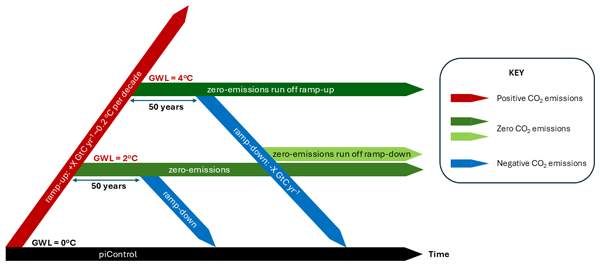
We introduce a new Earth system model experiment protocol to help researchers understand how Earth might respond to positive, zero, and negative carbon emissions. This protocol enables different models to be compared following similar warming and cooling rates. Researchers use the models to explore how the Earth reacts to different climate futures, including the risk of tipping points being exceeded and whether changes can be reversed. The results will support improved long-term climate policy.
Nils Bochow, Philipp Hess, and Alexander Robinson
The Cryosphere, 20, 1841–1866, https://doi.org/10.5194/tc-20-1841-2026, https://doi.org/10.5194/tc-20-1841-2026, 2026
Short summary
Short summary
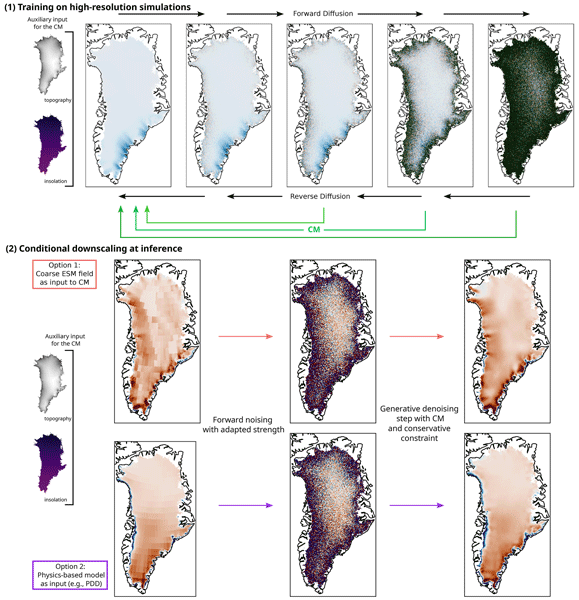
This study presents a fast, physics-guided machine-learning method that downscales coarse climate fields to fine resolution while enforcing conservation of large-scale totals. Trained on regional climate simulations and driven by Earth system model output, it handles extremes and outperforms linear interpolation, providing realistic, high-resolution forcing for ice-sheet models and improving projections of Greenland’s sea-level contribution.
Ming Shi, Huang Yu, Zuntao Fu, Hao Xue, Xiaolong Qiu, Xintong Hao, Xiaohan Zhang, Haiyang Yu, and Weiqi Xing
EGUsphere, https://doi.org/10.5194/egusphere-2026-1376, https://doi.org/10.5194/egusphere-2026-1376, 2026
Short summary
Short summary
Tropical Pacific sea surface temperature variability strongly influences global climate. Using a dynamical systems approach, we analyzed daily SST anomalies over decades and identified a marked shift of the mean value of Dynamical systems instantaneous dimension (DSID) over the western tropical Pacific after 2007—a change not seen elsewhere. Numerical experiments confirm that the high-frequency changes drive the shift.
Clara Hummel, Niklas Boers, and Martin Rypdal
Earth Syst. Dynam., 16, 2035–2062, https://doi.org/10.5194/esd-16-2035-2025, https://doi.org/10.5194/esd-16-2035-2025, 2025
Short summary
Short summary
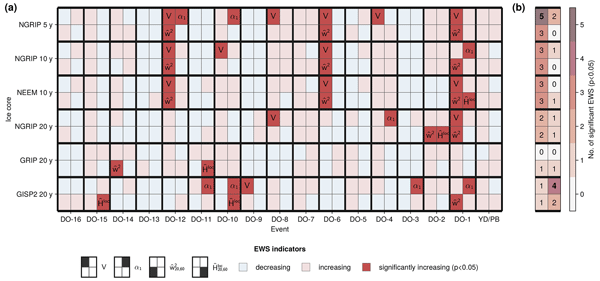
We revisit early warning signals (EWS) for past abrupt climate changes known as Dansgaard-Oeschger (DO) events. Using advanced statistical methods, we find fewer significant EWS than previously reported. While some signals appear consistent across Greenland ice core records, they are not enough to identify the still unknown mechanisms behind DO events. This study highlights the complexity of predicting climate changes and urges caution in interpreting (paleo-)climate data.
Takahito Mitsui, Peter Ditlevsen, Niklas Boers, and Michel Crucifix
Earth Syst. Dynam., 16, 1569–1584, https://doi.org/10.5194/esd-16-1569-2025, https://doi.org/10.5194/esd-16-1569-2025, 2025
Short summary
Short summary
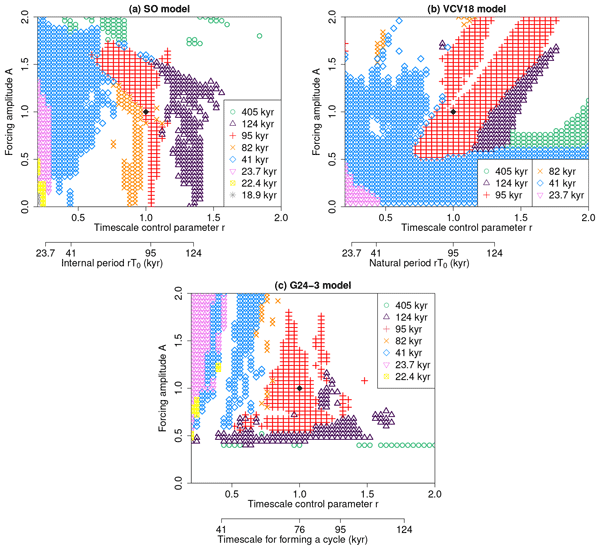
The late Pleistocene glacial cycles are dominated by a 100-kyr periodicity, rather than other major astronomical periods like 19, 23, 41, or 400 kyr. Various models propose distinct mechanisms to explain this, but their diversity may obscure the key factor behind the 100-kyr periodicity. We propose a timescale-matching hypothesis, suggesting that the ice-sheet climate system responds to astronomical forcing at ∼100 kyr because its intrinsic timescale is closer to 100 kyr than to other periods.
Ricarda Winkelmann, Donovan P. Dennis, Jonathan F. Donges, Sina Loriani, Ann Kristin Klose, Jesse F. Abrams, Jorge Alvarez-Solas, Torsten Albrecht, David Armstrong McKay, Sebastian Bathiany, Javier Blasco Navarro, Victor Brovkin, Eleanor Burke, Gokhan Danabasoglu, Reik V. Donner, Markus Drüke, Goran Georgievski, Heiko Goelzer, Anna B. Harper, Gabriele Hegerl, Marina Hirota, Aixue Hu, Laura C. Jackson, Colin Jones, Hyungjun Kim, Torben Koenigk, Peter Lawrence, Timothy M. Lenton, Hannah Liddy, José Licón-Saláiz, Maxence Menthon, Marisa Montoya, Jan Nitzbon, Sophie Nowicki, Bette Otto-Bliesner, Francesco Pausata, Stefan Rahmstorf, Karoline Ramin, Alexander Robinson, Johan Rockström, Anastasia Romanou, Boris Sakschewski, Christina Schädel, Steven Sherwood, Robin S. Smith, Norman J. Steinert, Didier Swingedouw, Matteo Willeit, Wilbert Weijer, Richard Wood, Klaus Wyser, and Shuting Yang
EGUsphere, https://doi.org/10.5194/egusphere-2025-1899, https://doi.org/10.5194/egusphere-2025-1899, 2025
Short summary
Short summary
The Tipping Points Modelling Intercomparison Project (TIPMIP) is an international collaborative effort to systematically assess tipping point risks in the Earth system using state-of-the-art coupled and stand-alone domain models. TIPMIP will provide a first global atlas of potential tipping dynamics, respective critical thresholds and key uncertainties, generating an important building block towards a comprehensive scientific basis for policy- and decision-making.
Nils Bochow, Anna Poltronieri, and Niklas Boers
The Cryosphere, 18, 5825–5863, https://doi.org/10.5194/tc-18-5825-2024, https://doi.org/10.5194/tc-18-5825-2024, 2024
Short summary
Short summary
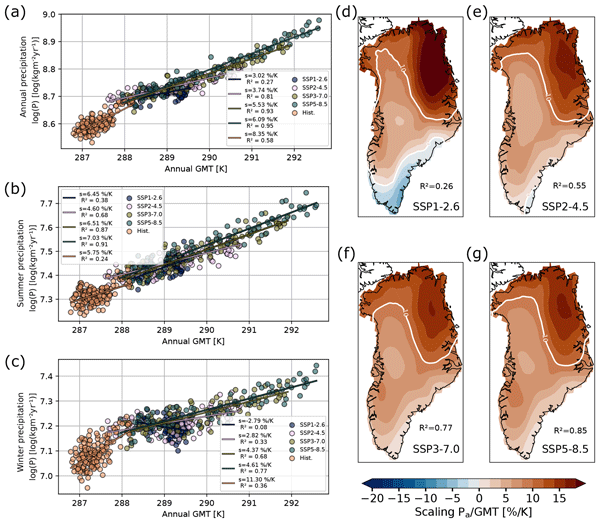
Using the latest climate models, we update the understanding of how the Greenland ice sheet responds to climate changes. We found that precipitation and temperature changes in Greenland vary across different regions. Our findings suggest that using uniform estimates for temperature and precipitation for modelling the response of the ice sheet can overestimate ice loss in Greenland. Therefore, this study highlights the need for spatially resolved data in predicting the ice sheet's future.
Vasilis Dakos, Chris A. Boulton, Joshua E. Buxton, Jesse F. Abrams, Beatriz Arellano-Nava, David I. Armstrong McKay, Sebastian Bathiany, Lana Blaschke, Niklas Boers, Daniel Dylewsky, Carlos López-Martínez, Isobel Parry, Paul Ritchie, Bregje van der Bolt, Larissa van der Laan, Els Weinans, and Sonia Kéfi
Earth Syst. Dynam., 15, 1117–1135, https://doi.org/10.5194/esd-15-1117-2024, https://doi.org/10.5194/esd-15-1117-2024, 2024
Short summary
Short summary
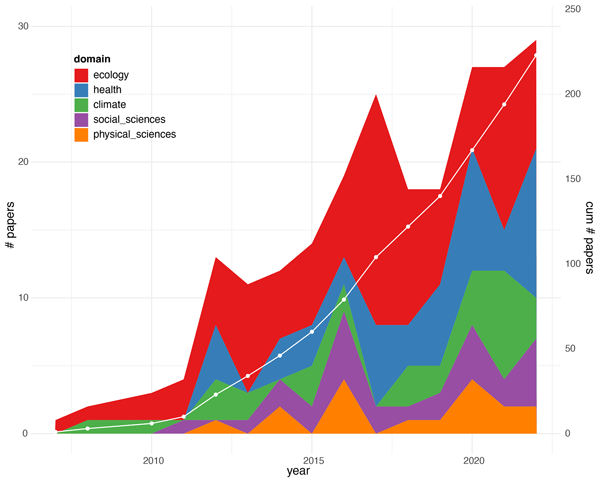
Tipping points are abrupt, rapid, and sometimes irreversible changes, and numerous approaches have been proposed to detect them in advance. Such approaches have been termed early warning signals and represent a set of methods for identifying changes in the underlying behaviour of a system across time or space that might indicate an approaching tipping point. Here, we review the literature to explore where, how, and which early warnings have been used in real-world case studies so far.
Maya Ben-Yami, Lana Blaschke, Sebastian Bathiany, and Niklas Boers
EGUsphere, https://doi.org/10.5194/egusphere-2024-1106, https://doi.org/10.5194/egusphere-2024-1106, 2024
Preprint archived
Short summary
Short summary
Recent work has used observations to find statistical signs that the Atlantic Meridional Overturning Circulation (AMOC) may be approaching a collapse. We find that in complex climate models in which the AMOC does not collapse before 2100, the statistical signs that are present in the observations are not found in the 1850–2014 equivalent model time series. This indicates that the observed statistical signs are not prone to false positives.
Takahito Mitsui and Niklas Boers
Clim. Past, 20, 683–699, https://doi.org/10.5194/cp-20-683-2024, https://doi.org/10.5194/cp-20-683-2024, 2024
Short summary
Short summary
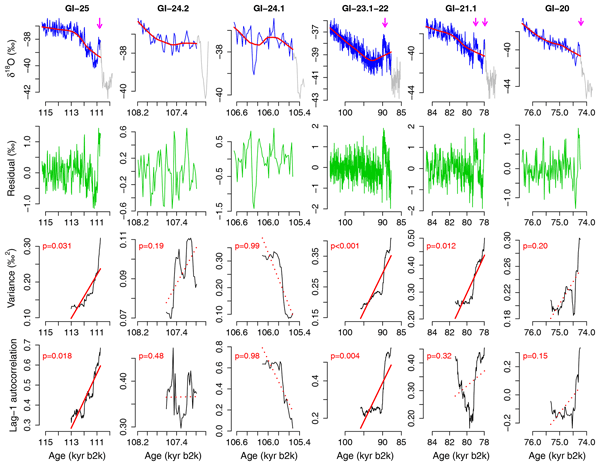
In general, the variance and short-lag autocorrelations of the fluctuations increase in a system approaching a critical transition. Using these indicators, we identify statistical precursor signals for the Dansgaard–Oeschger cooling events recorded in two climatic proxies of three Greenland ice core records. We then provide a dynamical systems theory that bridges the gap between observing statistical precursor signals and the physical precursor signs empirically known in paleoclimate research.
Nico Wunderling, Anna S. von der Heydt, Yevgeny Aksenov, Stephen Barker, Robbin Bastiaansen, Victor Brovkin, Maura Brunetti, Victor Couplet, Thomas Kleinen, Caroline H. Lear, Johannes Lohmann, Rosa Maria Roman-Cuesta, Sacha Sinet, Didier Swingedouw, Ricarda Winkelmann, Pallavi Anand, Jonathan Barichivich, Sebastian Bathiany, Mara Baudena, John T. Bruun, Cristiano M. Chiessi, Helen K. Coxall, David Docquier, Jonathan F. Donges, Swinda K. J. Falkena, Ann Kristin Klose, David Obura, Juan Rocha, Stefanie Rynders, Norman Julius Steinert, and Matteo Willeit
Earth Syst. Dynam., 15, 41–74, https://doi.org/10.5194/esd-15-41-2024, https://doi.org/10.5194/esd-15-41-2024, 2024
Short summary
Short summary
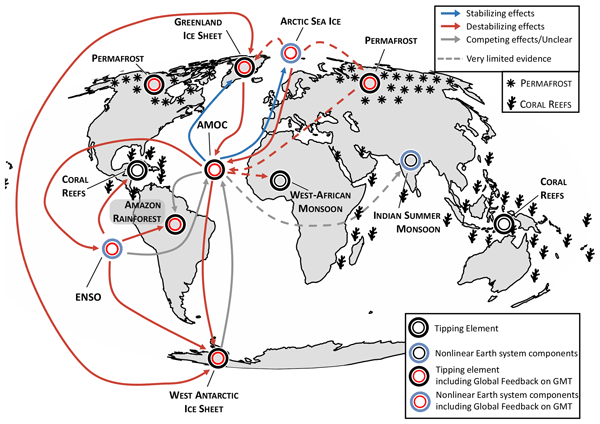
This paper maps out the state-of-the-art literature on interactions between tipping elements relevant for current global warming pathways. We find indications that many of the interactions between tipping elements are destabilizing. This means that tipping cascades cannot be ruled out on centennial to millennial timescales at global warming levels between 1.5 and 2.0 °C or on shorter timescales if global warming surpasses 2.0 °C.
Takahito Mitsui, Matteo Willeit, and Niklas Boers
Earth Syst. Dynam., 14, 1277–1294, https://doi.org/10.5194/esd-14-1277-2023, https://doi.org/10.5194/esd-14-1277-2023, 2023
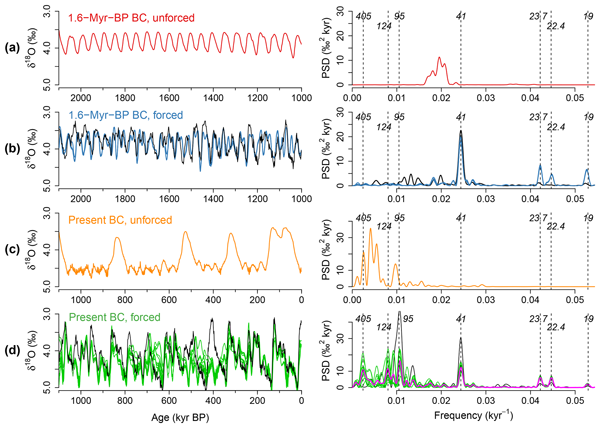
Short summary
Short summary
The glacial–interglacial cycles of the Quaternary exhibit 41 kyr periodicity before the Mid-Pleistocene Transition (MPT) around 1.2–0.8 Myr ago and ~100 kyr periodicity after that. The mechanism generating these periodicities remains elusive. Through an analysis of an Earth system model of intermediate complexity, CLIMBER-2, we show that the dominant periodicities of glacial cycles can be explained from the viewpoint of synchronization theory.
Sara M. Vallejo-Bernal, Frederik Wolf, Niklas Boers, Dominik Traxl, Norbert Marwan, and Jürgen Kurths
Hydrol. Earth Syst. Sci., 27, 2645–2660, https://doi.org/10.5194/hess-27-2645-2023, https://doi.org/10.5194/hess-27-2645-2023, 2023
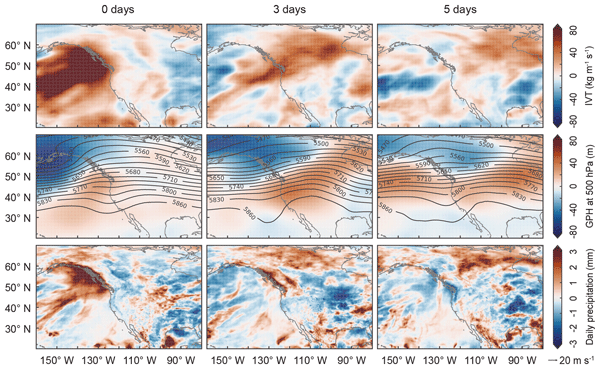
Short summary
Short summary
Employing event synchronization and complex networks analysis, we reveal a cascade of heavy rainfall events, related to intense atmospheric rivers (ARs): heavy precipitation events (HPEs) in western North America (NA) that occur in the aftermath of land-falling ARs are synchronized with HPEs in central and eastern Canada with a delay of up to 12 d. Understanding the effects of ARs in the rainfall over NA will lead to better anticipating the evolution of the climate dynamics in the region.
Maximilian Gelbrecht, Alistair White, Sebastian Bathiany, and Niklas Boers
Geosci. Model Dev., 16, 3123–3135, https://doi.org/10.5194/gmd-16-3123-2023, https://doi.org/10.5194/gmd-16-3123-2023, 2023
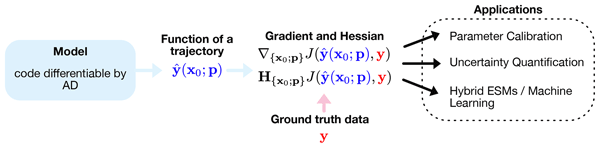
Short summary
Short summary
Differential programming is a technique that enables the automatic computation of derivatives of the output of models with respect to model parameters. Applying these techniques to Earth system modeling leverages the increasing availability of high-quality data to improve the models themselves. This can be done by either using calibration techniques that use gradient-based optimization or incorporating machine learning methods that can learn previously unresolved influences directly from data.
Keno Riechers, Leonardo Rydin Gorjão, Forough Hassanibesheli, Pedro G. Lind, Dirk Witthaut, and Niklas Boers
Earth Syst. Dynam., 14, 593–607, https://doi.org/10.5194/esd-14-593-2023, https://doi.org/10.5194/esd-14-593-2023, 2023
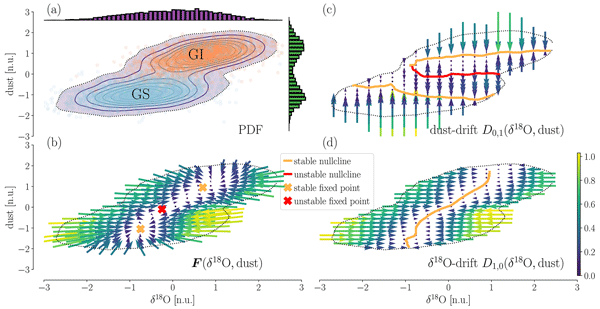
Short summary
Short summary
Paleoclimate proxy records show that the North Atlantic climate repeatedly transitioned between two regimes during the last glacial interval. This study investigates a bivariate proxy record from a Greenland ice core which reflects past Greenland temperatures and large-scale atmospheric conditions. We reconstruct the underlying deterministic drift by estimating first-order Kramers–Moyal coefficients and identify two separate stable states in agreement with the aforementioned climatic regimes.
Taylor Smith, Ruxandra-Maria Zotta, Chris A. Boulton, Timothy M. Lenton, Wouter Dorigo, and Niklas Boers
Earth Syst. Dynam., 14, 173–183, https://doi.org/10.5194/esd-14-173-2023, https://doi.org/10.5194/esd-14-173-2023, 2023
Short summary
Short summary
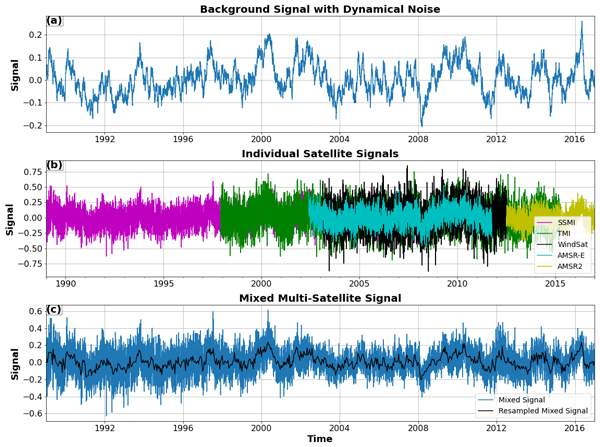
Multi-instrument records with varying signal-to-noise ratios are becoming increasingly common as legacy sensors are upgraded, and data sets are modernized. Induced changes in higher-order statistics such as the autocorrelation and variance are not always well captured by cross-calibration schemes. Here we investigate using synthetic examples how strong resulting biases can be and how they can be avoided in order to make reliable statements about changes in the resilience of a system.
Eirik Myrvoll-Nilsen, Keno Riechers, Martin Wibe Rypdal, and Niklas Boers
Clim. Past, 18, 1275–1294, https://doi.org/10.5194/cp-18-1275-2022, https://doi.org/10.5194/cp-18-1275-2022, 2022
Short summary
Short summary
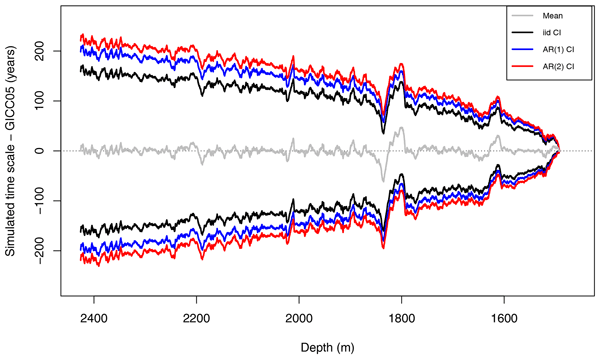
In layer counted proxy records each measurement is accompanied by a timestamp typically measured by counting periodic layers. Knowledge of the uncertainty of this timestamp is important for a rigorous propagation to further analyses. By assuming a Bayesian regression model to the layer increments we express the dating uncertainty by the posterior distribution, from which chronologies can be sampled efficiently. We apply our framework to dating abrupt warming transitions during the last glacial.
Keno Riechers, Takahito Mitsui, Niklas Boers, and Michael Ghil
Clim. Past, 18, 863–893, https://doi.org/10.5194/cp-18-863-2022, https://doi.org/10.5194/cp-18-863-2022, 2022
Short summary
Short summary
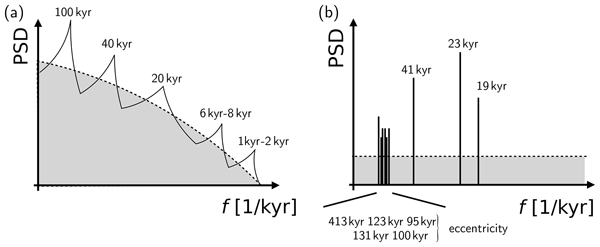
Building upon Milancovic's theory of orbital forcing, this paper reviews the interplay between intrinsic variability and external forcing in the emergence of glacial interglacial cycles. It provides the reader with historical background information and with basic theoretical concepts used in recent paleoclimate research. Moreover, it presents new results which confirm the reduced stability of glacial-cycle dynamics after the mid-Pleistocene transition.
Cited articles
Aich, M.: Model weights for Conditional diffusion models for downscaling & bias correction of ESM precipitation, Zenodo [code], https://doi.org/10.5281/zenodo.18069119, 2025. a
Aich, M.: aim56009/ESM_cdifffusion_downscaling_bc: GMD (Version v0), Zenodo [code], https://doi.org/10.5281/zenodo.18368891, 2026 (code also available at: https://github.com/aim56009/ESM_cdifffusion_downscaling_bc.git, last access: 18 February 2026). a
Cuturi, M.: Sinkhorn distances: Lightspeed computation of optimal transport, in: Advances in Neural Information Processing Systems 26 (NIPS 2013), https://papers.nips.cc/paper/4927-sinkhorn-distances-lightspeed-computation-of-optimal (last access: 18 February 2026), 2013. a
Doury, A., Somot, S., Gadat, S., Ribes, A., and Corre, L.: Regional climate model emulator based on deep learning: Concept and first evaluation of a novel hybrid downscaling approach, Clim. Dynam., 60, 1751–1779, 2023. a
Doury, A., Somot, S., and Gadat, S.: On the suitability of a convolutional neural network based RCM-emulator for fine spatio-temporal precipitation, Clim. Dynam., 62, 8587–8613, 2024. a
Dunne, J. P., Horowitz, L. W., Adcroft, A. J., Ginoux, P., Held, I. M., John, J. G., Krasting, J. P., Malyshev, S., Naik, V., Paulot, F., Shevliakova, E., Stock, C. A., Zadeh, N., Balaji, V., Blanton, C., Dunne, K. A., Dupuis, C., Durachta, J., Dussin, R., Gauthier, P. P. G., Griffies, S. M., Guo, H., Hallberg, R. W., Harrison, M., He, J., Hurlin, W., McHugh, C., Menzel, R., Milly, P. C. D., Nikonov, S., Paynter, D. J., Ploshay, J., Radhakrishnan, A., Rand, K., Reichl, B. G., Robinson, T., Schwarzkopf, D. M., Sentman, L. T., Underwood, S., Vahlenkamp, H., Winton, M., Wittenberg, A. T., Wyman, B., Zeng, Y., and Zhao, M.: The GFDL Earth System Model Version 4.1 (GFDL-ESM 4.1): Overall Coupled Model Description and Simulation Characteristics, J. Adv. Model. Earth Syst., 12, e2019MS002015, https://doi.org/10.1029/2019MS002015, 2020. a, b, c
Goodfellow, I., Pouget-Abadie, J., Mirza, M., Xu, B., Warde-Farley, D., Ozair, S., Courville, A., and Bengio, Y.: Generative adversarial networks, Commun. ACM, 63, 139–144, 2020. a
Gudmundsson, L., Bremnes, J. B., Haugen, J. E., and Engen-Skaugen, T.: Technical Note: Downscaling RCM precipitation to the station scale using statistical transformations – a comparison of methods, Hydrol. Earth Syst. Sci., 16, 3383–3390, https://doi.org/10.5194/hess-16-3383-2012, 2012. a
Gutjahr, O., Putrasahan, D., Lohmann, K., Jungclaus, J. H., von Storch, J.-S., Brüggemann, N., Haak, H., and Stössel, A.: Max Planck Institute Earth System Model (MPI-ESM1.2) for the High-Resolution Model Intercomparison Project (HighResMIP), Geosci. Model Dev., 12, 3241–3281, https://doi.org/10.5194/gmd-12-3241-2019, 2019. a
Gutmann, E., Pruitt, T., Clark, M. P., Brekke, L., Arnold, J. R., Raff, D. A., and Rasmussen, R. M.: An intercomparison of statistical downscaling methods used for water resource assessments in the United States, Water Resour. Res., 50, 7167–7186, 2014. a
Hang, T., Gu, S., Li, C., Bao, J., Chen, D., Hu, H., Geng, X., and Guo, B.: Efficient diffusion training via min-snr weighting strategy, in: Proceedings of the IEEE/CVF International Conference on Computer Vision, 7441–7451, https://doi.org/10.1109/ICCV51070.2023.00684, 2023. a
Hersbach, H., Bell, B., Berrisford, P., Hirahara, S., Horányi, A., Muñoz-Sabater, J., Nicolas, J., Peubey, C., Radu, R., Schepers, D., Simmons, A., Soci, C., Abdalla, S., Abellan, X., Balsamo, G., Bechtold, P., Biavati, G., Bidlot, J., Bonavita, M., De Chiara, G., Dahlgren, P., Dee, D., Diamantakis, M., Dragani, R., Flemming, J., Forbes, R., Fuentes, M., Geer, A., Haimberger, L., Healy, S., Hogan, R. J., Hólm, E., Janisková, M., Keeley, S., Laloyaux, P., Lopez, P., Lupu, C., Radnoti, G., de Rosnay, P., Rozum, I., Vamborg, F., Villaume, S., and Thépaut, J.-N.: The ERA5 global reanalysis, Q. J. Roy. Meteorol. Soc., 146, 1999–2049, https://doi.org/10.1002/qj.3803, 2020. a, b
Hersbach, H., Bell, B., Berrisford, P., Biavati, G., Horányi, A., Muñoz Sabater, J., Nicolas, J., Peubey, C., Radu, R., Rozum, I., Schepers, D., Simmons, A., Soci, C., Dee, D., and Thépaut, J.-N.: ERA5 hourly data on single levels from 1940 to present, Copernicus Climate Change Service (C3S) Climate Data Store (CDS) [data set], https://doi.org/10.24381/cds.adbb2d47, 2023. a
Hess, P., Lange, S., Schötz, C., and Boers, N.: Deep Learning for Bias-Correcting CMIP6-Class Earth System Models, Earth's Future, 11, e2023EF004002, https://doi.org/10.1029/2023EF004002, 2023. a, b
Hess, P., Aich, M., Pan, B., and Boers, N.: Fast, scale-adaptive and uncertainty-aware downscaling of Earth system model fields with generative machine learning, Nat. Mach. Intel., 7, 363–373, https://doi.org/10.1038/s42256-025-00980-5, 2025. a, b, c, d
Ho, J., Jain, A., and Abbeel, P.: Denoising diffusion probabilistic models, Adv. Neural Inf. Process. Syst., 33, 6840–6851, 2020. a
Ho, J., Saharia, C., Chan, W., Fleet, D. J., Norouzi, M., and Salimans, T.: Cascaded diffusion models for high fidelity image generation, J. Mach. Learn. Res., 23, 1–33, 2022. a
Hobeichi, S., Nishant, N., Shao, Y., Abramowitz, G., Pitman, A., Sherwood, S., Bishop, C., and Green, S.: Using machine learning to cut the cost of dynamical downscaling, Earth's Future, 11, e2022EF003291, https://doi.org/10.1029/2022EF003291, 2023. a
IPCC: Climate Change 2023: Synthesis Report, in: Contribution of Working Groups I, II and III to the Sixth Assessment Report of the Intergovernmental Panel on Climate Change, IPCC – Intergovernmental Panel on Climate Change, Geneva, Switzerland, ISBN 978-92-9169-164-7, https://doi.org/10.59327/IPCC/AR6-9789291691647.001, 2023. a
Karras, T., Aittala, M., Aila, T., and Laine, S.: Elucidating the design space of diffusion-based generative models, Adv. Neural Inf. Process. Syst., 35, 26565–26577, 2022. a
Kingma, D. and Ba, J.: Adam: A Method for Stochastic Optimization, in: International Conference on Learning Representations (ICLR), San Diego, CA, USA, arXiv [preprint], https://doi.org/10.48550/arXiv.1412.6980, 2015. a
Krasting, J. P., John, J. G., Blanton, C., McHugh, C., Nikonov, S., Radhakrishnan, A., Rand, K., Zadeh, N. T., Balaji, V., Durachta, J., Dupuis, C., Menzel, R., Robinson, T., Underwood, S., Vahlenkamp, H., Dunne, K. A., Gauthier, P. P. G., Ginoux, P., Griffies, S. M., Hallberg, R., Harrison, M., Hurlin, W., Malyshev, S., Naik, V., Paulot, F., Paynter, D. J., Ploshay, J., Reichl, B. G., Schwarzkopf, D. M., Seman, C. J., Silvers, L., Wyman, B., Zeng, Y., Adcroft, A., Dunne, J. P., Dussin, R., Guo, H., He, J., Held, I. M., Horowitz, L. W., Lin, P., Milly, P. C. D., Shevliakova, E., Stock, C., Winton, M., Wittenberg, A. T., Xie, Y., and Zhao, M.: NOAA-GFDL GFDL-ESM4 model output prepared for CMIP6 CMIP historical, Earth System Grid Federation [data set], https://doi.org/10.22033/ESGF/CMIP6.8597, 2018. a
Li, W., Pan, B., Xia, J., and Duan, Q.: Convolutional neural network-based statistical post-processing of ensemble precipitation forecasts, J. Hydrol., 605, 127301, https://doi.org/10.1016/j.jhydrol.2021.127301, 2022. a
Luhman, E. and Luhman, T.: Knowledge Distillation in Iterative Generative Models for Improved Sampling Speed, arXiv [preprint] arXiv:2101.02388 [cs], https://doi.org/10.48550/arXiv.2101.02388, 2021. a
Miao, Q., Pan, B., Wang, H., Hsu, K., and Sorooshian, S.: Improving monsoon precipitation prediction using combined convolutional and long short term memory neural network, Water, 11, 977, https://doi.org/10.3390/w11050977, 2019. a
Pan, B., Hsu, K., AghaKouchak, A., and Sorooshian, S.: Improving precipitation estimation using convolutional neural network, Water Resour. Res., 55, 2301–2321, 2019. a
Pan, B., Anderson, G. J., Goncalves, A., Lucas, D. D., Bonfils, C. J., Lee, J., Tian, Y., and Ma, H.-Y.: Learning to correct climate projection biases, J. Adv. Model. Earth Syst., 13, e2021MS002509, https://doi.org/10.1029/2021MS002509, 2021. a, b
Rampal, N., Gibson, P. B., Sood, A., Stuart, S., Fauchereau, N. C., Brandolino, C., Noll, B., and Meyers, T.: High-resolution downscaling with interpretable deep learning: Rainfall extremes over New Zealand, Weather Clim. Ext., 38, 100525, https://doi.org/10.1016/j.wace.2022.100525, 2022. a
Rampal, N., Hobeichi, S., Gibson, P. B., Baño-Medina, J., Abramowitz, G., Beucler, T., González-Abad, J., Chapman, W., Harder, P., and Gutiérrez, J. M.: Enhancing Regional Climate Downscaling through Advances in Machine Learning, Artif. Intel. Earth Syst., 3, 230066, https://doi.org/10.1175/AIES-D-23-0066.1, 2024. a
Rampal, N., Gibson, P. B., Sherwood, S., Abramowitz, G., and Hobeichi, S.: A reliable generative adversarial network approach for climate downscaling and weather generation, J. Adv. Model. Earth Syst., 17, e2024MS004668, https://doi.org/10.1029/2024MS004668, 2025. a
Rombach, R., Blattmann, A., Lorenz, D., Esser, P., and Ommer, B.: High-resolution image synthesis with latent diffusion models, in: Proceedings of the IEEE/CVF conference on computer vision and pattern recognition, 10684–10695, https://doi.org/10.1109/CVPR52688.2022.01042, 2022. a
Saharia, C., Chan, W., Chang, H., Lee, C., Ho, J., Salimans, T., Fleet, D., and Norouzi, M.: Palette: Image-to-image diffusion models, in: ACM SIGGRAPH 2022 Conference Proceedings, 1–10, https://doi.org/10.1145/3528233.3530757, 2022a. a
Saharia, C., Chan, W., Saxena, S., Li, L., Whang, J., Denton, E. L., Ghasemipour, K., Gontijo Lopes, R., Karagol Ayan, B., Salimans, T., Ho, J., Fleet, D., and Norouzi, M.: Photorealistic text-to-image diffusion models with deep language understanding, Adv. Neural Inf. Process. Syst., 35, 36479–36494, 2022b. a, b, c
Saharia, C., Ho, J., Chan, W., Salimans, T., Fleet, D. J., and Norouzi, M.: Image super-resolution via iterative refinement, IEEE T. Pattern Anal. Mach. Intel., 45, 4713–4726, 2022c. a
Tong, Y., Gao, X., Han, Z., Xu, Y., Xu, Y., and Giorgi, F.: Bias correction of temperature and precipitation over China for RCM simulations using the QM and QDM methods, Clim. Dynam., 57, 1425–1443, 2021. a
Vandal, T., Kodra, E., Ganguly, S., Michaelis, A., Nemani, R., and Ganguly, A. R.: Deepsd: Generating high resolution climate change projections through single image super-resolution, in: Proceedings of the 23rd acm sigkdd international conference on knowledge discovery and data mining, 1663–1672, https://doi.org/10.1145/3097983.3098004, 2017. a
van der Meer, M., de Roda Husman, S., and Lhermitte, S.: Deep learning regional climate model emulators: A comparison of two downscaling training frameworks, J. Adv. Model. Earth Syst., 15, e2022MS003593, https://doi.org/10.1029/2022MS003593, 2023. a
Wan, Z. Y., Baptista, R., Boral, A., Chen, Y.-F., Anderson, J., Sha, F., and Zepeda-Núñez, L.: Debias coarsely, sample conditionally: Statistical downscaling through optimal transport and probabilistic diffusion models, arXiv [preprint], https://doi.org/10.48550/arXiv.2305.15618, 2024. a
Zelinka, M. D., Myers, T. A., McCoy, D. T., Po-Chedley, S., Caldwell, P. M., Ceppi, P., Klein, S. A., and Taylor, K. E.: Causes of higher climate sensitivity in CMIP6 models, Geophys. Res. Lett., 47, e2019GL085782, https://doi.org/10.1029/2019GL085782, 2020. a
Zhu, J.-Y., Park, T., Isola, P., and Efros, A. A.: Unpaired Image-To-Image Translation Using Cycle-Consistent Adversarial Networks, in: Proceedings of the IEEE International Conference on Computer Vision (ICCV), https://doi.org/10.1109/ICCV.2017.244, 2017. a
Short summary
Accurately simulating rainfall is essential to understand the impacts of climate change, especially extreme events such as floods and droughts. Climate models simulate the atmosphere at a coarse resolution and often misrepresent precipitation, leading to biased and overly smooth fields. We improve the precipitation using a machine learning model that is data-efficient, preserves key climate signals such as trends and variability, and significantly improves the representation of extreme events.
Accurately simulating rainfall is essential to understand the impacts of climate change,...


