
Articles | Volume 19, issue 4
https://doi.org/10.5194/gmd-19-1683-2026
© Author(s) 2026. This work is distributed under
the Creative Commons Attribution 4.0 License.
the Creative Commons Attribution 4.0 License.
https://doi.org/10.5194/gmd-19-1683-2026
© Author(s) 2026. This work is distributed under
the Creative Commons Attribution 4.0 License.
the Creative Commons Attribution 4.0 License.
Methods for assessment of models
| 
27 Feb 2026
Methods for assessment of models |
| 27 Feb 2026
| 27 Feb 2026
GHGPSE-Net: a method towards spaceborne automated extraction of greenhouse-gas point sources using point-object-detection deep neural network
Yiguo Pang
Innovation Academy for Microsatellites of Chinese Academy of Sciences, Shanghai, China
University of Chinese Academy of Sciences, Beijing, China
Denghui Hu
Innovation Academy for Microsatellites of Chinese Academy of Sciences, Shanghai, China
Longfei Tian
Innovation Academy for Microsatellites of Chinese Academy of Sciences, Shanghai, China
Shuang Gao
Innovation Academy for Microsatellites of Chinese Academy of Sciences, Shanghai, China
Guohua Liu
CORRESPONDING AUTHOR

Innovation Academy for Microsatellites of Chinese Academy of Sciences, Shanghai, China
University of Chinese Academy of Sciences, Beijing, China
Related authors

Yiguo Pang, Longfei Tian, Denghui Hu, Shuang Gao, and Guohua Liu
Atmos. Meas. Tech., 18, 455–470, https://doi.org/10.5194/amt-18-455-2025, https://doi.org/10.5194/amt-18-455-2025, 2025
Short summary
Short summary
The spatial adjacency of methane point sources can result in plume overlapping, presenting challenges for quantification from space. A separation and quantification method combining the Gaussian plume model and the integrated mass enhancement method is proposed. A modern parameter estimation technique is introduced to separate the overlapping plumes from satellite observations. The proposed method is evaluated with synthesized observations and real satellite observations.
Rongjin Song, Zhaonan Cai, Yi Liu, Dongxu Yang, Lin Wu, Longfei Tian, Denghui Hu, and Guohua Liu
EGUsphere, https://doi.org/10.5194/egusphere-2026-3549, https://doi.org/10.5194/egusphere-2026-3549, 2026
This preprint is open for discussion and under review for Atmospheric Measurement Techniques (AMT).
Short summary
Short summary
We tested whether the way a neural network is trained can improve satellite methane measurements. Using GOSAT-2 observations, we compared two training targets and checked the results against later satellite data and ground-based measurements. The model trained with the proxy-based target was more stable, more accurate across time, and less affected by changing observation conditions. This suggests that target design is key for building faster and more reliable methane retrievals.
Dianrun Zhao, Shanshan Du, Chu Zou, Longfei Tian, Meng Fan, Yulu Du, and Liangyun Liu
Atmos. Meas. Tech., 18, 3647–3667, https://doi.org/10.5194/amt-18-3647-2025, https://doi.org/10.5194/amt-18-3647-2025, 2025
Short summary
Short summary
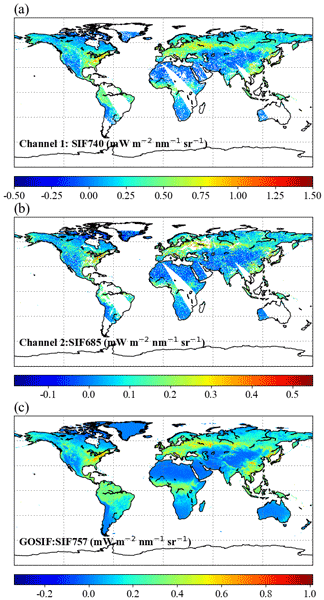
TanSat-2 is designed for global carbon monitoring, offering high-resolution dual-band observations of solar-induced chlorophyll fluorescence – a key indicator of photosynthesis. Simulations show its data processing can retrieve fluorescence with high accuracy. These results suggest TanSat-2 will enhance global tracking of the carbon cycle and vegetation health, providing valuable insights for climate change research.
Yiguo Pang, Longfei Tian, Denghui Hu, Shuang Gao, and Guohua Liu
Atmos. Meas. Tech., 18, 455–470, https://doi.org/10.5194/amt-18-455-2025, https://doi.org/10.5194/amt-18-455-2025, 2025
Short summary
Short summary
The spatial adjacency of methane point sources can result in plume overlapping, presenting challenges for quantification from space. A separation and quantification method combining the Gaussian plume model and the integrated mass enhancement method is proposed. A modern parameter estimation technique is introduced to separate the overlapping plumes from satellite observations. The proposed method is evaluated with synthesized observations and real satellite observations.
Lu Yao, Yi Liu, Dongxu Yang, Zhaonan Cai, Jing Wang, Chao Lin, Naimeng Lu, Daren Lyu, Longfei Tian, Maohua Wang, Zengshan Yin, Yuquan Zheng, and Sisi Wang
Atmos. Meas. Tech., 15, 2125–2137, https://doi.org/10.5194/amt-15-2125-2022, https://doi.org/10.5194/amt-15-2125-2022, 2022
Short summary
Short summary
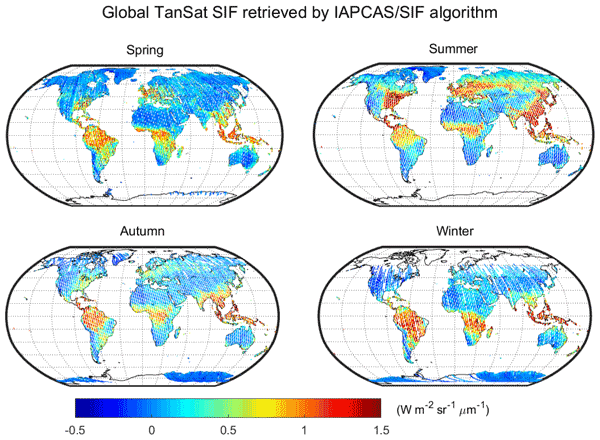
A physics-based SIF retrieval algorithm, IAPCAS/SIF, is introduced and applied to OCO-2 and TanSat measurements. The strong linear relationship between OCO-2 SIF retrieved by IAPCAS/SIF and the official product indicates the algorithm's reliability. The good consistency in the spatiotemporal patterns and magnitude of the OCO-2 and TanSat SIF products suggests that the combinative usage of multi-satellite products has potential and that such work would contribute to further research.
Cited articles
Al-Hemoud, A., Al-Sudairawi, M., Al-Rashidi, M., Behbehani, W., and Al-Khayat, A.: Temperature Inversion and Mixing Height: Critical Indicators for Air Pollution in Hot Arid Climate, Natural Hazards, 97, 139–155, https://doi.org/10.1007/s11069-019-03631-2, 2019. a, b
Bisht, J. S. H., Patra, P. K., Takigawa, M., Kanaya, Y., Yamaguchi, M., Machida, T., and Tanimoto, H.: CO2 High-Resolution Simulation Using WRF-GHG over the Kanto Region in Japan, ESS Open Archive [preprint], 941, essoar.168626399, https://doi.org/10.22541/essoar.168626399.94131688/v1, 2023. a
Bovensmann, H., Buchwitz, M., Burrows, J. P., Reuter, M., Krings, T., Gerilowski, K., Schneising, O., Heymann, J., Tretner, A., and Erzinger, J.: A remote sensing technique for global monitoring of power plant CO2 emissions from space and related applications, Atmospheric Measurement Techniques, 3, 781–811, https://doi.org/10.5194/amt-3-781-2010, 2010. a
Brunner, D., Kuhlmann, G., Marshall, J., Clément, V., Fuhrer, O., Broquet, G., Löscher, A., and Meijer, Y.: Accounting for the vertical distribution of emissions in atmospheric CO2 simulations, Atmospheric Chemistry and Physics, 19, 4541–4559, https://doi.org/10.5194/acp-19-4541-2019, 2019. a
Brunner, D., Kuhlmann, G., Henne, S., Koene, E., Kern, B., Wolff, S., Voigt, C., Jöckel, P., Kiemle, C., Roiger, A., Fiehn, A., Krautwurst, S., Gerilowski, K., Bovensmann, H., Borchardt, J., Galkowski, M., Gerbig, C., Marshall, J., Klonecki, A., Prunet, P., Hanfland, R., Pattantyús-Ábrahám, M., Wyszogrodzki, A., and Fix, A.: Evaluation of simulated CO2 power plant plumes from six high-resolution atmospheric transport models, Atmospheric Chemistry and Physics, 23, 2699–2728, https://doi.org/10.5194/acp-23-2699-2023, 2023. a, b
Calvo Buendia, E., Tanabe, K., Kranjc, A., Baasansuren, J., Fukuda, M., Ngarize, S., Osako, A., Pyrozhenko, Y., Shermanau, P., and Federici, S.: 2019 Refinement to the 2006 IPCC Guidelines for National Greenhouse Gas Inventories, Intergovernmental Panel on Climate Change, ISBN 978-4-88788-232-4, 2019. a
Chen, C., Fan, M., Wang, Z., Liang, M., Tao, J., and Chen, L.: MPSUNet: A Deep Learning-Based Segmentation Framework for Methane Plume Detection With Space-Based Hyperspectral and Multispectral Imagery, IEEE Transactions on Geoscience and Remote Sensing, 63, 1–15, https://doi.org/10.1109/TGRS.2025.3563599, 2025a. a
Chen, F. and Dudhia, J.: Coupling an Advanced Land Surface–Hydrology Model with the Penn State–NCAR MM5 Modeling System. Part I: Model Implementation and Sensitivity, Monthly Weather Review, 129, 569–585, https://doi.org/10.1175/1520-0493(2001)129<0569:CAALSH>2.0.CO;2, 2001. a
Chen, W., Ren, T., Zhao, C., Wen, Y., Gu, Y., Zhou, M., and Wang, P.: Transformer-Based Fast Mole Fraction of CO2 Retrievals from Satellite-Measured Spectra, Journal of Remote Sensing, 5, 0470, https://doi.org/10.34133/remotesensing.0470, 2025b. a
Chiba, T., Haga, Y., Inoue, M., Kiguchi, O., Nagayoshi, T., Madokoro, H., and Morino, I.: Measuring Regional Atmospheric CO2 Concentrations in the Lower Troposphere with a Non-Dispersive Infrared Analyzer Mounted on a UAV, Ogata Village, Akita, Japan, Atmosphere, 10, 487, https://doi.org/10.3390/atmos10090487, 2019. a
Connor, B. J., Boesch, H., Toon, G., Sen, B., Miller, C., and Crisp, D.: Orbiting Carbon Observatory: Inverse Method and Prospective Error Analysis, Journal of Geophysical Research: Atmospheres, 113, https://doi.org/10.1029/2006JD008336, 2008. a
Crippa, M., Guizzardi, D., Pisoni, E., Solazzo, E., Guion, A., Muntean, M., Florczyk, A., Schiavina, M., Melchiorri, M., and Hutfilter, A. F.: Global Anthropogenic Emissions in Urban Areas: Patterns, Trends, and Challenges, Environmental Research Letters, 16, 074033, https://doi.org/10.1088/1748-9326/ac00e2, 2021. a
Crippa, M., Guizzardi, D., Pagani, F., Schiavina, M., Melchiorri, M., Pisoni, E., Graziosi, F., Muntean, M., Maes, J., Dijkstra, L., Van Damme, M., Clarisse, L., and Coheur, P.: Insights into the spatial distribution of global, national, and subnational greenhouse gas emissions in the Emissions Database for Global Atmospheric Research (EDGAR v8.0), Earth System Science Data, 16, 2811–2830, https://doi.org/10.5194/essd-16-2811-2024, 2024. a, b, c
Cybenko, G.: Approximation by Superpositions of a Sigmoidal Function, Mathematics of Control, Signals and Systems, 2, 303–314, https://doi.org/10.1007/BF02551274, 1989. a
Duan, K., Bai, S., Xie, L., Qi, H., Huang, Q., and Tian, Q.: CenterNet: Keypoint Triplets for Object Detection, in: 2019 IEEE/CVF International Conference on Computer Vision (ICCV), 6568–6577, https://doi.org/10.1109/ICCV.2019.00667, 2019. a, b
Dudhia, J.: Numerical Study of Convection Observed during the Winter Monsoon Experiment Using a Mesoscale Two-Dimensional Model, Journal of The Atmospheric Sciences, 46, 3077–3107, https://doi.org/10.1175/1520-0469(1989)046<3077:NSOCOD>2.0.CO;2, 1989. a
Dumont Le Brazidec, J., Vanderbecken, P., Farchi, A., Bocquet, M., Lian, J., Broquet, G., Kuhlmann, G., Danjou, A., and Lauvaux, T.: Segmentation of XCO2 images with deep learning: application to synthetic plumes from cities and power plants, Geoscientific Model Development, 16, 3997–4016, https://doi.org/10.5194/gmd-16-3997-2023, 2023. a
Dumont Le Brazidec, J., Vanderbecken, P., Farchi, A., Broquet, G., Kuhlmann, G., and Bocquet, M.: Deep learning applied to CO2 power plant emissions quantification using simulated satellite images, Geoscientific Model Development, 17, 1995–2014, https://doi.org/10.5194/gmd-17-1995-2024, 2024. a, b, c, d
Durand, Y., Courrèges-Lacoste, G. B., Pachot, C., Fernandez, M. M., Cabezudo, D. S., Fernandez, V., Lesschaeve, S., Spilling, D., Dussaux, A., Serre, D., Komadina, J., te Hennepe, F., and Pasquet, A.: Copernicus CO2M: Status of the Mission for Monitoring Anthropogenic Carbon Dioxide from Space, in: International Conference on Space Optics – ICSO 2022, SPIE, vol. 12777, 1936–1950, https://doi.org/10.1117/12.2690839, 2023. a
Duren, R. M., Thorpe, A. K., Foster, K. T., Rafiq, T., Hopkins, F. M., Yadav, V., Bue, B. D., Thompson, D. R., Conley, S., Colombi, N. K., Frankenberg, C., McCubbin, I. B., Eastwood, M. L., Falk, M., Herner, J. D., Croes, B. E., Green, R. O., and Miller, C. E.: California's Methane Super-Emitters, Nature, 575, 180–184, https://doi.org/10.1038/s41586-019-1720-3, 2019. a
Durre, I., Yin, X., Vose, R. S., Applequist, S., Arnfield, J., Korzeniewski, B., and Hundermark, B.: Integrated Global Radiosonde Archive (IGRA), Version 2, NOAA National Centers for Environmental Information [data set], https://doi.org/10.7289/V5X63K0Q, 2016. a
Eldering, A., Taylor, T. E., O'Dell, C. W., and Pavlick, R.: The OCO-3 mission: measurement objectives and expected performance based on 1 year of simulated data, Atmospheric Measurement Techniques, 12, 2341–2370, https://doi.org/10.5194/amt-12-2341-2019, 2019. a
EPA: Clean Air Markets Program Data (CAMPD), https://campd.epa.gov (last access: 18 February 2026), 2021. a
Fan, M., Chen, L., Tian, L., Yang, D., Huiqin, M., Chen, Tao, J., Jiang, F., Liu, L., Zhang, M., Liu, L., Yin, Z., Chen, C., Wang, J., Yao, L., Du, S., Yu, C., Zhang, Y., Hu, D., Zhou, G., Kong, Y., and Wu, W. U.: Requirements and Design of TanSat-2 Mission, National Remote Sensing Bulletin, 1–12, https://doi.org/10.11834/jrs.20255080, 2025. a
Frankenberg, C., Platt, U., and Wagner, T.: Iterative maximum a posteriori (IMAP)-DOAS for retrieval of strongly absorbing trace gases: Model studies for CH4 and CO2 retrieval from near infrared spectra of SCIAMACHY onboard ENVISAT, Atmospheric Chemistry and Physics, 5, 9–22, https://doi.org/10.5194/acp-5-9-2005, 2005. a
Galli, A., Guerlet, S., Butz, A., Aben, I., Suto, H., Kuze, A., Deutscher, N. M., Notholt, J., Wunch, D., Wennberg, P. O., Griffith, D. W. T., Hasekamp, O., and Landgraf, J.: The impact of spectral resolution on satellite retrieval accuracy of CO2 and CH4, Atmospheric Measurement Techniques, 7, 1105–1119, https://doi.org/10.5194/amt-7-1105-2014, 2014. a
Guanter, L., Irakulis-Loitxate, I., Gorroño, J., Sánchez-García, E., Cusworth, D. H., Varon, D. J., Cogliati, S., and Colombo, R.: Mapping Methane Point Emissions with the PRISMA Spaceborne Imaging Spectrometer, Remote Sensing of Environment, 265, 112671, https://doi.org/10.1016/j.rse.2021.112671, 2021. a
Guevara, M., Enciso, S., Tena, C., Jorba, O., Dellaert, S., Denier van der Gon, H., and Pérez García-Pando, C.: A global catalogue of CO2 emissions and co-emitted species from power plants, including high-resolution vertical and temporal profiles, Earth System Science Data, 16, 337–373, https://doi.org/10.5194/essd-16-337-2024, 2024. a, b
Hakkarainen, J., Ialongo, I., and Tamminen, J.: Direct Space-Based Observations of Anthropogenic CO2 Emission Areas from OCO-2, Geophysical Research Letters, 43, 11400–11406, https://doi.org/10.1002/2016GL070885, 2016. a
He, K., Gkioxari, G., Dollár, P., and Girshick, R.: Mask R-CNN, in: 2017 IEEE International Conference on Computer Vision (ICCV), 2980–2988, https://doi.org/10.1109/ICCV.2017.322, 2017. a
He, Z., Gao, L., Liang, M., and Zeng, Z.-C.: A survey of methane point source emissions from coal mines in Shanxi province of China using AHSI on board Gaofen-5B, Atmospheric Measurement Techniques, 17, 2937–2956, https://doi.org/10.5194/amt-17-2937-2024, 2024. a
Hong, S.-Y., Dudhia, J., and Chen, S.-H.: A Revised Approach to Ice Microphysical Processes for the Bulk Parameterization of Clouds and Precipitation, Monthly Weather Review, 132, 103–120, https://doi.org/10.1175/1520-0493(2004)132<0103:ARATIM>2.0.CO;2, 2004. a
Hong, S.-Y., Noh, Y., and Dudhia, J.: A New Vertical Diffusion Package with an Explicit Treatment of Entrainment Processes, Monthly Weather Review, 134, 2318–2341, https://doi.org/10.1175/MWR3199.1, 2006. a
Iqbal, H.: HarisIqbal88/PlotNeuralNet v1.0.0, Zenodo [code], https://doi.org/10.5281/zenodo.2526396, 2018. a
Irakulis-Loitxate, I., Guanter, L., Maasakkers, J. D., Zavala-Araiza, D., and Aben, I.: Satellites Detect Abatable Super-Emissions in One of the World's Largest Methane Hotspot Regions, Environmental Science & Technology, 56, 2143–2152, https://doi.org/10.1021/acs.est.1c04873, 2022. a, b
Jacobson, A. R., Schuldt, K. N., Tans, P., Andrews, A., Miller, J. B., Oda, T., Mund, J., Weir, B., Ott, L., Aalto, T., Abshire, J. B., Aikin, K., Aoki, S., Apadula, F., Arnold, S., Baier, B., Bartyzel, J., Beyersdorf, A., Biermann, T., Biraud, S. C., Boenisch, H., Brailsford, G., Brand, W. A., Chen, G., Chen, H., Chmura, L., Clark, S., Colomb, A., Commane, R., Conil, S., Couret, C., Cox, A., Cristofanelli, P., Cuevas, E., Curcoll, R., Daube, B., Davis, K. J., De Wekker, S., Coletta, J. D., Delmotte, M., DiGangi, E., DiGangi, J. P., Di Sarra, A. G., Dlugokencky, E., Elkins, J. W., Emmenegger, L., Fang, S., Fischer, M. L., Forster, G., Frumau, A., Galkowski, M., Gatti, L. V., Gehrlein, T., Gerbig, C., Gheusi, F., Gloor, E., Gomez-Trueba, V., Goto, D., Griffis, T., Hammer, S., Hanson, C., Haszpra, L., Hatakka, J., Heimann, M., Heliasz, M., Hensen, A., Hermansen, O., Hintsa, E., Holst, J., Ivakhov, V., Jaffe, D. A., Jordan, A., Joubert, W., Karion, A., Kawa, S. R., Kazan, V., Keeling, R. F., Keronen, P., Kneuer, T., Kolari, P., Komínková, K., Kort, E., Kozlova, E., Krummel, P., Kubistin, D., Labuschagne, C., Lam, D. H., Lan, X., Langenfelds, R. L., Laurent, O., Laurila, T., Lauvaux, T., Lavric, J., Law, B. E., Lee, J., Lee, O. S., Lehner, I., Lehtinen, K., Leppert, R., Leskinen, A., Leuenberger, M., Levin, I., Levula, J., Lin, J., Lindauer, M., Loh, Z., Lopez, M., Luijkx, I. T., Lunder, C. R., Machida, T., Mammarella, I., Manca, G., Manning, A., Manning, A., Marek, M. V., Martin, M. Y., Matsueda, H., McKain, K., Meijer, H., Meinhardt, F., Merchant, L., Mihalopoulos, N., Miles, N. L., Miller, C. E., Mitchell, L., Mölder, M., Montzka, S., Moore, F., Moossen, H., Morgan, E., Morgui, J.-A., Morimoto, S., Müller-Williams, J., Munger, J. W., Munro, D., Myhre, C. L., Nakaoka, S.-I., Jaroslaw Necki, Newman, S., Nichol, S., Niwa, Y., Obersteiner, F., O'Doherty, S., Paplawsky, B., Peischl, J., Peltola, O., Piacentino, S., Pichon, J.-M., Pickers, P., Piper, S., Pitt, J., Plass-Dülmer, C., Platt, S. M., Prinzivalli, S., Ramonet, M., Ramos, R., Reyes-Sanchez, E., Richardson, S. J., Riris, H., Rivas, P. P., Ryerson, T., Saito, K., Sargent, M., Sasakawa, M., Scheeren, B., Schuck, T., Schumacher, M., Seifert, T., Sha, M. K., Shepson, P., Shook, M., Sloop, C. D., Smith, P., Stanley, K., Steinbacher, M., Stephens, B., Sweeney, C., Thoning, K., Timas, H., Torn, M., Tørseth, K., Trisolino, P., Turnbull, J., Van Den Bulk, P., Van Dinther, D., Vermeulen, A., Viner, B., Vitkova, G., Walker, S., Watson, A., Wofsy, S. C., Worsey, J., Worthy, D., Young, D., Zaehle, S., Zahn, A., and Zimnoch, M.: CarbonTracker CT2022, https://doi.org/10.25925/z1gj-3254, 2023. a, b, c
Janssens-Maenhout, G., Crippa, M., Guizzardi, D., Muntean, M., Schaaf, E., Dentener, F., Bergamaschi, P., Pagliari, V., Olivier, J. G. J., Peters, J. A. H. W., van Aardenne, J. A., Monni, S., Doering, U., Petrescu, A. M. R., Solazzo, E., and Oreggioni, G. D.: EDGAR v4.3.2 Global Atlas of the three major greenhouse gas emissions for the period 1970–2012, Earth System Science Data, 11, 959–1002, https://doi.org/10.5194/essd-11-959-2019, 2019. a
Jin, Z., Tian, X., Wang, Y., Zhang, H., Zhao, M., Wang, T., Ding, J., and Piao, S.: A global surface CO2 flux dataset (2015–2022) inferred from OCO-2 retrievals using the GONGGA inversion system, Earth System Science Data, 16, 2857–2876, https://doi.org/10.5194/essd-16-2857-2024, 2024. a, b, c
Jongaramrungruang, S., Matheou, G., Thorpe, A. K., Zeng, Z.-C., and Frankenberg, C.: Remote sensing of methane plumes: instrument tradeoff analysis for detecting and quantifying local sources at global scale, Atmospheric Measurement Techniques, 14, 7999–8017, https://doi.org/10.5194/amt-14-7999-2021, 2021. a
Joyce, P., Ruiz Villena, C., Huang, Y., Webb, A., Gloor, M., Wagner, F. H., Chipperfield, M. P., Barrio Guilló, R., Wilson, C., and Boesch, H.: Using a deep neural network to detect methane point sources and quantify emissions from PRISMA hyperspectral satellite images, Atmospheric Measurement Techniques, 16, 2627–2640, https://doi.org/10.5194/amt-16-2627-2023, 2023. a, b
Kain, J. S.: The Kain Fritsch Convective Parameterization: An Update, Journal of Applied Meteorology, 43, 170–181, https://doi.org/10.1175/1520-0450(2004)043<0170:TKCPAU>2.0.CO;2, 2004. a
Kiel, M., Eldering, A., Roten, D. D., Lin, J. C., Feng, S., Lei, R., Lauvaux, T., Oda, T., Roehl, C. M., Blavier, J.-F., and Iraci, L. T.: Urban-Focused Satellite CO2 Observations from the Orbiting Carbon Observatory-3: A First Look at the Los Angeles Megacity, Remote Sensing of Environment, 258, 112314, https://doi.org/10.1016/j.rse.2021.112314, 2021. a
Krings, T., Gerilowski, K., Buchwitz, M., Reuter, M., Tretner, A., Erzinger, J., Heinze, D., Pflüger, U., Burrows, J. P., and Bovensmann, H.: MAMAP – a new spectrometer system for column-averaged methane and carbon dioxide observations from aircraft: retrieval algorithm and first inversions for point source emission rates, Atmospheric Measurement Techniques, 4, 1735–1758, https://doi.org/10.5194/amt-4-1735-2011, 2011. a, b
Kuenen, J. J. P., Visschedijk, A. J. H., Jozwicka, M., and Denier van der Gon, H. A. C.: TNO-MACC_II emission inventory; a multi-year (2003–2009) consistent high-resolution European emission inventory for air quality modelling, Atmospheric Chemistry and Physics, 14, 10963–10976, https://doi.org/10.5194/acp-14-10963-2014, 2014. a
Kuhlmann, G., Broquet, G., Marshall, J., Clément, V., Löscher, A., Meijer, Y., and Brunner, D.: Detectability of CO2 emission plumes of cities and power plants with the Copernicus Anthropogenic CO2 Monitoring (CO2M) mission, Atmospheric Measurement Techniques, 12, 6695–6719, https://doi.org/10.5194/amt-12-6695-2019, 2019a. a
Kuhlmann, G., Clément, V., Marshall, J., Fuhrer, O., Broquet, G., Schnadt-Poberaj, C., Löscher, A., Meijer, Y., and Brunner, D.: SMARTCARB – Use of Satellite Measurements of Auxiliary Reactive Trace Gases for Fossil Fuel Carbon Dioxide Emission Estimation, Tech. rep., Zenodo, https://doi.org/10.5281/zenodo.4034266, 2019b. a, b, c, d, e
Kuhlmann, G., Clément, V., Marshall, J., Fuhrer, O., Broquet, G., Schnadt-Poberaj, C., Löscher, A., Meijer, Y., and Brunner, D.: Synthetic XCO2, CO and NO2 Observations for the CO2M and Sentinel-5 Satellites, Zenodo [data set], https://doi.org/10.5281/zenodo.4048228, 2020. a, b
Kuik, F., Lauer, A., Churkina, G., Denier van der Gon, H. A. C., Fenner, D., Mar, K. A., and Butler, T. M.: Air quality modelling in the Berlin–Brandenburg region using WRF-Chem v3.7.1: sensitivity to resolution of model grid and input data, Geoscientific Model Development, 9, 4339–4363, https://doi.org/10.5194/gmd-9-4339-2016, 2016. a
Law, H. and Deng, J.: CornerNet: Detecting Objects as Paired Keypoints, arXiv [preprint], https://doi.org/10.48550/arXiv.1808.01244, 2019. a, b
Lei, R., Feng, S., Xu, Y., Tran, S., Ramonet, M., Grutter, M., Garcia, A., Campos-Pineda, M., and Lauvaux, T.: Reconciliation of Asynchronous Satellite-Based NO2 and XCO2 Enhancements with Mesoscale Modeling over Two Urban Landscapes, Remote Sensing of Environment, 281, 113241, https://doi.org/10.1016/j.rse.2022.113241, 2022. a
Lin, X., van der A, R., de Laat, J., Eskes, H., Chevallier, F., Ciais, P., Deng, Z., Geng, Y., Song, X., Ni, X., Huo, D., Dou, X., and Liu, Z.: Monitoring and quantifying CO2 emissions of isolated power plants from space, Atmospheric Chemistry and Physics, 23, 6599–6611, https://doi.org/10.5194/acp-23-6599-2023, 2023. a, b
Liu, W., Anguelov, D., Erhan, D., Szegedy, C., Reed, S., Fu, C.-Y., and Berg, A. C.: SSD: Single Shot MultiBox Detector, in: Computer Vision – ECCV 2016, edited by: Leibe, B., Matas, J., Sebe, N., and Welling, M., Lecture Notes in Computer Science, Springer International Publishing, Cham, 21–37, ISBN 978-3-319-46448-0, https://doi.org/10.1007/978-3-319-46448-0_2, 2016. a
Maasakkers, J. D., Varon, D. J., Elfarsdóttir, A., McKeever, J., Jervis, D., Mahapatra, G., Pandey, S., Lorente, A., Borsdorff, T., Foorthuis, L. R., Schuit, B. J., Tol, P., van Kempen, T. A., van Hees, R., and Aben, I.: Using satellites to uncover large methane emissions from landfills, Science Advances, https://doi.org/10.1126/sciadv.abn9683, 2021. a
Mahadevan, P., Wofsy, S. C., Matross, D. M., Xiao, X., Dunn, A. L., Lin, J. C., Gerbig, C., Munger, J. W., Chow, V. Y., and Gottlieb, E. W.: A Satellite-Based Biosphere Parameterization for Net Ecosystem CO2 Exchange: Vegetation Photosynthesis and Respiration Model (VPRM), Global Biogeochemical Cycles, 22, https://doi.org/10.1029/2006GB002735, 2008. a, b
Marjani, M., Mohammadimanesh, F., Varon, D. J., Radman, A., and Mahdianpari, M.: PRISMethaNet: A Novel Deep Learning Model for Landfill Methane Detection Using PRISMA Satellite Data, ISPRS Journal of Photogrammetry and Remote Sensing, 218, 802–818, https://doi.org/10.1016/j.isprsjprs.2024.10.003, 2024. a
Meinshausen, M., Nicholls, Z. R. J., Lewis, J., Gidden, M. J., Vogel, E., Freund, M., Beyerle, U., Gessner, C., Nauels, A., Bauer, N., Canadell, J. G., Daniel, J. S., John, A., Krummel, P. B., Luderer, G., Meinshausen, N., Montzka, S. A., Rayner, P. J., Reimann, S., Smith, S. J., van den Berg, M., Velders, G. J. M., Vollmer, M. K., and Wang, R. H. J.: The shared socio-economic pathway (SSP) greenhouse gas concentrations and their extensions to 2500, Geoscientific Model Development, 13, 3571–3605, https://doi.org/10.5194/gmd-13-3571-2020, 2020. a
Mlawer, E. J., Taubman, S. J., Brown, P. D., Iacono, M. J., and Clough, S. A.: Radiative Transfer for Inhomogeneous Atmospheres: RRTM, a Validated Correlated-k Model for the Longwave, Journal of Geophysical Research: Atmospheres, 102, 16663–16682, https://doi.org/10.1029/97JD00237, 1997. a
Monin, A. and Obukhov, A.: Basic Laws of Turbulent Mixing in the Surface Layer of the Atmosphere, Contrib. Geophys. Inst. Acad. Sci., USSR, 163–187, 1954. a
Nassar, R., Hill, T. G., McLinden, C. A., Wunch, D., Jones, D. B. A., and Crisp, D.: Quantifying CO2 Emissions From Individual Power Plants From Space, Geophysical Research Letters, 44, 10045–10053, https://doi.org/10.1002/2017GL074702, 2017. a, b, c
Nassar, R., Mastrogiacomo, J.-P., Bateman-Hemphill, W., McCracken, C., MacDonald, C. G., Hill, T., O'Dell, C. W., Kiel, M., and Crisp, D.: Advances in Quantifying Power Plant CO2 Emissions with OCO-2, Remote Sensing of Environment, 264, 112579, https://doi.org/10.1016/j.rse.2021.112579, 2021. a
National Centers for Environmental Prediction, Service, N. W., NOAA, and U S. Department of Commerce: NCEP GDAS/FNL 0.25 Degree Global Tropospheric Analyses and Forecast Grids, NSF National Center for Atmospheric Research [data set], https://doi.org/10.5065/D65Q4T4Z, 2015. a, b
Nerobelov, G., Timofeyev, Y., Foka, S., Smyshlyaev, S., Poberovskiy, A., and Sedeeva, M.: Complex Validation of Weather Research and Forecasting – Chemistry Modelling of Atmospheric CO2 in the Coastal Cities of the Gulf of Finland, Remote Sensing, 15, 5757, https://doi.org/10.3390/rs15245757, 2023. a
Newell, A., Yang, K., and Deng, J.: Stacked Hourglass Networks for Human Pose Estimation, arXiv [preprint] https://doi.org/10.48550/arXiv.1603.06937, 2016. a
Nocedal, J. and Wright, S. J.: Quasi-Newton Methods, in: Numerical Optimization, Springer, New York, NY, 135–163, ISBN 978-0-387-40065-5, https://doi.org/10.1007/978-0-387-40065-5_6, 2006. a
OCO-2/OCO-3 Science Team, Chatterjee, A., and Payne, V.: OCO-3 Level 2 Bias-Corrected XCO2 and Other Select Fields from the Full-Physics Retrieval Aggregated as Daily Files, Retrospective Processing V10.4r, https://doi.org/10.5067/970BCC4DHH24, 2022. a, b, c
Oda, T., Maksyutov, S., and Andres, R. J.: The Open-source Data Inventory for Anthropogenic CO2, version 2016 (ODIAC2016): a global monthly fossil fuel CO2 gridded emissions data product for tracer transport simulations and surface flux inversions, Earth System Science Data, 10, 87–107, https://doi.org/10.5194/essd-10-87-2018, 2018. a
O'Dell, C. W., Eldering, A., Wennberg, P. O., Crisp, D., Gunson, M. R., Fisher, B., Frankenberg, C., Kiel, M., Lindqvist, H., Mandrake, L., Merrelli, A., Natraj, V., Nelson, R. R., Osterman, G. B., Payne, V. H., Taylor, T. E., Wunch, D., Drouin, B. J., Oyafuso, F., Chang, A., McDuffie, J., Smyth, M., Baker, D. F., Basu, S., Chevallier, F., Crowell, S. M. R., Feng, L., Palmer, P. I., Dubey, M., García, O. E., Griffith, D. W. T., Hase, F., Iraci, L. T., Kivi, R., Morino, I., Notholt, J., Ohyama, H., Petri, C., Roehl, C. M., Sha, M. K., Strong, K., Sussmann, R., Te, Y., Uchino, O., and Velazco, V. A.: Improved retrievals of carbon dioxide from Orbiting Carbon Observatory-2 with the version 8 ACOS algorithm, Atmospheric Measurement Techniques, 11, 6539–6576, https://doi.org/10.5194/amt-11-6539-2018, 2018. a
Pang, Y.: Source Code for “GHGPSE-Net: A Method towards Spaceborne Automated Extraction of Greenhouse-Gas Point Sources Using Point-Object-Detection Deep Neural Network”, Zenodo [code], https://doi.org/10.5281/zenodo.17417618, 2025a. a
Pang, Y.: WRF-GHG Simulation for “GHGPSE-Net: A Method towards Spaceborne Automated Extraction of Greenhouse-Gas Point Sources Using Point-Object-Detection Deep Neural Network”, Zenodo [code], https://doi.org/10.5281/zenodo.17337441, 2025b. a
Pang, Y., Tian, L., Hu, D., Gao, S., and Liu, G.: Separating and quantifying facility-level methane emissions with overlapping plumes for spaceborne methane monitoring, Atmospheric Measurement Techniques, 18, 455–470, https://doi.org/10.5194/amt-18-455-2025, 2025. a
Paszke, A., Gross, S., Massa, F., Lerer, A., Bradbury, J., Chanan, G., Killeen, T., Lin, Z., Gimelshein, N., Antiga, L., Desmaison, A., Köpf, A., Yang, E., DeVito, Z., Raison, M., Tejani, A., Chilamkurthy, S., Steiner, B., Fang, L., Bai, J., and Chintala, S.: PyTorch: An Imperative Style, High-Performance Deep Learning Library, arXiv [preprint], https://doi.org/10.48550/arXiv.1912.01703, 2019. a
Radman, A., Mahdianpari, M., Varon, D. J., and Mohammadimanesh, F.: S2MetNet: A Novel Dataset and Deep Learning Benchmark for Methane Point Source Quantification Using Sentinel-2 Satellite Imagery, Remote Sensing of Environment, 295, 113708, https://doi.org/10.1016/j.rse.2023.113708, 2023. a, b, c, d
Rafiq, T., Duren, R. M., Thorpe, A. K., Foster, K., Patarsuk, R., Miller, C. E., and Hopkins, F. M.: Attribution of Methane Point Source Emissions Using Airborne Imaging Spectroscopy and the Vista-California Methane Infrastructure Dataset, Environmental Research Letters, 15, 124001, https://doi.org/10.1088/1748-9326/ab9af8, 2020. a
Reuter, M., Hilker, M., Noël, S., Di Noia, A., Weimer, M., Schneising, O., Buchwitz, M., Bovensmann, H., Burrows, J. P., Bösch, H., and Lang, R.: Retrieving the atmospheric concentrations of carbon dioxide and methane from the European Copernicus CO2M satellite mission using artificial neural networks, Atmospheric Measurement Techniques, 18, 241–264, https://doi.org/10.5194/amt-18-241-2025, 2025. a
Ronneberger, O., Fischer, P., and Brox, T.: U-Net: Convolutional Networks for Biomedical Image Segmentation, in: Medical Image Computing and Computer-Assisted Intervention – MICCAI 2015, edited by: Navab, N., Hornegger, J., Wells, W. M., and Frangi, A. F., Lecture Notes in Computer Science, Springer International Publishing, Cham, 234–241, ISBN 978-3-319-24574-4, https://doi.org/10.1007/978-3-319-24574-4_28, 2015. a
Růžička, V. and Markham, A.: HyperspectralViTs: General Hyperspectral Models for On-Board Remote Sensing, IEEE Journal of Selected Topics in Applied Earth Observations and Remote Sensing, 18, 10241–10253, https://doi.org/10.1109/JSTARS.2025.3557527, 2025. a
Růžička, V., Mateo-Garcia, G., Gómez-Chova, L., Vaughan, A., Guanter, L., and Markham, A.: Semantic Segmentation of Methane Plumes with Hyperspectral Machine Learning Models, Scientific Reports, 13, https://doi.org/10.1038/s41598-023-44918-6, 2023. a
Sánchez-García, E., Gorroño, J., Irakulis-Loitxate, I., Varon, D. J., and Guanter, L.: Mapping methane plumes at very high spatial resolution with the WorldView-3 satellite, Atmospheric Measurement Techniques, 15, 1657–1674, https://doi.org/10.5194/amt-15-1657-2022, 2022. a
Schuit, B. J., Maasakkers, J. D., Bijl, P., Mahapatra, G., van den Berg, A.-W., Pandey, S., Lorente, A., Borsdorff, T., Houweling, S., Varon, D. J., McKeever, J., Jervis, D., Girard, M., Irakulis-Loitxate, I., Gorroño, J., Guanter, L., Cusworth, D. H., and Aben, I.: Automated detection and monitoring of methane super-emitters using satellite data, Atmospheric Chemistry and Physics, 23, 9071–9098, https://doi.org/10.5194/acp-23-9071-2023, 2023. a, b, c
Skamarock, W. C., Klemp, J. B., Dudhia, J., Gill, D. O., Liu, Z., Berner, J., Wang, W., Powers, J. G., Duda, M. G., Barker, D. M., and Huang, X.: A Description of the Advanced Research WRF Version 4, Tech. rep., NCAR, https://doi.org/10.5065/1dfh-6p97, 2019. a
Tanimoto, H., Matsunaga, T., Someya, Y., Fujinawa, T., Ohyama, H., Morino, I., Yashiro, H., Sugita, T., Inomata, S., Mueller, A., Saeki, T., Yoshida, Y., Niwa, Y., Saito, M., Noda, H., Yamashita, Y., Ikeda, K., Saigusa, N., Machida, T., and Sato, T.: The Greenhouse Gas Observation Mission with Global Observing SATellite for Greenhouse Gases and Water Cycle (GOSAT-GW): Objectives, Conceptual Framework and Scientific Contributions, Progress in Earth and Planetary Science, 12, https://doi.org/10.1186/s40645-025-00684-9, 2025. a
Thorpe, A. K., Green, R. O., Thompson, D. R., Brodrick, P. G., Chapman, J. W., Elder, C. D., Irakulis-Loitxate, I., Cusworth, D. H., Ayasse, A. K., Duren, R. M., Frankenberg, C., Guanter, L., Worden, J. R., Dennison, P. E., Roberts, D. A., Chadwick, K. D., Eastwood, M. L., Fahlen, J. E., and Miller, C. E.: Attribution of Individual Methane and Carbon Dioxide Emission Sources Using EMIT Observations from Space, Science Advances, 9, eadh2391, https://doi.org/10.1126/sciadv.adh2391, 2023. a, b
Ummel, K.: Carma Revisited: An Updated Database of Carbon Dioxide Emissions from Power Plants Worldwide (SSRN Scholarly Paper No. 2226505), Social Science Research Network, https://doi.org/10.2139/ssrn.2226505, 2012. a
Varon, D. J., Jacob, D. J., McKeever, J., Jervis, D., Durak, B. O. A., Xia, Y., and Huang, Y.: Quantifying methane point sources from fine-scale satellite observations of atmospheric methane plumes, Atmospheric Measurement Techniques, 11, 5673–5686, https://doi.org/10.5194/amt-11-5673-2018, 2018. a, b, c, d
Vaughan, A., Mateo-García, G., Gómez-Chova, L., Růžička, V., Guanter, L., and Irakulis-Loitxate, I.: CH4Net: a deep learning model for monitoring methane super-emitters with Sentinel-2 imagery, Atmospheric Measurement Techniques, 17, 2583–2593, https://doi.org/10.5194/amt-17-2583-2024, 2024. a, b
Wu, K., Yang, D., Liu, Y., Cai, Z., Zhou, M., Feng, L., and Palmer, P. I.: Evaluating the Ability of the Pre-Launch TanSat-2 Satellite to Quantify Urban CO2 Emissions, Remote Sensing, 15, 4904, https://doi.org/10.3390/rs15204904, 2023. a
Xu, R., Tong, D., Xiao, Q., Qin, X., Chen, C., Yan, L., Cheng, J., Cui, C., Hu, H., Liu, W., Yan, X., Wang, H., Liu, X., Geng, G., Lei, Y., Guan, D., He, K., and Zhang, Q.: MEIC-global-CO2: A New Global CO2 Emission Inventory with Highly-Resolved Source Category and Sub-Country Information, Science China Earth Sciences, 67, 450–465, https://doi.org/10.1007/s11430-023-1230-3, 2024. a
Yang, D., Boesch, H., Liu, Y., Somkuti, P., Cai, Z., Chen, X., Di Noia, A., Lin, C., Lu, N., Lyu, D., Parker, R. J., Tian, L., Wang, M., Webb, A., Yao, L., Yin, Z., Zheng, Y., Deutscher, N. M., Griffith, D. W. T., Hase, F., Kivi, R., Morino, I., Notholt, J., Ohyama, H., Pollard, D. F., Shiomi, K., Sussmann, R., Té, Y., Velazco, V. A., Warneke, T., and Wunch, D.: Toward High Precision XCO2 Retrievals From TanSat Observations: Retrieval Improvement and Validation Against TCCON Measurements, Journal of Geophysical Research: Atmospheres, 125, e2020JD032794, https://doi.org/10.1029/2020JD032794, 2020. a
Yang, Y., Zhou, M., Wang, W., Ning, Z., Zhang, F., and Wang, P.: Quantification of CO2 Emissions from Three Power Plants in China Using OCO-3 Satellite Measurements, Advances in Atmospheric Sciences, 41, 2276–2288, https://doi.org/10.1007/s00376-024-3293-9, 2024. a
Yoshida, Y., Kikuchi, N., Morino, I., Uchino, O., Oshchepkov, S., Bril, A., Saeki, T., Schutgens, N., Toon, G. C., Wunch, D., Roehl, C. M., Wennberg, P. O., Griffith, D. W. T., Deutscher, N. M., Warneke, T., Notholt, J., Robinson, J., Sherlock, V., Connor, B., Rettinger, M., Sussmann, R., Ahonen, P., Heikkinen, P., Kyrö, E., Mendonca, J., Strong, K., Hase, F., Dohe, S., and Yokota, T.: Improvement of the retrieval algorithm for GOSAT SWIR XCO2 and XCH4 and their validation using TCCON data, Atmospheric Measurement Techniques, 6, 1533–1547, https://doi.org/10.5194/amt-6-1533-2013, 2013. a
Zhang, X., Zhang, T., Wang, G., Zhu, P., Tang, X., Jia, X., and Jiao, L.: Remote Sensing Object Detection Meets Deep Learning: A Meta-review of Challenges and Advances, arXiv [preprint], https://doi.org/10.48550/arXiv.2309.06751, 2023. a
Zheng, T., Nassar, R., and Baxter, M.: Estimating Power Plant CO2 Emission Using OCO-2 XCO2 and High Resolution WRF-Chem Simulations, Environmental Research Letters, 14, 085001, https://doi.org/10.1088/1748-9326/ab25ae, 2019. a, b
Zhou, X., Wang, D., and Krähenbühl, P.: Objects as Points, arXiv [preprint], https://doi.org/10.48550/arXiv.1904.07850, 2019. a
Short summary
Satellites can reveal greenhouse gas point sources, but current point source extraction methods rely on manual inspection. We developed a point-object-detection-based deep learning method for fast, automated detection and quantification of these sources. The model was trained on a large synthetic dataset and tested for generalization using two independent datasets, including simulations and satellite observations.
Satellites can reveal greenhouse gas point sources, but current point source extraction methods...


