
Articles | Volume 19, issue 22
https://doi.org/10.5194/gmd-19-11209-2026
© Author(s) 2026. This work is distributed under
the Creative Commons Attribution 4.0 License.
https://doi.org/10.5194/gmd-19-11209-2026
© Author(s) 2026. This work is distributed under
the Creative Commons Attribution 4.0 License.
Development and technical paper
| 
24 Nov 2026
Development and technical paper |
| 24 Nov 2026
Idealised framework to prescribe sea surface temperatures to investigate the atmospheric circulation response
Fumiaki Ogawa
Faculty of Bioresources, Mie University, Tsu, Japan
Research Center for Advanced Science and Technology, University of Tokyo, Tokyo, Japan
Andrea Marcheggiani
CORRESPONDING AUTHOR

Geophysical Institute, University of Bergen, and Bjerknes Centre for Climate Research, Bergen, Norway
Department of Atmospheric and Cryospheric Sciences, University of Innsbruck, Innsbruck, Austria
Hisashi Nakamura
Research Center for Advanced Science and Technology, University of Tokyo, Tokyo, Japan
Thomas Spengler
Geophysical Institute, University of Bergen, and Bjerknes Centre for Climate Research, Bergen, Norway
Department of Atmospheric and Cryospheric Sciences, University of Innsbruck, Innsbruck, Austria
Related authors
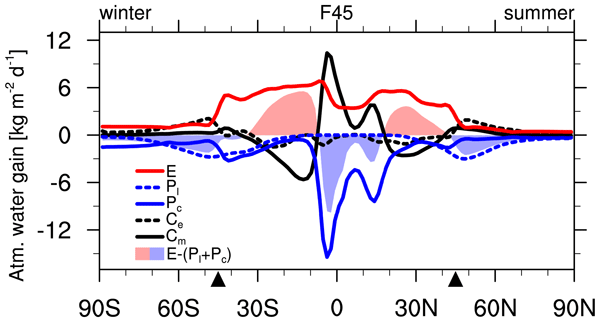
Fumiaki Ogawa and Thomas Spengler
Weather Clim. Dynam., 5, 1031–1042, https://doi.org/10.5194/wcd-5-1031-2024, https://doi.org/10.5194/wcd-5-1031-2024, 2024
Short summary
Short summary
The exchange of energy and moisture between the atmosphere and ocean is maximised along strong meridional contrasts in sea surface temperature, such as across the Gulf Stream and Kuroshio. We find that these strong meridional contrasts confine and determine the position of evaporation and precipitation, as well as storm occurrence and intensity. The general intensity of the water cycle and storm activity, however, is determined by the underlying absolute sea surface temperature.
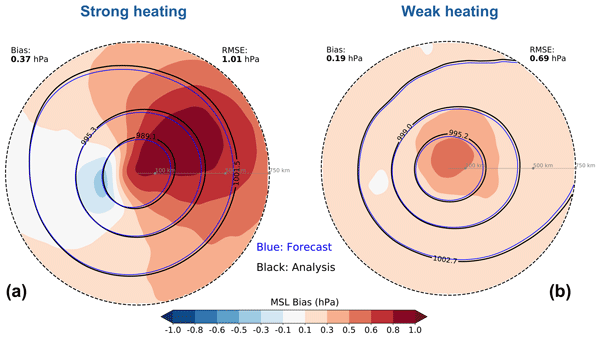
Qidi Yu, Clemens Spensberger, Linus Magnusson, and Thomas Spengler
Weather Clim. Dynam., 7, 1117–1131, https://doi.org/10.5194/wcd-7-1117-2026, https://doi.org/10.5194/wcd-7-1117-2026, 2026
Short summary
Short summary
Forecast biases of winter extratropical cyclones are quantified by varying diabatic heating intensity. A southwest shift and underestimated intensity are found in the strong heating group. The weaker heating group mainly shows an intensity bias. Specific biases are identified for wind, moisture, temperature, and upper-level circulation fields. Findings highlight that representing moist processes and their interaction with atmospheric dynamics is a key area for future model developments.
Qidi Yu, Linus Magnusson, Clemens Spensberger, and Thomas Spengler
EGUsphere, https://doi.org/10.5194/egusphere-2026-3727, https://doi.org/10.5194/egusphere-2026-3727, 2026
Short summary
Short summary
Forecast models still struggle to capture moisture and how it interacts with winter ocean storms. We compared 12-hour forecasts from a leading physics-based model at 9 km resolution and its artificial intelligence model. Both improve on the previous version, yet the former underestimates storm strength, linked to how it represents the vertical distribution of heating, while the latter shows a physical inconsistency: near-surface winds that do not match its pressure pattern.
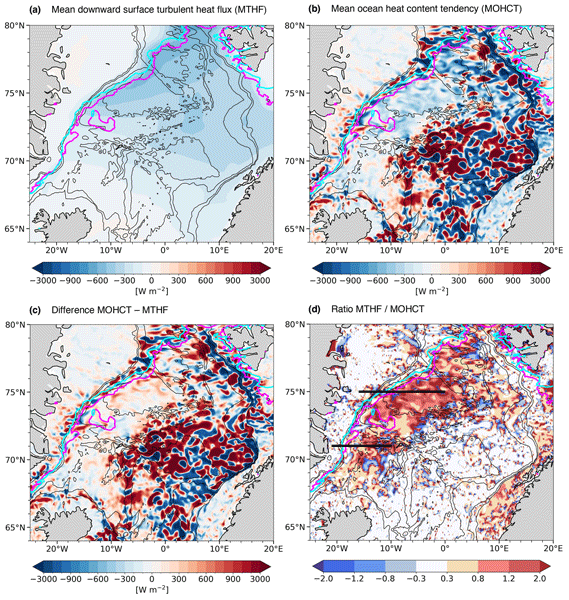
Svenya Chripko, Thomas Spengler, Stefanie Semper, and Kjetil Våge
Ocean Sci., 22, 1711–1726, https://doi.org/10.5194/os-22-1711-2026, https://doi.org/10.5194/os-22-1711-2026, 2026
Short summary
Short summary
Using a high-resolution ocean reanalysis, we provide the first quantification of the three-dimensional ocean response to a strong cold air outbreak in the entire Nordic Seas. We show that the effects of the cold air outbreak on the mixed layer are masked by the effects of lateral heat transport in the eastern part of the region. The effects are only visible in the western Nordic Seas (away from sea ice and currents), which impacts water mass transformation in the area.

Chris Weijenborg and Thomas Spengler
Weather Clim. Dynam., 7, 475–488, https://doi.org/10.5194/wcd-7-475-2026, https://doi.org/10.5194/wcd-7-475-2026, 2026
Short summary
Short summary
The swift succession of storms, referred to as cyclone clustering, is often associated with weather extremes. We introduce a detection scheme for these events and subdivide these into two types. One type is associated with storms that follow each other in space, whereas the other type requires a proximity over time. Cyclone clustering is more frequent during winter and the first type is associated with stronger storms, suggesting that the two types emerge due to different mechanisms.
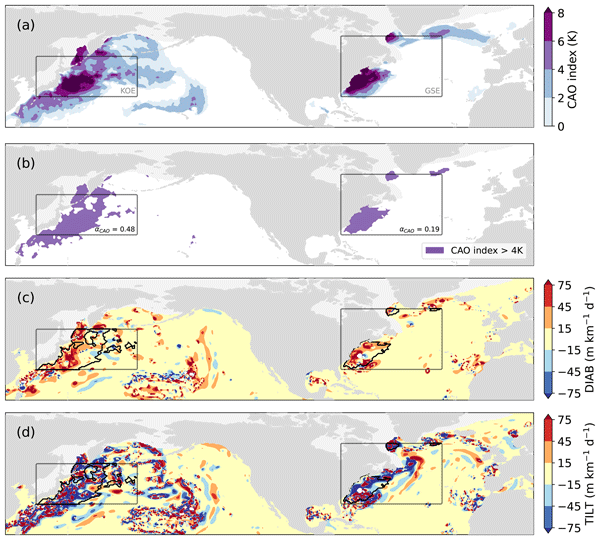
Andrea Marcheggiani and Thomas Spengler
Weather Clim. Dynam., 6, 1479–1489, https://doi.org/10.5194/wcd-6-1479-2025, https://doi.org/10.5194/wcd-6-1479-2025, 2025
Short summary
Short summary
Cold air outbreaks, where cold polar air flows over warmer oceans, help restore midlatitude atmospheric temperature gradients near strong ocean currents, supporting storm formation. Using a novel method, we show that moderate outbreaks cover less than 15 % of the Gulf Stream region but explain up to 40 % of near-surface variability. In the North Pacific, they are more extensive and still account for a large share of variability, highlighting their key role in shaping storm tracks.
Clemens Spensberger, Kjersti Konstali, and Thomas Spengler
Weather Clim. Dynam., 6, 431–446, https://doi.org/10.5194/wcd-6-431-2025, https://doi.org/10.5194/wcd-6-431-2025, 2025
Short summary
Short summary
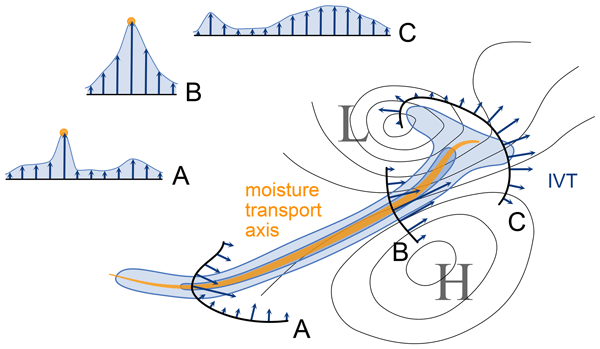
The transport of moisture from warmer and moister to colder and drier regions mainly occurs in brief and narrow bursts. In the mid-latitudes, such bursts are generally referred to as atmospheric rivers; in the Arctic they are often referred to as warm moist intrusions. We introduce a new definition to identify such bursts which is based primarily on their elongated structure. With this more general definition, we show that bursts in moisture transport occur frequently across all climate zones.
Henrik Auestad, Clemens Spensberger, Andrea Marcheggiani, Paulo Ceppi, Thomas Spengler, and Tim Woollings
Weather Clim. Dynam., 5, 1269–1286, https://doi.org/10.5194/wcd-5-1269-2024, https://doi.org/10.5194/wcd-5-1269-2024, 2024
Short summary
Short summary
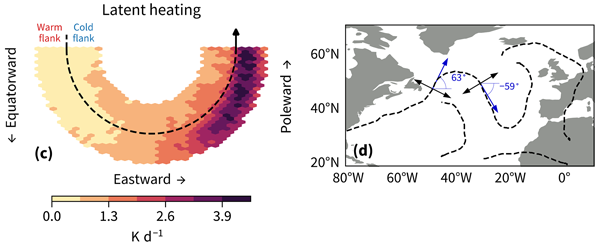
Latent heating due to condensation can influence atmospheric circulation by strengthening or weakening horizontal temperature contrasts. Strong temperature contrasts intensify storms and imply the existence of strong upper tropospheric winds called jets. It remains unclear whether latent heating preferentially reinforces or abates the existing jet. We show that this disagreement is attributable to how the jet is defined, confirming that latent heating reinforces the jet.
Fumiaki Ogawa and Thomas Spengler
Weather Clim. Dynam., 5, 1031–1042, https://doi.org/10.5194/wcd-5-1031-2024, https://doi.org/10.5194/wcd-5-1031-2024, 2024
Short summary
Short summary
The exchange of energy and moisture between the atmosphere and ocean is maximised along strong meridional contrasts in sea surface temperature, such as across the Gulf Stream and Kuroshio. We find that these strong meridional contrasts confine and determine the position of evaporation and precipitation, as well as storm occurrence and intensity. The general intensity of the water cycle and storm activity, however, is determined by the underlying absolute sea surface temperature.
Patrick Martineau, Swadhin K. Behera, Masami Nonaka, Hisashi Nakamura, and Yu Kosaka
Weather Clim. Dynam., 5, 1–15, https://doi.org/10.5194/wcd-5-1-2024, https://doi.org/10.5194/wcd-5-1-2024, 2024
Short summary
Short summary
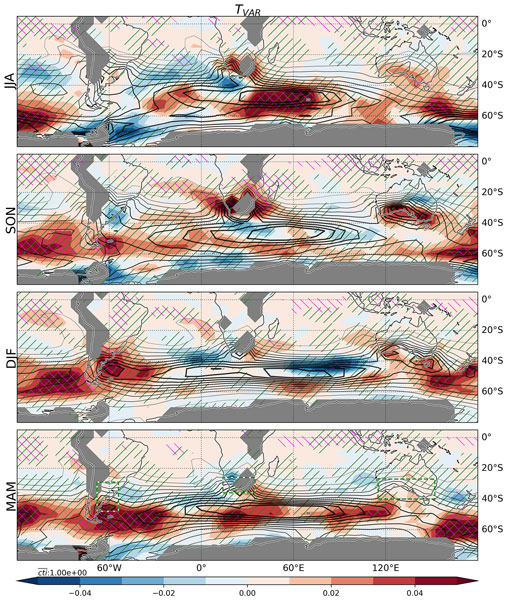
The representation of subweekly near-surface temperature variability trends over the Southern Hemisphere landmasses is compared across multiple atmospheric reanalyses. It is found that there is generally a good agreement concerning the positive trends affecting South Africa and Australia in the spring, and South America in the summer. A more efficient generation of subweekly temperature variance by horizontal temperature fluxes contributes to the observed rise.
Christiane Duscha, Juraj Pálenik, Thomas Spengler, and Joachim Reuder
Atmos. Meas. Tech., 16, 5103–5123, https://doi.org/10.5194/amt-16-5103-2023, https://doi.org/10.5194/amt-16-5103-2023, 2023
Short summary
Short summary
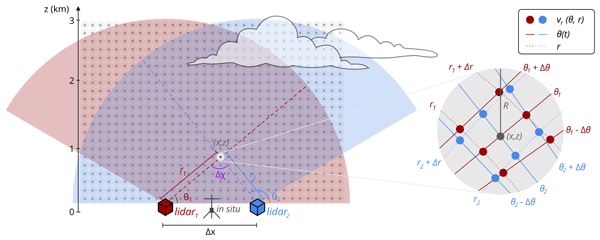
We combine observations from two scanning Doppler lidars to obtain new and unique insights into the dynamic processes inherent to atmospheric convection. The approach complements and enhances conventional methods to probe convection and has the potential to substantially deepen our understanding of this complex process, which is crucial to improving our weather and climate models.
Andrea Marcheggiani and Thomas Spengler
Weather Clim. Dynam., 4, 927–942, https://doi.org/10.5194/wcd-4-927-2023, https://doi.org/10.5194/wcd-4-927-2023, 2023
Short summary
Short summary
There is a gap between the theoretical understanding and model representation of moist diabatic effects on the evolution of storm tracks. We seek to bridge this gap by exploring the relationship between diabatic and adiabatic contributions to changes in baroclinicity. We find reversed behaviours in the lower and upper troposphere in the maintenance of baroclinicity. In particular, our study reveals a link between higher moisture availability and upper-tropospheric restoration of baroclinicity.
Stephen Outten, Camille Li, Martin P. King, Lingling Suo, Peter Y. F. Siew, Hoffman Cheung, Richard Davy, Etienne Dunn-Sigouin, Tore Furevik, Shengping He, Erica Madonna, Stefan Sobolowski, Thomas Spengler, and Tim Woollings
Weather Clim. Dynam., 4, 95–114, https://doi.org/10.5194/wcd-4-95-2023, https://doi.org/10.5194/wcd-4-95-2023, 2023
Short summary
Short summary
Strong disagreement exists in the scientific community over the role of Arctic sea ice in shaping wintertime Eurasian cooling. The observed Eurasian cooling can arise naturally without sea-ice loss but is expected to be a rare event. We propose a framework that incorporates sea-ice retreat and natural variability as contributing factors. A helpful analogy is of a dice roll that may result in cooling, warming, or anything in between, with sea-ice loss acting to load the dice in favour of cooling.
Tim Woollings, Camille Li, Marie Drouard, Etienne Dunn-Sigouin, Karim A. Elmestekawy, Momme Hell, Brian Hoskins, Cheikh Mbengue, Matthew Patterson, and Thomas Spengler
Weather Clim. Dynam., 4, 61–80, https://doi.org/10.5194/wcd-4-61-2023, https://doi.org/10.5194/wcd-4-61-2023, 2023
Short summary
Short summary
This paper investigates large-scale atmospheric variability in polar regions, specifically the balance between large-scale turbulence and Rossby wave activity. The polar regions are relatively more dominated by turbulence than lower latitudes, but Rossby waves are found to play a role and can even be triggered from high latitudes under certain conditions. Features such as cyclone lifetimes, high-latitude blocks, and annular modes are discussed from this perspective.
Clemens Spensberger, Trond Thorsteinsson, and Thomas Spengler
Geosci. Model Dev., 15, 2711–2729, https://doi.org/10.5194/gmd-15-2711-2022, https://doi.org/10.5194/gmd-15-2711-2022, 2022
Short summary
Short summary
In order to understand the atmosphere, we rely on a hierarchy of models ranging from very simple to very complex. Comparing different steps in this hierarchy usually entails comparing different models. Here we combine two such steps that are commonly used in one modelling framework. This makes comparisons both much easier and much more direct.
Cited articles
Blackburn, M. and Hoskins, B. J.: Context and aims of the Aqua-Planet Experiment, J. Meteorol. Soc. Jpn., 91, 1–15, https://doi.org/10.2151/jmsj.2013-A01, 2013. a
Blackburn, M., Williamson, D. L., Nakajima, K., Ohfuchi, W., Takahashi, Y. O., Hayashi, Y.-Y., Nakamura, H., Ishiwatari, M., McGregor, J. L., Borth, H., Wirth, V., Frank, H., Bechtold, P., Wedi, N. P., Tomita, H., Satoh, M., Zhao, M., Held, I. M., Suarez, M. J., Lee, M.-I., Watanabe, M., Kimoto, M., Liu, Y., Wang, Z., Molod, A., Rajendran, K., Kitoh, A., and Stratton, R.: The Aqua-Planet Experiment (APE): CONTROL SST Simulation, J. Meteorol. Soc. Jpn., 91A, 17–56, https://doi.org/10.2151/jmsj.2013-A02, 2013. a, b
Bluestein, H. B.: Observations and Theory of Weather Systems, Vol. 2: Synoptic-Dynamic Meteorology in Midlatitudes, Oxford University Press, New York, ISBN 9780195062687, https://global.oup.com/academic/product/synoptic-dynamic-meteorology-in-midlatitudes-9780195062687?cc=de&lang=en& (last access: 17 November 2026), 1993. a
Booth, J. F., Thompson, L., Patoux, J., and Kelly, K. A.: Sensitivity of midlatitude storm intensification to perturbations in the sea surface temperature near the Gulf Stream, Mon. Weather Rev., 140, 1241–1256, https://doi.org/10.1175/MWR-D-11-00195.1, 2012. a
Brachet, S., Codron, F., Feliks, Y., Ghil, M., Le Treut, H., and Simonnet, E.: Atmospheric circulations induced by a midlatitude SST front: A GCM study, J. Climate, 25, 1847–1853, https://doi.org/10.1175/JCLI-D-11-00329.1, 2012. a
Brayshaw, D. J., Hoskins, B., and Blackburn, M.: The storm-track response to idealized SST perturbations in an aquaplanet GCM, J. Atmos. Sci., 65, 2842–2860, https://doi.org/10.1175/2008JAS2657.1, 2008. a, b
Brayshaw, D. J., Hoskins, B., and Blackburn, M.: The basic ingredients of the North Atlantic storm track. Part I: Land–sea contrast and orography, J. Atmos. Sci., 66, 2539–2558, https://doi.org/10.1175/2009JAS3078.1, 2009. a
Brayshaw, D. J., Hoskins, B., and Blackburn, M.: The basic ingredients of the North Atlantic storm track. Part II: Sea surface temperatures, J. Atmos. Sci., 68, 1784–1805, https://doi.org/10.1175/2011JAS3674.1, 2011. a
Bui, H. and Spengler, T.: On the influence of sea surface temperature distributions on the development of extratropical cyclones, J. Atmos. Sci., 78, 1173–1188, https://doi.org/10.1175/JAS-D-20-0137.1, 2021. a, b, c
Emanuel, K. A.: A scheme for representing cumulus convection in large-scale models, J. Atmos. Sci., 48, 2313–2329, https://doi.org/10.1175/1520-0469(1991)048<2313:ASFRCC>2.0.CO;2, 1991. a
Enomoto, T., Kuwano-Yoshida, A., Komori, N., and Ohfuchi, W.: Description of AFES 2: Improvements for high-resolution and coupled simulations, in: High resolution numerical modelling of the atmosphere and ocean, Springer, 77–97, https://doi.org/10.1007/978-0-387-49791-4_5, 2008. a
Graff, L. S. and LaCasce, J.: Changes in the extratropical storm tracks in response to changes in SST in an AGCM, J. Climate, 25, 1854–1870, https://doi.org/10.1175/JCLI-D-11-00174.1, 2012. a
Grise, K. M. and Davis, S. M.: Hadley cell expansion in CMIP6 models, Atmos. Chem. Phys., 20, 5249–5268, https://doi.org/10.5194/acp-20-5249-2020, 2020. a
Haualand, K. F. and Spengler, T.: Direct and indirect effects of surface fluxes on moist baroclinic development in an idealized framework, J. Atmos. Sci., 77, 3211–3225, https://doi.org/10.1175/JAS-D-19-0328.1, 2020. a
Hersbach, H., Bell, B., Berrisford, P., Hirahara, S., Horányi, A., Muñoz-Sabater, J., Nicolas, J., Peubey, C., Radu, R., Schepers, D., Simmons, A., Soci, C., Abdalla, S., Abellan, X., Balsamo, G., Bechtold, P., Biavati, G., Bidlot, J., Bonavita, M., De Chiara, G., Dahlgren, P., Dee, D., Diamantakis, M., Dragani, R., Flemming, J., Forbes, R., Fuentes, M., Geer, A., Haimberger, L., Healy, S., Hogan, R. J., Hólm, E., Janisková, M., Keeley, S., Laloy-aux, P., Lopez, P., Lupu, C., Radnoti, G., de Rosnay, P., Rozum, I., Vamborg, F., Villaume, S., and Thépaut, J.-N.: The ERA5 global reanalysis, Q. J. Roy. Meteor. Soc., 146, 1999–2049, https://doi.org/10.1002/qj.3803, 2020. a
Hirata, H., Kawamura, R., Kato, M., and Shinoda, T.: Response of rapidly developing extratropical cyclones to sea surface temperature variations over the western Kuroshio–Oyashio confluence region, J. Geophys. Res.-Atmos., 121, 3843–3858, https://doi.org/10.1002/2015JD024391, 2016. a
Hotta, D. and Nakamura, H.: On the significance of the sensible heat supply from the ocean in the maintenance of the mean baroclinicity along storm tracks, J. Climate, 24, 3377–3401, https://doi.org/10.1175/2010JCLI3910.1, 2011. a, b
Kosaka, Y., Kobayashi, S., Harada, Y., Kobayashi, C., Naoe, H., Yoshimoto, K., Harada, M., Goto, N., Chiba, J., Miyaoka, K., Sekiguchi, R., Deushi, M., Kamahori, H., Nakaegawa, T., Tanaka, T. Y., Tokuhiro, T., Sato, Y., Matsushita, Y., and Onogi, K.: The JRA-3Q reanalysis, J. Meteorol. Soc. Jpn., 102, 49–109, https://doi.org/10.2151/jmsj.2024-004, 2024. a
Kuwano-Yoshida, A. and Minobe, S.: Storm-track response to SST fronts in the northwestern Pacific region in an AGCM, J. Climate, 30, 1081–1102, https://doi.org/10.1175/JCLI-D-16-0331.1, 2017. a, b
Kuwano-Yoshida, A., Enomoto, T., and Ohfuchi, W.: An improved PDF cloud scheme for climate simulations, Q. J. Roy. Meteor. Soc.y, 136, 1583–1597, https://doi.org/10.1002/qj.660, 2010. a
Louis, J.-F.: A parametric model of vertical eddy fluxes in the atmosphere, Bound.-Lay. Meteorol., 17, 187–202, https://doi.org/10.1007/BF00117978, 1979. a
Lu, J., Chen, G., and Frierson, D. M.: The position of the midlatitude storm track and eddy-driven westerlies in aquaplanet AGCMs, J. Atmos. Sci., 67, 3984–4000, https://doi.org/10.1175/2010JAS3477.1, 2010. a
Ma, X., Chang, P., Saravanan, R., Montuoro, R., Nakamura, H., Wu, D., Lin, X., and Wu, L.: Importance of resolving Kuroshio front and eddy influence in simulating the North Pacific storm track, J. Climate, 30, 1861–1880, https://doi.org/10.1175/JCLI-D-16-0154.1, 2017. a
Marcheggiani, A. and Ambaum, M. H. P.: The role of heat-flux–temperature covariance in the evolution of weather systems, Weather Clim. Dynam., 1, 701–713, https://doi.org/10.5194/wcd-1-701-2020, 2020. a
Marcheggiani, A. and Spengler, T.: Diabatic effects on the evolution of storm tracks, Weather Clim. Dynam., 4, 927–942, https://doi.org/10.5194/wcd-4-927-2023, 2023. a
Marcheggiani, A. and Spengler, T.: Cold air outbreaks drive near-surface baroclinicity variability over storm track entrance regions in the Northern Hemisphere, Weather Clim. Dynam., 6, 1479–1489, https://doi.org/10.5194/wcd-6-1479-2025, 2025. a
Marcheggiani, A., Dacre, H., Spensberger, C., and Spengler, T.: Weather features drive free-tropospheric baroclinicity variability in the North Atlantic storm track, Q. J. Roy. Meteor. Soc., 151, e5061, https://doi.org/10.1002/qj.5061, 2025. a
Mellor, G. L. and Yamada, T.: Development of a turbulence closure model for geophysical fluid problems, Rev. Geophys., 20, 851–875, https://doi.org/10.1029/RG020i004p00851, 1982. a
Michel, C. and Rivière, G.: Sensitivity of the position and variability of the eddy-driven jet to different SST profiles in an aquaplanet general circulation model, J. Atmos. Sci., 71, 349–371, https://doi.org/10.1175/JAS-D-13-074.1, 2014. a, b
Nakajima, T. and Tanaka, M.: Matrix formulations for the transfer of solar radiation in a plane-parallel scattering atmosphere, J. Quant. Spectrosc. Ra., 35, 13–21, https://doi.org/10.1016/0022-4073(86)90088-9, 1986. a
Nakamura, H. and Shimpo, A.: Seasonal Variations in the Southern Hemisphere Storm Tracks and Jet Streams as Revealed in a Reanalysis Dataset, J. Climate, 17, 1828–1844, https://doi.org/10.1175/1520-0442(2004)017<1828:SVITSH>2.0.CO;2, 2004. a
Nakamura, H., Sampe, T., Tanimoto, Y., and Shimpo, A.: Observed associations among storm tracks, jet streams and midlatitude oceanic fronts, Earth’s Climate: The Ocean–Atmosphere Interaction, Geophys. Monogr., 147, 329–345, https://doi.org/10.1029/147GM18, 2004. a, b, c, d
Neale, R. B. and Hoskins, B. J.: A standard test for AGCMs including their physical parametrizations: I: The proposal, Atmos. Sci. Lett., 1, 101–107, https://doi.org/10.1006/asle.2000.0019, 2000. a, b, c
Nonaka, M., Nakamura, H., Taguchi, B., Komori, N., Kuwano-Yoshida, A., and Takaya, K.: Air–sea heat exchanges characteristic of a prominent midlatitude oceanic front in the South Indian Ocean as simulated in a high-resolution coupled GCM, J. Climate, 22, 6515–6535, https://doi.org/10.1175/2009JCLI2960.1, 2009. a
Ogawa, F. and Marcheggiani, A.: Model, input data, and run scripts for “Idealised framework to prescribe sea surface temperatures to investigate the atmospheric circulation response”, Zenodo [code and data set], https://doi.org/10.5281/zenodo.19550344, 2026. a
Ogawa, F. and Spengler, T.: Prevailing surface wind direction during air–sea heat exchange, J. Climate, 32, 5601–5617, https://doi.org/10.1175/JCLI-D-18-0752.1, 2019. a
Ogawa, F., Nakamura, H., Nishii, K., Miyasaka, T., and Kuwano-Yoshida, A.: Dependence of the climatological axial latitudes of the tropospheric westerlies and storm tracks on the latitude of an extratropical oceanic front, Geophys. Res. Lett., 39, https://doi.org/10.1029/2011GL049922, 2012. a, b, c, d, e, f, g, h, i, j
Ogawa, F., Omrani, N.-E., Nishii, K., Nakamura, H., and Keenlyside, N.: Ozone-induced climate change propped up by the Southern Hemisphere oceanic front, Geophys. Res. Lett., 42, 10056–10063, https://doi.org/10.1002/2015GL066538, 2015. a
Ogawa, F., Nakamura, H., Nishii, K., Miyasaka, T., and Kuwano-Yoshida, A.: Importance of midlatitude oceanic frontal zones for the annular mode variability: Interbasin differences in the southern annular mode signature, J. Climate, 29, 6179–6199, https://doi.org/10.1175/JCLI-D-15-0885.1, 2016. a, b, c, d, e
Ohfuchi, W., Nakamura, H., Yoshioka, M., Enomoto, T., Takaya, K., Peng, X., Yamane, S., Nishimura, T., Kurihara, Y., and Ninomiya, K.: 10-km mesh meso-scale resolving simulations of the global atmosphere on the Earth Simulator: Preliminary outcomes of AFES (AGCM for the Earth Simulator), J. Earth Simulator, 1, 8–34, https://doi.org/10.32131/jes.1.8, 2004. a
Okajima, S., Nakamura, H., and Spengler, T.: Midlatitude oceanic fronts strengthen the hydrological cycle between cyclones and anticyclones, Geophys. Res. Lett., 51, e2023GL106187, https://doi.org/10.1029/2023GL106187, 2024. a
O'Reilly, C. H., Minobe, S., Kuwano-Yoshida, A., and Woollings, T.: The Gulf Stream influence on wintertime North Atlantic jet variability, Q. J. Roy. Meteor. Soc., 143, 173–183, https://doi.org/10.1002/qj.2907, 2017. a
O'Reilly, C. H., Minobe, S., and Kuwano-Yoshida, A.: The influence of the Gulf Stream on wintertime European blocking, Clim. Dynam., 47, 1545–1567, https://doi.org/10.1007/s00382-015-2919-0, 2016. a
Papritz, L. and Spengler, T.: Analysis of the slope of isentropic surfaces and its tendencies over the North Atlantic, Q. J. Roy. Meteor. Soc., 141, 3226–3238, https://doi.org/10.1002/qj.2605, 2015. a
Parfitt, R., Czaja, A., Minobe, S., and Kuwano-Yoshida, A.: The atmospheric frontal response to SST perturbations in the Gulf Stream region, Geophys. Res. Lett., 43, 2299–2306, https://doi.org/10.1002/2016GL067723, 2016. a
Piazza, M., Terray, L., Boé, J., Maisonnave, E., and Sanchez-Gomez, E.: Influence of small-scale North Atlantic sea surface temperature patterns on the marine boundary layer and free troposphere: A study using the atmospheric ARPEGE model, Clim. Dynam., 46, 1699–1717, https://doi.org/10.1007/s00382-015-2669-z, 2016. a
Sampe, T., Nakamura, H., Goto, A., and Ohfuchi, W.: Significance of a midlatitude SST frontal zone in the formation of a storm track and an eddy-driven westerly jet, J. Climate, 23, 1793–1814, https://doi.org/10.1175/2009JCLI3163.1, 2010. a, b
Schemm, S. and Röthlisberger, M.: Aquaplanet simulations with winter and summer hemispheres: model setup and circulation response to warming, Weather Clim. Dynam., 5, 43–63, https://doi.org/10.5194/wcd-5-43-2024, 2024. a, b, c, d
Seo, H., O’Neill, L. W., Bourassa, M. A., Czaja, A., Drushka, K., Edson, J. B., Fox-Kemper, B., Frenger, I., Gille, S. T., Kirtman, B. P., Minobe, S., Pendergrass, A. G., Renault, L., Roberts, M. J., Schneider, N., Small, R. J., Stoffelen, A., and Wang, Q.: Ocean Mesoscale and Frontal-Scale Ocean–Atmosphere Interactions and Influence on Large-Scale Climate: A Review, J. Climate, 36, 1981–2013, https://doi.org/10.1175/JCLI-D-21-0982.1, 2023. a
Small, R. J., Tomas, R. A., and Bryan, F. O.: Storm track response to ocean fronts in a global high-resolution climate model, Clim. Dynam., 43, 805–828, https://doi.org/10.1007/s00382-013-1980-9, 2014. a, b, c
Taguchi, B., Nakamura, H., Nonaka, M., and Xie, S.-P.: Influences of the Kuroshio/Oyashio Extensions on air–sea heat exchanges and storm-track activity as revealed in regional atmospheric model simulations for the 2003/04 cold season, J. Climate, 22, 6536–6560, https://doi.org/10.1175/2009JCLI2910.1, 2009. a, b
Tsopouridis, L., Spengler, T., and Spensberger, C.: Smoother versus sharper Gulf Stream and Kuroshio sea surface temperature fronts: effects on cyclones and climatology, Weather Clim. Dynam., 2, 953–970, https://doi.org/10.5194/wcd-2-953-2021, 2021a. a
Tsopouridis, L., Spensberger, C., and Spengler, T.: Characteristics of cyclones following different pathways in the Gulf Stream region, Q. J. Roy. Meteor. Soc., 147, 392–407, https://doi.org/10.1002/qj.3924, 2021b. a
Tsopouridis, L., Spensberger, C., and Spengler, T.: Cyclone intensification in the Kuroshio region and its relation to the sea surface temperature front and upper-level forcing, Q. J. Roy. Meteor. Soc., 147, 485–500, https://doi.org/10.1002/qj.3929, 2021c. a
Uno, I., Cai, X.-M., Steyn, D. G., and Emori, S.: A simple extension of the Louis method for rough surface layer modelling, Bound.-Lay. Meteor., 76, 395–409, https://doi.org/10.1007/BF00709241, 1995. a
Weijenborg, C. and Spengler, T.: Diabatic heating as a pathway for cyclone clustering encompassing the extreme storm Dagmar, Geophys. Res. Lett., 47, e2019GL085777, https://doi.org/10.1029/2019GL085777, 2020. a
Williamson, D. L., Blackburn, M., Nakajima, K., Ohfuchi, W., Takahashi, Y. O., Hayashi, Y.-Y., Nakamura, H., Ishiwatari, M., McGregor, J. L., Borth, H., Wirth, V., Frank, H., Bechtold, P., Wedi, N. P., Tomita, H., Satoh, M., Zhao, M., Held, I. M., Suarez, M. J., Lee, M.-I., Watanabe, M., Kimoto, M., Liu, Y., Wang, Z., Molod, A., Rajendran, K., Kitoh, A., and Stratton, R.: The Aqua-Planet Experiment (APE): Response to changed meridional SST profile, J. Meteorol. Soc. Jpn., 91A, 57–89, https://doi.org/10.2151/jmsj.2013-A03, 2013. a, b
Yao, Y., Zhong, Z., and Yang, X.-Q.: Numerical experiments of the storm track sensitivity to oceanic frontal strength within the Kuroshio/Oyashio Extensions, J. Geophys. Res.-Atmos., 121, 2888–2900, https://doi.org/10.1002/2015JD024381, 2016. a
Short summary
We propose an idealised framework to study how the shape of midlatitude SST fronts controls the atmospheric general circulation. The new SST profile enables separate changes in the geometric properties of extratropical SST fronts, such as strength, width, position, and maximum SST. The response of storm tracks, jets, and the water cycle to changes in frontal parameters are briefly discussed. This approach provides a basis for more targeted studies on the role of SST fronts on the atmosphere.
We propose an idealised framework to study how the shape of midlatitude SST fronts controls the...


Altmetrics
Final-revised paper
Preprint