
Articles | Volume 19, issue 22
https://doi.org/10.5194/gmd-19-10897-2026
© Author(s) 2026. This work is distributed under
the Creative Commons Attribution 4.0 License.
the Creative Commons Attribution 4.0 License.
https://doi.org/10.5194/gmd-19-10897-2026
© Author(s) 2026. This work is distributed under
the Creative Commons Attribution 4.0 License.
the Creative Commons Attribution 4.0 License.
Model description paper
| 
17 Nov 2026
Model description paper |
| 17 Nov 2026
| 17 Nov 2026
Development of ACFIRE version 1.0: a mesoscale model with forest canopy and fire behavior submodels
Michael T. Kiefer
Department of Geography, Environment, and Spatial Sciences, Michigan State University, East Lansing, MI, 48824, USA

Department of Geography, Environment, and Spatial Sciences, Michigan State University, East Lansing, MI, 48824, USA
Joseph J. Charney
Northern Research Station, USDA Forest Service, East Lansing, MI, 48823, USA
Xindi Bian
Northern Research Station, USDA Forest Service, East Lansing, MI, 48823, USA
Warren E. Heilman
Northern Research Station, USDA Forest Service, East Lansing, MI, 48823, USA
Joseph Seitz
Department of Geography, Environment, and Spatial Sciences, Michigan State University, East Lansing, MI, 48824, USA
Nicholas S. Skowronski
Northern Research Station, USDA Forest Service, Morgantown, WV 26505, USA
Kenneth L. Clark
Northern Research Station, USDA Forest Service, New Lisbon, NJ 08064, USA
Michael R. Gallagher
Northern Research Station, USDA Forest Service, New Lisbon, NJ 08064, USA
Matthew Patterson
Northern Research Station, USDA Forest Service, Morgantown, WV 26505, USA
Jason Cole
Northern Research Station, USDA Forest Service, Morgantown, WV 26505, USA
Eric V. Mueller
National Institute of Standards and Technology, Gaithersburg, MD 20899, USA
Xiaolin Hu
Department of Computer Science, Georgia State University, Atlanta, GA, 30303, USA
Related authors
Nicholas S. Skowronski, Xindi Bian, Zakary J. Campbell-Lochrie, Joseph J. Charney, Kenneth L Clark, Jason A. Cole, Julia Defeo, Giovanni Di Cristina, Alexis I. Everland, Michael R. Gallagher, Rory M. Hadden, Warren E. Heilman, John L. Hom, Seong-kyun Im, Michael T. Kiefer, Robert L. Kremens, William E. Mell, Eric V. Mueller, Matthew M. Patterson, Ali Rangwala, Joseph Seitz, Albert J. Simeoni, Carlos Walker-Ravena, and Shiyuan Zhong
Earth Syst. Sci. Data Discuss., https://doi.org/10.5194/essd-2026-11, https://doi.org/10.5194/essd-2026-11, 2026
Preprint under review for ESSD
Short summary
Short summary
We present an open dataset from 35 carefully controlled prescribed fires conducted in 2018–2019 on small forest plots in the New Jersey Pinelands, USA. Fire spread and interactions with the atmosphere were documented in detail over time, including measurements of wind, temperature, gases, heat release, fuel moisture, and fuel consumption before and after burning. The dataset supports improved understanding of fire behavior and development of wildfire models.

Joseph Seitz, Shiyuan Zhong, Joseph J. Charney, Warren E. Heilman, Kenneth L. Clark, Xindi Bian, Nicholas S. Skowronski, Michael R. Gallagher, Matthew Patterson, Jason Cole, Michael T. Kiefer, Rory Hadden, and Eric Mueller
Atmos. Chem. Phys., 24, 1119–1142, https://doi.org/10.5194/acp-24-1119-2024, https://doi.org/10.5194/acp-24-1119-2024, 2024
Short summary
Short summary
Atmospheric turbulence affects wildland fire behaviors and heat and smoke transfer. Turbulence data collected during an experimental fire on a 10 m x 10 m densely instrumented burn plot are analyzed, and the results reveal substantial heterogeneity in fire-induced turbulence characteristics across the small plot, which highlights the necessity for coupled atmosphere–fire behavior models to have 1–2 m grid spacing so that adequate simulations of fire behavior and smoke transfer can be achieved.
Lejiang Yu, Shiyuan Zhong, Timo Vihma, and Jinlun Zhang
EGUsphere, https://doi.org/10.5194/egusphere-2026-4204, https://doi.org/10.5194/egusphere-2026-4204, 2026
This preprint is open for discussion and under review for The Cryosphere (TC).
Short summary
Short summary
Sea ice in the Weddell Sea, east of the Antarctic Peninsula, is an important part of the global climate system. Summertime sea-ice concentration variability has increased in the northern Weddell Sea but decreased in the southern Weddell Sea. These opposite changes are partly linked to large-scale atmospheric patterns connected to tropical regions near Australia and the Indian Ocean.
Nicholas S. Skowronski, Xindi Bian, Zakary J. Campbell-Lochrie, Joseph J. Charney, Kenneth L Clark, Jason A. Cole, Julia Defeo, Giovanni Di Cristina, Alexis I. Everland, Michael R. Gallagher, Rory M. Hadden, Warren E. Heilman, John L. Hom, Seong-kyun Im, Michael T. Kiefer, Robert L. Kremens, William E. Mell, Eric V. Mueller, Matthew M. Patterson, Ali Rangwala, Joseph Seitz, Albert J. Simeoni, Carlos Walker-Ravena, and Shiyuan Zhong
Earth Syst. Sci. Data Discuss., https://doi.org/10.5194/essd-2026-11, https://doi.org/10.5194/essd-2026-11, 2026
Preprint under review for ESSD
Short summary
Short summary
We present an open dataset from 35 carefully controlled prescribed fires conducted in 2018–2019 on small forest plots in the New Jersey Pinelands, USA. Fire spread and interactions with the atmosphere were documented in detail over time, including measurements of wind, temperature, gases, heat release, fuel moisture, and fuel consumption before and after burning. The dataset supports improved understanding of fire behavior and development of wildfire models.
Joseph Seitz, Shiyuan Zhong, Joseph J. Charney, Warren E. Heilman, Kenneth L. Clark, Xindi Bian, Nicholas S. Skowronski, Michael R. Gallagher, Matthew Patterson, Jason Cole, Michael T. Kiefer, Rory Hadden, and Eric Mueller
Atmos. Chem. Phys., 24, 1119–1142, https://doi.org/10.5194/acp-24-1119-2024, https://doi.org/10.5194/acp-24-1119-2024, 2024
Short summary
Short summary
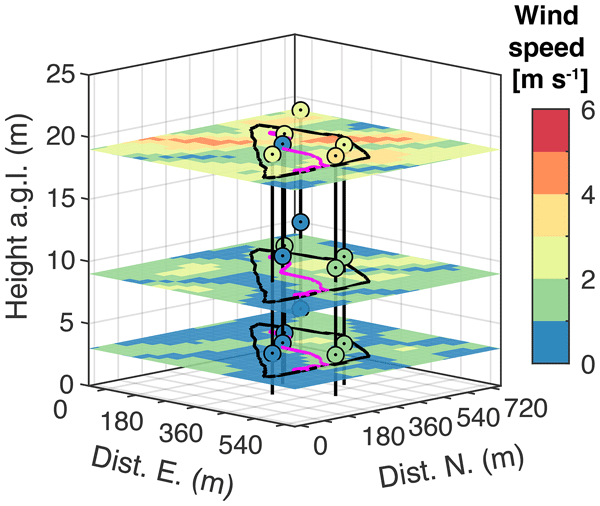
Atmospheric turbulence affects wildland fire behaviors and heat and smoke transfer. Turbulence data collected during an experimental fire on a 10 m x 10 m densely instrumented burn plot are analyzed, and the results reveal substantial heterogeneity in fire-induced turbulence characteristics across the small plot, which highlights the necessity for coupled atmosphere–fire behavior models to have 1–2 m grid spacing so that adequate simulations of fire behavior and smoke transfer can be achieved.
Lejiang Yu, Shiyuan Zhong, Timo Vihma, Cuijuan Sui, and Bo Sun
EGUsphere, https://doi.org/10.5194/egusphere-2023-2436, https://doi.org/10.5194/egusphere-2023-2436, 2023
Preprint archived
Short summary
Short summary
In contrary to the current understanding, there can be a strong connection between ENSO and the South Atlantic Subtropical Dipole (SASD). It is highly probable that the robust inverse correlation between ENSO and SASD will persist in the future. The ENSO-SASD correlation exhibits substantial multi-decadal variability over the course of a century. The change in the ENSO-SASD relation can be linked to changes in ENSO regime and convective activities over the central South Pacific Ocean.
Lejiang Yu, Shiyuan Zhong, Timo Vihma, Cuijuan Sui, and Bo Sun
Atmos. Chem. Phys., 23, 345–353, https://doi.org/10.5194/acp-23-345-2023, https://doi.org/10.5194/acp-23-345-2023, 2023
Short summary
Short summary
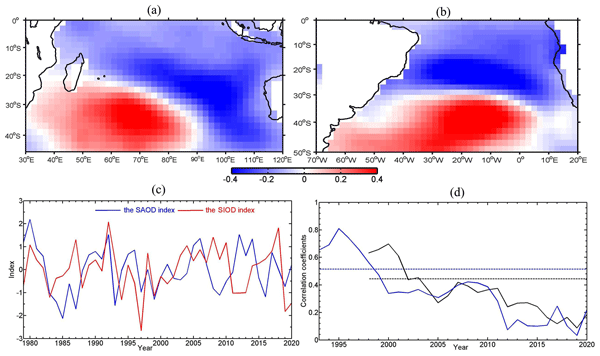
Previous studies have noted a significant relationship between the Subtropical Indian Ocean Dipole and the South Atlantic Ocean Dipole indices, but little is known about the stability of their relationship. We found a significant positive correlation between the two indices prior to the year 2000 but an insignificant correlation afterwards.
Michael T. Kiefer, Warren E. Heilman, Shiyuan Zhong, Joseph J. Charney, Xindi Bian, Nicholas S. Skowronski, Kenneth L. Clark, Michael R. Gallagher, John L. Hom, and Matthew Patterson
Geosci. Model Dev., 15, 1713–1734, https://doi.org/10.5194/gmd-15-1713-2022, https://doi.org/10.5194/gmd-15-1713-2022, 2022
Short summary
Short summary
We examine methods used to represent wildland fire sensible heat release in atmospheric models. A set of simulations are evaluated using observations from a low-intensity prescribed fire in the New Jersey Pine Barrens. The comparison is motivated by the need for guidance regarding the representation of low-intensity fire sensible heating in atmospheric models. Such fires are prevalent during prescribed fire operations and can impact the health and safety of fire personnel and the public.
Cited articles
Ahmadov, R., Grell, G., James, E., Freitas, S., Pereira, G., Csiszar, I., Tsidulko, M., Pierce, B., McKeen, S., Peckham, S., Alexander, C., Saide, P., and Benjamin, S.: A High Resolution Coupled Meteorology-Smoke Modeling System HRRR-Smoke to Simulate Air Quality over the CONUS Domain in Real Time, Geophys. Res. Abstr., 19, EGU2017–10841, https://meetingorganizer.copernicus.org/EGU2017/EGU2017-10841.pdf (last access: 3 April 2025), 2017.
Ahmadov, R., James, E., Grell, G., Alexander, C., and McKeen, S.: Operational Implementation of the Smoke Forecasting Capability in the RAP/HRRR Numerical Weather Prediction System, in: EGU General Assembly 2021, online, 19–30 April 2021, EGU21-14268, https://doi.org/10.5194/egusphere-egu21-14268, 2021.
Albini, F. A. and Baughman, R. G.: Estimating windspeeds for predicting wildland fire behavior, Res. Pap. INT-221, U.S. Department of Agriculture, Forest Service, Intermountain Forest and Range Experiment Station, https://www.frames.gov/documents/behaveplus/publications/Albini_and_Baughman_1979_INT-RP-221_ocr.pdf (last access: 30 June 2025), 1979.
Anderson, H. E.: Aids to Determining Fuel Models for Estimating Fire Behavior, Gen. Tech. Rep. INT-122, U.S. Department of Agriculture, Forest Service, Intermountain Forest and Range Experiment Station, https://www.fs.usda.gov/rm/pubs_int/int_gtr122.pdf (last access: 3 April 2025), 1982.
Andrews, P. L.: BEHAVE: fire behavior prediction and fuel modeling system – BURN Subsystem, Part 1, General Technical Report INT-194, U.S. Department of Agriculture, Forest Service, Intermountain Research Station, Ogden, UT, 130 p https://doi.org/10.2737/INT-GTR-194 (last access: 24, November 2025), 1986.
Andrews, P. L.: Modeling Wind Adjustment Factor and Midflame Wind Speed for Rothermel's Surface Fire Spread Model, U.S. Department of Agriculture, Forest Service, Intermountain Forest and Range Experiment Station, https://www.fs.usda.gov/rm/pubs/rmrs_gtr266.pdf (last access: 3 April 2025), 2012.
Andrews, P. L. and Chase, C. H.: BEHAVE: fire behavior prediction and fuel modeling system – BURN subsystem, Part 2, General Technical Report INT-GTR-260, U.S. Department of Agriculture, Forest Service, Intermountain Research Station, Ogden, UT, 93 p. https://doi.org/10.2737/INT-GTR-260 (last access: 24, November 2025), 1989.
Banerjee, T.: The Role of Canopy Turbulence in Wildland Fire Behavior, Annu. Rev. Fluid Mech., 58, 473–502, https://doi.org/10.1146/annurev-fluid-112723-062216, 2026.
Baughman, R. G. and Albini, F. A.: Estimating Midflame Windspeeds, in: Proceedings of Sixth Conference on Fire and Forest Meteorology, 22–24 April 1980, Seattle, WA, USA, https://www.frames.gov/documents/behaveplus/publications/Baughman_and_Albini_1980_EstMidflamWind_ocr.pdf (last access: 3 April 2025), 1980.
Burgan, R. E. and Rothermel, R. C.: BEHAVE: fire behavior prediction and fuel modeling system–FUEL subsystem, General Technical Report INT-167, U.S. Department of Agriculture, Forest Service, Intermountain Forest and Range Experiment Station, Ogden, UT, 126 p. https://doi.org/10.2737/INT-GTR-167 (last access: 24, November 2025), 1984.
Charney, J. J., Kiefer, M. T., Zhong, S., Heilman, W. E., Nikolic, J., Bian, X., Hom, J. L., Clark, K. L., Skowronski, N. S., Gallagher, M. R., Patterson, M., Liu, Y., and Hawley, C.: Assessing Forest Canopy Impacts on Smoke Concentrations Using a Coupled Numerical Model, Atmosphere, 10, 273, https://doi.org/10.3390/atmos10050273, 2019.
Cheney, N. P., Gould, J. S., and Catchpole, W. R.: The Influence of Fuel, Weather and Fire Shape Variables on Fire-Spread in Grasslands, Int. J. Wildland Fire, 3, 31–44, https://doi.org/10.1071/WF9930031, 1993.
Chou, M.-D.: Parameterization for the Absorption of Solar Radiation by O2 and CO2 with Application to Climate Studies, J. Climate, 3, 209–217, https://doi.org/10.1175/1520-0442(1990)003<0209:PFTAOS>2.0.CO;2, 1990.
Chou, M.-D.: A Solar Radiation Model for Use in Climate Studies, J. Atmos. Sci., 49, 762–772, https://doi.org/10.1175/1520-0469(1992)049<0762:ASRMFU>2.0.CO;2, 1992.
Chou, M.-D. and Suarez, M. J.: An Efficient Thermal Infrared Radiation Parameterization for use in General Circulation Models, Tech. Rep. Tech. Memo 104606, NASA, NASA Center for Aerospace Information, 800 Elkridge Landing Road, Linthicum Heights, MD 21090-2934, https://ntrs.nasa.gov/api/citations/19950009331/downloads/19950009331.pdf (last access: 13 November 2026), 1994.
Chow, F. K., Schär, C., Ban, N., Lundquist, K. A., Schlemmer, L., and Shi, X.: Crossing Multiple Gray Zones in the Transition from Mesoscale to Microscale Simulation over Complex Terrain, Atmosphere, 10, 274, https://doi.org/10.3390/atmos10050274, 2019.
Chow, F. K., Yu, K. A., Young, A., James, E., Grell, G. A., Csiszar, I., Tsidulko, M., Freitas, S., Pereira, G., Giglio, L., Friberg, M. D., and Ahmadov, R.: High-Resolution Smoke Forecasting for the 2018 Camp Fire in California, B. Am. Meteorol. Soc., 103, E1531–E1552,https://doi.org/10.1175/BAMS-D-20-0329.1, 2022.
Clark, K. L., Heilman, W. E., Skowronski, N. S., Gallagher, M. R., Mueller, E., Hadden, R. M., and Simeoni, A.: Fire Behavior, Fuel Consumption, and Turbulence and Energy Exchange during Prescribed Fires in Pitch Pine Forests, Atmosphere, 11, 242, https://doi.org/10.3390/atmos11030242, 2020.
Clark, T. L., Jenkins, M. A., Coen, J., and Packham, D.: A Coupled Atmospheric-Fire Model: Convective Feedback on Fire Line Dynamics, J. Appl. Meteorol., 35, 875–901, https://doi.org/10.1175/1520-0450(1996)035%3C0875:ACAMCF%3E2.0.CO;2, 1996a.
Clark, T. L., Jenkins, M. A., Coen, J., and Packham, D. A.: A Coupled Atmosphere-Fire Model: Role of the Convective Froude Number and Dynamic Fingering at the Fireline, Int. J. Wildland Fire, 6, 177–190, https://doi.org/10.1071/WF9960177, 1996b.
Clark, T. L., Radke, L., Coen, J., and Middleton, D.: Analysis of Scale-Scale Convective Dynamics in a Crown Fire Using Infrared Video Camera Imagery, J. Appl. Meteorol., 38, 1401–1420, https://doi.org/10.1175/1520-0450(1999)038%3C1401:AOSSCD%3E2.0.CO;2, 1999.
Clark, T. L., Coen, J. L., and Latham, D.: Description of a Coupled Atmosphere-Fire Model, Int. J. Wildland Fire, 13, 49–63, https://doi.org/10.1071/WF03043, 2004.
Clements, C. B., Zhong, S., Goodrick, S., Li, J., Potter, B. E., Bian, X., Heilman, W. E., Charney, J. J., Perna, R., Jang, M., and Lee, D.: Observing the Dynamics of Wildland Grass Fires: FireFlux – A Field Validation Experiment, B. Am. Meteorol. Soc., 88, 1369–1382, 2007.
Clements, C. B., Kochanski, A. K., Seto, D., Davis, B., Camacho, C., Lareau, N. P., Contezac, J., Restaino, J., Heilman, W. E., Krueger, S. K., Butler, B., Ottmar, R. D., Vihnanek, R., Flynn, J., Filippi, J.-B., Barboni, T., Hall, D. E., Mandel, J., Jenkins, M. A., O'Brien, J., Hornsby, B., and Teske, C.: The FireFlux II Experiment: A Model-Guided Field Experiment to Improve Understanding of Fire–Atmosphere Interactions and Fire Spread, Int. J. Wildland Fire, 28, 308–326, https://doi.org/10.1071/WF18089, 2019.
Coen, J. L.: Simulation of the Big Elk Fire Using Coupled Atmosphere-Fire Modeling, Int. J. Wildland Fire, 14, 49–59, https://doi.org/10.1071/WF04047, 2005.
Coen, J. L.: Modeling Wildland Fires: A Description of the Coupled Atmosphere-Wildland Fire Environment Model (CAWFE), National Corporation for Atmospheric Research (NCAR) Technical Note NCAR/TN-500+STR, NCAR, https://opensky.ucar.edu/system/files/2024-08/technotes_511.pdf (last access: 3 April 2025), 2013.
Coen, J. L.: Some Requirements for Simulating Wildland Fire Behavior Using Insight from Coupled Weather – Wildland Fire Models, Fire, 1, 6, https://doi.org/10.3390/fire1010006, 2018.
Dahl, N., Xue, H., Hu, X. and Xue, M.: Coupled Fire–Atmosphere Modeling of Wildland Fire Spread Using DEVS-FIRE and ARPS, Nat. Hazards, 77, 1013–1035, https://doi.org/10.1007/s11069-015-1640-y, 2015.
Deardorff, J. W.: Stratocumulus-Capped Mixed Layers Derived from a Three-Dimensional Model, Bound.-Lay. Meteorol., 18, 495–527, https://doi.org/10.1007/BF00119502, 1980.
Dudhia, J.: A History of Mesoscale Model Development, Asia-Pac. J. Atmos. Sci., 50, 121–131, https://doi.org/10.1007/s13143-014-0031-8, 2014.
Dupont, S. and Brunet, Y.: Influence of Foliar Density Profile on Canopy Flow: A Large-Eddy Simulation Study, Agr. Forest. Meteorol., 148, 976–990, https://doi.org/10.1016/j.agrformet.2008.01.014, 2008.
Filippi, J.-B., Bosseur, F., Pialat, X., Santoni, P.-A., Strada, S., and Mari, C.: Simulation of Coupled Fire/Atmosphere Interaction with the MesoNH-ForeFire Models, J. Combust., 2011, 540390, https://doi.org/10.1155/2011/540390, 2011.
Filippi, J.-B., Pialat, X., and Clements, C. B.: Assessment of ForeFire/Meso-NH for Wildland Fire/Atmosphere Coupled Simulation of the FireFlux Experiment, Proc. Combust. Inst., 34, 2633–2640, https://doi.org/10.1016/j.proci.2012.07.022, 2013.
Finney, M. A.: FARSITE: Fire Area Simulator-model development and evaluation, Res. Pap. RMRS-RP-4, Revised 2004, U.S. Department of Agriculture, Forest Service, Rocky Mountain Research Station, Ogden, UT, 47 p, https://doi.org/10.2737/RMRS-RP-4 (last access: 24, November 2025), 1998.
Finney, M. A.: An Overview of FlamMap Fire Modeling Capabilities, in: comps. 2006. Fuels Management-How to Measure Success: Conference Proceedings. 28–30 March 2006, Portland, OR, edited by: Andrews, P. L. and Butler, B. W., Proceedings RMRS-P-41, U.S. Department of Agriculture, Forest Service, Rocky Mountain Research Station, Fort Collins, CO, p. 213–220, https://research.fs.usda.gov/treesearch/25948 (last access: 24 Novermber 2025), 2006.
Finnigan, J. J.: Turbulence in Plant Canopies, Annu. Rev. Fluid Mech., 32, 519–571, https://doi.org/10.1146/annurev.fluid.32.1.519, 2000.
Gallagher, M. R., Skowronski, N. S., Hadden, R. M., Mueller, E. V., Clark, K. L., Campbell-Lochrie, Z. J., Walker-Ravena, C., Kremens, R. L., Everland, A. I., Patterson, M. M., Cole, J. A., Heilman, W. E., Charney, J. J., Bian, X., Mell, W. E., Hom, J. L., Im, S.-K., Kiefer, M. T., Zhong, S., Simeoni, A. J., Rangwala, A., Di Cristina, G., and Sietz, J.: Multi-scale analyses of wildland fire combustion processes: Large-scale field experiments – burn layout and documentation, USDA Forest Service Research Data Archive [data set], https://doi.org/10.2737/RDS-2022-0089, 2023.
Heilman, W. E., Clements, C. B., Seto, D., Bian, X., Clark, K. L., Skowronski, N. S., and Hom, J. L.: Observations of Fire-Induced Turbulence Regimes During Low-Intensity Wildland Fires in Forested Environments: Implications for Smoke Dispersion, Atmos. Sci. Lett., 16, 453–460, https://doi.org/10.1002/asl.581, 2015.
Heilman, W. E., Clark, K. L., Bian, X., Charney, J. J., Zhong, S., Skowronski, N. S., Gallagher, M. R., and Patterson, M.: Turbulent Momentum Flux Behavior above a Fire Front in an Open-Canopied Forest, Atmosphere, 12, 956, https://doi.org/10.3390/atmos12080956, 2021.
Heilman, W. E.: Atmospheric turbulence and wildland fires: a review, Int. J. Wildland Fire, 32, 476–495, https://doi.org/10.1071/WF22053, 2023.
Hiers, J. K., Ottmar, R., Butler, B. W., Clements, C., Vihnanek, R., Dickinson, M. B., and O'Brien, J.: An Overview of the Prescribed Fire Combustion and Atmospheric Dynamics Research Experiment (Rx-CADRE), in: 4th International Fire Ecology and Management Congress: Fire as a Global Process, 30 November–5 December 2009, Savannah, Georgia, USA, edited by: Rideout-Hanzak, S., https://doi.org/10.4996/fireecology.0701001, 2009.
Hoffman, C. M., Linn, R., Parsons, R., Sieg, C., and Winterkamp, J.: Modeling Spatial and Temporal Dynamics of Wind Flow and Potential Fire Behavior Following a Mountain Pine Beetle Outbreak in a Lodgepole Pine Forest, Agr. Forest. Meteorol., 204, 79–93, https://doi.org/10.1016/j.agrformet.2015.01.018, 2015.
Huang, H.: Modeling the inhibition effect of straw checkerboard barriers on wind-blown sand, Earth Surf. Dynam., 11, 167–181, https://doi.org/10.5194/esurf-11-167-2023, 2023.
Kiefer, M. T. and Zhong, S.: An Idealized Modeling Study of Nocturnal Cooling Processes Inside a Small Enclosed Basin, J. Geophys. Res., 116, D20127, https://doi.org/10.1029/2011JD016119, 2011.
Kiefer, M. T. and Zhong, S.: The Effect of Sidewall Forest Canopies on the Formation of Cold-Air Pools – A Numerical Study, J. Geophys. Res., 118, 5965–5978, https://doi.org/10.1002/jgrd.50509, 2013.
Kiefer, M. T. and Zhong, S.: The Role of Forest Cover and Valley Geometry in Cold-Air Pool Evolution, J. Geophys. Res., 120, 8693–8711, https://doi.org/10.1002/2014JD022998, 2015.
Kiefer, M. T., Lin, Y.-L., and Charney, J. J.: A Study of Two-Dimensional Dry Convective Plume Modes with Variable Critical Level Height, J. Atmos. Sci., 65, 448–469, https://doi.org/10.1175/2007JAS2301.1, 2008.
Kiefer, M. T., Parker, M. D., and Charney, J. J.: Regimes of Dry Convection Above Wildfires: Idealized Numerical Simulations and Dimensional Analysis, J. Atmos. Sci., 66, 806–836, https://doi.org/10.1175/2008JAS2896.1, 2009.
Kiefer, M. T., Parker, M. D., and Charney, J. J.: Regimes of Dry Convection Above Wildfires: Sensitivity to Fireline Details, J. Atmos. Sci., 67, 611–632, https://doi.org/10.1175/2009JAS3226.1, 2010.
Kiefer, M. T., Zhong, S., Heilman, W. E., Charney, J. J., and Bian, X.: Evaluation of an ARPS-Based Canopy Flow Modeling System for use in Future Operational Smoke Prediction Efforts, J. Geophys. Res., 118, 6175–6188, https://doi.org/10.1002/jgrd.50491, 2013.
Kiefer, M. T., Heilman, W. E., Zhong, S., Charney, J. J., Bian, X., Skowronski, N. S., Hom, J. L., Clark, K. L., Patterson, M., and Gallagher, M. R.: Multiscale Simulation of a Prescribed Fire Event in the New Jersey Pine Barrens using ARPS-CANOPY, J. Appl. Meteorol. Clim., 53, 793–812, https://doi.org/10.1175/JAMC-D-13-0131.1, 2014.
Kiefer, M. T., Heilman, W. E., Zhong, S., Charney, J. J., and Bian, X.: Mean and Turbulent Flow Downstream of a Low-Intensity Fire: Influence of Canopy and Background Atmospheric Conditions, J. Appl. Meteorol. Clim., 54, 42–57, https://doi.org/10.1175/JAMC-D-14-0058.1, 2015.
Kiefer, M. T., Heilman, W. E., Zhong, S., Charney, J. J., and Bian, X.: A study of the influence of forest gaps on fire–atmosphere interactions, Atmos. Chem. Phys., 16, 8499–8509, https://doi.org/10.5194/acp-16-8499-2016, 2016.
Kiefer, M. T., Zhong, S., Heilman, W. E., Charney, J. J., and Bian, X.: A Numerical Study of Atmospheric Perturbations Induced by Heat from a Wildland Fire: Sensitivity to Vertical Canopy Structure and Heat Source Strength, J. Geophys. Res., 123, 2555–2572, https://doi.org/10.1002/2017JD027904, 2018.
Kiefer, M. T., Charney, J. J., Zhong, S., Heilman, W. E., Bian, X., Hom, J. L., and Patterson, M.: Evaluation of the Ventilation Index in Complex Terrain: A Dispersion Modeling Study. J. Appl. Meteorol. Clim., 58, 551–568, https://doi.org/10.1175/JAMC-D-18-0201.1, 2019.
Kiefer, M. T., Charney, J. J., Zhong, S., Heilman, W. E., Bian, X., and Mathewson, T. O.: A Numerical Modeling Study of Smoke Dispersion and the Ventilation Index in Southwestern Colorado, Atmosphere, 11, 846, https://doi.org/10.3390/atmos11080846, 2020.
Kiefer, M. T., Heilman, W. E., Zhong, S., Charney, J. J., Bian, X., Skowronski, N. S., Clark, K. L., Gallagher, M. R., Hom, J. L., and Patterson, M.: Representing low-intensity fire sensible heat output in a mesoscale atmospheric model with a canopy submodel: a case study with ARPS-CANOPY (version 5.2.12), Geosci. Model Dev., 15, 1713–1734, https://doi.org/10.5194/gmd-15-1713-2022, 2022.
Kiefer, M. T., Zhong, S., Charney, J. J., Bian, X., Heilman, W. E., Seitz, J., Skowronski, N. S., Clark, K. L., Gallagher, M. R., Hom, J. L., Patterson, M., Mueller, E. V., and Hu, X: Development of ACFIRE version 1.0: A mesoscale model with forest canopy and fire behaviour submodels, Harvard Dataverse [data set], https://doi.org/10.7910/DVN/WECMQW, 2025.
Kiefer, M. T., Zhong, S., Charney, J. J., Bian, X., Heilman, W.E., Seitz, J., Skowronski, N. S., Clark, K. L., Gallagher, M. R., Hom, J. L., Patterson, M., Mueller, E. V., and Hu, X: Animation of DEVS-FIRE sensible heat flux and ARPS-CANOPY wind speed and direction, Zenodo [video], https://doi.org/10.5281/zenodo.23768351, 2026.
Kochanski, A. K., Jenkins, M. A., Yedinak, K., Mandel, J., Beezley, J., and Lamb, B.: Toward an Integrated System for Fire, Smoke and Air Quality Simulations, Int. J. Wildland Fire, 25, 534–546, https://doi.org/10.1071/WF14074, 2016.
Kochanski, A. K., Fournier, A., and Mandel, J.: Experimental Design of a Prescribed Burn Instrumentation, Atmosphere, 9, 296, https://doi.org/10.3390/atmos9080296, 2018.
Linn, R., Reisner, J., Colman, J. J., and Winterkamp, J.: Studying Wildfire Behavior Using FIRETEC, Int. J. Wildland Fire, 11, 233–246, https://doi.org/10.1071/WF02007, 2002.
Linn, R. R., Goodrick, S. L., Brambilla, S., Brown, M. J., Middleton, R. S., O'Brien, J., and Hiers, J. K.: QUIC-fire: A Fast-Running Simulation Tool for Prescribed Fire Planning, Environ. Model. Softw., 125, 104616, https://doi.org/10.1016/j.envsoft.2019.104616, 2020.
Linn, R. R., Winterkamp, J. L., Furman, J. H., Williams, B., Hiers, J. K., Jonko, A., O'Brien, J. J., Yedinak, K. M., and Goodrick, S.: Modeling Low Intensity Fires: Lessons Learned from 2012 RxCADRE, Atmosphere, 12, 139, https://doi.org/10.3390/atmos12020139, 2021.
Luderer, G., Trentmann, J., Winterrath, T., Textor, C., Herzog, M., Graf, H. F., and Andreae, M. O.: Modeling of biomass smoke injection into the lower stratosphere by a large forest fire (Part II): sensitivity studies, Atmos. Chem. Phys., 6, 5261–5277, https://doi.org/10.5194/acp-6-5261-2006, 2006.
Ma, Y. and Liu, H.: An Advanced Multiple-Layer Canopy Model in the WRF model with Large-Eddy Simulations to Simulate Canopy Flows and Scalar Transport Under Different Stability Conditions, J. Adv. Model. Earth Sy., 11, 2330–2351, https://doi.org/10.1029/2018MS001347, 2019.
Mallia, D. V., Kochanski, A. K., Urbanski, S. P., and Lin, J. C.: Optimizing Smoke and Plume Rise Modeling Approaches at Local Scales, Atmosphere, 9, 166, https://doi.org/10.3390/atmos9050166, 2018.
Mallia, D. V., Kochanski, A. K., Urbanski, S. P., Mandel, J., Farguell, A., and Krueger, S. K.: Incorporating a Canopy Parameterization within a Coupled Fire-Atmosphere Model to Improve a Smoke Simulation for a Prescribed Burn, Atmosphere, 11, 832, https://doi.org/10.3390/atmos11080832, 2020.
Mandel, J., Beezley, J. D., and Kochanski, A. K.: Coupled atmosphere-wildland fire modeling with WRF 3.3 and SFIRE 2011, Geosci. Model Dev., 4, 591–610, https://doi.org/10.5194/gmd-4-591-2011, 2011.
Mason, P. J.: Large-Eddy Simulation: A Critical Review of the Technique, Q. J. Roy. Meteor. Soc., 120, 1–26, https://doi.org/10.1002/qj.49712051503, 1994.
Massman, W. J., Forthofer, J. M., and Finney, M. A.: An Improved Canopy Wind Model for Predicting Wind Adjustment Factors and Wildland Fire Behavior, Can. J. For. Res., 47, 594–603, https://doi.org/10.1139/cjfr-2016-0354, 2017.
Mell, W., Jenkins, M. A., Gould, J., and Cheney, P.: A Physics-Based Approach to Modelling Grassland Fires, Int. J. Wildland Fire, 16, 1–22, https://doi.org/10.1071/WF06002, 2007.
Moeng, C. H. and Wyngaard, J. C.: Evaluation of Turbulent Transport and Dissipation Closures in Second-Order Modeling, J. Atmos. Sci., 46, 2311–2330, https://doi.org/10.1175/1520-0469(1989)046%3C2311:EOTTAD%3E2.0.CO;2, 1989.
Morvan, D., Accary, G., Meradji, S., and Frangieh, N.: Fifty Years of Progress in Wildland Fire Modelling: From Empirical to Fully Physical CFD Models, C. R. Mecanique, 350, 107–115, https://doi.org/10.5802/crmeca.133, 2022.
Mueller, E. V., Skowronski, N, Clark, K., Gallagher, M., Kremens, R., Thomas, J. C., El Houssami, M., Filkov, A., Hadden, R. M., Mell, W., and Simeoni, A.: Utilization of Remote Sensing Techniques for the Quantification of Fire Behavior in Two Pine Stands, Fire Safety J., 91, 845–854, https://doi.org/10.1016/j.firesaf.2017.03.076, 2017.
Noilhan, J. and Planton, S.: A Simple Parameterization of Land Surface Processes for Meteorological Models, Mon. Weather Rev., 117, 536–549, https://doi.org/10.1175/1520-0493(1989)117<0536:ASPOLS>2.0.CO;2, 1989.
Peace, M., Mattner, T., Mills, G., Kepert, J., and McCaw, L.: Coupled Fire–Atmosphere Simulations of the Rocky River Fire Using WRF-SFIRE, J. Appl. Meteorol. Clim., 55, 1151–1168, https://doi.org/10.1175/JAMC-D-15-0157.1, 2016.
Peace, M., Charney, J., and Bally, J.: Lessons Learned From Coupled Fire-Atmosphere Research and Implications for Operational Fire Prediction and Meteorological Products Provided by the Bureau of Meteorology to Australian Fire Agencies, Atmosphere, 11, 1380, https://doi.org/10.3390/atmos11121380, 2020.
Pimont, F., Dupuy, J. L., Linn, R. R., and Dupont, S.: Impacts of Tree Canopy Structure on Wind Flows and Fire Propagation Simulated with FIRETEC, Ann. For. Sci., 68, 523–530, https://doi.org/10.1007/s13595-011-0061-7, 2011.
Pleim, J. E. and Xiu, A.: Development and Testing of a Surface Flux and Planetary Boundary Layer Model for Application in Mesoscale Models, J. Appl. Meteorol., 34, 16–32, https://doi.org/10.1175/1520-0450-34.1.16, 1995.
Rothermel, R. C.: A Mathematical Model for Predicting Fire Spread in Wildland Fuels, Res. Pap. INT-115, USDA Forest Service, https://www.fs.usda.gov/rm/pubs_int/int_rp115.pdf (last access: 8 April 2025), 1972.
Rothermel, R. C.: Predicting Behavior and Size of Crown Fires in the Northern Rocky Mountains, Res. Pap. INT-438, USDA Forest Service, https://research.fs.usda.gov/treesearch/26696 (last access: 18 August 2026), 1991.
Scott, J. H., and Reinhardt, E. D.: Assessing Crown Fire Potential by Linking Models of Surface and Crown Fire Behavior (Research Paper RMRS-RP-29), United States Department of Agriculture Forest Service, 2001.
Seitz, J., Zhong, S., Charney, J. J., Heilman, W. E., Clark, K. L., Bian, X., Skowronski, N. S., Gallagher, M. R., Patterson, M., Cole, J., Kiefer, M. T., Hadden, R., and Mueller, E.: Atmospheric turbulence observed during a fuel-bed-scale low-intensity surface fire, Atmos. Chem. Phys., 24, 1119–1142, https://doi.org/10.5194/acp-24-1119-2024, 2024.
Skowronski, N. S., Gallagher, M. R., and Warner, T. A.: Decomposing the Interactions between Fire Severity and Canopy Fuel Structure Using Multi-Temporal, Active, and Passive Remote Sensing Approaches, Fir e, 3, 7, https://doi.org/10.3390/fire3010007, 2020.
Stull, R. B. (Ed.): An Introduction to Boundary Layer Meteorology, Atmospheric Sciences Library, 1st edn., Kluwer Academic, vol. 13, ISBN 978-90-277-2768-8, 1988.
Sullivan, A. L.: Wildland Surface Fire Spread Modelling, 1990–2007. 1: Physical and quasi-physical models, Int. J. Wildland Fire, 18, 349–368, https://doi.org/10.1071/WF06143, 2009a.
Sullivan, A. L.: Wildland Surface Fire Spread Modelling, 1990–2007. 2: Empirical and quasi-empirical models, Int. J. Wildland Fire, 18, 369–386, https://doi.org/10.1071/WF06142, 2009b.
Sullivan, A. L.: Wildland Surface Fire Spread Modelling, 1990–2007. 3: Simulation and mathematical analogue models, Int. J. Wildland Fire, 18, 387–403, https://doi.org/10.1071/WF06144, 2009c.
Sun, H., Clark, T. L., Stull, R. B., and Black, T. A.: Two-Dimensional Simulation of Airflow and Carbon Dioxide Transport over a Forested Mountain. Part I: Interactions Between Thermally-Forced Circulations, Agr. Forest. Meteorol., 140, 338–351, https://doi.org/10.1016/j.agrformet.2006.03.023, 2006.
Toivanen, J., Engel, C. B., Reeder, M. J., Lane, T. P., Davies, L., Webster, S., and Wales, S. A.: Coupled Atmosphere-Fire Simulations of the Black Saturday Kilmore East Wildfires with the Unified Model, J. Adv. Model. Earth Sy., 11, 210–230, https://doi.org/10.1029/2017MS001245, 2019.
Trentmann, J., Luderer, G., Winterrath, T., Fromm, M. D., Servranckx, R., Textor, C., Herzog, M., Graf, H.-F., and Andreae, M. O.: Modeling of biomass smoke injection into the lower stratosphere by a large forest fire (Part I): reference simulation, Atmos. Chem. Phys., 6, 5247–5260, https://doi.org/10.5194/acp-6-5247-2006, 2006.
Van Wagner, C. E.: Conditions for the start and spread of crown fire, Can. J. Forest Res., 7, 23–34, https://doi.org/10.1139/x77-004, 1977.
von Neumann, J.: The Theory of Self-Reproducing Automata, University of Illinois Press, ISBN 978-0252727337, 1966.
Vučković, V., Vujović, D., and Jovanović, A.: Aerosol Parameterisation in a Three-Moment Microphysical Scheme: Numerical Simulation of Submicron-Sized Aerosol Scavenging, Atmos. Res., 273, 106148, https://doi.org/10.1016/j.atmosres.2022.106148, 2022.
Wang, J.-W. A., Sardeshmukh, P. D., Compo, G. P., Whitaker, J. S., Slivinski, L. C., McColl, C. M., and Pegion, P. J.: Sensitivities of the NCEP Global Forecast System, Mon. Weather Rev., 147, 1237–1256, https://doi.org/10.1175/MWR-D-18-0239.1, 2019a
Wang, Z., Huang, N., and Pähtz, T.: The Effect of Turbulence on Drifting Snow Sublimation, Geophys. Res. Lett., 46, 11568–11575, https://doi.org/10.1029/2019GL083636, 2019b
Warner, T. A., Skowronski, N. S., and La Puma, I.: The Influence of Prescribed Burning and Wildfire on Lidar-Estimated Forest Structure of the New Jersey Pinelands National Reserve, Int. J. Wildland Fire, 29, 1100–1108, https://doi.org/10.1071/WF20037, 2020.
Wiersema, D. J., Wharton, S., Arthur, R. S., Juliano, T. W., Lundquist, K. A., Glascoe, L. G., Newsom, R. K., Schalk, W. W., Brown, M. J., and Dexheimer, D.: Assessing Turbulence and Mixing Parameterizations in the Gray-Zone of Multiscale Simulations over Mountainous Terrain During the METEX21 Field Experiment, Front. Earth Sci., 11, 1251180, https://doi.org/10.3389/feart.2023.1251180, 2023.
Wyngaard, J. C.: Toward Numerical Modeling in the “Terra Incognita”, J. Atmos. Sci., 61, 1816–1826, https://doi.org/10.1175/1520-0469(2004)061<1816:TNMITT>2.0.CO;2, 2004.
Xue, M., Droegemeier, K. K., and Wong, V.: The Advanced Regional Prediction System (ARPS) – A Multi-Scale Nonhydrostatic Atmosphere Simulation and Prediction Model. Part I: Model Dynamics and Verification, Meteorol. Atmos. Phys., 75, 463–485, https://doi.org/10.1007/s007030070003, 2000.
Xue, M., Droegemeier, K. K., Wong, V., Shapiro, A., Brewster, K., Carr, F., Weber, D., Liu, Y., and Wang, D.: The Advanced Regional Prediction System (ARPS) – A Multi-Scale Nonhydrostatic Atmosphere Simulation and Prediction Tool. Part II: Model Physics and Applications, Meteorol. Atmos. Phys., 76, 143–165, https://doi.org/10.1007/s007030170027, 2001.
Yamada, T.: A Numerical Study of Turbulent Airflow in and Above a Forest Canopy, J. Meteorol. Soc. Jpn., 60, 439–454, https://doi.org/10.2151/jmsj1965.60.1_439, 1982.
Short summary
We introduce a modeling system that couples a surface fire model with a canopy-resolving atmospheric model to simulate two-way fire–atmosphere interactions. Using data from a New Jersey Pine Barrens prescribed burn, we show that the system reproduces observed fire-perturbed atmospheric variables and surface fire spread. Our results demonstrate the potential of dynamic coupling to improve surface fire behavior prediction in complex forests and enable future integration of crown-fire processes.
We introduce a modeling system that couples a surface fire model with a canopy-resolving...


Altmetrics
Final-revised paper
Preprint