
Articles | Volume 19, issue 22
https://doi.org/10.5194/gmd-19-10863-2026
© Author(s) 2026. This work is distributed under
the Creative Commons Attribution 4.0 License.
the Creative Commons Attribution 4.0 License.
https://doi.org/10.5194/gmd-19-10863-2026
© Author(s) 2026. This work is distributed under
the Creative Commons Attribution 4.0 License.
the Creative Commons Attribution 4.0 License.
Model description paper
| 
16 Nov 2026
Model description paper |
| 16 Nov 2026
| 16 Nov 2026
EGGS-WG: an open source global gridded stochastic weather generator derived from ERA5-Land
Alex Schuddeboom
CORRESPONDING AUTHOR

School of Physical and Chemical Sciences, University of Canterbury, Christchurch, New Zealand
Christian Zammit
Earth Sciences New Zealand, Christchurch, New Zealand
David Plew
Earth Sciences New Zealand, Christchurch, New Zealand
Piet Verburg
School of Geography, Environment and Earth Sciences, Victoria University of Wellington, Wellington, New Zealand
Aidin Jabbari
Earth Sciences New Zealand, Christchurch, New Zealand
Related authors
Yusuf A. Bhatti, Laura E. Revell, Alex J. Schuddeboom, Adrian J. McDonald, Alex T. Archibald, Jonny Williams, Abhijith U. Venugopal, Catherine Hardacre, and Erik Behrens
Atmos. Chem. Phys., 23, 15181–15196, https://doi.org/10.5194/acp-23-15181-2023, https://doi.org/10.5194/acp-23-15181-2023, 2023
Short summary
Short summary
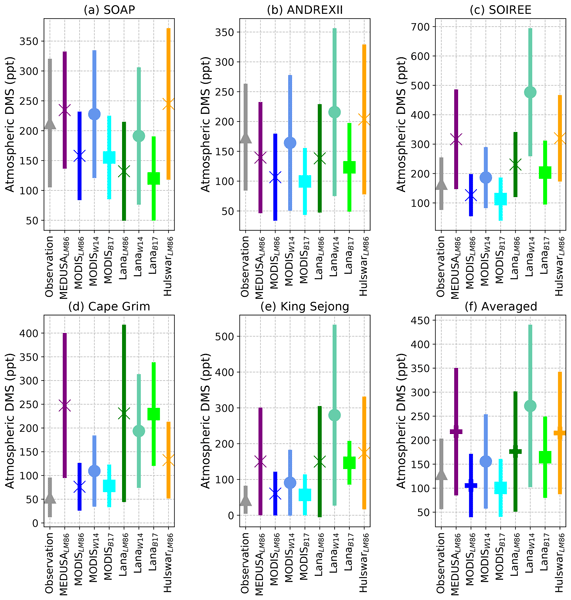
Aerosols are a large source of uncertainty over the Southern Ocean. A dominant source of sulfate aerosol in this region is dimethyl sulfide (DMS), which is poorly simulated by climate models. We show the sensitivity of simulated atmospheric DMS to the choice of oceanic DMS data set and emission scheme. We show that oceanic DMS has twice the influence on atmospheric DMS than the emission scheme. Simulating DMS more accurately in climate models will help to constrain aerosol uncertainty.
Peter Kuma, Frida A.-M. Bender, Alex Schuddeboom, Adrian J. McDonald, and Øyvind Seland
Atmos. Chem. Phys., 23, 523–549, https://doi.org/10.5194/acp-23-523-2023, https://doi.org/10.5194/acp-23-523-2023, 2023
Short summary
Short summary
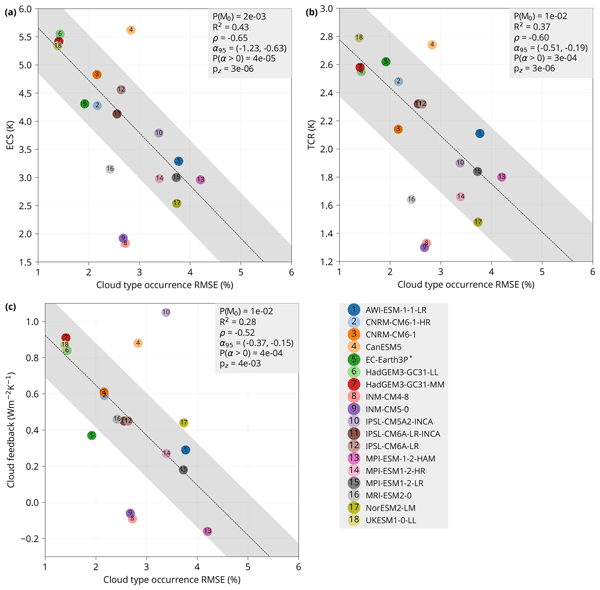
We present a machine learning method for determining cloud types in climate model output and satellite observations based on ground observations of cloud genera. We analyse cloud type biases and changes with temperature in climate models and show that the bias is anticorrelated with climate sensitivity. Models simulating decreasing stratiform and increasing cumuliform clouds with increased CO2 concentration tend to have higher climate sensitivity than models simulating the opposite tendencies.
Manon Maisonnier, Maoyuan Feng, David Bastviken, Sandra Arndt, Ronny Lauerwald, Aidin Jabbari, Goulven Gildas Laruelle, Murray D. MacKay, Zeli Tan, Wim Thiery, and Pierre Regnier
Earth Syst. Dynam., 16, 1779–1808, https://doi.org/10.5194/esd-16-1779-2025, https://doi.org/10.5194/esd-16-1779-2025, 2025
Short summary
Short summary
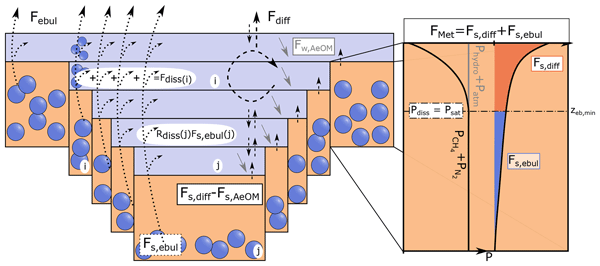
A new process-based modelling framework, FLaMe-v1.0 (Fluxes of Lake Methane version 1.0), is developed to simulate methane (CH4) emissions from lakes at large scales. FLaMe couples the dynamics of organic carbon, oxygen and methane in lakes and rests on an innovative, computationally efficient lake clustering approach for the simulation of CH4 emissions across a large number of lakes. The model evaluation suggests that FLaMe captures the sub-annual and spatial variability of CH4 emissions well.
Yusuf A. Bhatti, Laura E. Revell, Alex J. Schuddeboom, Adrian J. McDonald, Alex T. Archibald, Jonny Williams, Abhijith U. Venugopal, Catherine Hardacre, and Erik Behrens
Atmos. Chem. Phys., 23, 15181–15196, https://doi.org/10.5194/acp-23-15181-2023, https://doi.org/10.5194/acp-23-15181-2023, 2023
Short summary
Short summary
Aerosols are a large source of uncertainty over the Southern Ocean. A dominant source of sulfate aerosol in this region is dimethyl sulfide (DMS), which is poorly simulated by climate models. We show the sensitivity of simulated atmospheric DMS to the choice of oceanic DMS data set and emission scheme. We show that oceanic DMS has twice the influence on atmospheric DMS than the emission scheme. Simulating DMS more accurately in climate models will help to constrain aerosol uncertainty.
Peter Kuma, Frida A.-M. Bender, Alex Schuddeboom, Adrian J. McDonald, and Øyvind Seland
Atmos. Chem. Phys., 23, 523–549, https://doi.org/10.5194/acp-23-523-2023, https://doi.org/10.5194/acp-23-523-2023, 2023
Short summary
Short summary
We present a machine learning method for determining cloud types in climate model output and satellite observations based on ground observations of cloud genera. We analyse cloud type biases and changes with temperature in climate models and show that the bias is anticorrelated with climate sensitivity. Models simulating decreasing stratiform and increasing cumuliform clouds with increased CO2 concentration tend to have higher climate sensitivity than models simulating the opposite tendencies.
Cited articles
Ailliot, P., Allard, D., Monbet, V., and Naveau, P.: Stochastic weather generators: an overview of weather type models, Journal de la Société Française de Statistique, 156, 101–113, 2015. a
Baigorria, G. A. and Jones, J. W.: GiST: A Stochastic Model for Generating Spatially and Temporally Correlated Daily Rainfall Data, J. Climate, 23, 5990–6008, https://doi.org/10.1175/2010JCLI3537.1, 2010. a, b, c
Chen, J., Brissette, F., and Leconte, R.: WeaGETS – a Matlab-based daily scale weather generator for generating precipitation and temperature, Procedia Environ. Sci., 13, 2222–2235, https://doi.org/10.1016/j.proenv.2012.01.211, 2012a. a, b, c, d
Chen, J., Brissette, F. P., and Leconte, R.: Downscaling of weather generator parameters to quantify hydrological impacts of climate change, Clim. Res., 51, 185–200, https://doi.org/10.3354/cr01062, 2012b. a, b
Chen, J., Brissette, F., and Zhang, X. J.: Multi-Site Stochastic Weather Generator for Daily Precipitation and Temperature, T. ASABE, 57, 1375–1391, https://doi.org/10.13031/trans.57.10685, 2014. a
Copernicus Climate Change Service: Copernicus Climate Change Service (C3S) Climate Data Store (CDS), https://doi.org/10.24381/cds.e2161bac, 2022. a, b
Cordano, E. and Eccel, E.: Tools for stochastic weather series generation in R environment, Ital. J. Agrometeorol., 21, 31–42, https://doi.org/10.19199/2016.3.2038-5625.031, 2016. a
Dawkins, L. C., Osborne, J. M., Economou, T., Darch, G. J., and Stoner, O. R.: The Advanced Meteorology Explorer: a novel stochastic, gridded daily rainfall generator, J. Hydrol., 607, 127478, https://doi.org/10.1016/j.jhydrol.2022.127478, 2022. a, b
Dumont, M., Etheridge, Z., Curtis, A., Beukes, P., and Schuddeboom, A.: Current climate variability of pastoral yield: a case study in Canterbury, New Zealand, Climatic Change, 178, 1–20, https://doi.org/10.1007/s10584-025-03946-z, 2025. a
Friend, A., Stevens, A., Knox, R., and Cannell, M.: A process-based, terrestrial biosphere model of ecosystem dynamics (Hybrid v3.0), Ecol. Model., 95, 249–287, https://doi.org/10.1016/S0304-3800(96)00034-8, 1997. a
Fullhart, A., Ponce-Campos, G. E., Meles, M. B., McGehee, R. P., Armendariz, G., Oliveira, P. T. S., Das Neves Almeida, C., de Araújo, J. C., Nel, W., and Goodrich, D. C.: Gridded 20-year climate parameterization of Africa and South America for a stochastic weather generator (CLIGEN), Big Earth Data, 7, 349–374, https://doi.org/10.1080/20964471.2022.2136610, 2023. a
Fullhart, A. T., Nearing, M. A., Armendariz, G., and Weltz, M. A.: Climate benchmarks and input parameters representing locations in 68 countries for a stochastic weather generator, CLIGEN, Earth Syst. Sci. Data, 13, 435–446, https://doi.org/10.5194/essd-13-435-2021, 2021. a
Hansen, J. E. and Driscoll, D. M.: A Mathematical Model for the Generation of Hourly Temperatures, J. Appl. Meteorol., 16, 935–948, https://doi.org/10.1175/1520-0450(1977)016<0935:AMMFTG>2.0.CO;2, 1977. a
Ji, H. K., Mirzaei, M., Lai, S. H., Dehghani, A., and Dehghani, A.: Implementing generative adversarial network (GAN) as a data-driven multi-site stochastic weather generator for flood frequency estimation, Environ. Modell. Softw., 172, 105896, https://doi.org/10.1016/j.envsoft.2023.105896, 2024. a
Keller, D. E., Fischer, A. M., Liniger, M. A., Appenzeller, C., and Knutti, R.: Testing a weather generator for downscaling climate change projections over Switzerland, Int. J. Climatol., 37, 928–942, https://doi.org/10.1002/joc.4750, 2017. a
Khalili, M., Brissette, F., and Leconte, R.: Stochastic multi-site generation of daily weather data, Stoch. Env. Res. Risk A., 23, 837–849, https://doi.org/10.1007/s00477-008-0275-x, 2009. a, b
Kilsby, C., Jones, P., Burton, A., Ford, A., Fowler, H., Harpham, C., James, P., Smith, A., and Wilby, R.: A daily weather generator for use in climate change studies, Environ. Modell. Softw., 22, 1705–1719, https://doi.org/10.1016/j.envsoft.2007.02.005, 2007. a
Lavers, D. A., Simmons, A., Vamborg, F., and Rodwell, M. J.: An evaluation of ERA5 precipitation for climate monitoring, Q. J. Roy. Meteor. Soc., 148, 3152–3165, https://doi.org/10.1002/qj.4351, 2022. a
Martinez-Villalobos, C. and Neelin, J. D.: Why Do Precipitation Intensities Tend to Follow Gamma Distributions?, J. Atmos. Sci., 76, 3611–3631, https://doi.org/10.1175/JAS-D-18-0343.1, 2019. a
Martinez-Villalobos, C. and Neelin, J. D.: Regionally high risk increase for precipitation extreme events under global warming, Sci. Rep., 13, 5579, https://doi.org/10.1038/s41598-023-32372-3, 2023. a
Muñoz-Sabater, J., Dutra, E., Agustí-Panareda, A., Albergel, C., Arduini, G., Balsamo, G., Boussetta, S., Choulga, M., Harrigan, S., Hersbach, H., Martens, B., Miralles, D. G., Piles, M., Rodríguez-Fernández, N. J., Zsoter, E., Buontempo, C., and Thépaut, J.-N.: ERA5-Land: a state-of-the-art global reanalysis dataset for land applications, Earth Syst. Sci. Data, 13, 4349–4383, https://doi.org/10.5194/essd-13-4349-2021, 2021. a, b
Najibi, N., Perez, A. J., Arnold, W., Schwarz, A., Maendly, R., and Steinschneider, S.: A statewide, weather-regime based stochastic weather generator for process-based bottom-up climate risk assessments in California – Part I: Model evaluation, Climate Services, 34, https://doi.org/10.1016/j.cliser.2024.100489, 2024a. a, b
Najibi, N., Perez, A. J., Arnold, W., Schwarz, A., Maendly, R., and Steinschneider, S.: A statewide, weather-regime based stochastic weather generator for process-based bottom-up climate risk assessments in California – Part II: Thermodynamic and dynamic climate change scenarios, Climate Services, 34, https://doi.org/10.1016/j.cliser.2024.100485, 2024b. a, b, c
Nandan, R., Bandaru, V., Meduri, P., Jones, C., and Lollato, R.: Evaluating the utility of weather generators in crop simulation models for in-season yield forecasting, Agr. Syst., 220, 104082, https://doi.org/10.1016/j.agsy.2024.104082, 2024. a
Nelder, J. A. and Mead, R.: A Simplex Method for Function Minimization, Comput. J., 7, 308–313, https://doi.org/10.1093/comjnl/7.4.308, 1965. a
Parlange, M. B. and Katz, R. W.: An Extended Version of the Richardson Model for Simulating Daily Weather Variables, J. Appl. Meteorol., 39, 610–622, https://doi.org/10.1175/1520-0450-39.5.610, 2000. a
Peleg, N., Fatichi, S., Paschalis, A., Molnar, P., and Burlando, P.: An advanced stochastic weather generator for simulating 2-D high-resolution climate variables, J. Adv. Model. Earth Sy., 9, 1595–1627, https://doi.org/10.1002/2016MS000854, 2017. a, b
Powell, M. J. D.: An efficient method for finding the minimum of a function of several variables without calculating derivatives, Comput. J., 7, 155–162, https://doi.org/10.1093/comjnl/7.2.155, 1964. a
Rahat, S. H., Steinschneider, S., Kucharski, J., Arnold, W., Olzewski, J., Walker, W., Maendly, R., Wasti, A., and Ray, P.: Characterizing Hydrologic Vulnerability under Nonstationary Climate and Antecedent Conditions Using a Process-Informed Stochastic Weather Generator, J. Water Res. Pl., 148, https://doi.org/10.1061/(ASCE)WR.1943-5452.0001557, 2022. a
Rampal, N., Gibson, P. B., Sherwood, S., Abramowitz, G., and Hobeichi, S.: A Reliable Generative Adversarial Network Approach for Climate Downscaling and Weather Generation, J. Adv. Model. Earth Sy., 17, 1–28, https://doi.org/10.1029/2024MS004668, 2025. a, b
Rebonato, R. and Jaeckel, P.: The Most General Methodology to Create a Valid Correlation Matrix for Risk Management and Option Pricing Purposes, SSRN Electronic Journal, 17, 1767–1768, https://doi.org/10.2139/ssrn.1969689, 2000. a, b
Richardson, C. W.: Stochastic simulation of daily precipitation, temperature, and solar radiation, Water Resour. Res., 17, 182–190, https://doi.org/10.1029/WR017i001p00182, 1981. a, b, c, d
Richardson, C. W.: Weather Simulation for Crop Management Models, T. ASAE, 28, 1602–1606, https://doi.org/10.13031/2013.32484, 1985. a
Richardson, C. W. and Wright, D. A.: WGEN: A Model for Generating Daily Weather Variables, United States Department of Agriculture, Agriculture Research Service ARS-8, p. 83, ftp://ftp.biosfera.dea.ufv.br/users/francisca/Franciz/papers/Richardson%20&%20Wright.pdf (last access: 12 November 2026), 1984. a, b, c
Schuddeboom, A.: EGGS-WG V1.2.1, Zenodo [code, data set], https://doi.org/10.5281/zenodo.19228384, 2025. a, b
Semenov, M., Brooks, R., Barrow, E., and Richardson, C.: Comparison of the WGEN and LARS-WG stochastic weather generators for diverse climates, Clim. Res., 10, 95–107, https://doi.org/10.3354/cr010095, 1998. a, b, c
Sohrabi, S. and Brissette, F. P.: Evaluation of a stochastic weather generator for long-term ensemble streamflow forecasts, Hydrolog. Sci. J., 66, 474–487, https://doi.org/10.1080/02626667.2021.1873343, 2021. a, b, c
Sommer, P. S. and Kaplan, J. O.: A globally calibrated scheme for generating daily meteorology from monthly statistics: Global-WGEN (GWGEN) v1.0, Geosci. Model Dev., 10, 3771–3791, https://doi.org/10.5194/gmd-10-3771-2017, 2017. a
Steinschneider, S. and Brown, C.: A semiparametric multivariate, multisite weather generator with low-frequency variability for use in climate risk assessments, Water Resour. Res., 49, 7205–7220, https://doi.org/10.1002/wrcr.20528, 2013. a
Steinschneider, S., Ray, P., Rahat, S. H., and Kucharski, J.: A Weather‐Regime‐Based Stochastic Weather Generator for Climate Vulnerability Assessments of Water Systems in the Western United States, Water Resour. Res., 55, 6923–6945, https://doi.org/10.1029/2018WR024446, 2019. a, b, c
Stoner, O. and Economou, T.: An advanced hidden Markov model for hourly rainfall time series, Computational Statistics and Data Analysis, 152, 107045, https://doi.org/10.1016/j.csda.2020.107045, 2020. a
Vesely, F. M., Paleari, L., Movedi, E., Bellocchi, G., and Confalonieri, R.: Quantifying Uncertainty Due to Stochastic Weather Generators in Climate Change Impact Studies, Sci. Rep., 9, 9258, https://doi.org/10.1038/s41598-019-45745-4, 2019. a
Virtanen, P., Gommers, R., Oliphant, T. E., Haberland, M., Reddy, T., Cournapeau, D., Burovski, E., Peterson, P., Weckesser, W., Bright, J., van der Walt, S. J., Brett, M., Wilson, J., Millman, K. J., Mayorov, N., Nelson, A. R. J., Jones, E., Kern, R., Larson, E., Carey, C. J., Polat, I., Feng, Y., Moore, E. W., VanderPlas, J., Laxalde, D., Perktold, J., Cimrman, R., Henriksen, I., Quintero, E. A., Harris, C. R., Archibald, A. M., Ribeiro, A. H., Pedregosa, F., van Mulbregt, P., Vijaykumar, A., Bardelli, A. P., Rothberg, A., Hilboll, A., Kloeckner, A., Scopatz, A., Lee, A., Rokem, A., Woods, C. N., Fulton, C., Masson, C., Häggström, C., Fitzgerald, C., Nicholson, D. A., Hagen, D. R., Pasechnik, D. V., Olivetti, E., Martin, E., Wieser, E., Silva, F., Lenders, F., Wilhelm, F., Young, G., Price, G. A., Ingold, G.-L., Allen, G. E., Lee, G. R., Audren, H., Probst, I., Dietrich, J. P., Silterra, J., Webber, J. T., Slavič, J., Nothman, J., Buchner, J., Kulick, J., Schönberger, J. L., de Miranda Cardoso, J. V., Reimer, J., Harrington, J., Rodríguez, J. L. C., Nunez-Iglesias, J., Kuczynski, J., Tritz, K., Thoma, M., Newville, M., Kümmerer, M., Bolingbroke, M., Tartre, M., Pak, M., Smith, N. J., Nowaczyk, N., Shebanov, N., Pavlyk, O., Brodtkorb, P. A., Lee, P., McGibbon, R. T., Feldbauer, R., Lewis, S., Tygier, S., Sievert, S., Vigna, S., Peterson, S., More, S., Pudlik, T., Oshima, T., Pingel, T. J., Robitaille, T. P., Spura, T., Jones, T. R., Cera, T., Leslie, T., Zito, T., Krauss, T., Upadhyay, U., Halchenko, Y. O., and Vázquez-Baeza, Y.: SciPy 1.0: fundamental algorithms for scientific computing in Python, Nat. Meth., 17, 261–272, https://doi.org/10.1038/s41592-019-0686-2, 2020. a
Vishwanathan, G., McDonald, A., Noble, C., A. Stone, D., Rosier, S., Schuddeboom, A., Kreft, P., Macara, G., Carey-Smith, T., and Bodeker, G. E.: Regional Characteristics of Extreme Precipitation Events Over Aotearoa New Zealand, SSRN Electronic Journal, 44, https://doi.org/10.2139/ssrn.4621746, 2023a. a
Vishwanathan, G., McDonald, A., Stone, D. A., Rosier, S., Rana, S., and Noble, C.: Mean and extreme precipitation over Aotearoa New Zealand: A comparison across multiple different estimation techniques, Int. J. Climatol., 43, 3072–3093, https://doi.org/10.1002/joc.8017, 2023b. a
Whitehead, M. G. and Bebbington, M. S.: Brief communication: SWM – stochastic weather model for precipitation-related hazard assessments using ERA5-Land data, Nat. Hazards Earth Syst. Sci., 24, 1929–1935, https://doi.org/10.5194/nhess-24-1929-2024, 2024. a
Wilks, D. S.: Adapting stochastic weather generation algorithms for climate change studies, Climatic Change, 22, 67–84, https://doi.org/10.1007/BF00143344, 1992. a, b
Wilks, D. S.: Multisite downscaling of daily precipitation with a stochastic weather generator, Clim. Res., 11, 125–136, https://doi.org/10.3354/cr011125, 1999a. a
Wilks, D. S.: Simultaneous stochastic simulation of daily precipitation, temperature and solar radiation at multiple sites in complex terrain, Agr. Forest Meteorol., 96, 85–101, https://doi.org/10.1016/S0168-1923(99)00037-4, 1999b. a, b, c
Wilks, D. S.: High-resolution spatial interpolation of weather generator parameters using local weighted regressions, Agr. Forest Meteorol., 148, 111–120, https://doi.org/10.1016/j.agrformet.2007.09.005, 2008. a
Wilks, D. S.: A gridded multisite weather generator and synchronization to observed weather data, Water Resour. Res., 45, 1–11, https://doi.org/10.1029/2009WR007902, 2009. a, b
Wilks, D. S.: Stochastic weather generators for climate-change downscaling, part II: Multivariable and spatially coherent multisite downscaling, WIRes Clim. Change, 3, 267–278, https://doi.org/10.1002/wcc.167, 2012. a, b
Short summary
Stochastic Weather Generators are simple models that can be used to produce realistic, simulated weather. Specifically, they use a combination of statistical techniques and existing measurements to make possible futures. This paper documents the release and provides validation of an open-source modern model, EGGS-WG. It produces daily rainfall values and hourly air temperature and dew point temperature values. The simulation quality is shown to be high when validated against ERA5-Land.
Stochastic Weather Generators are simple models that can be used to produce realistic, simulated...


Altmetrics
Final-revised paper
Preprint