
Articles | Volume 19, issue 20
https://doi.org/10.5194/gmd-19-10077-2026
© Author(s) 2026. This work is distributed under
the Creative Commons Attribution 4.0 License.
the Creative Commons Attribution 4.0 License.
https://doi.org/10.5194/gmd-19-10077-2026
© Author(s) 2026. This work is distributed under
the Creative Commons Attribution 4.0 License.
the Creative Commons Attribution 4.0 License.
Development and technical paper
| 
22 Oct 2026
Development and technical paper |
| 22 Oct 2026
| 22 Oct 2026
Optimization of the fast layer transmittance algorithm in RTTOV v13.1 for strong water vapor absorption channels of the FY-3F HIRAS-II instrument using LBLRTM v12.11
Panxiang Zhang
University of Science and Technology of China, Hefei, 230052, China
Beijing Huayun Shinetek Technology Co., Ltd., Beijing, 100081, China

Meteorological Observation Centre of CMA, Beijing, 100081, China
Gang Ma
CORRESPONDING AUTHOR
China Meteorological Administration Earth System Numerical Prediction Centre, Beijing, 100081, China
Rui Li
University of Science and Technology of China, Hefei, 230052, China
National Satellite Meteorological Centre, Beijing, 100081, China
Wenguang Bai
National Satellite Meteorological Centre, Beijing, 100081, China
Chengli Qi
National Satellite Meteorological Centre, Beijing, 100081, China
Related authors
No articles found.
Yu Wang, Xinbin Ma, Banghai Wu, Qiang Guo, Jing Xi, Rui Li, Xin Wang, and Xiaoqing Li
Atmos. Meas. Tech., 19, 6553–6569, https://doi.org/10.5194/amt-19-6553-2026, https://doi.org/10.5194/amt-19-6553-2026, 2026
Short summary
Short summary
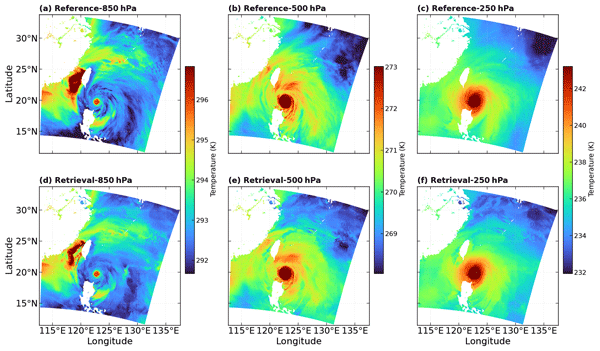
China’s Fengyun-4M, planned for launch in late 2026, will be the first geostationary satellite to carry a passive microwave instrument, opening a new era of weather observation. To better use its more than one hundred channels, we developed a retrieval method and an optimized channel setup for all-sky temperature profile retrieval over ocean. The results indicate that this algorithm shows low errors while reducing computing time, which is a preferred choice for future operational use.
Min Min, Qiang Yu, Jun Li, Han Lin, Yunheng Xue, Xinran Xia, Di Di, Bo Li, and Peng Zhang
Atmos. Chem. Phys., 26, 14205–14228, https://doi.org/10.5194/acp-26-14205-2026, https://doi.org/10.5194/acp-26-14205-2026, 2026
Short summary
Short summary
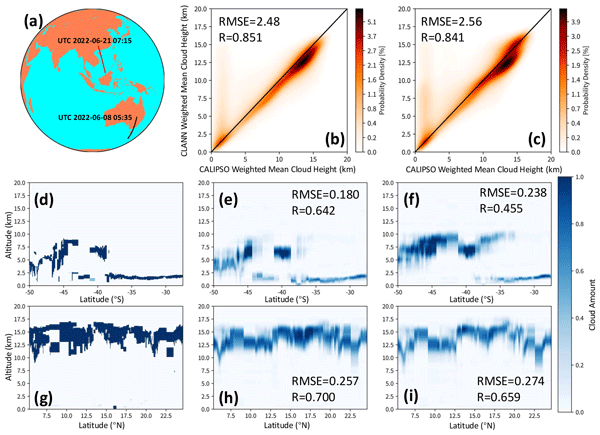
A physics‑constrained transfer learning framework enables accurate radiance transformation across satellite sensors with different spectral response functions (SRFs). It integrates a Spectral‑Fidelity‑Preserving model from radiative transfer. Tests confirm robustness to calibration uncertainties and define SRF constraints. FY‑4A/B application improves cloud and precipitation retrievals, enabling operational algorithm transfer.
Shangyi Liu, Cathy Clerbaux, Anne Boynard, Mingjian Gu, Chengli Qi, Bruno Franco, Lieven Clarisse, Shan Han, Mengya Sheng, Nicolas Theys, and Zhao-Cheng Zeng
EGUsphere, https://doi.org/10.5194/egusphere-2026-5017, https://doi.org/10.5194/egusphere-2026-5017, 2026
This preprint is open for discussion and under review for Atmospheric Chemistry and Physics (ACP).
Short summary
Short summary
The March 2026 Tehran refinery explosions released massive amounts of toxic sulfur dioxide gas. We used multiple satellites to track this plume, discovering that intense fires pushed the pollution high into the atmosphere, causing it to travel across continents for days. Current air quality forecast models completely missed this major event. This highlights the urgent need to use advanced satellites to monitor pollution from armed conflicts to assess global climate risks.
Ruijie Zhang, Lu Zhang, Xingying Zhang, Peng Zhang, Minqiang Zhou, Xifeng Cao, Chonghui Cheng, and Huirong Yang
EGUsphere, https://doi.org/10.5194/egusphere-2026-3007, https://doi.org/10.5194/egusphere-2026-3007, 2026
Short summary
Short summary
Measuring carbon dioxide from individual power plants is important for checking emissions, but satellite observations face a trade-off: sharper views are often noisier, while averaging many measurements can blur the plume. We used China’s Daqi-1 satellite data, simulations, and real power plant cases to test how much averaging is useful. We found that no single setting is best. Reliable estimates must balance noise reduction, plume detail, and the number of useful observations.
Mengya Sheng, Runyi Zhou, Jiancong Hua, Shan Han, Shangyi Liu, Lin Zhang, Wei Wang, Ruijun Dang, Hansen Cao, Zichong Chen, Yixuan Gu, Mingxu Liu, Lu Lee, Chengli Qi, Feng Lu, Changpei Han, Mark W. Shephard, Nadir Guendouz, Camille Viatte, Lieven Clarisse, Martin Van Damme, Cathy Clerbaux, and Zhao-Cheng Zeng
Atmos. Chem. Phys., 26, 7803–7826, https://doi.org/10.5194/acp-26-7803-2026, https://doi.org/10.5194/acp-26-7803-2026, 2026
Short summary
Short summary
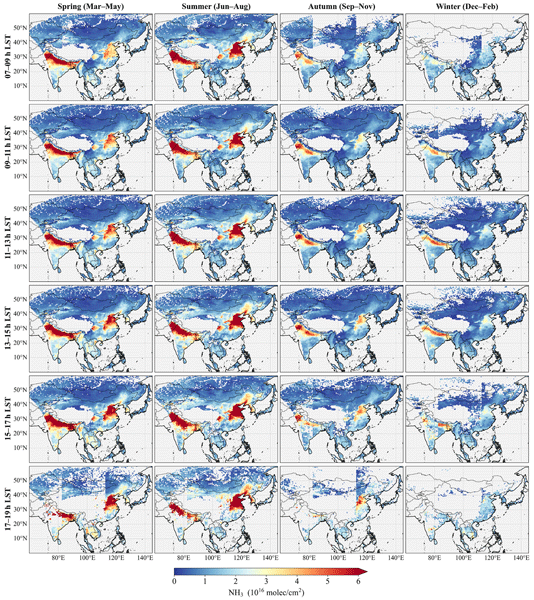
Geostationary observations of NH3 provide an unprecedented opportunity to monitor spatial and temporal variations in emissions and their evolution throughout the day. Using 3 years of observations from FY-4B/GIIRS over East Asia, we demonstrated the enhanced capability of geostationary observations to identify emission sources and capture daytime variations associated with agricultural activities. This shows the potential of future geostationary satellites for monitoring air quality globally.
Xiaozhong Cao, Qiyun Guo, Haowen Luo, Jincheng Wang, Rongkang Yang, Die Xiao, Yinfeng Liu, Zhongliang Sun, Shijun Liu, Sijie Chen, Anfan Huang, Guo Jianping, and Peng Zhang
Atmos. Meas. Tech., 19, 3231–3251, https://doi.org/10.5194/amt-19-3231-2026, https://doi.org/10.5194/amt-19-3231-2026, 2026
Short summary
Short summary
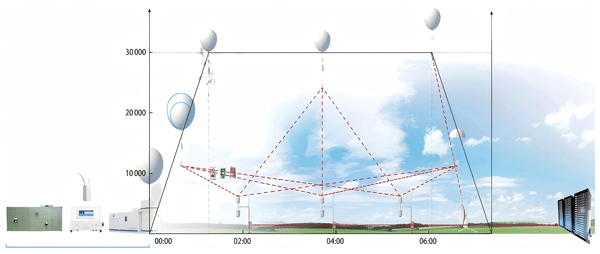
The Ascent-Drift-Descent Radiosonde System (ADDRS) represents an emerging cost-effective technology for upper-air measurements, Its 'Internet cloud + instrument terminal' design enables targeted observations for extreme weather research. Initial data application shows high potential for numerical weather prediction, The pilot application of ADDRS is list in the World Meteorological Organization Region II Coordination 2025-2027 demonstration project (No.RA II-18-I-DP-2).
Shangyi Liu, Yingjun Zheng, Mengya Sheng, Lu Lee, Chengli Qi, Feng Lu, Bruno Franco, Lieven Clarisse, Cathy Clerbaux, Nicolas Theys, Jhoon Kim, and Zhao-Cheng Zeng
EGUsphere, https://doi.org/10.5194/egusphere-2026-1745, https://doi.org/10.5194/egusphere-2026-1745, 2026
Short summary
Short summary
Volcanic sulfur dioxide evolves rapidly after an eruption, which makes it challenging to monitor. Taking the 2024 Kanlaon eruption as a case study, we propose using a constellation of GEO and LEO satellites to track SO2 mass and layer height at high frequency. In particular, we present the first quantitative SO2 retrieval from a GEO hyperspectral infrared sounder (FY-4B/GIIRS). This research provides a vital blueprint for the future global monitoring of volcanic events.
Qixiang Sun, Husi Letu, Yongqian Wang, Peng Zhang, Hong Liang, Chong Shi, Shuai Yin, Jiancheng Shi, and Dabin Ji
Earth Syst. Sci. Data, 18, 371–395, https://doi.org/10.5194/essd-18-371-2026, https://doi.org/10.5194/essd-18-371-2026, 2026
Short summary
Short summary
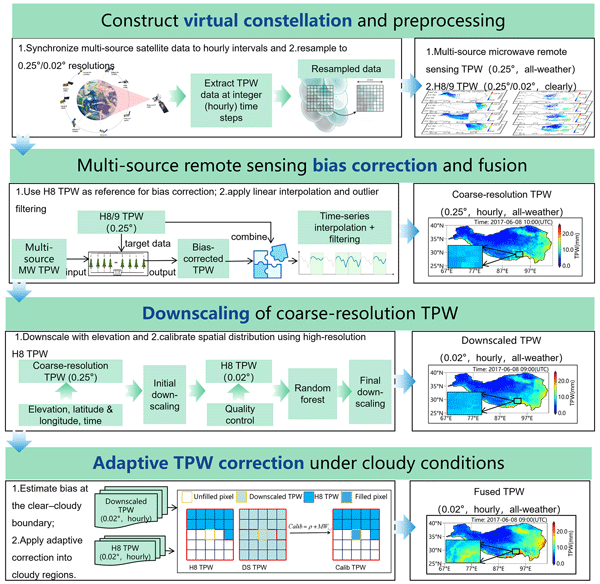
The Tibetan Plateau plays a vital role in Asia’s water cycle, but tracking water vapor in this mountainous region is difficult, especially under cloudy conditions. We developed a new satellite-based method to generate hourly water vapor data at 0.02-degree resolution from 2016 to 2022, now available at https://doi.org/10.11888/Atmos.tpdc.301518, which improves accuracy and reveals fine-scale moisture transport critical for understanding rainfall and extreme weather.
Jing Xi, Yu Wang, Rui Li, Banghai Wu, Xiaoye Fan, Xinbin Ma, and Zixiang Meng
Atmos. Chem. Phys., 26, 15–32, https://doi.org/10.5194/acp-26-15-2026, https://doi.org/10.5194/acp-26-15-2026, 2026
Short summary
Short summary
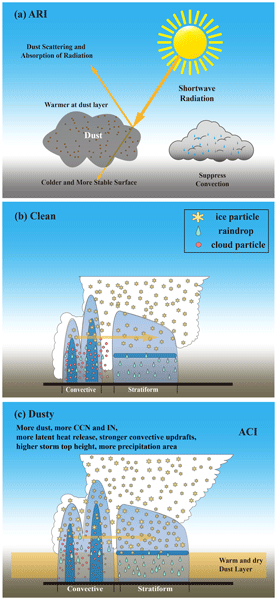
The impacts of Saharan dust aerosols on 3-D structure of organized precipitation systems of different horizontal sizes over the tropical Atlantic Ocean in spring were studied using multiple satellite observations. Results show that under comparable thermodynamic conditions, dust-laden precipitation systems have higher storm tops, broader upper-level precipitation areas with more large particles, stronger convective activities, and heavier surface rain rates than clean ones.
Zhenhao Wu, Jian Shang, Chunguan Cui, Peng Zhang, Songyan Gu, Lin Chen, and Yunfei Fu
Earth Syst. Sci. Data, 17, 5137–5148, https://doi.org/10.5194/essd-17-5137-2025, https://doi.org/10.5194/essd-17-5137-2025, 2025
Short summary
Short summary
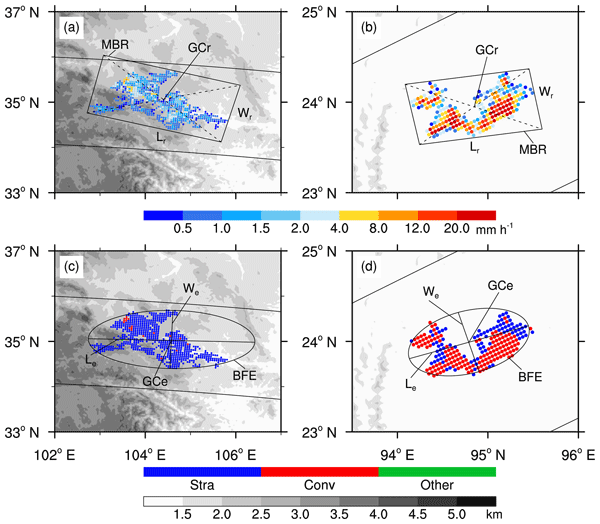
We have established a new dataset of rain cell precipitation parameters and visible-infrared and microwave signals by combining multi-instrument observation data from the Tropical Rainfall Measuring Mission (TRMM). The purpose of this dataset is to promote the three-dimensional studies of rain cell precipitation systems and to reveal the spatial and temporal variations in their scale, morphology, and intensity.
Yixiao Fu, Cheng-Zhi Zou, Peng Zhang, Banghai Wu, Shengli Wu, Shi Liu, and Yu Wang
Earth Syst. Sci. Data, 17, 4651–4670, https://doi.org/10.5194/essd-17-4651-2025, https://doi.org/10.5194/essd-17-4651-2025, 2025
Short summary
Short summary
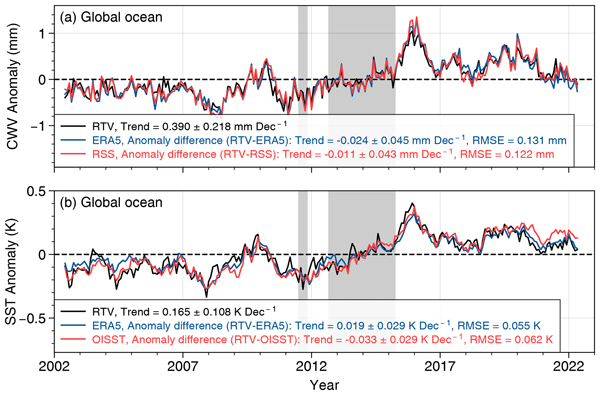
This study presents a climate data record (CDR) of atmospheric column water vapor and sea surface temperature using over two decades of stable-orbit satellite-based passive microwave imagery observations. The evaluation results show that the CDR has long-term consistency and continuity, and is more accurate than other similar products in climate covariability, suggesting that the CDR is suitable for climate change research and for constraining climate model simulations.
Xinyu Li, Lin Zhu, Hongfu Sun, Jun Li, Ximing Lv, Chengli Qi, and Huanhuan Yan
Atmos. Meas. Tech., 18, 2333–2352, https://doi.org/10.5194/amt-18-2333-2025, https://doi.org/10.5194/amt-18-2333-2025, 2025
Short summary
Short summary
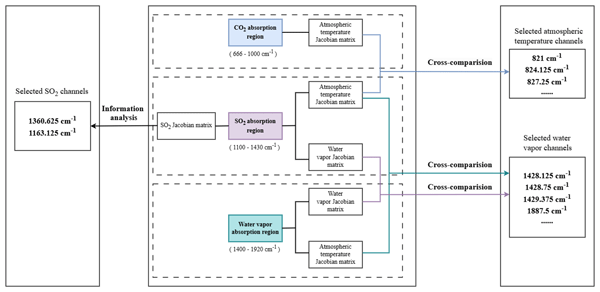
This paper proposes a novel methodology for selecting sulfur-dioxide-sensitive channels from FY-3E/HIRAS-II hyperspectral IR atmospheric sensors to quantitatively monitor volcanic sulfur dioxide. This methodology considers the interference of atmospheric temperature, humidity, and surface temperature with sulfur dioxide detection and retrieval, laying the groundwork for developing a more accurate and flexible volcanic sulfur dioxide retrieval algorithm under different atmospheric conditions.
Xinran Xia, Rubin Jiang, Min Min, Shengli Wu, Peng Zhang, and Xiangao Xia
Earth Syst. Sci. Data Discuss., https://doi.org/10.5194/essd-2024-395, https://doi.org/10.5194/essd-2024-395, 2024
Revised manuscript not accepted
Short summary
Short summary
Based on the MicroWave Radiation Imager aboard FY-3 series satellites, we developed a global terrestrial precipitable water vapor dataset from 2012 to 2020. This dataset overcomes the limitations of infrared observations and provides accurate, all-weather PWV data ,spanning all types of land surface. Researchers are expected to leverage it to explore the role of water vapor in weather patterns, refine precipitation forecasting, and validate climate simulations.
Zhao-Cheng Zeng, Lu Lee, Chengli Qi, Lieven Clarisse, and Martin Van Damme
Atmos. Meas. Tech., 16, 3693–3713, https://doi.org/10.5194/amt-16-3693-2023, https://doi.org/10.5194/amt-16-3693-2023, 2023
Short summary
Short summary
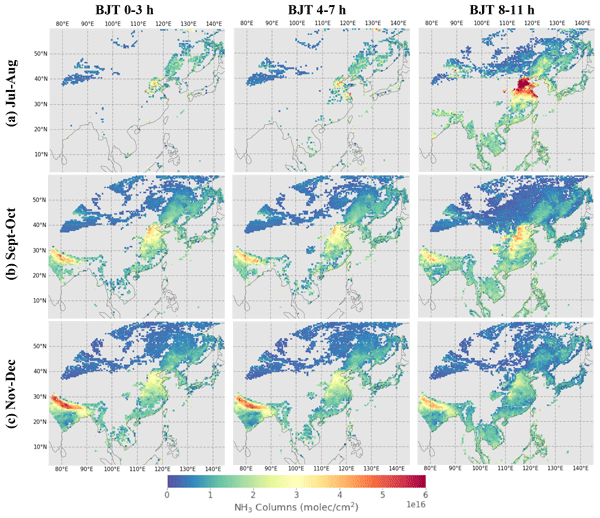
This study presents an NH3 retrieval algorithm based on the optimal estimation method for the Geostationary Interferometric Infrared Sounder (GIIRS) on board China’s FengYun-4B satellite (FY-4B/GIIRS). Retrieval results demonstrate the capability of FY-4B/GIIRS in capturing the diurnal NH3 changes in East Asia. This operational geostationary observation by FY-4B/GIIRS represents an important advancement over the twice-per-day observations provided by current low-Earth-orbit (LEO) instruments.
Ying Chen, Ruibo Lei, Xi Zhao, Shengli Wu, Yue Liu, Pei Fan, Qing Ji, Peng Zhang, and Xiaoping Pang
Earth Syst. Sci. Data, 15, 3223–3242, https://doi.org/10.5194/essd-15-3223-2023, https://doi.org/10.5194/essd-15-3223-2023, 2023
Short summary
Short summary
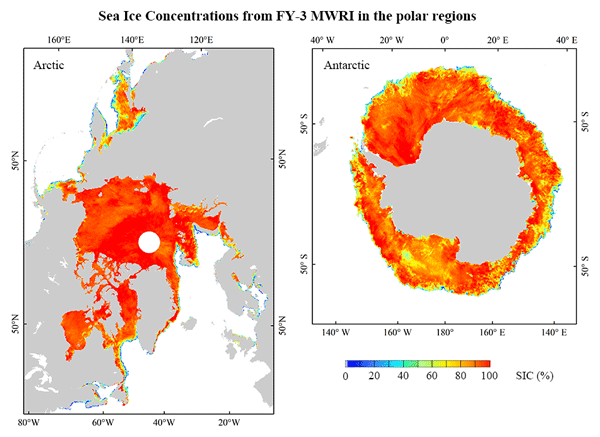
The sea ice concentration product derived from the Microwave Radiation Image sensors on board the FengYun-3 satellites can reasonably and independently identify the seasonal and long-term changes of sea ice, as well as extreme cases of annual maximum and minimum sea ice extent in polar regions. It is comparable with other sea ice concentration products and applied to the studies of climate and marine environment.
Zhao-Cheng Zeng, Lu Lee, and Chengli Qi
Atmos. Meas. Tech., 16, 3059–3083, https://doi.org/10.5194/amt-16-3059-2023, https://doi.org/10.5194/amt-16-3059-2023, 2023
Short summary
Short summary
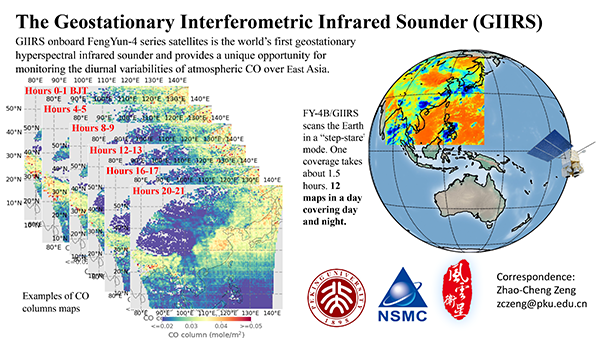
Observations from geostationary orbit provide contiguous coverage with a high temporal resolution, representing an important advancement over current low-Earth-orbit instruments. Using measurements from GIIRS on board China's FengYun satellite, the world’s first geostationary hyperspectral infrared sounder, we showed the first results of diurnal CO in eastern Asia from a geostationary orbit, which will have great potential in improving local and global air quality and climate research.

Hongxia Zhu, Rui Li, Shuping Yang, Chun Zhao, Zhe Jiang, and Chen Huang
Atmos. Chem. Phys., 23, 2421–2437, https://doi.org/10.5194/acp-23-2421-2023, https://doi.org/10.5194/acp-23-2421-2023, 2023
Short summary
Short summary
The impacts of atmospheric dust aerosols and cloud dynamic conditions on precipitation vertical development in southeastern China were studied using multiple satellite observations. It was found that the precipitating drops under dusty conditions grow faster in the middle layer but slower in the upper and lower layers compared with their pristine counterparts. Quantitative estimation of the sensitivity of the precipitation top temperature to the dust aerosol optical depth is also provided.
Tai-Long He, Dylan B. A. Jones, Kazuyuki Miyazaki, Kevin W. Bowman, Zhe Jiang, Xiaokang Chen, Rui Li, Yuxiang Zhang, and Kunna Li
Atmos. Chem. Phys., 22, 14059–14074, https://doi.org/10.5194/acp-22-14059-2022, https://doi.org/10.5194/acp-22-14059-2022, 2022
Short summary
Short summary
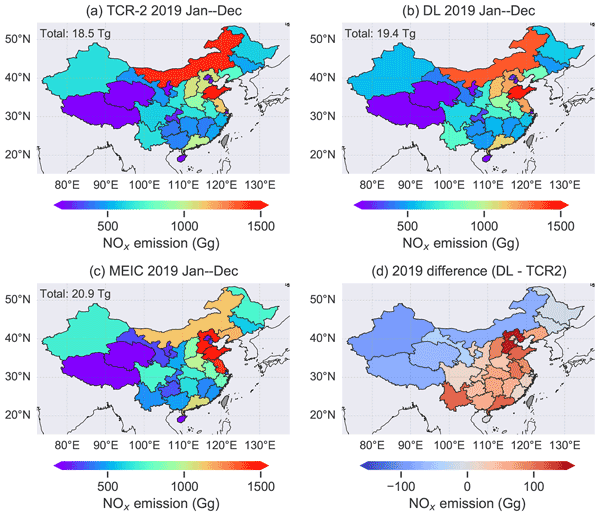
We use a deep-learning (DL) model to estimate Chinese NOx emissions by combining satellite analysis and in situ measurements. Our results are consistent with conventional analyses of Chinese NOx emissions. Comparison with mobility data shows that the DL model has a better capability to capture changes in NOx. We analyse Chinese NOx emissions during the COVID-19 pandemic lockdown period. Our results illustrate the potential use of DL as a complementary tool for conventional air quality studies.
Yungang Wang, Liping Fu, Fang Jiang, Xiuqing Hu, Chengbao Liu, Xiaoxin Zhang, Jiawei Li, Zhipeng Ren, Fei He, Lingfeng Sun, Ling Sun, Zhongdong Yang, Peng Zhang, Jingsong Wang, and Tian Mao
Atmos. Meas. Tech., 15, 1577–1586, https://doi.org/10.5194/amt-15-1577-2022, https://doi.org/10.5194/amt-15-1577-2022, 2022
Short summary
Short summary
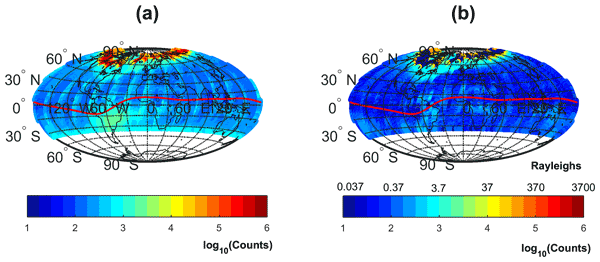
Far-ultraviolet (FUV) airglow radiation is particularly well suited for space-based remote sensing. The Ionospheric Photometer (IPM) instrument carried aboard the Feng Yun 3-D satellite measures the spectral radiance of the Earth FUV airglow. IPM is a tiny, highly sensitive, and robust remote sensing instrument. Initial results demonstrate that the performance of IPM meets the designed requirement and therefore can be used to study the thermosphere and ionosphere in the future.
Cited articles
Alvarado, M. J., Payne, V. H., Mlawer, E. J., Uymin, G., Shephard, M. W., Cady-Pereira, K. E., Delamere, J. S., and Moncet, J.-L.: Performance of the Line-By-Line Radiative Transfer Model (LBLRTM) for temperature, water vapor, and trace gas retrievals: recent updates evaluated with IASI case studies, Atmos. Chem. Phys., 13, 6687–6711, https://doi.org/10.5194/acp-13-6687-2013, 2013.
Bai, W., Zhang, P., Zhang, W., Ma, G., and Qi, C.: A model for accurately calculating hyper-spectral, middle-shortwave infrared radiative transfer for remote sensing, Sci. China Earth Sci., 61, 317–326, https://doi.org/10.1007/s11430-017-9100-6, 2017.
Bai, W., Zhang, P., Zhang, W., Li, J., Ma, G., Qi, C., and Liu, H.: Jacobian matrix for near-infrared remote sensing based on vector radiative transfer model, Sci. China Earth Sci., 63, 1353–1365, https://doi.org/10.1007/s11430-019-9586-7, 2020.
Bormann, N., Salmond, D., Matricardi, M., Geer, A., and Hamrud, M.: The RTTOV-9 upgrade for clear-sky radiance assimilation in the IFS, ECMWF Technical Memorandum, 586, https://doi.org/10.21957/gqpyuvskj, 2009.
Chevallier, F., Di Michele, S., and McNally, A. P.: Diverse profile datasets from the ECMWF 91-level short-range forecasts, NWP SAF Technical Report, 10, https://www.ecmwf.int/en/elibrary/73985-diverse-profile-datasets-ecmwf-91-level-short-range-forecasts (last access: 15 October 2026), 2006.
Clough, S. A., Shephard, M. W., Mlawer, E. J., Delamere, J. S., Iacono, M. J., Cady-Pereira, K., Boukabara, S., and Brown, P. D.. Atmospheric radiative transfer modeling: A summary of the AER codes. J. Quant. Spectrosc. Ra., 91, 233–244, https://doi.org/10.1016/j.jqsrt.2004.05.058, 2005.
Di, D., Li, J., Han, W., Bai, W., Wu, C., and Menzel, W. P.: Enhancing the Fast Radiative Transfer Model for FengYun‐4 GIIRS by Using Local Training Profiles, J. Geophys. Res.-Atmos., 123, https://doi.org/10.1029/2018jd029089, 2018.
Dhudia, A.: The Reference Forward Model (RFM), J. Quant. Spectrosc. Ra., 186, 243–253, https://doi.org/10.1016/j.jqsrt.2016.06.018, 2017.
Eyre, J. R.: A fast radiative transfer model for satellite sounding systems, ECMWF, Research Dept., Tech. Memo., 176, https://doi.org/10.21957/xsg8d92y3, 1991.
Eyre, J. R. and Woolf, H. M.: Transmittance of atmospheric gases in the microwave region: a fast model, Appl. Optics, 27, 3244–3249, https://doi.org/10.1364/AO.27.003244, 1988.
Eyre, J. R., Kelly, G. A., McNally, A. P., Andersson, E., and Persson, A.: Assimilation of TOVS radiance information through one-dimensional variational analysis, Q. J. Roy. Meteor. Soc., 119, 1427–1463, https://doi.org/10.1002/qj.49711951411, 1993.
Eyre, J. R., English, S. J., and Forsythe, M.: Assimilation of satellite data in numerical weather prediction. Part I: The early years, Q. J. Roy. Meteor. Soc., 146, 49–68, https://doi.org/10.1002/qj.3654, 2020.
Eyre, J. R., Bell, W., Cotton, J., English, S. J., Forsythe, M., Healy, S. B., and Pavelin, E. G.: Assimilation of satellite data in numerical weather prediction. Part II: Recent years, Q. J. Roy. Meteor. Soc., 148, https://doi.org/10.1002/qj.4228, 521-556, 2022.
Hannon, S. E., Strow, L. L., and McMillan, W. W.: Atmospheric infrared fast transmittance models: A comparison of two approaches, Optical Spectroscopic Techniques and Instrumentation for Atmospheric and Space Research II, SPIE, 2830, 94–105, https://doi.org/10.1117/12.256106, 1996.
Harris, F. J.: Multirate FIR filters for interpolating and desampling, in: Handbook of Digital Signal Processing, Academic Press, 173–287, https://doi.org/10.1016/B978-0-08-050780-4.50008-4, 1987.
Hocking, J., Vidot, J., Brunel, P., Roquet, P., Silveira, B., Turner, E., and Lupu, C.: A new gas absorption optical depth parameterisation for RTTOV version 13, Geosci. Model Dev., 14, 2899–2915, https://doi.org/10.5194/gmd-14-2899-2021, 2021.
Hocking, J., Candy, B., Dell, M., Rundle, D., Geer, A., Lupu, C., Scanlon, T., Turner, E., Borderies, M., Chambon, P., Lalande, J.-M., Vidot, J., Baur, F., Köpken-Watts, C., Raisig, P., Scheck, L., Stiller, O., Stumpf, C., Barlakas, V., Borbas, E., Labonnote, L., and Mangla, R.: RTTOV v14 Science and Validation Report (Version 1.0.1), https://nwp-saf.eumetsat.int/site/download/documentation/rtm/docs_rttov14/rttov14_svr.pdf (last access: 10 January 2026), 2025.
Johnson, B. T., Dang, C., Stegmann, P., Liu, Q., Moradi, I., and Auligne, T.: The Community Radiative Transfer Model (CRTM): Community-focused collaborative model development accelerating research to operations, B. Am. Meteorol. Soc., 104, E1817–E1830, https://doi.org/10.1175/BAMS-D-22-0015.1, 2023.
Kleespies, T. J., van Delst, P., McMillin, L. M., and Derber, J.: Atmospheric transmittance of an absorbing gas. 6. OPTRAN status report and introduction to the NESDIS/NCEP community radiative transfer model, Appl. Optics, 43, 3103–3109, https://doi.org/10.1364/ao.43.003103, 2004.
Li, J., Li, Z., Wang, P., Schmit, T. J., Bai, W., and Atlas, R.: An efficient radiative transfer model for hyperspectral IR radiance simulation and applications under cloudy-sky conditions, J. Geophys. Res.-Atmos., 122, 7600–7613, https://doi.org/10.1002/2016JD026273, 2017.
Li, S., Hu, H., Fang, C., Wang, S., Xun, S., He, B., Wu, W., and Huo, Y.: Hyperspectral Infrared Atmospheric Sounder (HIRAS) Atmospheric Sounding System, Remote Sens., 14, 3882, https://doi.org/10.3390/rs14163882, 2022.
Matricardi, M.: RTIASI-4, a new version of the ECMWF fast radiative transfer model for the infrared atmospheric sounding interferometer, European Centre for Medium-Range Weather Forecasts, https://doi.org/10.21957/76cvnxi6d, 2003.
Matricardi, M.: An inter-comparison of line-by-line radiative transfer models. European Centre for Medium-Range Weather Forecasts, 525, https://doi.org/10.21957/b3amji4k, 2007.
Matricardi, M.: The generation of RTTOV regression coefficients for IASI and AIRS using a new profile training set and a new line-by-line database, ECMWF Technical Memorandum, 564, https://doi.org/10.21957/59u3oc9es, 2008a.
Matricardi, M.: The inclusion of aerosols and clouds in RTIASI, the ECMWF fast radiative transfer model for the infrared atmospheric sounding interferometer, ECMWF Technical Memorandum, 647, https://doi.org/10.21957/83f54g7h, 2008b.
Matricardi, M.: Technical Note: An assessment of the accuracy of the RTTOV fast radiative transfer model using IASI data, Atmos. Chem. Phys., 9, 6899–6913, https://doi.org/10.5194/acp-9-6899-2009, 2009.
Matricardi, M. and Saunders, R.: Fast radiative transfer model for simulation of infrared atmospheric sounding interferometer radiances, Appl. Optics, 38, 5679–5691, https://doi.org/10.1364/AO.38.005679, 1999.
Matricardi, M., Chevallier, F., Kelly, G., and Thépaut, J.-N.: An improved general fast radiative transfer model for the assimilation of radiance observations, Q. J. Roy. Meteor. Soc., 130, 153–173, https://doi.org/10.1256/qj.02.181, 2004.
McMillin, L. M. and Fleming, H. E.: Atmospheric transmittance of an absorbing gas: a computationally fast and accurate transmittance model for absorbing gases with constant mixing ratios in inhomogeneous atmospheres, Appl. Optics, 15, 358–363, https://doi.org/10.1364/AO.15.000358, 1976.
McMillin, L. M., Crone, L. J., Goldberg, M. D., and Kleespies, T. J.: Atmospheric transmittance of an absorbing gas. 4. OPTRAN: a computationally fast and accurate transmittance model for absorbing gases with fixed and with variable mixing ratios at variable viewing angles, Appl. Optics, 34, 6269–6274, https://doi.org/10.1364/AO.34.006269, 1995.
Menzel, W. P., Schmit, T. J., Zhang, P., and Li, J.: Satellite-Based Atmospheric Infrared Sounder Development and Applications, B. Am. Meteorol. Soc., 99, 1729–1738, 2018.
Rayer, P. J.: Fast transmittance model for satellite sounding, Appl. Optics, 34, 7387–7394, 1995.
Saunders, R., Matricardi, M., and Brunel, P.: An improved fast radiative transfer model for assimilation of satellite radiance observations, Q. J. Roy. Meteor. Soc., 125, 1407–1425, https://doi.org/10.1002/qj.1999.49712555615, 1999.
Saunders, R., Hocking, J., Turner, E., Rayer, P., Rundle, D., Brunel, P., Vidot, J., Roquet, P., Matricardi, M., Geer, A., Bormann, N., and Lupu, C.: An update on the RTTOV fast radiative transfer model (currently at version 12), Geosci. Model Dev., 11, 2717–2737, https://doi.org/10.5194/gmd-11-2717-2018, 2018.
Schmit, T. J., Li, J., Lee, S. J., Li, Z., Dworak, R., Lee, Y. K., Bowlan, M., Gerth, J., Martin, G. D., and Straka, W.: Legacy atmospheric profiles and derived products from GOES‐16: Validation and applications, Earth Space Sci., 6, 1730–1748, https://doi.org/10.1029/2019EA000729, 2019.
Wang, L., Tremblay, D., Zhang, B., and Han, Y.: Fast and accurate collocation of the visible infrared imaging radiometer suite measurements with cross-track infrared sounder, Remote Sens., 8, 76, https://doi.org/10.3390/rs8010076, 2016.
Weng, F., Yu, X., Duan, Y., Yang, J., and Wang, J.: Advanced Radiative Transfer Modeling System (ARMS): A New-Generation Satellite Observation Operator Developed for Numerical Weather Prediction and Remote Sensing Applications, Adv. Atmos. Sci., 37, 131–136, https://doi.org/10.1007/s00376-019-9170-2, 2020.
Wu, C., Qi, C., Hu, X., Gu, M., Yang, T., Xu, H., Zhang, P., and Weng, F.: FY-3D HIRAS radiometric calibration and accuracy assessment, IEEE T. Geosci. Remote, 58, 3965–3976, https://doi.org/10.1109/TGRS.2019.2959830, 2020.
Zeng, Z.-C., Clarisse, L., Franco, B., Clerbaux, C., Theys, N., Qi, C., Lee, L., Zhu, L., Hu, X., Gu, M., and Zhang, P.: Volcanic sulfur dioxide monitored from a constellation of FengYun hyperspectral infrared sounders in dawn-dusk, mid-morning, and afternoon sun-synchronous orbits, Remote Sens. Environ., 331, 115057, https://doi.org/10.1016/j.rse.2025.115057, 2025.
Zhang, P., Chen, L., Xian, D., and Xu, Z.: Recent Progress of Fengyun Meteorology Satellites, Chinese Journal of Space Science, 38, 788–796, https://doi.org/10.11728/cjss2018.05.788, 2018.
Zhang, P., Hu, X., Sun, L., Xu, N., Chen, L., Zhu, A., Lin, M., Lu, Q., Yang, Z., Yang, J., and Wang, J.: The On-Orbit Performance of FY-3E in an Early Morning Orbit, B. Am. Meteorol. Soc., 105, E144–E175, https://doi.org/10.1175/BAMS-D-22-0045.1, 2024.
Zhang, P. X.: Optimization of the Fast Layer Transmittance Algorithm in RTTOV for Strong Water Vapor Absorption Channels of the FY-3 HIRAS-II Instrument Using LBLRTM v12.11, Zenodo [code], https://doi.org/10.5281/zenodo.18263685, 2025.
Zhou, M. Q., Wang, Y. P., Robert, C., Zhang, X.-Y., Zhang, L., Deng, Z. L., Qi, C. L., and Wang, P. C.: Global carbon monoxide column derived from HIRAS-II/FY-3F satellite observations, Adv. Atmos. Sci., 42, 1776–1782, https://doi.org/10.1007/s00376-025-5016-2, 2025.
Zhu, L., Bao, Y., Petropoulos, G. P., Zhang, P., Lu, F., Lu, Q., Wu, Y., and Xu, D.: Temperature and Humidity Profiles Retrieval in a Plain Area from Fengyun-3D/HIRAS Sensor Using a 1D-VAR Assimilation Scheme, Remote Sens., 12, 435, https://doi.org/10.3390/rs1203043, 2020.
Short summary
To enhance atmospheric transmittance accuracy in strong water vapor absorption bands, this study proposes an optimized scheme for the fast transmittance algorithm applied to the Hyperspectral Infrared Atmospheric Sounder-II. It introduces a transmittance threshold for sample selection and a weighted least squares regression with transmittance weighting. Validation against line-by-line models and observations shows significant improvements in forward model accuracy and stability at 6.7 μm.
To enhance atmospheric transmittance accuracy in strong water vapor absorption bands, this study...


