
Articles | Volume 18, issue 23
https://doi.org/10.5194/gmd-18-9945-2025
© Author(s) 2025. This work is distributed under
the Creative Commons Attribution 4.0 License.
the Creative Commons Attribution 4.0 License.
Special issue:
https://doi.org/10.5194/gmd-18-9945-2025
© Author(s) 2025. This work is distributed under
the Creative Commons Attribution 4.0 License.
the Creative Commons Attribution 4.0 License.
Development and technical paper
| 
11 Dec 2025
Development and technical paper |
| 11 Dec 2025
| 11 Dec 2025
Traffic impact modelling in SURFEX-TEB V9.0 model for improved road surface temperature prediction

Météo-France, CNRS, Univ. Toulouse, CNRM, Toulouse, France
Valéry Masson
Météo-France, CNRS, Univ. Toulouse, CNRM, Toulouse, France
François Bouttier
Météo-France, CNRS, Univ. Toulouse, CNRM, Toulouse, France
Ludovic Bouilloud
Météo-France, CNRS, Univ. Toulouse, CNRM, Toulouse, France
Related authors
Gabriel Colas, Valéry Masson, François Bouttier, Ludovic Bouilloud, Laura Pavan, and Virve Karsisto
Geosci. Model Dev., 18, 3453–3472, https://doi.org/10.5194/gmd-18-3453-2025, https://doi.org/10.5194/gmd-18-3453-2025, 2025
Short summary
Short summary
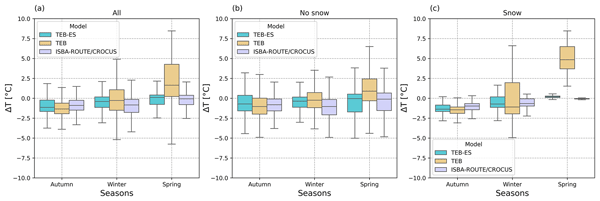
In winter, snow- and ice-covered artificial surfaces are important aspects of the urban climate. They may influence the magnitude of the urban heat island effect, but this is still unclear. In this study, we improved the representation of the snow and ice cover in the Town Energy Balance (TEB) urban climate model. Evaluations have shown that the results are promising for using TEB to study the climate of cold cities.
Jérémy Bernard, Tim Nagel, Valéry Masson, Aude Lemonsu, Jean Wurtz, Pierre Tulet, and Quentin Rodier
Atmos. Chem. Phys., 26, 12729–12749, https://doi.org/10.5194/acp-26-12729-2026, https://doi.org/10.5194/acp-26-12729-2026, 2026
Short summary
Short summary
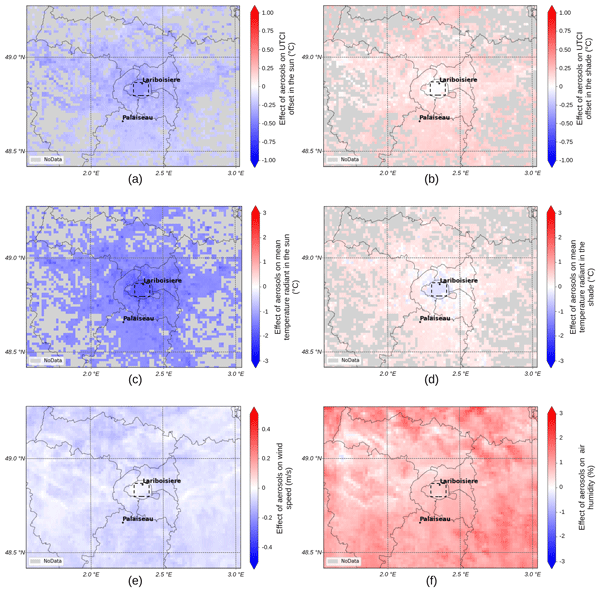
Cities are particularly vulnerable to heat-waves because of their dense population combined with an amplification of the heat hazard caused by the urban heat island phenomenon. Heat event are sometimes associated with aerosol plume in the atmosphere, which affect the thermal comfort. This study shows that aerosol plumes can result in a heat stress reduction of up to 1 °C in sunny areas in cities while no difference in the shade of suburban areas.
Paul Boumendil, Pierre-Antoine Joulin, Quentin Rodier, and Valéry Masson
Wind Energ. Sci. Discuss., https://doi.org/10.5194/wes-2026-118, https://doi.org/10.5194/wes-2026-118, 2026
Preprint under review for WES
Short summary
Short summary
Wind turbines can modify atmospheric conditions in and around wind farms. This review brings together results from field measurements, satellite observations, and numerical simulations to examine meteorological changes occurring near the ground, where they may influence ecosystems and human activities. The reviewed studies show that wind turbines can affect wind, temperature, humidity, turbulence and surface exchanges, with effects that depend on weather conditions and site characteristics.
Robert Schoetter, Cyril Caliot, Florent Retailleau, Tim Nagel, Christophe Coustet, Vincent Eymet, Vincent Forest, Frédéric Hourdin, Atsushi Inagaki, Simone Kotthaus, Valéry Masson, William Morrison, and Najda Villefranque
EGUsphere, https://doi.org/10.5194/egusphere-2026-2061, https://doi.org/10.5194/egusphere-2026-2061, 2026
This preprint is open for discussion and under review for Geoscientific Model Development (GMD).
Short summary
Short summary
Temperature, humidity, radiation, and wind can have a negative impact on human comfort and infrastructure in urban areas. Building-resolving meteorological models can help to quantify such meteorological impacts and the potential benefits of adaptation measures to climate change. Here, a new unified algorithm to calculate the radiation, heat conduction, and sensible heat exchange in urban areas is coupled with an atmospheric model, and evaluated against experimental data.
Paul Boumendil, Pierre-Antoine Joulin, Quentin Rodier, and Valéry Masson
Wind Energ. Sci. Discuss., https://doi.org/10.5194/wes-2026-84, https://doi.org/10.5194/wes-2026-84, 2026
Revised manuscript accepted for WES
Short summary
Short summary
Wind turbines can modify atmospheric conditions over wind farms. This study uses multi-scale, coupled atmosphere-soil-vegetation-wind turbine simulations to investigate how a wind farm interacts with a spring frost event in a vineyard area with complex terrain. Such a numerical approach provides new insights into turbine-atmosphere interactions and shows that turbine operation induces vertical mixing that disrupts near-surface atmospheric layers, leading to local warming of up to 2°C.
Lorena de Carvalho Araujo, Valéry Masson, Robert Schoetter, Jean Wurtz, Anouk Le Bihan, and Marion Bonhomme
Earth Syst. Sci. Data Discuss., https://doi.org/10.5194/essd-2026-201, https://doi.org/10.5194/essd-2026-201, 2026
Revised manuscript under review for ESSD
Short summary
Short summary
Urban populations are increasingly exposed to heat stress due to climate change and the urban heat island effect. Urban climate models require detailed data on building materials (e.g. roof cover material, insulation in walls) to simulate the meteorological impact on humans and infrastructure. This study presents an open database of residential building types by country that has been created based on a global survey of architects and urban climatologists.
William Morrison, Dana Looschelders, Jonnathan Céspedes, Bernie Claxton, Marc-Antoine Drouin, Jean-Charles Dupont, Aurélien Faucheux, Martial Haeffelin, Christopher C. Holst, Simone Kotthaus, Valéry Masson, James McGregor, Jeremy Price, Matthias Zeeman, Sue Grimmond, and Andreas Christen
Earth Syst. Sci. Data, 17, 6507–6529, https://doi.org/10.5194/essd-17-6507-2025, https://doi.org/10.5194/essd-17-6507-2025, 2025
Short summary
Short summary
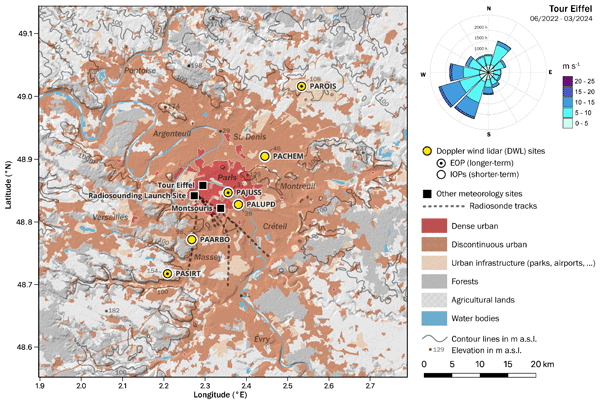
We conducted research using sophisticated wind sensors to better understand wind patterns in Paris. By installing these sensors across the city, we gathered detailed data on wind speeds and directions from 2022 to 2024. This information helps improve weather and climate models, making them more accurate for city environments. Our findings offer valuable insights for scientists studying urban air and weather, improving predictions and understanding of city-scale atmospheric processes.
Aurélien Mirebeau, Cécile de Munck, Bertrand Bonan, Christine Delire, Aude Lemonsu, Valéry Masson, and Stephan Weber
Geosci. Model Dev., 18, 5329–5349, https://doi.org/10.5194/gmd-18-5329-2025, https://doi.org/10.5194/gmd-18-5329-2025, 2025
Short summary
Short summary
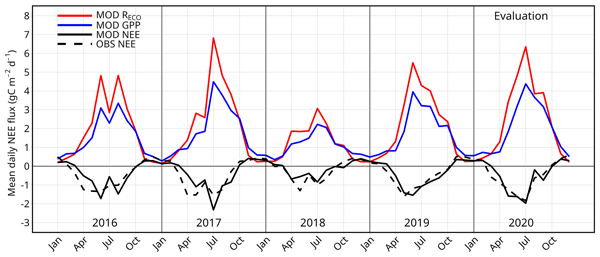
The greening of cities is recommended to limit the effects of climate change. In particular, green roofs can provide numerous environmental benefits, such as urban cooling, water retention, and carbon sequestration. The aim of this research is to develop a new module for calculating green roof CO2 fluxes within a model that can already simulate hydrological and thermal processes of such roofs. The calibration and evaluation of this module take advantage of long-term experimental data.
Cloé David, Clotilde Augros, Benoit Vié, François Bouttier, and Tony Le Bastard
Atmos. Meas. Tech., 18, 3715–3745, https://doi.org/10.5194/amt-18-3715-2025, https://doi.org/10.5194/amt-18-3715-2025, 2025
Short summary
Short summary
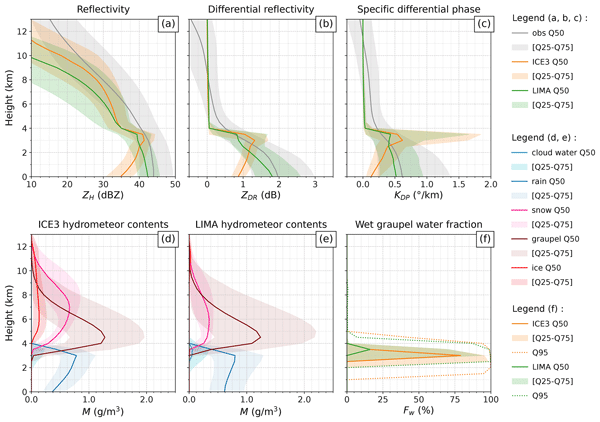
Simulations of storm characteristics and associated radar signatures were improved, especially under the freezing level, using an advanced cloud scheme. Discrepancies between observations and forecasts at and above the melting layer highlighted issues in both the radar forward operator and the microphysics. To overcome some of these issues, different parameterizations of the operator were suggested. This work aligns with the future integration of polarimetric data into assimilation systems.
Hugo Marchal, François Bouttier, and Olivier Nuissier
Nat. Hazards Earth Syst. Sci., 25, 2613–2628, https://doi.org/10.5194/nhess-25-2613-2025, https://doi.org/10.5194/nhess-25-2613-2025, 2025
Short summary
Short summary
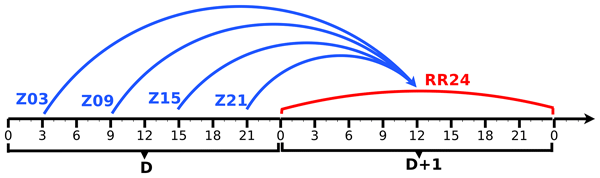
This paper investigates the relationship between changes in weather forecasts and predictability, which has so far been considered weak. By studying how weather scenarios persist over successive forecasts, it appears that conclusions can be drawn about forecasts' reliability.
Gabriel Colas, Valéry Masson, François Bouttier, Ludovic Bouilloud, Laura Pavan, and Virve Karsisto
Geosci. Model Dev., 18, 3453–3472, https://doi.org/10.5194/gmd-18-3453-2025, https://doi.org/10.5194/gmd-18-3453-2025, 2025
Short summary
Short summary
In winter, snow- and ice-covered artificial surfaces are important aspects of the urban climate. They may influence the magnitude of the urban heat island effect, but this is still unclear. In this study, we improved the representation of the snow and ice cover in the Town Energy Balance (TEB) urban climate model. Evaluations have shown that the results are promising for using TEB to study the climate of cold cities.
Robert Schoetter, Robin James Hogan, Cyril Caliot, and Valéry Masson
Geosci. Model Dev., 18, 405–431, https://doi.org/10.5194/gmd-18-405-2025, https://doi.org/10.5194/gmd-18-405-2025, 2025
Short summary
Short summary
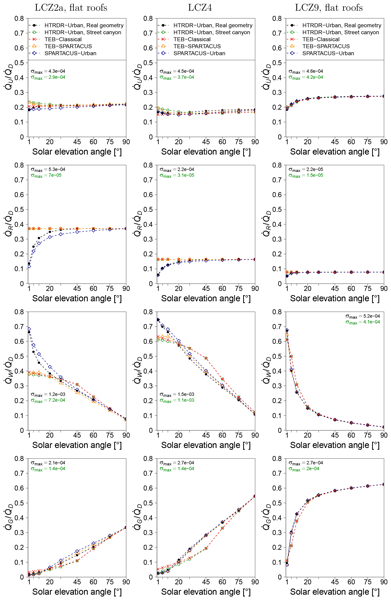
Radiation is relevant to the atmospheric impact on people and infrastructure in cities as it can influence the urban heat island, building energy consumption, and human thermal comfort. A new urban radiation model, assuming a more realistic form of urban morphology, is coupled to the urban climate model Town Energy Balance (TEB). The new TEB is evaluated with a reference radiation model for a variety of urban morphologies, and an improvement in the simulated radiative observables is found.
Martial Haeffelin, Jean-François Ribaud, Jonnathan Céspedes, Jean-Charles Dupont, Aude Lemonsu, Valéry Masson, Tim Nagel, and Simone Kotthaus
Atmos. Chem. Phys., 24, 14101–14122, https://doi.org/10.5194/acp-24-14101-2024, https://doi.org/10.5194/acp-24-14101-2024, 2024
Short summary
Short summary
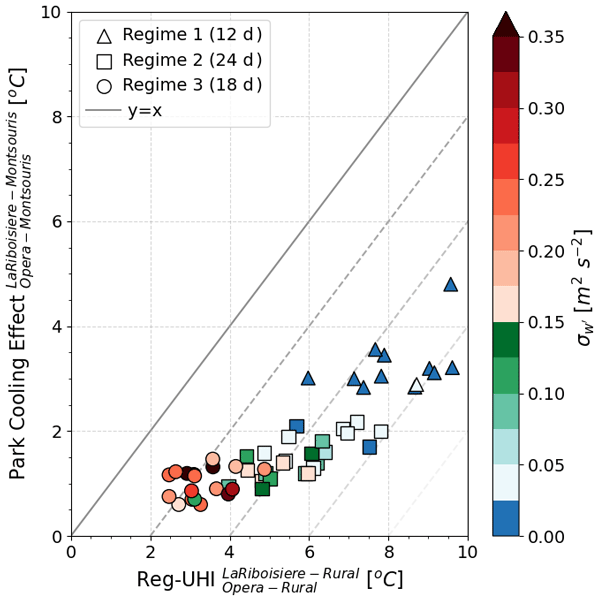
This study highlights how the state of the urban atmospheric boundary layer impacts urban park cooling effect intensity at night. Under summertime heat wave conditions, the urban atmosphere becomes stable at night, which inhibits turbulent motions. Under those specific conditions, urban parks and woods cool much more efficiently than the surrounding built-up neighbourhoods in the evening and through the night, providing cooler air temperatures by 4 to 6° C depending on park size.
François Bouttier and Hugo Marchal
Nat. Hazards Earth Syst. Sci., 24, 2793–2816, https://doi.org/10.5194/nhess-24-2793-2024, https://doi.org/10.5194/nhess-24-2793-2024, 2024
Short summary
Short summary
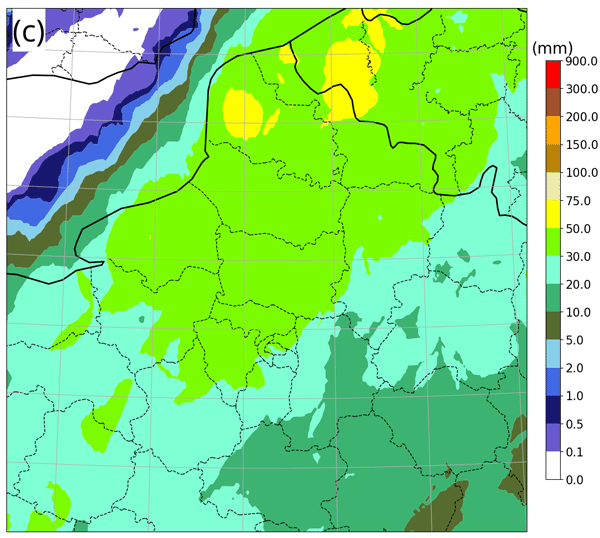
Weather prediction uncertainties can be described as sets of possible scenarios – a technique called ensemble prediction. Our machine learning technique translates them into more easily interpretable scenarios for various users, balancing the detection of high precipitation with false alarms. Key parameters are precipitation intensity and space and time scales of interest. We show that the approach can be used to facilitate warnings of extreme precipitation.
Erwan Jézéquel, Frédéric Blondel, and Valéry Masson
Wind Energ. Sci., 9, 119–139, https://doi.org/10.5194/wes-9-119-2024, https://doi.org/10.5194/wes-9-119-2024, 2024
Short summary
Short summary
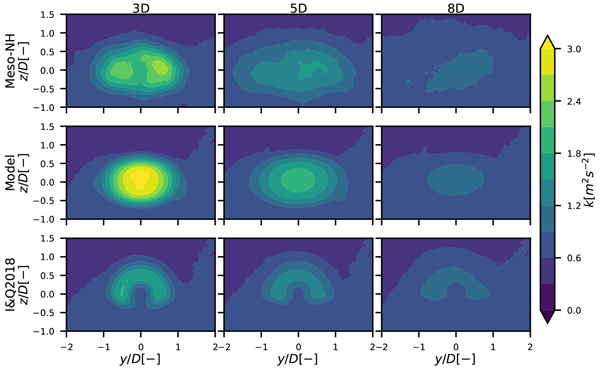
Analytical models allow us to quickly compute the decreased power output and lifetime induced by wakes in a wind farm. This is achieved by evaluating the modified velocity and turbulence in the wake. In this work, we present a new model based on the velocity and turbulence breakdowns presented in Part 1. This new model is physically based, allows us to compute the whole turbulence profile (rather than the maximum value) and is built to take atmospheric stability into account.
Erwan Jézéquel, Frédéric Blondel, and Valéry Masson
Wind Energ. Sci., 9, 97–117, https://doi.org/10.5194/wes-9-97-2024, https://doi.org/10.5194/wes-9-97-2024, 2024
Short summary
Short summary
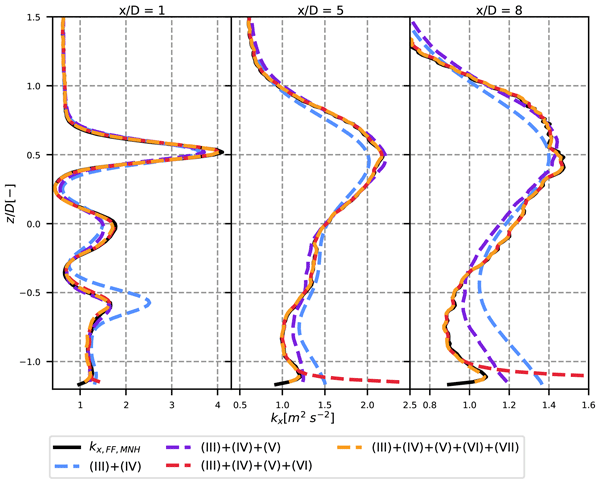
Wind turbine wakes affect the production and lifecycle of downstream turbines. They can be predicted with the dynamic wake meandering (DWM) method. In this paper, the authors break down the velocity and turbulence in the wake of a wind turbine into several terms. They show that it is implicitly assumed in the DWM that some of these terms are neglected. With high-fidelity simulations, it is shown that this can lead to some errors, in particular for the maximum turbulence added by the wake.
Juliette Godet, Olivier Payrastre, Pierre Javelle, and François Bouttier
Nat. Hazards Earth Syst. Sci., 23, 3355–3377, https://doi.org/10.5194/nhess-23-3355-2023, https://doi.org/10.5194/nhess-23-3355-2023, 2023
Short summary
Short summary
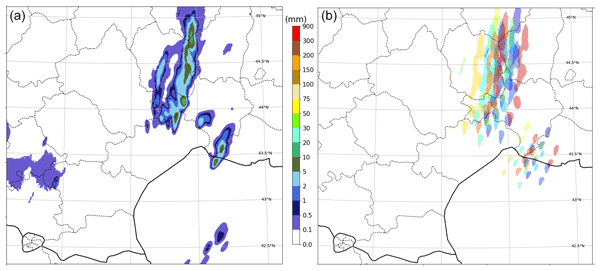
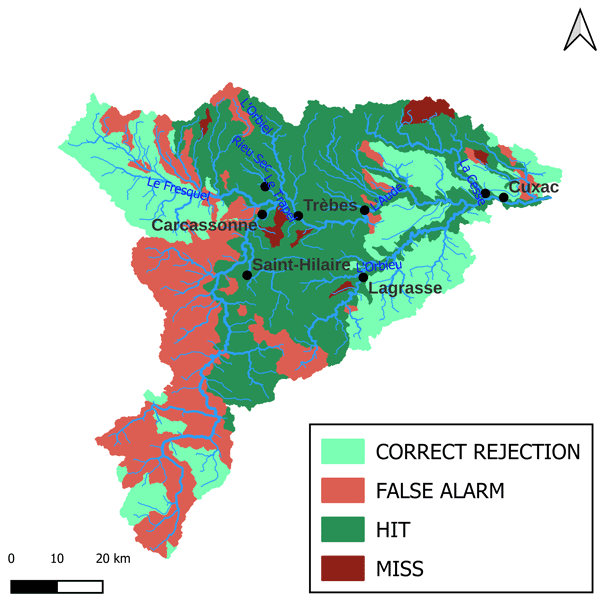
This article results from a master's research project which was part of a natural hazards programme developed by the French Ministry of Ecological Transition. The objective of this work was to investigate a possible way to improve the operational flash flood warning service by adding rainfall forecasts upstream of the forecasting chain. The results showed that the tested forecast product, which is new and experimental, has a real added value compared to other classical forecast products.
Maryse Charpentier-Noyer, Daniela Peredo, Axelle Fleury, Hugo Marchal, François Bouttier, Eric Gaume, Pierre Nicolle, Olivier Payrastre, and Maria-Helena Ramos
Nat. Hazards Earth Syst. Sci., 23, 2001–2029, https://doi.org/10.5194/nhess-23-2001-2023, https://doi.org/10.5194/nhess-23-2001-2023, 2023
Short summary
Short summary
This paper proposes a methodological framework designed for event-based evaluation in the context of an intense flash-flood event. The evaluation adopts the point of view of end users, with a focus on the anticipation of exceedances of discharge thresholds. With a study of rainfall forecasts, a discharge evaluation and a detailed look at the forecast hydrographs, the evaluation framework should help in drawing robust conclusions about the usefulness of new rainfall ensemble forecasts.
Mathew Lipson, Sue Grimmond, Martin Best, Winston T. L. Chow, Andreas Christen, Nektarios Chrysoulakis, Andrew Coutts, Ben Crawford, Stevan Earl, Jonathan Evans, Krzysztof Fortuniak, Bert G. Heusinkveld, Je-Woo Hong, Jinkyu Hong, Leena Järvi, Sungsoo Jo, Yeon-Hee Kim, Simone Kotthaus, Keunmin Lee, Valéry Masson, Joseph P. McFadden, Oliver Michels, Wlodzimierz Pawlak, Matthias Roth, Hirofumi Sugawara, Nigel Tapper, Erik Velasco, and Helen Claire Ward
Earth Syst. Sci. Data, 14, 5157–5178, https://doi.org/10.5194/essd-14-5157-2022, https://doi.org/10.5194/essd-14-5157-2022, 2022
Short summary
Short summary
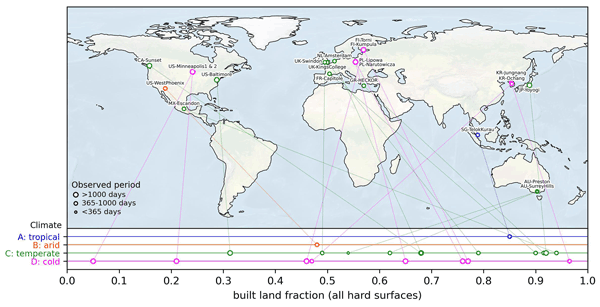
We describe a new openly accessible collection of atmospheric observations from 20 cities around the world, capturing 50 site years. The observations capture local meteorology (temperature, humidity, wind, etc.) and the energy fluxes between the land and atmosphere (e.g. radiation and sensible and latent heat fluxes). These observations can be used to improve our understanding of urban climate processes and to test the accuracy of urban climate models.
Jérémy Bernard, Erwan Bocher, Elisabeth Le Saux Wiederhold, François Leconte, and Valéry Masson
Geosci. Model Dev., 15, 7505–7532, https://doi.org/10.5194/gmd-15-7505-2022, https://doi.org/10.5194/gmd-15-7505-2022, 2022
Short summary
Short summary
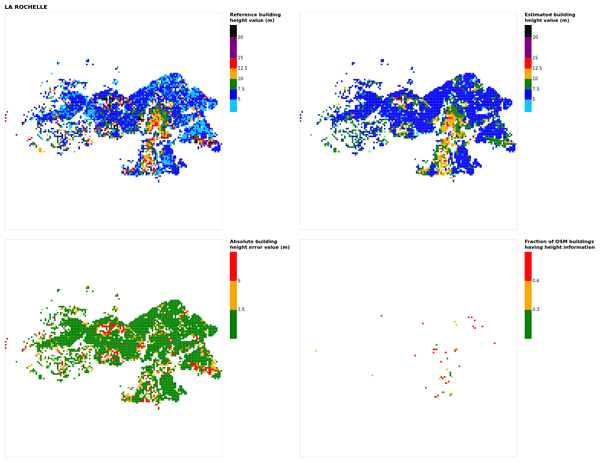
OpenStreetMap is a collaborative project aimed at creaing a free dataset containing topographical information. Since these data are available worldwide, they can be used as standard data for geoscience studies. However, most buildings miss the height information that constitutes key data for numerous fields (urban climate, noise propagation, air pollution). In this work, the building height is estimated using statistical modeling using indicators that characterize the building's environment.
Samira Khodayar, Silvio Davolio, Paolo Di Girolamo, Cindy Lebeaupin Brossier, Emmanouil Flaounas, Nadia Fourrie, Keun-Ok Lee, Didier Ricard, Benoit Vie, Francois Bouttier, Alberto Caldas-Alvarez, and Veronique Ducrocq
Atmos. Chem. Phys., 21, 17051–17078, https://doi.org/10.5194/acp-21-17051-2021, https://doi.org/10.5194/acp-21-17051-2021, 2021
Short summary
Short summary
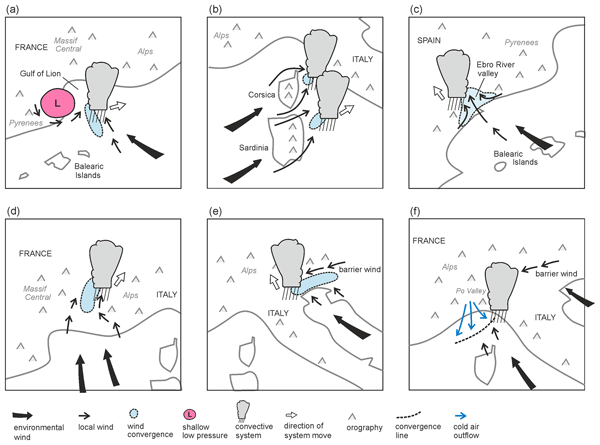
Heavy precipitation (HP) constitutes a major meteorological threat in the western Mediterranean. Every year, recurrent events affect the area with fatal consequences. Despite this being a well-known issue, open questions still remain. The understanding of the underlying mechanisms and the modeling representation of the events must be improved. In this article we present the most recent lessons learned from the Hydrological Cycle in the Mediterranean Experiment (HyMeX).
Cited articles
Ahmed, S.: An experimental study of the wake structures of typical automobile shapes, J. Wind Eng. Ind. Aerod., 9, 49–62, https://doi.org/10.1016/0167-6105(81)90077-5, 1981. a
Amato, F., Favez, O., Pandolfi, M., Alastuey, A., Querol, X., Moukhtar, S., Bruge, B., Verlhac, S., Orza, J. A. G., Bonnaire, N., Le Priol, T., Petit, J. F., and Sciare, J.: Traffic induced particle resuspension in Paris: Emission factors and source contributions, Atmos. Environ., 129, 114–124, https://doi.org/10.1016/j.atmosenv.2016.01.022, 2016. a, b
Baker, C.: Flow and dispersion in ground vehicle wakes, J. Fluid. Struct., 15, 1031–1060, https://doi.org/10.1006/jfls.2001.0385, 2001. a
Best, M. and Grimmond, C.: Investigation of the impact of anthropogenic heat flux within an urban land surface model and PILPS-urban, Theor. Appl. Climatol., 126, 51–60, https://doi.org/10.1007/s00704-015-1554-3, 2016. a
Bohnenstengel, S. I., Hamilton, I., Davies, M., and Belcher, S. E.: Impact of anthropogenic heat emissions on London's temperatures, Q. J. Roy. Meteorol. Soc., 140, 687–698, https://doi.org/10.1002/qj.2144, 2013. a, b
Bueno, B., Pigeon, G., Norford, L. K., Zibouche, K., and Marchadier, C.: Development and evaluation of a building energy model integrated in the TEB scheme, Geosci. Model Dev., 5, 433–448, https://doi.org/10.5194/gmd-5-433-2012, 2012. a
Chen, X. and Yang, J.: Potential benefit of electric vehicles in counteracting future urban warming: A case study of Hong Kong, Sustainable Cities and Society, 87, 104200, https://doi.org/10.1016/j.scs.2022.104200, 2022. a
Chen, X., Yang, J., Zhu, R., Wong, M. S., and Ren, C.: Spatiotemporal impact of vehicle heat on urban thermal environment: A case study in Hong Kong, Building and Environment, 205, 108224, https://doi.org/10.1016/j.buildenv.2021.108224, 2021. a
CNRM: CNRM Open Source, http://www.umr-cnrm.fr/surfex//spip.php?article387 (last access: 7 December 2025), 2025. a
Crevier, L.-P. and Delage, Y.: METRo: A and New Model and for Road-Condition and Forecasting in Canada, J. Appl. Meteorol., 40, 2026–2037, https://doi.org/10.1175/1520-0450(2001)040<2026:MANMFR>2.0.CO;2, 2001. a
de Munck, C., Pigeon, G., Masson, V., Meunier, F., Bousquet, P., Tréméac, B., Merchat, M., Poeuf, P., and Marchadier, C.: How much can air conditioning increase air temperatures for a city like Paris, France?, Int. J. Climatol., 33, 210–227, https://doi.org/10.1002/joc.3415, 2013. a, b
De Ridder, K., Lauwaet, D., and Maiheu, B.: UrbClim – A fast urban boundary layer climate model, Urban Clim., 12, 21–48, https://doi.org/10.1016/j.uclim.2015.01.001, 2015. a
Denby, B. R., Sundvor, I., Johansson, C., Pirjola, L., Ketzel, M., Norman, M., Kupiainen, K., Gustafsson, M., Blomqvist, G., Kauhaniemi, M., and Omstedt, G.: A coupled road dust and surface moisture model to predict non-exhaust road traffic induced particle emissions (NORTRIP). Part 2: Surface moisture and salt impact modelling, Atmos. Environ., 81, 485–503, https://doi.org/10.1016/j.atmosenv.2013.09.003, 2013. a, b, c
EEA: Sustainability of Europe’s mobility systems, Tech. rep., European environmental agency, https://doi.org/10.2800/8560026, 2024. a
Eskridge, R. and Rao, T.: Measurement and predicition of traffic-induced turbulence and velocity fields near roadways, J. Appl. Meteorol. Clim., 22, 1431–1443, https://doi.org/10.1175/1520-0450(1983)022<1431:MAPOTI>2.0.CO;2, 1983. a
Eskridge, R. E. and Thompson, R. S.: Experimental and theoretical study of the wake of a block-shaped vehicle in a shear-free boundary flow, Atmos. Environ. (1967), 16, 2821–2836, https://doi.org/10.1016/0004-6981(82)90033-6, 1982. a
Eurostat: Passenger cars, by type of motor energy, https://doi.org/10.2908/ROAD_EQS_CARPDA, 2023. a
Farroni, F., Giordano, D., Russo, M., and Timpone, F.: TRT: thermo racing tyre a physical model to predict the tyre temperature distribution, Meccanica, 49, 707–723, https://doi.org/10.1007/s11012-013-9821-9, 2014. a
Flanner, M. G.: Integrating anthropogenic heat flux with global climate models, Geophys. Res. Lett., 36, L02801, https://doi.org/10.1029/2008GL036465, 2009. a
Hargreaves, D. and Baker, C.: Gaussian puff model of an urban street canyon, J. Wind Eng. Ind. Aerod., 69-71, 927–939, https://doi.org/10.1016/S0167-6105(97)00218-3, 1997. a
Harrison, R., McGoldrick, B., and Williams, C.: Artificial heat release from greater London, 1971–1976, Atmos. Environ. (1967), 18, 2291–2304, https://doi.org/10.1016/0004-6981(84)90001-5, 1984. a
Hider, Z., Hibberd, S., and Baker, C.: Modelling particulate dispersion in the wake of a vehicle, J. Wind Eng. Ind. Aerod., 67-68, 733–744, https://doi.org/10.1016/S0167-6105(97)00114-1, 1997. a, b
Huber, P. J.: Robust Regression: Asymptotics, Conjectures and Monte Carlo, Ann. Statist., 1, 799–821, https://doi.org/10.1214/aos/1176342503, 1973. a
Iamarino, M., Beevers, S., and Grimmond, C. S. B.: High‐resolution (space, time) anthropogenic heat emissions: London 1970–2025, Int. J. Climatol., 32, 1754–1767, https://doi.org/10.1002/joc.2390, 2011. a, b, c, d
IPCC: Summary for Policymakers, Cambridge University Press, Cambridge, UK, in press, https://doi.org/10.1017/9781009157988.001, 2022. a
Jin, L., Schubert, S., Fenner, D., Meier, F., and Schneider, C.: Integration of a Building Energy Model in an Urban Climate Model and its Application, Boundary Layer Meteorol., 178, 249––281, https://doi.org/10.1007/s10546-020-00569-y, 2021. a
Johnson, T. and Joshi, A.: Review of vehicle engine efficiency and emissions, Tech. rep., SAE International, https://doi.org/10.4271/2018-01-0329, 2018. a, b
Kargul, J., Moskalik, A., Barba, D., Newman, K., and Dekraker, P.: Estimating GHG reduction from combinations of current best-available and future powertrain and vehicle technologies for a midsized car using EPA’s ALPHA model, SAE Technical Paper 2016-01-0910, SAE International, Warrendale, PA, 2688–3627, https://doi.org/10.4271/2016-01-0910, 2016. a, b
Kargul, J., Moskalik, A., Barba, D., and Butters, K.: Validation of hybrid and electric vehicle models for ALPHA v3.0, SAE Technical Paper 2025-01-8521, SAE International, Warrendale, PA, https://doi.org/10.4271/2025-01-8521, 2025. a
Karsisto, V. E.: RoadSurf 1.1: open-source road weather model library, Geosci. Model Dev., 17, 4837–4853, https://doi.org/10.5194/gmd-17-4837-2024, 2024. a, b
Kelly, D. P. and Sharp, R. S.: Time-optimal control of the race car: influence of a thermodynamic tyre model, Vehicle Syst. Dyn., 50, 641–662, https://doi.org/10.1080/00423114.2011.622406, 2012. a
Khalifa, A., Marchetti, M., Bouilloud, L., Martin, E., Bues, M., and Chancibaut, K.: Accounting for anthropic energy flux of traffic in winter urban road surface temperature simulations with the TEB model, Geosci. Model Dev., 9, 547–565, https://doi.org/10.5194/gmd-9-547-2016, 2016. a, b, c, d, e, f, g
Kłysik, K.: Spatial and seasonal distribution of anthropogenic heat emissions in Lodz, Poland, Atmos. Environ., 30, https://doi.org/10.1016/1352-2310(96)00043-X, 1996. a
Komnos, D., Broekaert, S., Zacharof, N., Ntziachristos, L., and Fontaras, G.: A method for quantifying the resistances of light and heavy-duty vehicles under in-use conditions, Energy Convers. Manage., 299, 117810, https://doi.org/10.1016/j.enconman.2023.117810, 2024. a
Kühlwein, J.: Driving Resistances of light-duty vehicles in Europe: present situation, trends, and scenarios for 2025, ICCT; International Council on Clean Transportation (2016), Tech. rep., International Council on Clean Transportation (ICCT), https://theicct.org/wp-content/uploads/2021/06/ICCT_LDV-Driving-Resistances-EU_121516.pdf (last access: 9 Decemeber 2025), 2016. a
Lemonsu, A., Masson, V., Shashua-Bar, L., Erell, E., and Pearlmutter, D.: Inclusion of vegetation in the Town Energy Balance model for modelling urban green areas, Geosci. Model Dev., 5, 1377–1393, https://doi.org/10.5194/gmd-5-1377-2012, 2012. a, b, c
Lemonsu, A., Viguié, V., Daniel, M., and Masson, V.: Vulnerability to heat waves: Impact of urban expansion scenarios on urban heat island and heat stress in Paris (France), Urban Clim., 14, 586–605, https://doi.org/10.1016/j.uclim.2015.10.007, 2015. a
Lin, Y.-J. and Hwang, S.-J.: Temperature prediction of rolling tires by computer simulation, Math. Comput. Simulation, 67, 235–249, https://doi.org/10.1016/j.matcom.2004.07.002, 2004. a
Lipson, M. J., Grimmond, S., Best, M., Abramowitz, G., Coutts, A., Tapper, N., Baik, J., Beyers, M., Blunn, L., Boussetta, S., Bou‐Zeid, E., De Kauwe, M. G., De Munck, C., Demuzere, M., Fatichi, S., Fortuniak, K., Han, B., Hendry, M. A., Kikegawa, Y., Kondo, H., Lee, D., Lee, S., Lemonsu, A., Machado, T., Manoli, G., Martilli, A., Masson, V., McNorton, J., Meili, N., Meyer, D., Nice, K. A., Oleson, K. W., Park, S., Roth, M., Schoetter, R., Simón‐Moral, A., Steeneveld, G., Sun, T., Takane, Y., Thatcher, M., Tsiringakis, A., Varentsov, M., Wang, C., Wang, Z., and Pitman, A. J.: Evaluation of 30 urban land surface models in the Urban‐PLUMBER project: Phase 1 results, Q. J. Roy. Meteor. Soc., 150, 126–169, https://doi.org/10.1002/qj.4589, 2024. a, b
Logan, J.: Modélisation des forces de contact entre le pneu d’un avion et la piste, PhD thesis, Toulouse, ISAE, Toulouse, https://theses.fr/2012ESAE0019 (last access: 9 Decemeber 2025), 2012. a
Masson, V. and Seity, Y.: Including Atmospheric Layers in Vegetation and Urban Offline Surface Schemes, J. Appl. Meteorol. Clim., 48, 1377–1397, https://doi.org/10.1175/2009JAMC1866.1, 2009. a
Meng, C.: A numerical forecast model for road meteorology, Meteorol. Atmos. Phys., 130, 485–498, https://doi.org/10.1007/s00703-017-0527-8, 2018. a
Newman, K., Kargul, J., and Barba, D.: Benchmarking and modeling of a conventional mid-size car using ALPHA, SAE Technical Paper 2015-01-1140, SAE International, Warrendale, PA, https://doi.org/10.4271/2015-01-1140, 2015. a
Newman, K. A. and Dekraker, P.: Modeling the effects of transmission gear count, ratio progression, and final drive ratio on fuel economy and performance using ALPHA, SAE Technical Paper 2016-01-1143, SAE International, Warrendale, PA, 2688–3627, https://doi.org/10.4271/2016-01-1143, 2016. a
Newman, K. A., Doorlag, M., and Barba, D.: Modeling of a conventional mid-size car with CVT using ALPHA and comparable powertrain technologies, SAE Technical Paper, 2016–01–1141, https://doi.org/10.4271/2016-01-1141, 2016. a
Pacejka, H. B.: Modelling of Tyre Force and Moment Generation, in: Rolling Contact Phenomena, Springer Vienna, Vienna, 277–327, https://doi.org/10.1007/978-3-7091-2782-7_5, 2000. a
Rao, K. S.: ROADWAY-2: A Model for Pollutant Dispersion near Highways, Water Air Soil Pollut., 2, 261–277, https://doi.org/10.1023/A:1021391519305, 2002. a
Sailor, D. J. and Lu, L.: A top–down methodology for developing diurnal and seasonal anthropogenic heating profiles for urban areas, Atmos. Environ., 38, 2737–2748, https://doi.org/10.1016/j.atmosenv.2004.01.034, 2004. a, b, c
Sher, F., Chen, S., Raza, A., Rasheed, T., Razmkhah, O., Rashid, T., Rafi-ul Shan, P. M., and Erten, B.: Novel strategies to reduce engine emissions and improve energy efficiency in hybrid vehicles, Cleaner Engineering and Technology, 2, 100074, https://doi.org/10.1016/j.clet.2021.100074, 2021. a
Shourehdeli, S. A., Mirmohammadi, A., and Gholipour, H.: Machine learning-driven universal models for gasoline engine performance maps: Accuracy and generality evaluation, Thermal Science and Engineering Progress, 62, 103593, https://doi.org/10.1016/j.tsep.2025.103593, 2025. a
Stuhldreher, M., Kargul, J., Barba, D., McDonald, J., Bohac, S., Dekraker, P., and Moskalik, A.: Benchmarking a 2016 Honda Civic 1.5-Liter L15B7 Turbocharged Engine and Evaluating the Future Efficiency Potential of Turbocharged Engines, SAE International Journal of Engines, 11, 1273–1305, https://doi.org/10.4271/2018-01-0319, 2018. a
Tutuianu, M., Bonnel, P., Ciuffo, B., Haniu, T., Ichikawa, N., Marotta, A., Pavlovic, J., and Steven, H.: Development of the World-wide harmonized Light duty Test Cycle (WLTC) and a possible pathway for its introduction in the European legislation, Transportation Research Part D: Transport and Environment, 40, 61–75, https://doi.org/10.1016/j.trd.2015.07.011, 2015. a, b
Varquez, A. C. G., Kiyomoto, S., Khanh, D. N., and Kanda, M.: Global 1-km present and future hourly anthropogenic heat flux, Sci. Data, 8, 64, https://doi.org/10.1038/s41597-021-00850-w, 2021. a
Wahlin, J., Leisinger, S., and Klein-Paste, A.: The effect of sodium chloride solution on the hardness of compacted snow, Cold Reg. Sci. Technol., 102, 1–7, https://doi.org/10.1016/j.coldregions.2014.02.002, 2014. a
Ward, H. C., Rotach, M. W., Gohm, A., Graus, M., Karl, T., Haid, M., Umek, L., and Muschinski, T.: Energy and mass exchange at an urban site in mountainous terrain – the Alpine city of Innsbruck, Atmos. Chem. Phys., 22, 6559–6593, https://doi.org/10.5194/acp-22-6559-2022, 2022. a
Weiss, M., Cloos, K. C., and Helmers, E.: Energy efficiency trade-offs in small to large electric vehicles, Environ. Sci. Eur., 32, 46, https://doi.org/10.1186/s12302-020-00307-8, 2020. a
Youssef, J.: Étude expérimentale d'un jet plan turbulent se développant dans un flux uniforme en co-courant, PhD thesis, ISAE-ENSMA Ecole Nationale Supérieure de Mécanique et d'Aérotechique, https://theses.hal.science/file/index/docid/784840/filename/these_JeanYoussef.pdf (last access: 9 December 2025), 2012. a
Short summary
Each vehicle from road traffic is a source of heat and an obstacle that induce wind when it passes. It directly impacts the local atmospheric conditions and the road surface temperature. These impacts are included in the numerical model of the Town Energy Balance, used to simulate local conditions in urbanised environments. Simulations show that road traffic has a significant impact on the road surface temperature up to a few degrees, and on local variables.
Each vehicle from road traffic is a source of heat and an obstacle that induce wind when it...


Special issue