
Articles | Volume 18, issue 23
https://doi.org/10.5194/gmd-18-9879-2025
© Author(s) 2025. This work is distributed under
the Creative Commons Attribution 4.0 License.
the Creative Commons Attribution 4.0 License.
https://doi.org/10.5194/gmd-18-9879-2025
© Author(s) 2025. This work is distributed under
the Creative Commons Attribution 4.0 License.
the Creative Commons Attribution 4.0 License.
Model description paper
| 
10 Dec 2025
Model description paper |
| 10 Dec 2025
| 10 Dec 2025
r.avaflow v4, a multi-purpose landslide simulation framework
Martin Mergili
CORRESPONDING AUTHOR

Cascade – Mountain Processes and Mountain Hazards, Department of Geography and Regional Science, University of Graz, Heinrichstraße 36, 8010 Graz, Austria
Hanna Pfeffer
Cascade – Mountain Processes and Mountain Hazards, Department of Geography and Regional Science, University of Graz, Heinrichstraße 36, 8010 Graz, Austria
Andreas Kellerer-Pirklbauer
Cascade – Mountain Processes and Mountain Hazards, Department of Geography and Regional Science, University of Graz, Heinrichstraße 36, 8010 Graz, Austria
Christian Zangerl
Institute of Applied Geology, University of Natural Resources and Life Sciences (BOKU), Peter-Jordan-Straße 82, 1190 Vienna, Austria
Shiva P. Pudasaini
School of Engineering and Design, Chair of Landslide Research, Technical University of Munich, Arcisstraße 21, 80333 Munich, Germany
Kathmandu Institute of Complex Flows, Kageshwori Manohara–3, Bhadrabas, Kathmandu, Nepal
Related authors
Anna Wirbel, Felix Oesterle, Guillaume Chambon, Thierry Faug, Johan Gaume, Julia Glaus, Stefan Hergarten, Dieter Issler, Yoichi Ito, Marco Martini, Martin Mergili, Matthias Rauter, Jörg Robl, Giorgio Rosatti, Kae Tsunematsu, Christian Tollinger, Hervé Vicari, Daniel Zugliani, and Jan-Thomas Fischer
EGUsphere, https://doi.org/10.5194/egusphere-2025-6053, https://doi.org/10.5194/egusphere-2025-6053, 2026
This preprint is open for discussion and under review for Geoscientific Model Development (GMD).
Short summary
Short summary
We present the first extended intercomparison of snow avalanche flow simulation tools. In this pilot-study, simulation results of mainly thickness/depth-integrated shallow flow models are compared for three simple test cases representative of standard applications. This analysis serves as a first quantitative assessment of the uncertainty introduced by the different implementation workflows (e.g., numerical schemes, ad-hoc treatments, geo-data handling, curvature treatment, etc.).
Johannes J. Fürst, David Farías-Barahona, Thomas Bruckner, Lucia Scaff, Martin Mergili, Santiago Montserrat, and Humberto Peña
Nat. Hazards Earth Syst. Sci., 25, 3559–3579, https://doi.org/10.5194/nhess-25-3559-2025, https://doi.org/10.5194/nhess-25-3559-2025, 2025
Short summary
Short summary
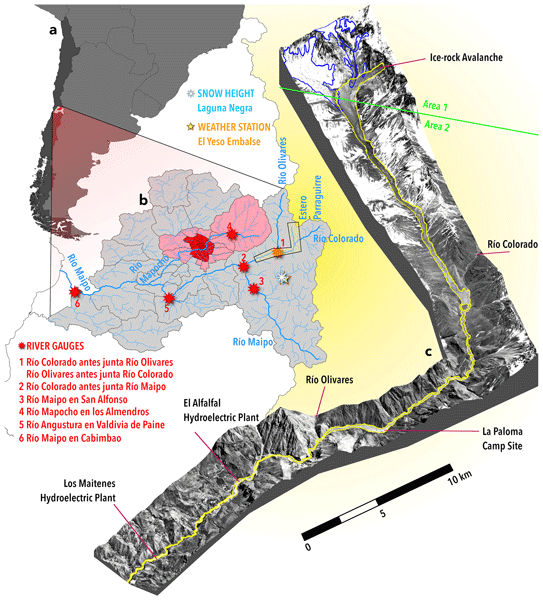
The 1987 Parraguirre ice–rock avalanche developed into a devastating debris flow, causing the loss of many lives and inflicting severe damage near Santiago, Chile. Here, we revise this event, combining various observational records with modelling techniques. In that year, important snow cover coincided with persistent warm periods in spring. We also put forward upward corrections for the trigger and flood volumes involved in this debris flow. Finally, temporary river damming was key for the flow ferocity.
Sonam Rinzin, Stuart Dunning, Rachel Joanne Carr, Ashim Sattar, and Martin Mergili
Nat. Hazards Earth Syst. Sci., 25, 1841–1864, https://doi.org/10.5194/nhess-25-1841-2025, https://doi.org/10.5194/nhess-25-1841-2025, 2025
Short summary
Short summary
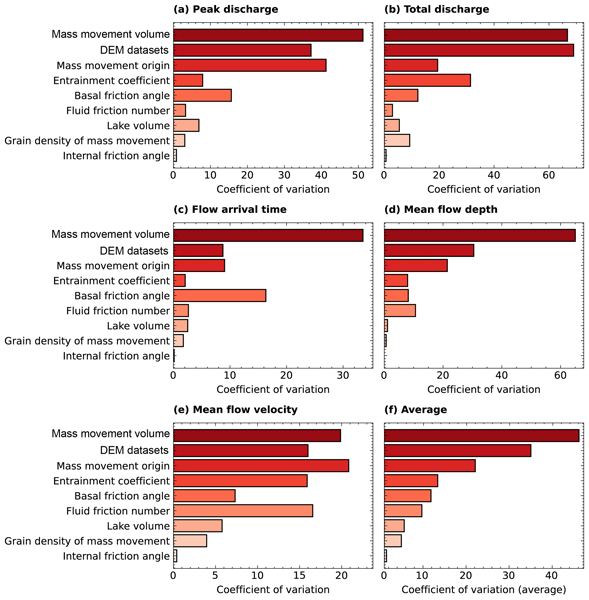
We modelled multiple glacial lake outburst flood (GLOF) scenarios (84 simulations) and tested the effect of nine key input parameters on the modelling results using r.avaflow. Our results highlight that GLOF modelling results are subject to uncertainty from the multiple input parameters. The variation in the volume of mass movement entering the lake causes the highest uncertainty in the modelled GLOF, followed by the DEM dataset and the origin of mass movement.
Adam Emmer, Simon K. Allen, Mark Carey, Holger Frey, Christian Huggel, Oliver Korup, Martin Mergili, Ashim Sattar, Georg Veh, Thomas Y. Chen, Simon J. Cook, Mariana Correas-Gonzalez, Soumik Das, Alejandro Diaz Moreno, Fabian Drenkhan, Melanie Fischer, Walter W. Immerzeel, Eñaut Izagirre, Ramesh Chandra Joshi, Ioannis Kougkoulos, Riamsara Kuyakanon Knapp, Dongfeng Li, Ulfat Majeed, Stephanie Matti, Holly Moulton, Faezeh Nick, Valentine Piroton, Irfan Rashid, Masoom Reza, Anderson Ribeiro de Figueiredo, Christian Riveros, Finu Shrestha, Milan Shrestha, Jakob Steiner, Noah Walker-Crawford, Joanne L. Wood, and Jacob C. Yde
Nat. Hazards Earth Syst. Sci., 22, 3041–3061, https://doi.org/10.5194/nhess-22-3041-2022, https://doi.org/10.5194/nhess-22-3041-2022, 2022
Short summary
Short summary
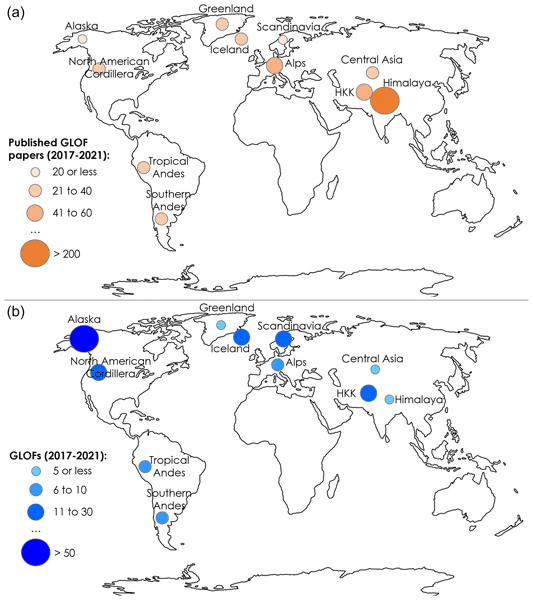
Glacial lake outburst floods (GLOFs) have attracted increased research attention recently. In this work, we review GLOF research papers published between 2017 and 2021 and complement the analysis with research community insights gained from the 2021 GLOF conference we organized. The transdisciplinary character of the conference together with broad geographical coverage allowed us to identify progress, trends and challenges in GLOF research and outline future research needs and directions.
Lea Hartl, Jakob Abermann, Ayla Akgün, Giulia Bertolotti, Tobias Bolch, Svenja Conzelmann, Codrut-Andrei Diaconu, Iris Hansche, Anne Hartig, Anna Haut, Kay Helfricht, Bernhard Hynek, Marie Sophie Kaucher, Andreas Kellerer-Pirklbauer, Ann Christin Kogel, Julie Krippes, Marcela Violeta Lauria, Christoph Mayer, Jan-Christoph Otto, Rainer Prinz, Sina Prölß, Lorenzo Rieg, Lea Schönleber, Gabriele Schwaizer, Bernd Seiser, Martin Stocker-Waldhuber, Markus Strudl, Martin Verhounik, and Harald Zandler
The Cryosphere, 20, 5157–5180, https://doi.org/10.5194/tc-20-5157-2026, https://doi.org/10.5194/tc-20-5157-2026, 2026
Short summary
Short summary
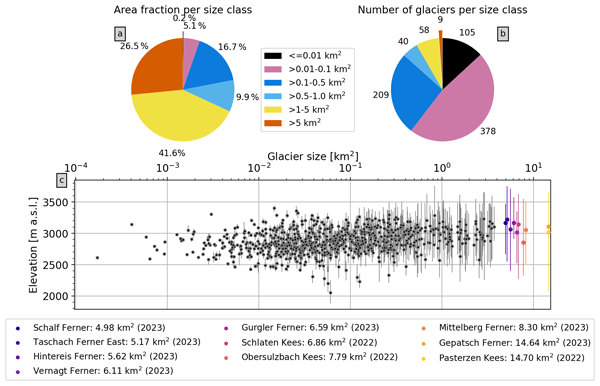
We mapped glacier outlines in Austria using recent, high resolution imagery. The resulting glacier inventory provides an update on glacier area in Austria in 2021-2023. More than 30% of glacier area was lost and 95 glaciers have disappeared since the mid-2000s. Glacier recession is accelerating and regular updates to glacier inventories are needed to understand downstream changes to the hydrological system, quantify glacier mass loss, and support planning and adaptation measures.
Katharina Wetterauer, Sebastian Müller, Michael Krautblatter, Shiva P. Pudasaini, and Ivo Baselt
EGUsphere, https://doi.org/10.5194/egusphere-2026-1235, https://doi.org/10.5194/egusphere-2026-1235, 2026
Short summary
Short summary
Contrasting mobility responses of erosive debris flows are poorly understood. Here, the role of bed inertia in debris-flow evolution and runout is experimentally assessed using distinct bed-density contrasts. Erosion is higher and runout longer over low-density beds, whereas equal- and high-density beds congruently show shallower erosion and shorter runout. The results indicate that solid density alone cannot explain mobility changes and that particle shape and internal friction also contribute.
Anna Wirbel, Felix Oesterle, Guillaume Chambon, Thierry Faug, Johan Gaume, Julia Glaus, Stefan Hergarten, Dieter Issler, Yoichi Ito, Marco Martini, Martin Mergili, Matthias Rauter, Jörg Robl, Giorgio Rosatti, Kae Tsunematsu, Christian Tollinger, Hervé Vicari, Daniel Zugliani, and Jan-Thomas Fischer
EGUsphere, https://doi.org/10.5194/egusphere-2025-6053, https://doi.org/10.5194/egusphere-2025-6053, 2026
This preprint is open for discussion and under review for Geoscientific Model Development (GMD).
Short summary
Short summary
We present the first extended intercomparison of snow avalanche flow simulation tools. In this pilot-study, simulation results of mainly thickness/depth-integrated shallow flow models are compared for three simple test cases representative of standard applications. This analysis serves as a first quantitative assessment of the uncertainty introduced by the different implementation workflows (e.g., numerical schemes, ad-hoc treatments, geo-data handling, curvature treatment, etc.).
Johannes J. Fürst, David Farías-Barahona, Thomas Bruckner, Lucia Scaff, Martin Mergili, Santiago Montserrat, and Humberto Peña
Nat. Hazards Earth Syst. Sci., 25, 3559–3579, https://doi.org/10.5194/nhess-25-3559-2025, https://doi.org/10.5194/nhess-25-3559-2025, 2025
Short summary
Short summary
The 1987 Parraguirre ice–rock avalanche developed into a devastating debris flow, causing the loss of many lives and inflicting severe damage near Santiago, Chile. Here, we revise this event, combining various observational records with modelling techniques. In that year, important snow cover coincided with persistent warm periods in spring. We also put forward upward corrections for the trigger and flood volumes involved in this debris flow. Finally, temporary river damming was key for the flow ferocity.
Sonam Rinzin, Stuart Dunning, Rachel Joanne Carr, Ashim Sattar, and Martin Mergili
Nat. Hazards Earth Syst. Sci., 25, 1841–1864, https://doi.org/10.5194/nhess-25-1841-2025, https://doi.org/10.5194/nhess-25-1841-2025, 2025
Short summary
Short summary
We modelled multiple glacial lake outburst flood (GLOF) scenarios (84 simulations) and tested the effect of nine key input parameters on the modelling results using r.avaflow. Our results highlight that GLOF modelling results are subject to uncertainty from the multiple input parameters. The variation in the volume of mass movement entering the lake causes the highest uncertainty in the modelled GLOF, followed by the DEM dataset and the origin of mass movement.
Felix Pfluger, Samuel Weber, Joseph Steinhauser, Christian Zangerl, Christine Fey, Johannes Fürst, and Michael Krautblatter
Earth Surf. Dynam., 13, 41–70, https://doi.org/10.5194/esurf-13-41-2025, https://doi.org/10.5194/esurf-13-41-2025, 2025
Short summary
Short summary
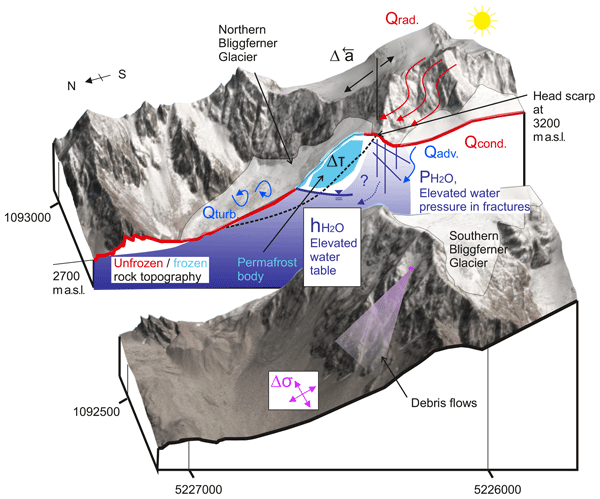
Our study explores permafrost–glacier interactions with a focus on their implications for preparing or triggering high-volume rock slope failures. Using the Bliggspitze rock slide as a case study, we demonstrate a new type of rock slope failure mechanism triggered by the uplift of the cold–warm dividing line in polythermal alpine glaciers, a widespread and currently under-explored phenomenon in alpine environments worldwide.
Adam Emmer, Simon K. Allen, Mark Carey, Holger Frey, Christian Huggel, Oliver Korup, Martin Mergili, Ashim Sattar, Georg Veh, Thomas Y. Chen, Simon J. Cook, Mariana Correas-Gonzalez, Soumik Das, Alejandro Diaz Moreno, Fabian Drenkhan, Melanie Fischer, Walter W. Immerzeel, Eñaut Izagirre, Ramesh Chandra Joshi, Ioannis Kougkoulos, Riamsara Kuyakanon Knapp, Dongfeng Li, Ulfat Majeed, Stephanie Matti, Holly Moulton, Faezeh Nick, Valentine Piroton, Irfan Rashid, Masoom Reza, Anderson Ribeiro de Figueiredo, Christian Riveros, Finu Shrestha, Milan Shrestha, Jakob Steiner, Noah Walker-Crawford, Joanne L. Wood, and Jacob C. Yde
Nat. Hazards Earth Syst. Sci., 22, 3041–3061, https://doi.org/10.5194/nhess-22-3041-2022, https://doi.org/10.5194/nhess-22-3041-2022, 2022
Short summary
Short summary
Glacial lake outburst floods (GLOFs) have attracted increased research attention recently. In this work, we review GLOF research papers published between 2017 and 2021 and complement the analysis with research community insights gained from the 2021 GLOF conference we organized. The transdisciplinary character of the conference together with broad geographical coverage allowed us to identify progress, trends and challenges in GLOF research and outline future research needs and directions.
Shiva P. Pudasaini
Earth Surf. Dynam. Discuss., https://doi.org/10.5194/esurf-2022-31, https://doi.org/10.5194/esurf-2022-31, 2022
Preprint withdrawn
Short summary
Short summary
New analytical landslide velocity solutions are unified with existing solutions, provide a complete picture of landslide with accelerating & decelerating movements through entire track. Initially ascending & descending fronts result in strikingly contrasting deposition lengths. Time & space evolution with initial peaks of variable strengths lead to a spectacular propagation pattern. Numerical solutions can be replaced by cost-effective, analytical solutions, offering great practical advantages.
Shiva P. Pudasaini and Michael Krautblatter
Earth Surf. Dynam., 10, 165–189, https://doi.org/10.5194/esurf-10-165-2022, https://doi.org/10.5194/esurf-10-165-2022, 2022
Short summary
Short summary
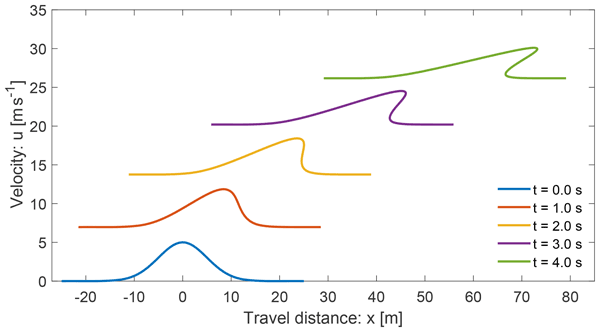
We present the first physics-based general landslide velocity model incorporating internal deformation and external forces. Voellmy–inviscid Burgers' equations are specifications of the novel advective–dissipative system. Unified analytical solutions constitute a new foundation of landslide velocity, providing key information to instantly estimate impact forces and describe breaking waves and folding, revealing that landslide dynamics are architectured by advection and reigned by forcing.
Cited articles
Barrett, R., Lebas, E., Ramalho, R., Klaucke, I., Kutterolf, S., Klügel, A., Lindhorst, K., Gross, F., and Krastel, S.: Revisiting the tsunamigenic volcanic flank collapse of Fogo Island in the Cape Verdes, offshore West Africa, Geol. Soc. Spec. Publ., 500, 13–26, https://doi.org/10.1144/SP500-2019-187, 2020.
Cicoira, A., Blatny, L., Li, X., Trottet, B., and Gaume, J.: Towards a predictive multi-phase model for alpine mass movements and process cascades, Eng. Geol., 310, 106866, https://doi.org/10.1016/j.enggeo.2022.106866, 2022.
Christen, M., Kowalski, J., and Bartelt, P.: RAMMS: numerical simulation of dense snow avalanches in three-dimensional terrain, Cold Reg. Sci. Technol., 63, 1–14, https://doi.org/10.1016/j.coldregions.2010.04.005, 2010.
Cornu, M. N., Paris, R., Doucelance, R., Bachélery, P., Bosq, C., Auclair, D., Benbakkar, M., Gannoun, A. M., and Guillou, H.: Exploring the links between volcano flank collapse and the magmatic evolution of an ocean island volcano: Fogo, Cape Verde, Sci. Rep., 11, 17478, https://doi.org/10.1038/s41598-021-96897-1, 2021.
Day, S. J., da Silva, S. H., and Fonseca, J. F. B. D.: A past giant lateral collapse and present-day flank instability of Fogo, Cape Verde Islands, J. Volcanol. Geotherm. Res., 94, 191–218, https://doi.org/10.1016/S0377-0273(99)00103-1, 1999.
Erismann, T. H. and Abele, G.: Dynamics of rockslides and rockfalls, Springer, Berlin, 2001.
Erismann, T. H., Heuberger, H., and Preuss, E.: Der Bimsstein von Köfels (Tirol), ein Bergsturz-“Friktionit”, Tschermaks Mineral. Petrogr. Mitt., 24, 67–119, https://doi.org/10.1007/BF01081746, 1977.
GEBCO Compilation Group: GEBCO 2021 Grid, NERC EDS British Oceanographic Data Centre NOC [data set], https://doi.org/10.5285/c6612cbe-50b3-0cff-e053-6c86abc09f8f, 2021.
GRASS Development Team: Geographic Resources Analysis Support System (GRASS) software, Open Source Geospatial Foundation, https://grass.osgeo.org (last access: 24 November 2025), 2025.
Heim, A.: Bergsturz und Menschenleben, Geol. Nachlese, Beibl. Vierteljahrsschr. Naturforsch. Ges. Zür., 30, 20, 1932.
Hungr, O., Leroueil, S., and Picarelli, L.: The Varnes classification of landslide types, an update, Landslides, 11, 167–194, https://doi.org/10.1007/s10346-013-0436-y, 2014.
Jarvis, A., Guevara, E., Reuter, H. I., and Nelson, A. D.: Hole-filled SRTM for the globe, version 4, data grid, CGIAR Consort. Spat. Inf., https://srtm.csi.cgiar.org (last access: 24 November 2025), 2008.
Kaufmann, V.: 20 years of geodetic monitoring of Dösen Rock Glacier (Ankogel Group, Austria) – a short review, Joannea Geol. Paläontologie, 12, 37–44, 2016.
Kaufmann, V., Ladstädter, R., and Kienast, G.: 10 years of monitoring of the Dösen Rock Glacier (Ankogel Group, Austria) – a review of the research activities for the time period 1995–2005, in: Proceedings of the 5th Mountain Cartography Workshop, 29 March–1 April 2006, Bohinj, Slovenia, edited by: Petrovič, D., 129–144, 2007.
Kellerer-Pirklbauer, A. and Kaufmann, V.: About the relationship between rock glacier velocity and climate parameters in central Austria, Austrian J. Earth Sci., 105, 94–112, 2012.
Kellerer-Pirklbauer, A., Lieb, G. K., and Kaufmann, V.: The Dösen Rock Glacier in Central Austria: a key site for multidisciplinary long-term rock glacier monitoring in the Eastern Alps, Austrian J. Earth Sci., 110, 2, https://doi.org/10.17738/ajes.2017.0013, 2018.
Kellerer-Pirklbauer, A., Lieb, G. K., and Kaufmann, V.: Rock glaciers in the Austrian Alps: a general overview with a special focus on Dösen Rock Glacier, Hohe Tauern Range, in: Landscapes and Landforms of Austria, World Geomorphological Landscapes, edited by: Embleton-Hamann, C., Springer, Cham, https://doi.org/10.1007/978-3-030-92815-5_27, 393–406, 2022.
Marques, F. O., Hildenbrand, A., Victória, S. S., Cunha, C., and Dias, P.: Caldera or flank collapse in the Fogo volcano? What age? Consequences for risk assessment in volcanic islands, J. Volcanol. Geotherm. Res., 388, 106686, https://doi.org/10.1016/j.jvolgeores.2019.106686, 2019.
Martínez-Moreno, F. J., Monteiro Santos, F. A., Madeira, J., Pous, J., Bernardo, I., Soares, A., Esteves, M., Adão, F., Ribeiro, J., Mata, J., and Brum da Silveira, A.: Investigating collapse structures in oceanic islands using magnetotelluric surveys: the case of Fogo Island in Cape Verde, J. Volcanol. Geotherm. Res., 357, 152–162, https://doi.org/10.1016/j.jvolgeores.2018.04.028, 2018.
Mergili, M.: r.avaflow v4, a multi-purpose landslide simulation framework – simulation package for discussion paper, Zenodo [code, data set], https://doi.org/10.5281/zenodo.14005917, 2024.
Mergili, M. and Prager, C.: Giant “Bergsturz” landscapes in the Tyrol, in: Landscapes and Landforms of Austria, edited by: Embleton-Hamann, C., Springer, Cham, 311–325, https://doi.org/10.1007/978-3-030-92815-5_21, 2022.
Mergili, M. and Pudasaini, S. P.: r.avaflow – the mass flow simulation tool, https://www.avaflow.org (last access: 24 November 2025), 2025.
Mergili, M., Fischer, J.-T., Krenn, J., and Pudasaini, S. P.: r.avaflow v1, an advanced open-source computational framework for the propagation and interaction of two-phase mass flows, Geosci. Model Dev., 10, 553–569, https://doi.org/10.5194/gmd-10-553-2017, 2017.
Mergili, M., Emmer, A., Juřicová, A., Cochachin, A., Fischer, J. T., Huggel, C., and Pudasaini, S. P.: How well can we simulate complex hydro-geomorphic process chains? The 2012 multi-lake outburst flood in the Santa Cruz Valley (Cordillera Blanca, Perú), Earth Surf. Process. Landf., 43, 1373–1389, https://doi.org/10.1002/esp.4318, 2018a.
Mergili, M., Frank, B., Fischer, J. T., Huggel, C., and Pudasaini, S. P.: Computational experiments on the 1962 and 1970 landslide events at Huascarán (Peru) with r.avaflow: lessons learned for predictive mass flow simulations, Geomorphology, 322, 15–28, https://doi.org/10.1016/j.geomorph.2018.08.032, 2018b.
Mergili, M., Jaboyedoff, M., Pullarello, J., and Pudasaini, S. P.: Back calculation of the 2017 Piz Cengalo–Bondo landslide cascade with r.avaflow: what we can do and what we can learn, Nat. Hazards Earth Syst. Sci., 20, 505–520, https://doi.org/10.5194/nhess-20-505-2020, 2020a.
Mergili, M., Pudasaini, S. P., Emmer, A., Fischer, J.-T., Cochachin, A., and Frey, H.: Reconstruction of the 1941 GLOF process chain at Lake Palcacocha (Cordillera Blanca, Peru), Hydrol. Earth Syst. Sci., 24, 93–114, https://doi.org/10.5194/hess-24-93-2020, 2020b.
Nicolussi, K., Spötl, C., Thurner, A., and Reimer, P. J.: Precise radiocarbon dating of the giant Köfels landslide (Eastern Alps, Austria), Geomorphology, 243, 87–91, https://doi.org/10.1016/j.geomorph.2015.05.001, 2015.
Pfeffer, H. and Mergili, M.: Level Up Learning: a user-friendly game engine template for virtual reality landslide experiences (EGU24-1785), Copernicus Meetings, https://doi.org/10.5194/egusphere-egu24-1785, 2024.
Preuss, E.: Gleitflächen und neue Friktionitfunde im Bergsturz von Köfels im Ötztal, Tirol, Mater. Techn., 14, 169–174, 1986.
Pudasaini, S. P.: A general two-phase debris flow model, J. Geophys. Res.-Earth Surf., 117, F03010, https://doi.org/10.1029/2011JF002186, 2012.
Pudasaini, S. P.: Dispersive landslide, Int. J. Non-Linear Mech., 150, 104349, https://doi.org/10.1016/j.ijnonlinmec.2023.104349, 2023.
Pudasaini, S. P. and Mergili, M.: A multi-phase mass flow model, J. Geophys. Res.-Earth Surf., 124, 2920–2942, https://doi.org/10.1029/2019JF005204, 2019.
Pudasaini, S. P. and Mergili, M.: Mechanically controlled landslide deformation, J. Geophys. Res.-Earth Surf., 129, 5, e2023JF007466, https://doi.org/10.1029/2023JF007466, 2024a.
Pudasaini, S. P. and Mergili, M.: Landslide dynamics with energy loss in internal shearing, Landslides, 22, 1491–1507, https://doi.org/10.1007/s10346-024-02424-4, 2024b.
Pudasaini, S. P., Mergili, M., Lin, Q., and Wang, Y.: Dynamic simulation of rock-avalanche fragmentation, J. Geophys. Res.-Earth Surf., 129, 9, e2024JF007689, https://doi.org/10.1029/2024JF007689, 2024.
Sattar, A., Cook, K. L., Kant Rai, S., Berthier, E., Allen, S., Rinzin, S., Van Wyk De Vries, M., Haeberli, W., Kushwaha, P., Shugar, D. H., Emmer, A., Haritashya, U., Frey, H., Rao, P., Kumar Gurudin, K. S., Rai, P., Rajak, R., Hossain, F., Huggel, C., Mergili, M., Farooq Azam, M., Gascoin, S., Carrivick, J. L., Bell, L. E., Kumar Ranjan, R., Rashid, I., Kulkarni, A. V., Petley, D., Schwanghart, W., Watson, C. S., Islam, N., Das Gupta, M., Lane, S., and Younis Bhat, S.: The Sikkim flood of October 2023: drivers, causes and impacts of a multi-hazard cascade, Science, 387, eads2659, https://doi.org/10.1126/science.ads2659, 2025.
Savage, S. B. and Hutter, K.: The motion of a finite mass of granular material down a rough incline, J. Fluid Mech., 199, 177–215, https://doi.org/10.1017/S0022112089000340, 1989.
Shugar, D. H., Jacquemart, M., Shean, D., Bhushan, S., Upadhyay, K., Sattar, A., Schwanghart, W., McBride, S., de Vries, M. Van Wyk, Mergili, M., Emmer, A., Deschamps-Berger, C., McDonnell, M., Bhambri, R., Allen, S., Berthier, E., Carrivick, J. L., Clague, J. J., Dokukin, M., Dunning, S. A., Frey, H., Gascoin, S., Haritashya, U. K., Huggel, C., Kääb, A., Kargel, J. S., Kavanaugh, J. L., Lacroix, P., Petley, D., Rupper, S., Azam, M. F., Cook, S. J., Dimri, A. P., Eriksson, M., Farinotti, D., Fiddes, J., Gnyawali, K. R., Harrison, S., Jha, M., Koppes, M., Kumar, A., Leinss, S., Majeed, U., Mal, S., Muhuri, A., Noetzli, J., Paul, F., Rashid, I., Sain, K., Steiner, J., Ugalde, F., Watson, C. S., and Westoby, M. J.: A massive rock and ice avalanche caused the 2021 disaster at Chamoli, Indian Himalaya, Science, 373, 300–306, https://doi.org/10.1126/science.abh4455, 2021.
Sørensen, S. A. and Bauer, B.: On the dynamics of the Köfels sturzstrom, Geomorphology, 54, 11–19, https://doi.org/10.1016/S0169-555X(03)00051-5, 2003.
Su, C., Mergili, M., Rana, N. M., Zhang, S., Dai, C., Wang, B., and Han, Y.: Failure analysis and flow dynamic modeling using a new slow-flow functionality: the 2022 Jiaokou (China) tailings dam breach, Landslides, 21, 379–391, https://doi.org/10.1007/s10346-023-02146-z, 2024.
Tai, Y. C., Noelle, S., Gray, J. M. N. T., and Hutter, K.: Shock-capturing and front-tracking methods for granular avalanches, J. Comput. Phys., 175, 269–301, https://doi.org/10.1006/jcph.2001.6946, 2002.
van den Bout, B., van Asch, T., Hu, W., Tang, C. X., Mavrouli, O., Jetten, V. G., and van Westen, C. J.: Towards a model for structured mass movements: the OpenLISEM hazard model 2.0a, Geosci. Model Dev., 14, 1841–1864, https://doi.org/10.5194/gmd-14-1841-2021, 2021.
van den Bout, B., Tang, C., van Westen, C., and Jetten, V.: Physically based modeling of co-seismic landslide, debris flow, and flood cascade, Nat. Hazards Earth Syst. Sci., 22, 3183–3209, https://doi.org/10.5194/nhess-22-3183-2022, 2022.
Vilca, O., Mergili, M., Emmer, A., Frey, H., and Huggel, C.: The 2020 glacial lake outburst flood process chain at Lake Salkantaycocha (Cordillera Vilcabamba, Peru). Landslides, 18, 2211–2223, https://doi.org/10.1007/s10346-021-01670-0, 2021.
Voellmy, A.: Über die Zerstörungskraft von Lawinen, Schweiz. Bauzeitung, 73, 159–165, 1955.
Wagner, T., Ribis, M., Kellerer-Pirklbauer, A., Krainer, K., and Winkler, G.: The Austrian rock glacier inventory RGI_1 and the related rock glacier catchment inventory RGCI_1 in ArcGIS (shapefile) format, PANGAEA, https://doi.org/10.1594/PANGAEA.921629, 2020.
Wang, Y., Hutter, K., and Pudasaini, S. P.: The Savage-Hutter theory: a system of partial differential equations for avalanche flows of snow, debris, and mud, Z. Angew. Math. Mech., 84, 507–527, https://doi.org/10.1002/zamm.200310123, 2004.
Yildiz, A., Zhao, H., and Kowalski, J.: Computationally-feasible uncertainty quantification in model-based landslide risk assessment, Front. Earth Sci., 10, 1032438, https://doi.org/10.3389/feart.2022.1032438, 2023.
Zangerl, C., Schneeberger, A., Steiner, G., and Mergili, M.: Geographic-information-system-based topographic reconstruction and geomechanical modelling of the Köfels rockslide, Nat. Hazards Earth Syst. Sci., 21, 2461–2483, https://doi.org/10.5194/nhess-21-2461-2021, 2021.
Zheng, G., Mergili, M., Emmer, A., Allen, S., Bao, A., Guo, H., and Stoffel, M.: The 2020 glacial lake outburst flood at Jinwuco, Tibet: causes, impacts, and implications for hazard and risk assessment, The Cryosphere, 15, 3159–3180, https://doi.org/10.5194/tc-15-3159-2021, 2021.
Short summary
We present a new version of the landslide model r.avaflow. It includes a model where different materials move on top of each other instead of mixing; a model supporting the entire range from block sliding to flowing; a model for slow-moving processes; and an interface for virtual reality visualization. Based on the results for four case studies we conclude that, at the moment, our enhancements are very useful for visualization of landslides for awareness building and environmental education.
We present a new version of the landslide model r.avaflow. It includes a model where different...


