
the Creative Commons Attribution 4.0 License.
the Creative Commons Attribution 4.0 License.
 | 03 Dec 2025
Adjoint-based simultaneous state and parameter estimation in an Arctic Sea Ice-Ocean Model using MITgcm (c63m)
Guokun Lyu
Longjiang Mu
Armin Koehl
Chuanyu Liu
Parameters in sea ice-ocean coupled models greatly affect the simulated evolution of the ocean and sea ice, and are typically tuned to bring the model state close to observations. Using an adjoint method, spatiotemporally varying parameters of an Arctic sea ice-ocean coupled model are optimized simultaneously with the initial conditions and atmospheric forcing by assimilating satellite and in-situ observations. The assimilation results show that the joint state and parameter estimation (SPE) substantially improves the sea ice concentration simulations. Particularly in October, when the ocean surface starts to refreeze, SPE reduces the lead closing parameter Ho (which determines the minimum ice thickness formed in the open water), thereby increasing the sea ice growth and facilitating the seasonal rapid sea ice recovery in the Arctic's Pacific sector. Comparisons with sea ice thickness observations from the moored upward-looking sonars and Ice Mass Balance buoys demonstrate that incorporating optimized model parameters into the coupled model also leads to better sea ice thickness estimation. Given that the optimal set of sea ice parameters may evolve alongside the thinning of Arctic sea ice, the adjoint-based SPE scheme has the potential to more accurately reconstruct the histical Arctic ocean and sea ice changes covering the satellite era, supporting research on Arctic sea ice and ocean variability.
- Article
(6707 KB) - Full-text XML
- BibTeX
- EndNote


In climate models, parameterizations are widely used to simulate the effects of unresolved processes on large-scale state variables. The parameters in these parameterizations significantly affect model simulations across various spatial and temporal scales (e.g., Mauritsen et al., 2012; Murphy et al., 2004). This is particularly important for the Arctic system, where observations are extremely scarce, and the ocean and sea ice states are undergoing rapid changes.
Most model parameters cannot be measured directly. Usually, a globally uniform value for individual parameters is assumed as the default in parameterization schemes. When incorporated into complex climate models, sensitive parameters are usually further adjusted to bring the model's climatology closer to observed state (e.g., Hourdin et al., 2017; Mauritsen et al., 2012). The underlying assumption is that these sensitive parameters determine the model's climatology and variations. Over the past decades, manual (e.g., Mauritsen et al., 2012) and automatic tuning (e.g., Jackson et al., 2008; Williamson et al., 2013; Yang et al., 2013) methods have been developed to optimize a number of sensitive parameters (on the order of 10). In addition, data assimilation techniques, including ensemble Kalman filters (Annan et al., 2005; Massonnet et al., 2014; Wu et al., 2012) and the adjoint method (Liu et al., 2012; Lyu et al., 2018), have been tested for optimizing spatiotemporally varying parameters with large dimensions.
In sea ice models, parameters significantly affect the sea ice's seasonal and interannual evolutions, as well as the heat, freshwater, and momentum budgets of the sea ice-ocean-atmosphere system (e.g., Kim et al., 2006; Uotila et al., 2012; Nie et al., 2023). Similar to climate models, these parameters are manually tuned through a trial-and-error process to match the historical sea ice state (e.g., Hibler, 1979; Miller et al., 2005). Automated parameter estimation methods, such as genetic algorithms (Sumata et al., 2019), ensemble Kalman filters (Massonnet et al., 2014), and the adjoint method (Lu et al., 2021; Lyu et al., 2018; Panteleev et al., 2020), are applied to optimize sensitive parameters using satellite sea ice observations. More recently, machine learning (e.g., Bretherton et al., 2022; Horvat and Roach, 2022; Kochkov et al., 2024) has been applied to develop the sub-grid parameterizations using high-resolution model simulations and reanalysis datasets. However, improvements in observed variables often come with detrimental effects on the other variables or in some regions. For instance, Massonnet et al. (2014) reported that the improvements in sea ice speed were accompanied by an overestimation of winter ice areal outflow through the Fram Strait.
Several factors are likely responsible for these detrimental effects. First, model parameters represent only parts of the model's uncertain inputs, and they may be over-adjusted to compensate for errors in the other uncertain inputs. For instance, Miller et al. (2005) suggested that optimal parameters likely compensate for deficiencies in atmospheric forcing. Therefore, it is necessary to optimize the model's uncertain inputs simultaneously. Second, the sensitivities of the sea ice state to parameter perturbations show distinct spatiotemporal patterns (Kim et al., 2006; Miller et al., 2005), suggesting that allowing optimized parameters to vary geographically and temporally is likely to further improve model performance. Additionally, it is necessary to use more comprehensive Arctic ocean and sea ice observations to constrain model parameters and the other uncertain inputs.
In the framework of data assimilation, simultaneous state and parameter estimation (SPE) can be achieved by including spatiotemporally varying parameters in the set of control variables (e.g., Hu et al., 2010; Liu et al., 2012; Wu et al., 2012; Zhang, 2011). Since initial conditions typically exert significant influences on short timescales within the Earth system, while parameters are more important on longer timescales (e.g., Branstator and Teng, 2010), constructing an error propagation model to project model-data misfits onto both initial conditions and parameters is challenging. Using an ensemble Kalman filter with a short assimilation window (within the predictability limit of the chaotic system), Zhang (2011) proposed to optimize the initial state first until the model-data misfits reach a quasi-equilibrium, where the parameter errors dominate; then they optimized the model parameters to reduce residual errors. Liu et al. (2012) used an adjoint model to project the model-data misfits over a large assimilation window onto initial conditions, atmospheric forcing, and eddy mixing parameters.
Applications of SPE in ocean models (Liu et al., 2012) and coupled climate models of intermediate complexity (Wu et al., 2012) have demonstrated additional effects on mitigating model bias and improving prediction accuracy. However, to date, parameter estimation (Lu et al., 2021; Panteleev et al., 2020) and state estimation (e.g., Fenty et al., 2017; Forget et al., 2015; Lindsay and Zhang, 2006; Lyu et al., 2021b; Mu et al., 2018; Nguyen et al., 2021; Liu and Zhang, 2018) are performed separately in the sea ice-ocean coupled model. Given the rapid thinning of the Arctic sea ice and its extremely strong spatial heterogeneity, it is necessary to have parameters that vary spatiotemporally in response to the changing climate background. Therefore, we developed SPE in a sea ice-ocean coupled model and investigated its potential effects by assimilating satellite and in-situ measurements.
This paper is organized as follows. In Sect. 2, we introduce the coupled sea ice-ocean assimilation system, including the model configuration, the parameters being adjusted, as well as the assimilated and independent observations. Section 3 briefly evaluates the parameter sensitivities and accuracy of the adjoint model based on the tangent linear model. Section 4 discusses the added effects of SPE. Finally, we summarize this study in Sect. 5.
2.1 The Pan-Arctic Ocean and Sea Ice Assimilation System
The sea ice-ocean coupled assimilation system is based on the adjoint method (4D-Var in operational oceanic and meteorological forecasting communities) from the Estimating the Circulation and Climate of the Ocean (ECCO) project. It employs the Massachusetts Institute of Technology general circulation model (MITgcm, Marshall et al., 1997) coupled with a zero-layer dynamic and thermodynamic sea ice model (Hibler, 1979, 1980; Losch et al., 2010). The sea ice dynamics are based on a viscous-plastic rheology and solved using a line successive over-relaxation algorithm (Zhang and Hibler, 1997).
The adjoint of the sea ice-ocean coupled model is generated using the Transformation of Algorithms in Fortran (Giering and Kaminski, 1998; Heimbach et al., 2010). In previous studies, due to persistent instability issues, the adjoint of the sea ice dynamics was usually excluded (Fenty and Heimbach, 2013; Fenty et al., 2017; Nguyen et al., 2021) or simplified to the adjoint of free-drift sea ice dynamics (Koldunov et al., 2017; Lyu et al., 2021a; Lyu et al., 2021b) in assimilation experiments. Recently, Lyu et al. (2023) incorporated and approximated the adjoint of viscous-plastic sea ice dynamics. In this study, we use the same model configuration as Lyu et al. (2023). Horizontally, we use a curvilinear grid with a resolution of 12–18 km. Vertically, we have 50 z-levels with layer thickness ranging from 10 m at the surface to 456 m in the deep ocean. In addition, we further developed the adjoint model to jointly estimate the state and spatiotemporally varying parameters, and evaluated the added effects by comparing with the results in Lyu et al. (2023).
The adjoint method minimizes a quadratic function (J) iteratively by adjusting the control variables (C) to bring the model simulation closer to available observations:
The first term on the right-hand side computes the “distance” between observations (x) and corresponding model-simulated variables (y) over a long period (one year in this study). The model-data misfits are normalized by their prior error (R). E interpolates the model state to the observations. Values of R for different observation types are introduced in Sect. 2.2.
The second term on the right-hand side measures the magnitude of the adjustments to the control variables (ΔC) and B−2 is the background error covariance. In the 3D-Var and 4D-Var system with short assimilation windows (on the order of days), covariance matrix B−2 is critical for filling in observational gaps and achieving the multivariate adjustments to initial conditions (Li et al., 2008; Weaver and Mirouze, 2013). However, on longer timescales (several months to years), this is no longer necessary because the advection and diffusion in the adjoint model transport information about model-data misfits to locations without observations and to unobserved variables. Therefore, for simplicity, we use a diagonal B matrix, and the second term on the right-hand side of Eq. (1) is simplified to , where σ represent the corresponding errors. As this term increases quadratically with ΔC, it limits the magnitude of adjustments during optimization.
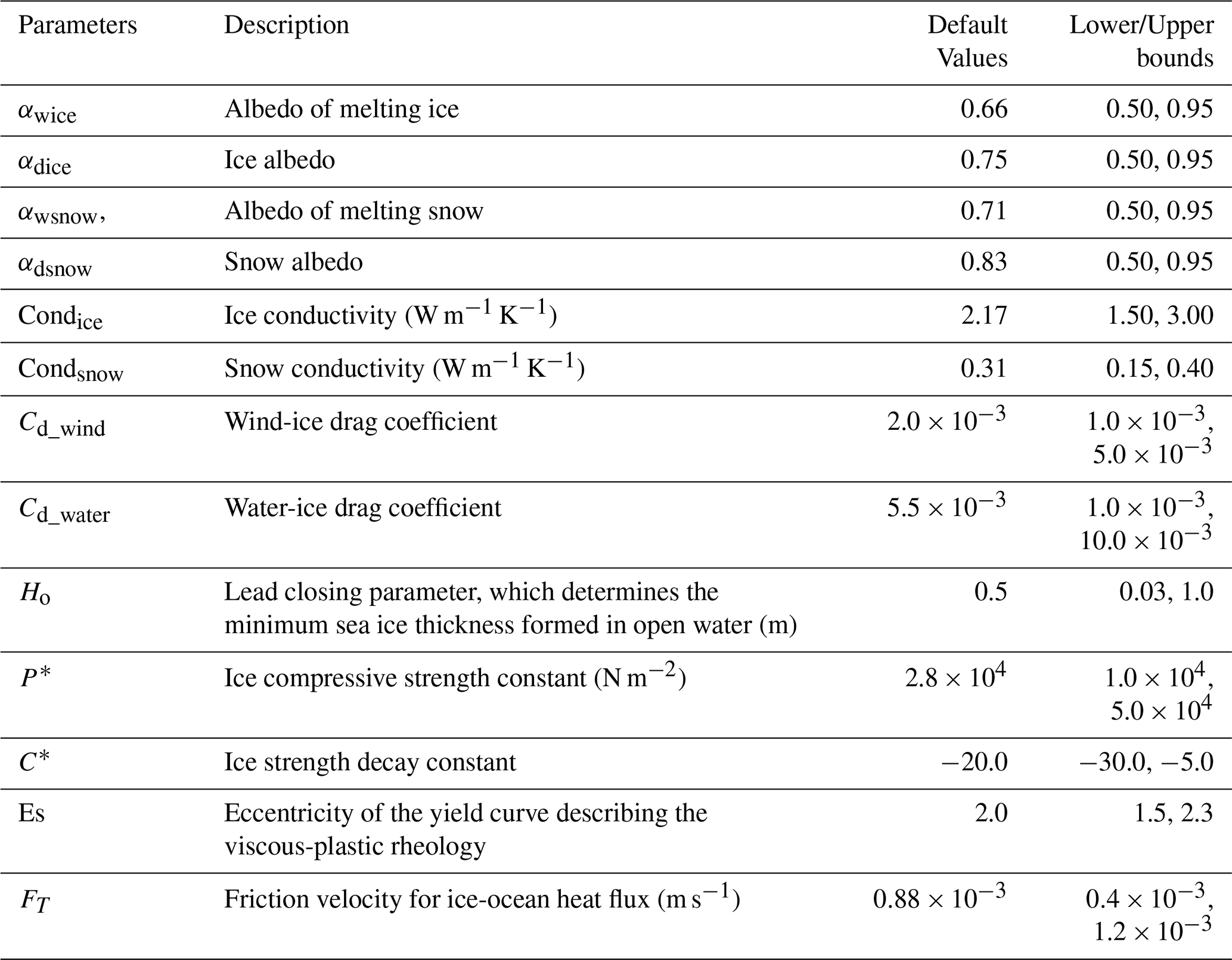
In addition to the initial oceanic temperature and salinity, sea ice concentration (SIC), sea ice thickness (SIT), and daily atmospheric state, which includes 2 m air temperature, 2 m specific humidity, precipitation rate, 10 m wind vectors, downward longwave radiation, and net shortwave radiation, we further include 13 spatiotemporally varying model parameters (see Table 1) in the control variables. These parameters vary by geographic location and on a daily basis. The uncertainties of 13 parameters are not precisely known; their error distributions are assumed to be Gaussian, with standard deviations of 20 % of their default values.
The assimilation system iteratively minimizes the cost function J using a quasi-Newton algorithm (Gilbert and Lemaréchal, 2023) and gradient information . The optimization stops when the cost function can no longer be reduced. The adjoint of the ocean-sea ice coupled model is used to compute which has dimensions of 108. To ensure the stability of the adjoint model over a one-year period, modifications to the adjoint codes are handled carefully. Details are provided in Lyu et al. (2023). The accuracy of the adjoint model is presented in Sect. 3.
2.2 The Assimilation Experiments and the Control Variables
Two assimilation experiments and one control run were performed to examine the additional effects of SPE. The initial condition for 1 January 2012, is taken from the Arctic sea ice-ocean reanalysis by Lyu et al. (2021b), which used the same model configuration as in this study. We take the forward simulation at iteration 0 as the control run (CTRL). The two assimilation experiments differ in their choice of control variables. In the first assimilation experiment, only the initial conditions and atmospheric forcings are adjusted (hereinafter named opti-SE). In the second assimilation experiment, we further include 13 spatiotemporally varying model parameters (see Table 1 for details) in the control variables (hereinafter named opti-SPE). Based on a previous study with a similar sea ice module (Sumata et al., 2019) and our sensitivity experiments, we identified these 13 sea ice parameters, which have considerable impact on sea ice properties. To prevent over-adjustments of the parameters, which may result in model instability, we further set upper and lower bounds for individual parameters in the model (Table 1).
Table 1The sea ice model parameters applied as additional control variables for optimization.
2.3 Assimilated Observations
We assimilate both satellite and in-situ observations (listed in Table 2). In the assimilation process, the observations and their errors must be provided beforehand. Errors for these types of observations are described in previous studies (Lyu et al., 2023).
Table 2Assimilated Observations.
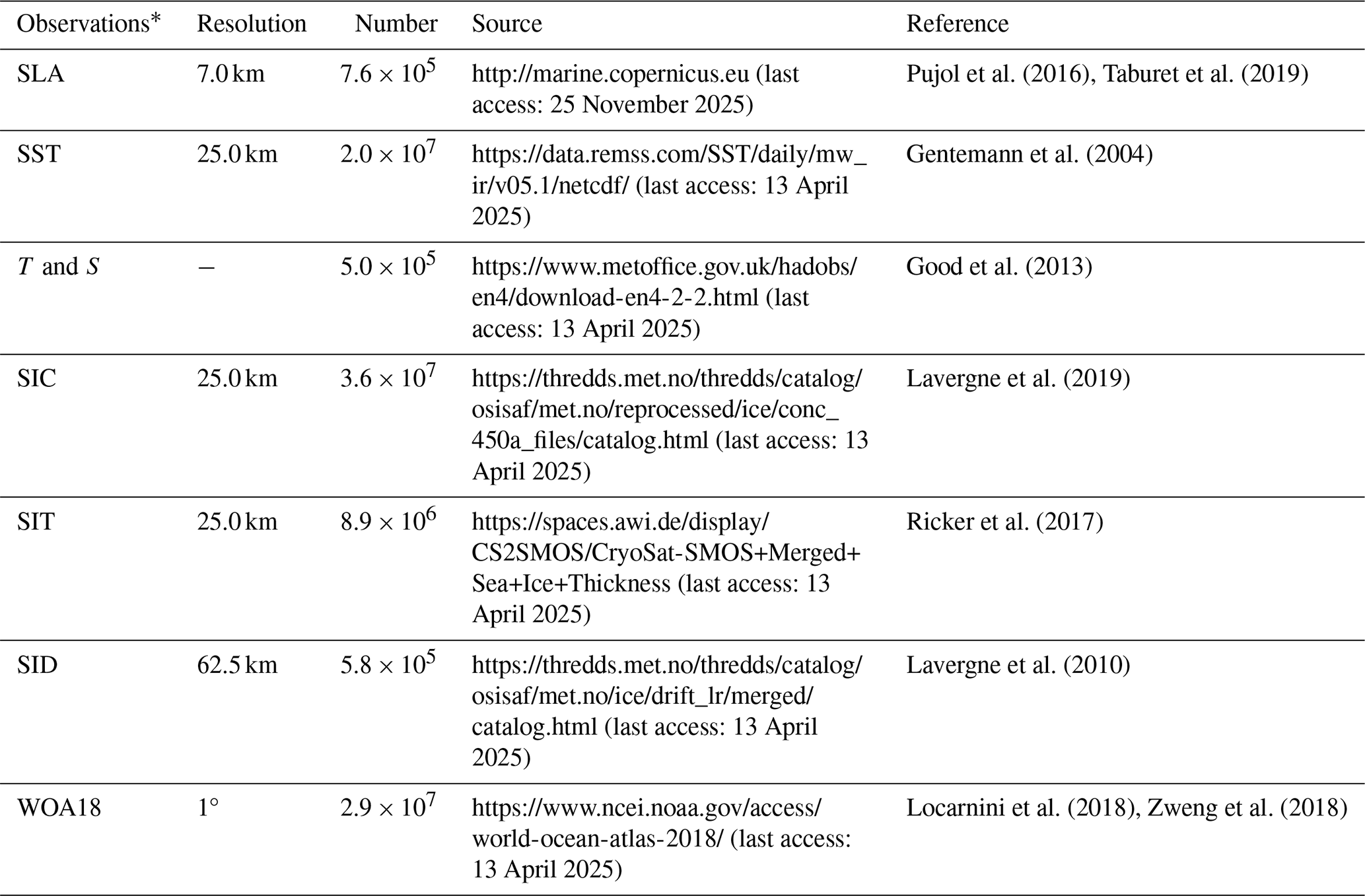
* SLA sea surface height anomaly, SST sea surface temperature, T and S temperature and salinity profiles from EN4 datasets, SIC sea ice concentration, SIT sea ice thickness, SID sea ice drift, WOA18 World Ocean Atlas 2018.
Altimeter along-track L3 sea surface heights anomalies (SLA) are assimilated with observational errors of 3 cm. Gridded sea surface temperature (SST) data for open waters and their associated errors are based on optimally interpolated microwave and infrared data from the Remote Sensing System (Gentemann et al., 2004). Subsurface oceanic temperature and salinity data are based on the EN4 dataset (Good et al., 2013). Observational errors of temperature and salinity (T and S) profiles are depth-dependent, ranging from ∼ 0.6 °C and ∼ 0.3 PSU at the surface to ∼ 0.02 °C and ∼ 0.02 PSU in the deep ocean. The World Ocean Atlas 2018 (WOA18) climatology is also assimilated to reduce biases in ocean temperature and salinity, with their prior errors set to five times those of the in-situ profiles. Since we interpolate the WOA18 to the finer model grids, which implicitly increases the number of the observations, we reduce the weight of temperature and salinity climatology cost components by multiplying by a factor of 0.04.
We assimilate the SIC observations from the Special Sensor Microwave/Imager (SSM/I) and ARTIST Sea Ice (ASI) algorithm (Kaleschke et al., 2001; Spreen et al., 2008). This dataset does not provide observational error estimates. In data assimilation studies, the observational errors should consist of representation and instrumental errors. Considering larger SIC errors near coastlines due to reduced accuracy in the SIC product and poor representation of landfast ice in the model (Fenty and Heimbach, 2013), we set the representation errors to 15 % within 50 km of the coastline and 10 % in other areas. Additionally, considering the dependence of SIC errors on the absolute value of SIC (Chen et al., 2023), we multiply the representation errors by factors of 0.85, 1.20, 1.10, and 1.00 for observed SIC ranges of 0 %, < 15 %, 15 % −25 %, and > 25 %, respectively.
Satellite SIT observations are based on the merged CryoSat-2 and SMOS product (CS2SMOS), which includes observational error estimates (Ricker et al., 2017). The SIT in this dataset represents the mean SIT over 25 km × 25 km areas but excludes open waters. Note that since the model simulates the grid-mean SIT (SIT × SIC), we convert the model-simulated grid-mean SIT to the mean SIT over ice-covered regions before comparing it against the satellite SIT observations in the cost function. Satellite sea ice drift (SID) data are derived from the Ocean and Sea Ice Satellite Application Facility (OSISAF, https://osi-saf.eumetsat.int, last access: 25 November 2025) product at a resolution of 62.5 km, which applies a continuous maximum cross-correlation method to track the sea ice displacements over a 48 h period from sequences of satellite images (Lavergne et al., 2010). The errors are dominated by satellite resolution (10–15 km), and are set to 10 km every 2 d (∼ 0.06 m s−1).
2.4 Independent Observations
Independent sea ice observations are used to validate the assimilation results. The observations can be categorized into two groups: (1) single-point measurements, which include sea ice variables within a small area or at specific sites, such as SIT or snow depth from the Ice Mass Balance buoys (IMBs) and ice draft from moored upward-looking sonars (ULSs); (2) gridded measurements, such as remote sensing products. These two types of measurements are not fully consistent, especially in regions with strong spatial heterogeneity of sea ice and prevalent ice dynamic processes. Nevertheless, we use these data to validate and cross-validate the assimilation results and gridded SIT observations, identifying potential discrepancies among the assimilated datasets, the numerical model, and the point observations.
2.4.1 Ice Mass Balance Buoy
IMBs are ice-based observing systems that measure the evolution of snow and sea ice growth and ablation, as well as vertical temperature profiles through the snow, ice, and upper ocean along ice drift trajectories. It uses two acoustic sensors to measure the ice surface and bottom. SIT is derived from the distance between ice surface and bottom. The errors in measurements of the ice surface and bottom by each acoustic sounders are ±5 mm (Richter-Menge et al., 2006). IMBs are deployed on thick and level ice floes to achieve relatively long measurement periods. It must be acknowledged that directly comparing this point measurements of SIT with gridded SIT is not straightforward. Thus, we also compare the mean SIT bias and temporal changes in SIT along the drifting trajectories. Compared to the satellite or helicopter-based altimeter observations, the IMB observations can effectively characterize the thermodynamic thickening of sea ice (Koo et al., 2021; von Albedyll et al., 2022).
2.4.2 International Arctic Buoy Programme
The International Arctic Buoy Programme (IABP, https://iabp.apl.uw.edu/index.html, last access: 25 November 2025) collects ice-based drifting buoys from various organizations. Most of these buoys also monitor sea level pressure and surface air temperature along the ice drift trajectories. In this study, we compute sea ice velocities based on drift trajectories and compare them with the model simulations. For 2012, we selected 23 trajectories with continuous position observations of more than 100 d for model validation.
2.4.3 Mooring measurements from the Beaufort Gyre Exploration Project
Starting from 2003, the Beaufort Gyre Exploration Project (BGEP), based at the Woods Hole Oceanographic Institution (https://www2.whoi.edu/site/beaufortgyre/, last access: 25 November 2025), deployed ULSs at three locations: Ma, Mb, and Md (see Fig. 7). The ULSs measure local sea ice draft with an error of ±0.1 m (Krishfield et al., 2014). In this study, we use daily-averaged sea ice draft for comparisons. Sea ice drafts are converted to sea ice thickness by multiplying with a factor of 1.1, calculated as ratio between mean seawater density (1024.0 kg m−3) and sea ice density (910.0 kg m−3), assuming no snow on the sea ice (Nguyen et al., 2011).
There are two requirements for optimizing model parameters using observations. First, parameter changes within the range of uncertainties have considerable impacts on model simulations. For instance, the SIC changes caused by parameter uncertainties should be larger than observational errors. Second, the error propagation model (the tangent linear model in this study) must accurately reproduce the spatiotemporal error propagations induced by the uncertain model inputs.
Here, we adjust each of the 13 model parameters (see Table 1) individually by adding 10 % of their default values and integrate the model over 2012. We then evaluate the spatiotemporal changes in SIC normalized by satellite SIC observational errors (e.g., 15 %). Normalized SIC changes > 1.0 indicate that the SIC changes caused by 10 % parameter perturbations are detectable by satellite observations. As Fig. 1 shows, albedos of the dry/wet snow and ice (αdsnow, αdice, αwsnow, αwice), have pronounced impacts on summertime SIC. The wind-ice drag coefficient (Cdwind) and ice compressive strength constant (P*) also exhibit large impacts throughout the year. For the remaining parameters, the normalized SIC changes grow slowly and show little seasonal dependence.
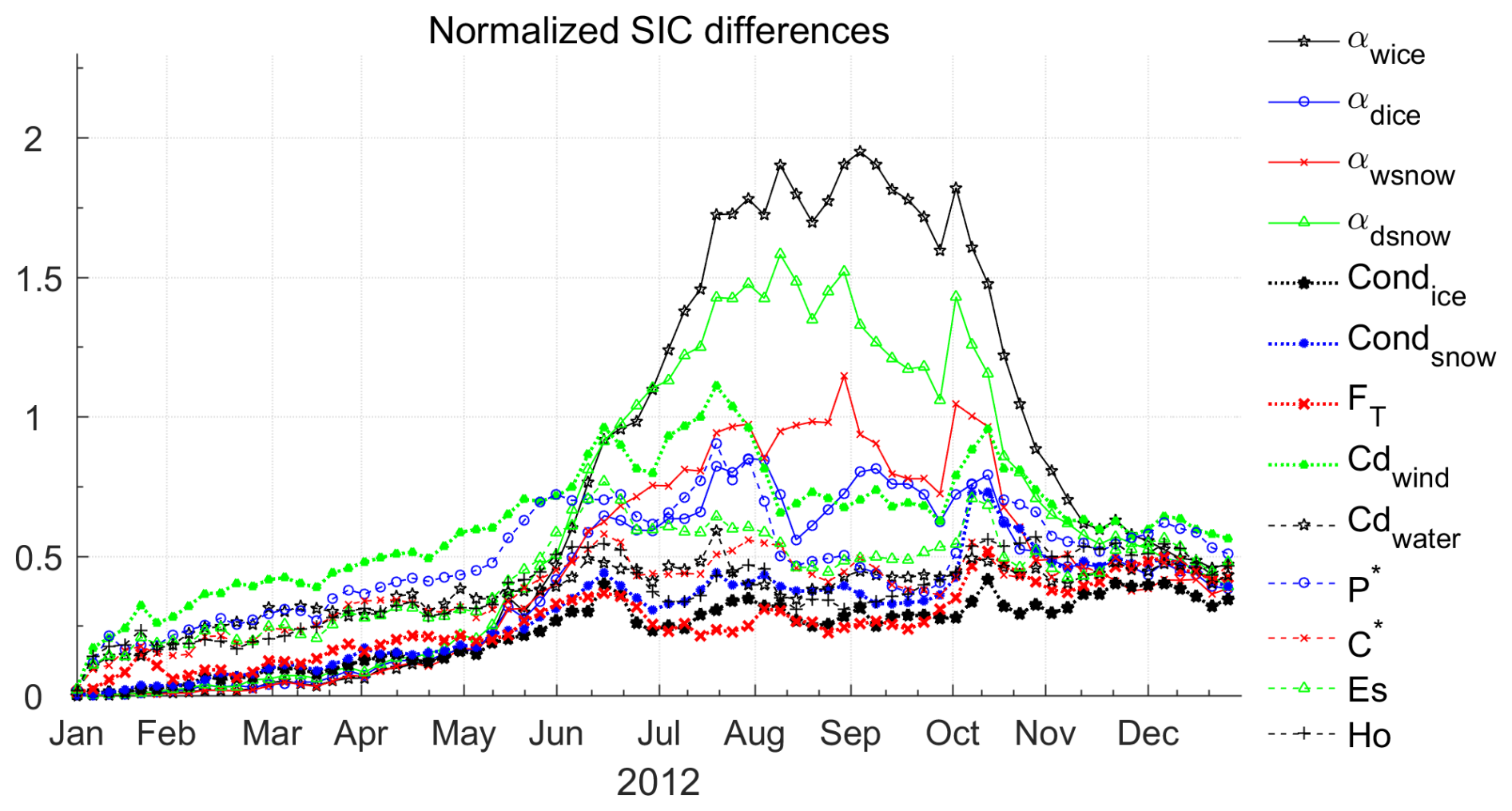
Figure 1Temporal evolutions of the norm of the SIC differences (normalized by 15 % SIC) averaged over the ice-covered regions due to the 10 % perturbations on the 13 parameters (see the legend and Table 1 for description of the parameters).
The accuracy of the tangent linear approximation is examined using the Taylor expansion. Taking the parameter Ho (lead closing parameter) as an example, we perturb it by and evaluate the first-order and higher-order approximations as follows:
and
Here, M is the model operator and X represents the model variables. The linear (first-order) and nonlinear (higher-order) errors can be obtained by and . By integrating the tangent linear model with , we obtain error evolution of the model variables.
Although the overall impacts of Ho on SIC do not exceed the SIC observational errors (normalized SIC changes < 1.0; Fig. 1) over the one-year period, it exerts substantial impacts on open water during refreezing (Fig. 2a). Since Ho determines the initial sea ice thickness formed in open water, increasing Ho by 10 % will delay the formation of new ice in open water, reducing sea ice coverage across the Arctic Ocean. The signals are dominated by the linear component (Fig. 2a), and the nonlinear component is small (Fig. 2b). The tangent linear model can reproduce the negative SIC changes very well (Fig. 2c).
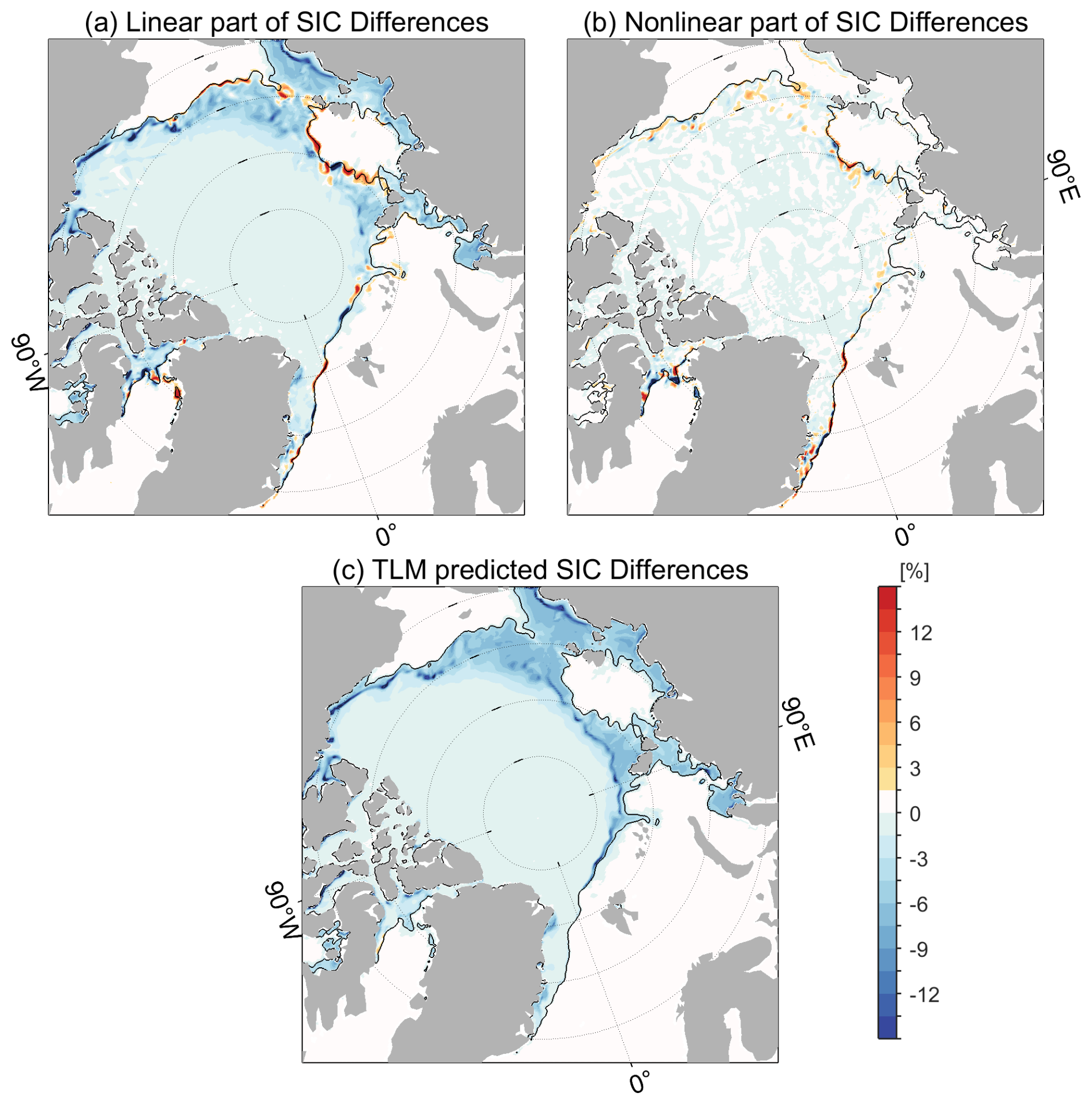
Figure 2(a) The linear and (b) nonlinear parts of SIC differences on 11 November 2012 computed using Eqs. (2)–(3). Panel (c) is the corresponding SIC changes predicted by the tangent linear model (TLM). The black lines denote the 15 % SIC contour.
The above analysis demonstrates that the responses of SIC to parameter perturbations are dominated by the linear component, and that the tangent linear model effectively captures the linear component of the error propagation, reproducing both its pattern and amplitude. These results motivate us to further explore the potential of using observations to simultaneously estimate the state and parameters.
In this section, we evaluate the impacts of SPE on the estimated sea ice state. Additionally, we compare the two assimilation runs and the control run against independent observations.
4.1 The cost function reduction
The optimization algorithm iteratively reduces the cost function J using the gradients . In the opti-SE and opti-SPE, the optimizations stop at iterations 32 and 86, respectively. The cost functions are reduced to 59.8 % and 49.3 % of their initial values (Fig. 3), and the norms of the gradients ( are reduced to 10.7 % and 9.0 %, respectively.
Of the assimilated observations, daily SST and SIC contribute to 27.3 % and 42.9 % of the cost function, respectively, with these proportions reduced to 14.0 % and 19.4 % in opti-SE and to 10.1 % and 13.2 % in opti-SPE. For other observations, their cost components are slightly reduced. In the following sections, we focus on improvements in the SIC, SIT, and SID, and evaluate the simulations against independent observations.
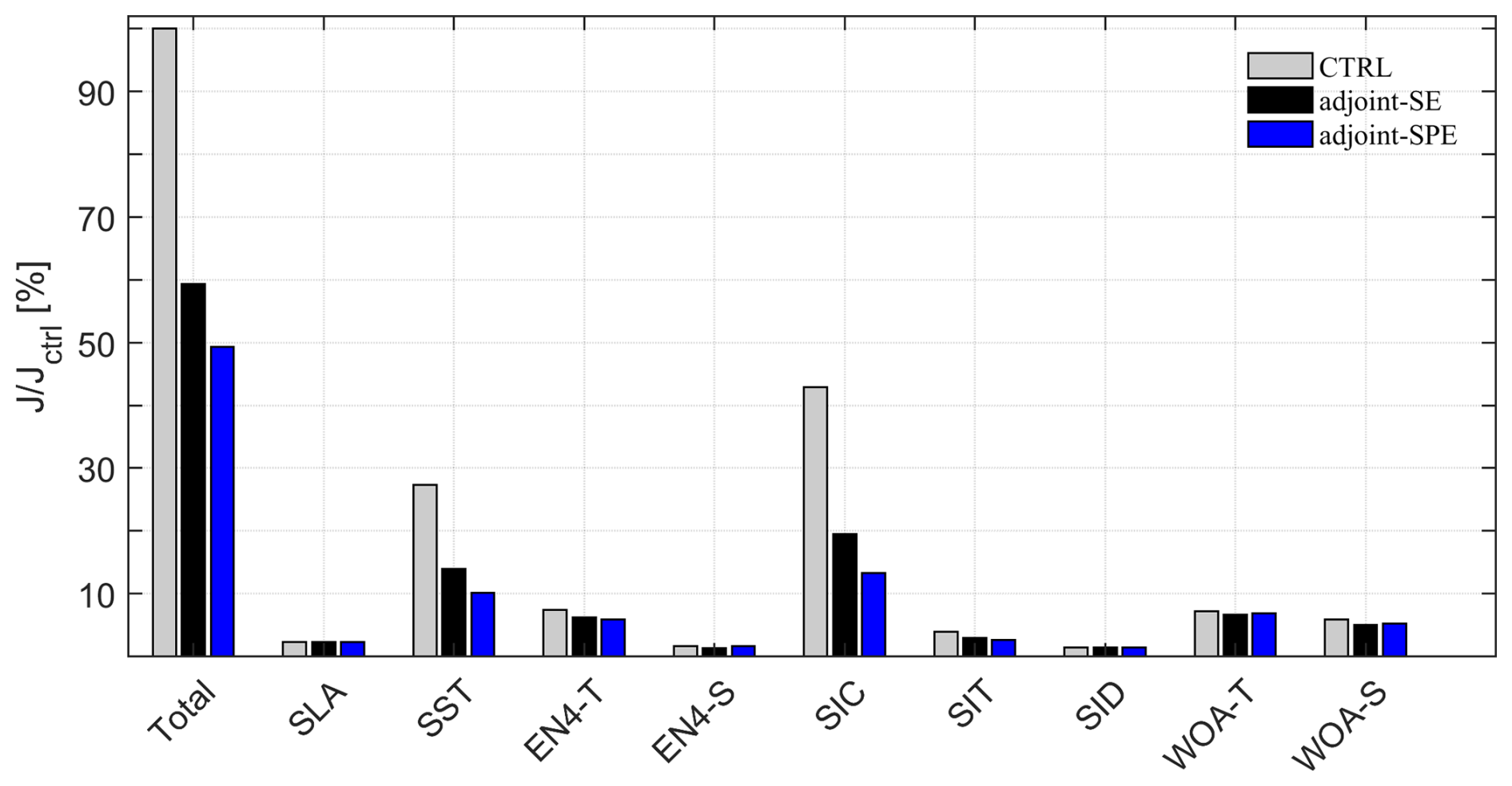
Figure 3The total cost function and individual components normalized by the total cost function in the control run (Jctrl). Abbreviations: SLA – sea level anomalies, SST – sea surface temperature, EN4-T – EN4 temperature profiles, EN4-S – EN4 salinity profiles, SIC – sea ice concentration, SIT – sea ice thickness, SID – sea ice drift velocities; WOA – T and WOA – S, climatological temperature and salinity from WOA18 dataset.
4.2 Improvements on Sea Ice Concentration
In the control run (CTRL), normalized SIC errors grow rapidly during spring, peaking in June. They then decrease from July to September before sharply increasing again in October (grey dotted line with filled circles in Fig. 4). opti-SE greatly improves the simulated SIC, with normalized SIC errors remaining near 1.0 throughout the year (black line in Fig. 4). However, the notable SIC errors persist from May to June, and the sharp October increase in errors remain unmitigated. By jointly optimizing the model parameters, opti-SPE further reduces the SIC errors; in particular, the errors from May to June and during October are reduced to acceptable levels (black line with filled circles in Fig. 4).
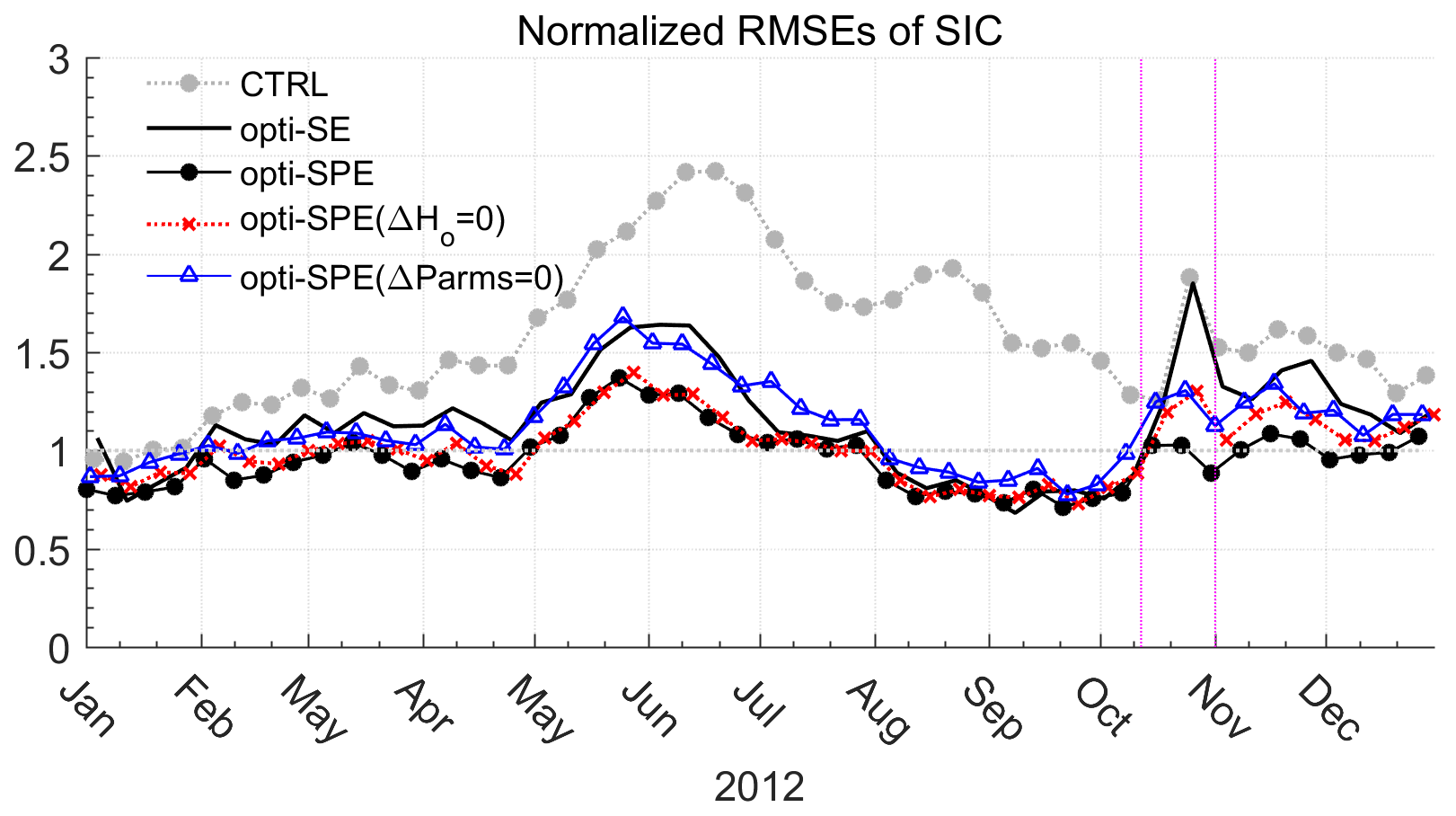
Figure 4Seasonal evolution of the root mean square errors of SIC (normalized by prior uncertainties) in CTRL, opti-SE, and opti-SPE. In opti-SPE (Δ Ho = 0), we replace the optimized Ho to its default value. And in opti-SPE (ΔParms = 0), we reset all the 13 parameters to their default values.
Two additional simulations are presented in Fig. 4 to demonstrate the added effects of joint parameter and state estimation. By resetting all the 13 parameters to their default values (opti-SPE(ΔParms = 0), blue line with triangles in Fig. 4), SIC errors increase to a level similar to that in opti-SE (black line with filled circles in Fig. 4). However, in October, the SIC errors are smaller than opti-SE when reset the 13 parameters to their default values. This indicates that the data assimilation finds a smaller minimum of the cost function J which is inaccessable in opti-SE. The further improvements in opti-SPE after October are partially attributed to adjustments to the parameter Ho, as evidenced by the sharp increase in SIC errors when ΔHo= 0 (opti-SPE (ΔHo= 0), dotted red line with crosses in Fig. 4).
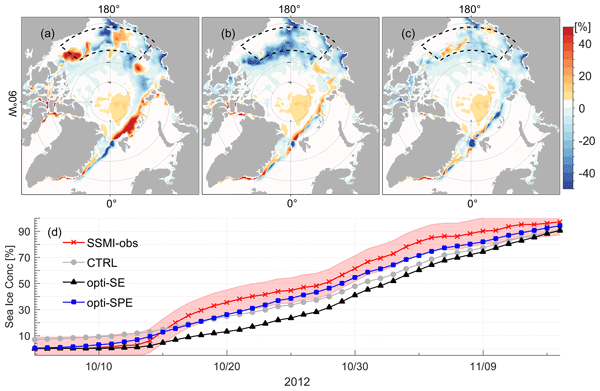
Since the sea ice recovery process in October impacts ocean-sea ice-atmosphere fluxes and sea ice thickness in subsequent years, we now focus on the SIC improvements during this period. Pronounced SIC differences between the control run and satellite observations appear in the Arctic's Pacific sector (enclosed by the dashed black line in Fig. 5a–c), where the most extensive summer sea ice loss occurs across the Arctic Ocean. At the beginning of October, the Arctic's Pacific sector is ice-free (red line with crosses in Fig. 5d). The control run fails to reproduce the ice-free conditions (grey line with filled circles in Fig. 5d). Both opti-SE and opti-SPE reproduce the ice-free conditions well (black line with trianges and blue line with rectangles in Fig. 5d). Starting from 10 October, the sea ice begins to recover. Compared with the control run and observations, opti-SE underestimates SIC by more than 40 % (Fig. 5b), and this underestimation persists until the early November (Fig. 5d). By simultaneously adjusting the model parameters, opti-SPE improves the sea ice recovery process and successfully reduces the negative SIC bias (Fig. 5c, d).
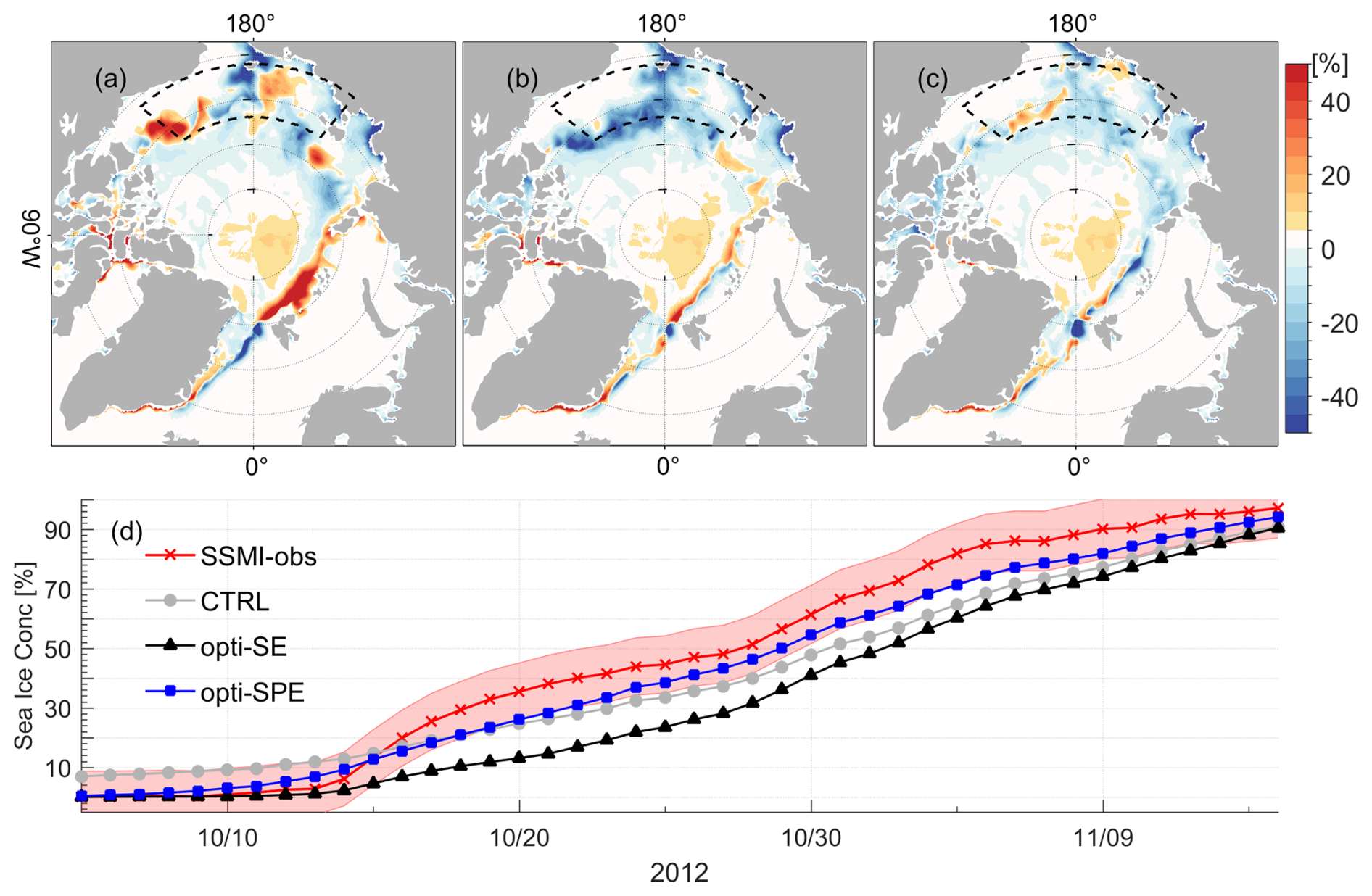
Figure 5Model-data differences of SIC averaged from 12 to 22 October 2012 in (a) CTRL, (b) opti-SE, and (c) opti-SPE. (d) Temporal evolution of in SIC averaged over the Pacific sector (enclosed by the dashed black line in panels a–c) in the control run (CTRL), two assimilation runs (opti-SE and opti-SPE), and satellite observations (SSMI-obs).
During summer, open waters accumulate a large amount of heat, and this ocean heat must be released before the ocean surface refreezes. Since the control run fails to reproduce the ice-free conditions (Fig. 5d), more sea ice persists in the Arctic's Pacific sector and less ocean heat is released before the open waters freeze. However, due to the ice-free conditions in the summer season in opti-SE and opti-SPE, the ocean needs to release more heat before refreezing. Therefore, opti-SE initially shows a much slower sea ice growth rate while opti-SPE improves the SIC evolution by adjusting the parameter Ho. In the sea ice model, Ho is the minimum SIT formed in open water, which impacts the vertical and lateral growth of the sea ice and is set to 0.5 m by default. Over the ice-free water, decreasing Ho reduces the amount of latent heat that needs to be released during the initial formation process of sea ice. After initial formation, the decreased Ho accelerates the formation of thinner sea ice in open areas. In opti-SPE, Ho is reduced by more than 0.1 m over open water (Fig. 6a) at the onset of refreezing (Fig. 6b), which gives rise to the rapid growth of thinner sea ice. The accelerated sea ice recovery significantly reduces the heat and momentum exchanges between atmosphere and ocean, altering the feedback processes in the atmosphere-sea ice-ocean system.
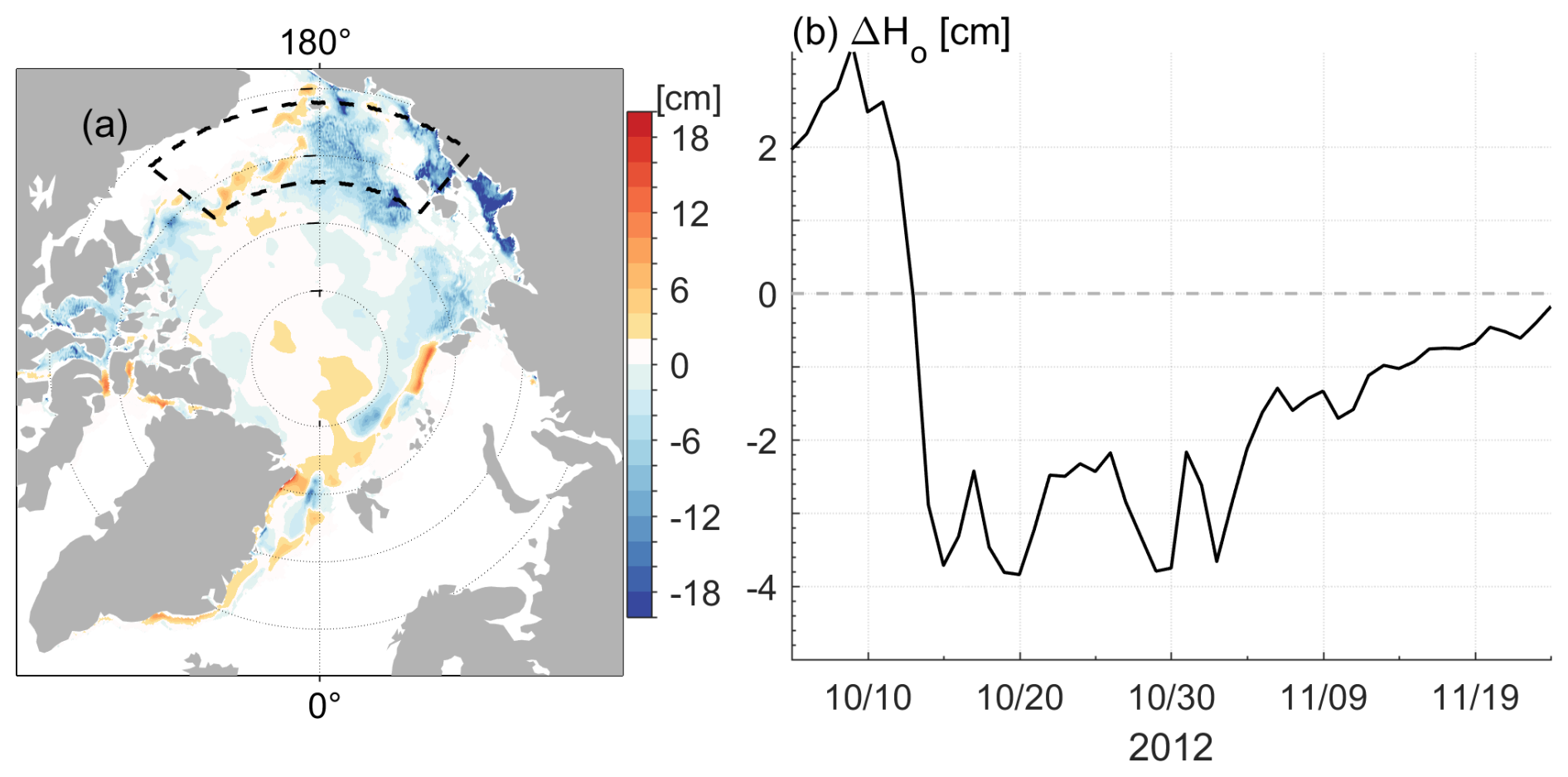
Figure 6(a) Adjustment on the parameter Ho (in cm) averaged from 12 to 22 October 2022. (b) Temporal changes in adjustments of Ho averaged over the Arctic's Pacific sector (enclosed by the dashed black line in a).
4.3 Comparisons against Independent Observations
4.3.1 Measurements at BGEP Moorings
In this subsection, we interpolated the gridded SIC and SIT data to the BGEP mooring locations to explore their seasonal variations.
The sea ice extent in 2012 reached the unprecedentedly low values since the satellite era. The ULSs of three moorings observed ice-free conditions from August to October. The control run fails to simulate the ice-free conditions, while both opti-SE and opti-SPE successfully reproduce the seasonal SIC variation (Fig. 7a–c). opti-SPE shows smaller RMSE at Mb and Md than opti-SE and CTRL (see the numbers in Fig. 7b, c). In opti-SPE, a pack ice broke off from the main ice field from 20 July to early August and gradually melted at Ma, resulting in slightly larger RMSEs (Fig. 7a).
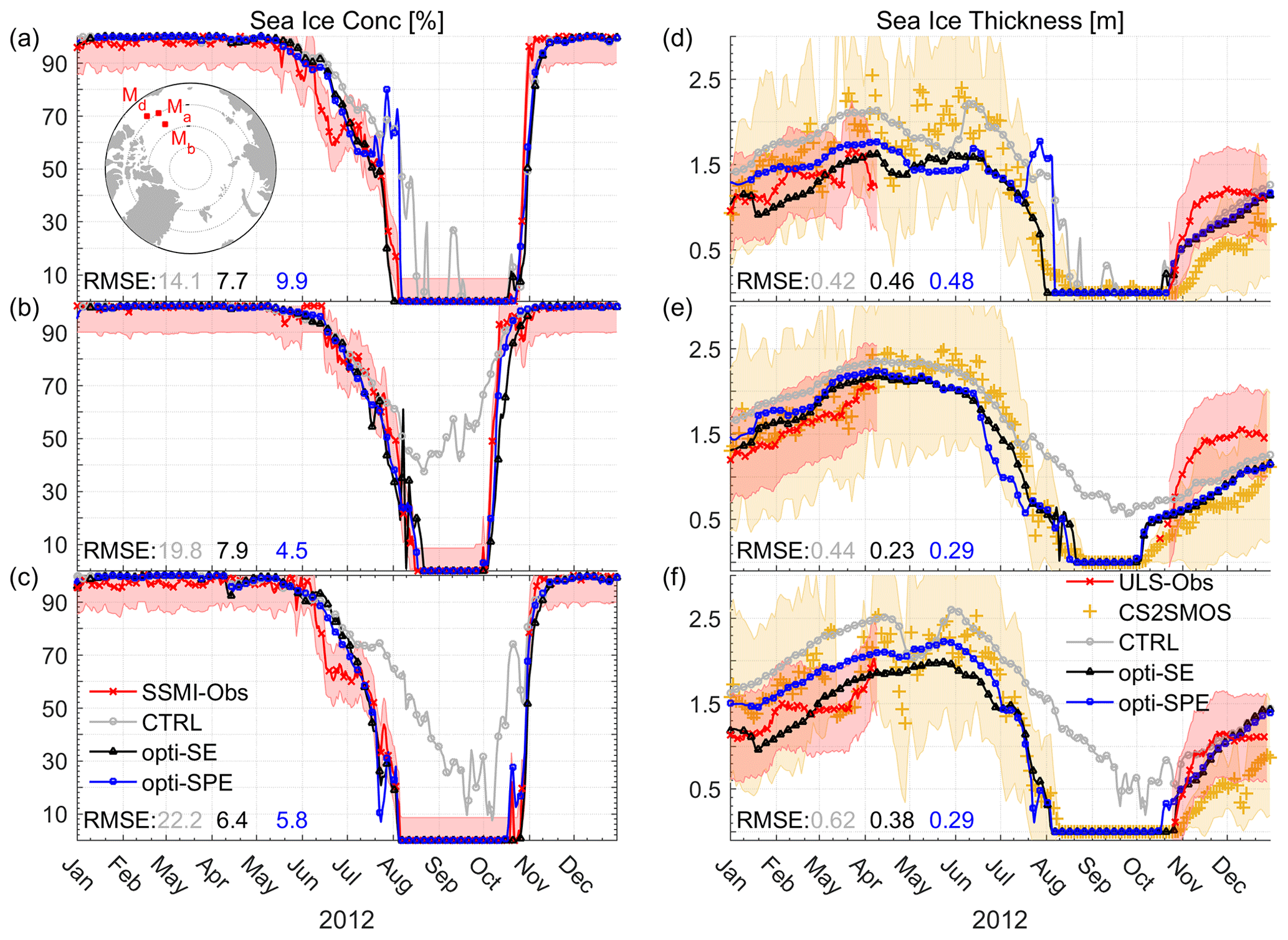
Figure 7SIC from satellite observations (SSMI-Obs), CTRL, opti-SE and opti-SPE at the mooring locations (a) Ma, (b) Mb, and (c) Md (see locations in subplot of panel a). The RMSEs of SIC between the three simulations and SSMI-Obs are listed in panels (a)–(c). Panels (d)–(f) are the corresponding SIT derived from the upward looking sonar (ULS-Obs), CS2SMOS, CTRL, opti-SE, and opti-SPE. And the RMSEs of SIT between the three simulations and ULS-Obs are also listed in panels (d)–(f). The shadings indicate the uncertainties of SIC and SIT obervations. For the ULS-Obs, we use the standard deviation of sub-daily sea ice thickness to represent the uncertainties.
For SIT, the two assimilation runs bring the simulated SIT into consistency with the CS2SMOS observations (Fig. 7d–f) and ULS-measurements. From January to August, the gridded SIT (the CS2SMOS data and the two assimilation runs) agrees well with the ULS-measured SIT, as the Beaufort Sea is covered by compact ice. However, from October to December, when the ocean starts to freeze, systematic discrepancies emerge between the CS2SMOS, the two assimilation runs, and the ULS-measurements: SIT increases more rapidly in the CS2SMOS dataset than in either two assimilation runs or the ULS-measurements. Overall, the two assimilation runs exhibit the smallest errors against the ULS-observed SIT and satellite-observed SIC, within the prior observational errors.
4.3.2 SIT from IMB data
The IMBs measure the variation of SIT along the drift trajectories. Comparing these Lagrangian SIT observations with gridded SIT from the sea ice-ocean coupled model and satellite data is challenging, as such comparisons are often subject to biases (e.g., Mu et al., 2018). We use two validation metrics: (1) the mean SIT over the observation time; (2) central root mean square deviation (CRMSD), computed as , where x and y represent the simulated- and measured-SIT, respectively, and the overbar denotes time average. N denotes the total number of valid SIT observations from an IMB, and n represents the index of individual observations. Smaller CRMSD values indicate better agreement between simulations and observations in capturing sea ice evolution. We selected six IMBs with long records: one deployed in 2011 in the central Beaufort Sea (2011J), which drifted toward the Chukchi Sea (top left panel in Fig. 8) in 2012; the remaining five IMBs were deployed in 2012 in the central Arctic.
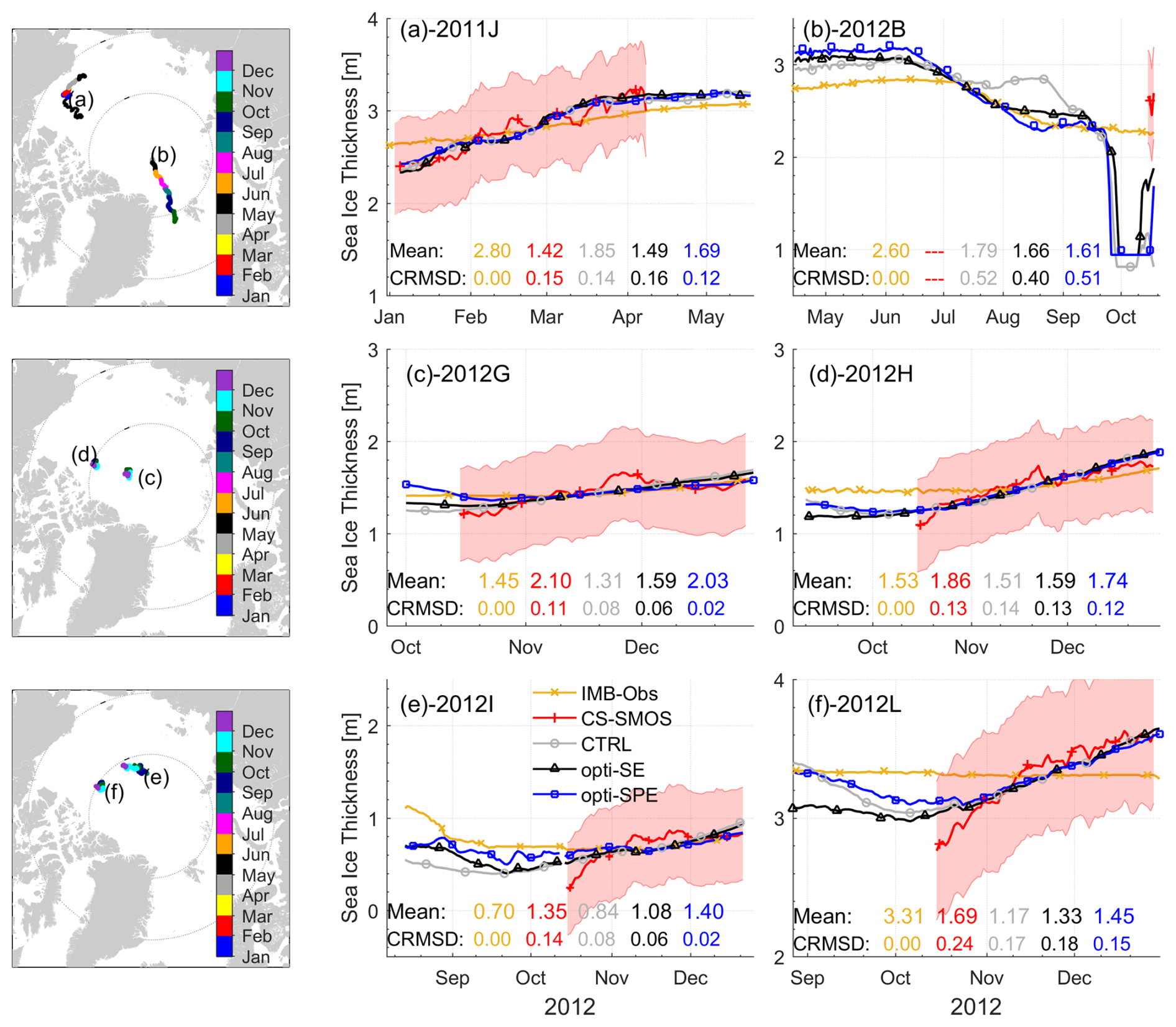
Figure 8SIT along the IMB trajectories. The IMB trajectories (a – 2011J, b – 2012B, c – 2012G, d – 2012H, e – 2012I, f – 2012L) are shown in the left panels and the colors indicate the observing time. The SIT of IMBs (yellow lines with crosses), CS2SMOS (red lines with plug signs), CTRL (grey lines with circles), opti-SE (black lines with triangles), opti-SPE (blue lines with rectangles) are plotted in the right-hand side against observing time. The shadings indicate the CS2SMOS observational uncertainties. The statistics (mean SIT and CRMSD against IMBs) of IMBs, CS2SMOS, CTRL, opti-SE, and opti-SPE are also shown in each plot.
As the mean SIT values indicate, SIT biases of 0.2–0.7 m exist between the CS2SMOS data and the control run (see “Mean” values in Fig. 8c–f). The optimization brings the model simulations closer to the CS2SMOS data, especially in opti-SPE. When considering the SIT evolution along the drift trajectories, both opti-SPE and opti-SE effectively reproduce the satellite-measured sea ice growth processes.
As expected, IMB measurements typically show 0.5–1.5 m differences compared with CS2SMOS observations (“Mean” values in Fig. 8). This likely reflects that the ice conditions at the IMB deployment sites do not necessarily represent a large spatial average, especially for SIT. Considering the SIT variation along the drift trajectories, all the three model simulations and the IMB measurements exhibit much weaker SIT variability than the CS2SMOS observations. This discrepancy arises from the following factors: (1) the buoys are generally deployed on the relatively thick level ice (Richter-Menge et al., 2006), and (2) the satellite altimeter observations contain significant signals from thin ice, which has a relatively large growth rate (Lei et al., 2022), and ice dynamic deformation can also contribute to the thickening of sea ice within the grid cells (von Albedyll et al., 2022). The CRMSDs, computed between gridded SIT and IMB measurements, indicate that the SIT variations in opti-SPE matches the IMB measurement best.
In summary, opti-SPE effectively reduces the mean SIT biases between CS2SMOS observations and the control run. The two assimilation runs reproduce the SIT variation observed by IMBs, with CS2SMOS observations exhibiting greater variability than IMB measurements. Analysis of the CRMSDs reveals that opti-SPE best matches the sea ice evolution as measured by IMBs. We note that data from point measurements of IMBs also have inherent limitations, including the representativeness of initial ice thickness at the deployment, the influence of spatial heterogeneity of snow accumulation during the later measurement stages, and the inability to account for sea ice thickening driven by ice dynamic deformation.
4.4 Sea Ice Velocity from IABP
Twenty-two IABP ice-drifting buoys with drifting periods exceeding 100 d are used to retrieve ice velocities, which are compared against the three model simulations. These buoys were initially deployed on multi-year sea ice and subsequently drifted with the sea ice. Daily sea ice velocities are computed from the buoy locations, and the model-simulated sea ice velocities are interpolated to the buoy locations. We summarize the statistics, including standard deviations, correlation coefficients, and root mean square deviations (RMSDs), using Taylor diagrams (Taylor, 2001).
The cost component of SID accounts for 1.45 % of the cost function, decreasing slightly to 1.42 % in opti-SE and 1.43 % in opti-SPE. As shown in Fig. 9b and c, the statistics of CTRL, opti-SE, and opti-SPE with respect to zonal and meridional sea ice velocities from drifting buoys do not differ systematically. Based on the statistics, these buoys can be categorized into two groups: (1) those buoys drifting in regions with compact ice (NOs. 1–14 in Fig. 9a); and (2) those buoys drifting into regions with gradually decreasing SIC (NOs. 15–22 in Fig. 9a).
In the first group (Nos. 1–14 in Fig. 9a), the RMSEs (0.0429, 0.0417, 0.0423) and correlation coefficients (0.8226, 0.8232, 0.8229) of CTRL, opti-SE, and opti-SPE are comparable. For individual buoys, their statistics in the Taylor diagrams (Fig. 9b, c) are also very similar across CTRL, opti-SE, and opti-SPE, with most RMSEs smaller than the prior uncertainties (0.06 m s−1).
In contrast to the first group, simulated ice velocities match the buoy observations (NOs. 15–22 in Fig. 9a) much less well in the second group, with RMSEs of 0.0880, 0.0973, and 0.0959, and correlation coefficients of 0.5691, 0.4863, and 0.4911 for CTRL, opti-SE, and opti-SPE, respectively. Additionally, the statistics of the second groups in the Taylor diagrams are more dispersed, indicating that the two assimilation runs increase the sea ice velocity errors and degrade correlations.
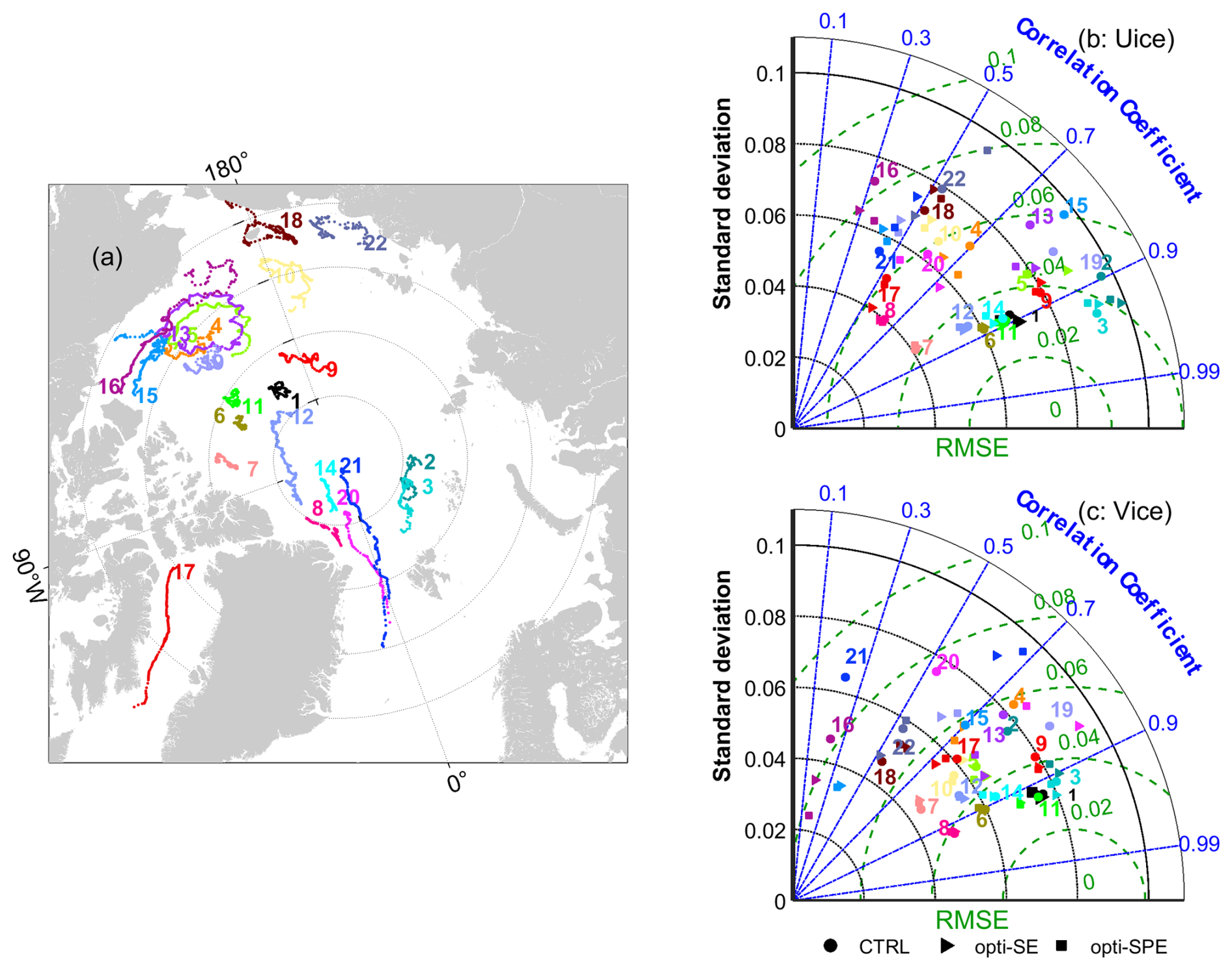
Figure 9(a) IABP buoy trajectories in 2012. Taylor diagrams of CTRL (filled circles), opti-SE (filled triangles), and opti-SPE (filled squares) with respect to the (b) zonal (UICE) and (c) meridional (VICE) ice velocities retrieved from the IABP buoys.
In Fig. 10, we further analyze two representative buoys (NOs. 16 and 21 in Fig. 9a) that gradually drifted toward the ice edge. The buoy-16 was deployed on 12 April 2012 in the southeastern Beaufort Sea (72.38° N, −127.47° E). It drifted westward along the southern periphery of the Beaufort Gyre and ceased data reporting by 10 November 2012 near the Alaska coast (71.34° N, −160.55° E). The buoy-21 was deployed on 15 April 2012 in the central Arctic Ocean. It was advected along the transpolar stream, exited through the Fram Strait, and finally ceased data reporting on November 6, 2012 in the Greenland Sea.
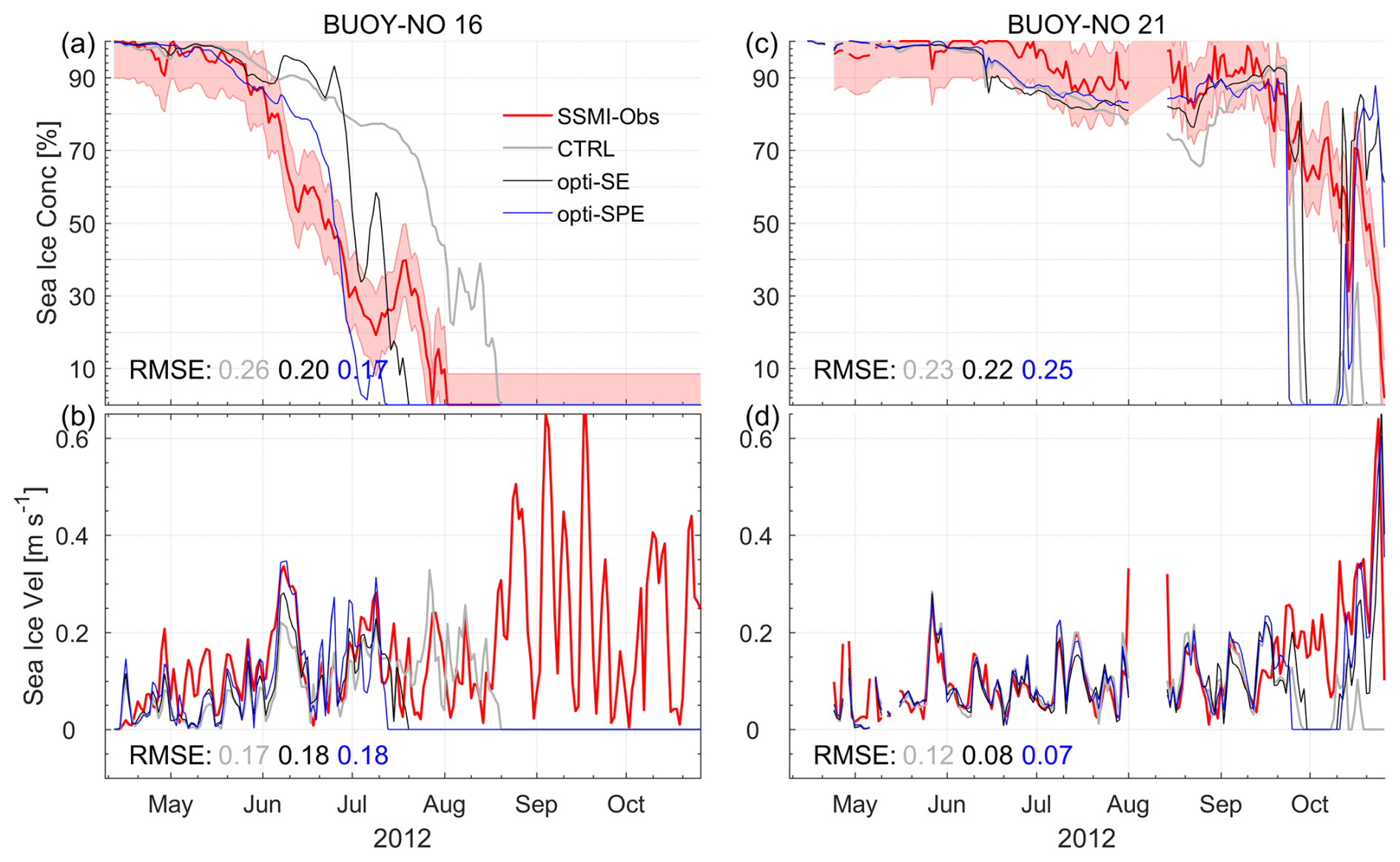
Figure 10Changes in (a, c) SIC and (b, d) sea ice velocity along the buoy trajectories (NOs. 16 and 21 in Fig. 9a).
The sea ice velocity differences are very small in regions with compact ice, as ice internal stress dampens the response of ice motion to wind forcing. When SIC decreases below 85 % (Fig. 10a, c), the marginal ice zone begins. Ice internal stress weakens and plays a negligible role in sea ice drift. Consequently, sea ice becomes more sensitive to wind stress (Fig. 10b, d). In the marginal ice zone, the three model simulations cannot perfectly reproduce the weakening ice field given current sea ice model physics, leading to noticeable errors in sea ice velocities. Along the buoy-16's trajectory, the satellite-observed SIC approached zero by early August (Fig. 10a), yet the buoy continued drifting until late October (Fig. 10b). The fragmented ice floes likely entered a fully free-drift state, where the ratio of sea ice speed to wind speed reaches a maximum (e.g., Zhang et al., 2022). We suspect that the size of the ice floe carrying the buoy was too small to be captured by the satellite and simulated by the numerical model which has a resolution of ∼ 10 km. This sea ice condition increases comparison uncertainty. Therefore, numerical simulation of sea ice and characterization of heat and momentum exchange between the atmosphere and ocean are extremely challenging in the marginal ice zone.
Building on the framework of the ECCO project, specifically the work of Fenty et al. (2013) and Lyu et al. (2023), we developed a simultaneous state and parameter estimation scheme for an ocean-sea ice coupled model. To our knowledge, this is the first study to optimize spatiotemporally varying sea ice model parameters together with atmospheric forcing and model initial conditions. By assimilating Arctic ocean and sea ice observations from 2012, we investigated the added effects of the simultaneous state and parameter estimation scheme (opti-SPE) relative to the traditional state estimation scheme (opti-SE) and the free model simulation (CTRL).
The results show that opti-SPE further reduces the cost function by 10.5 %, with notable improvements in SIC. In both the control run and opti-SE, sea ice grows much slower in the Arctic's Pacific sector in October. By reducing the lead closing parameter Ho (on the order of 0.1 m), opti-SPE accelerates sea ice growth. The lead closing parameters are widely used in Arctic sea ice-ocean assimilation models (Lindsay et al., 2006; Mu et al., 2018; Nguyen et al., 2021), and impact on the sea ice growth process in autumn. Our results suggest that delicate optimization of this parameter is necessary for better simulating Arctic sea ice changes and ocean-sea ice-atmosphere exchanges in the autumn.
For SIT, both opti-SE and opti-SPE bring the simulated SIT into agreement with CS2CMOS SIT, taking into account its prior uncertainties. Compared with the independent ULS-measured SIT at BGEP moorings, both assimilation runs efficiently reproduce the seasonal sea ice evolution. The differences between the assimilation runs and the ULS measurements are much smaller than those between CS2SMOS data and ULS measurements, especially from October to December. Considering sea ice evolutions along the six IMB trajectories, opti-SPE performs slightly better than opti-SE. However, the robustness of these comparisons may be limited by the small number of IMBs and their spatial representativeness relative to their surrounding areas.
The overall improvements in sea ice velocities from data assimilation are not significant. In regions with compact ice, the two assimilation runs slightly improve the simulated sea ice velocities. However, as buoys drift into the marginal ice zone or near-ice-free regions, both model simulations and the satellite data may fail to simulate or detect small ice floes, resulting in large deviations between the simulated and observed sea ice velocity.
Despite using a relatively low-complexity sea ice model compared to the modern sea ice models such as the Los Alamos sea ice model (CICE; Hunke et al., 2020), our assimilation results demonstrate that the model simulations are efficiently brought into agreement with the satellite observations and independent observations. Zampieri et al. (2021) demonstrated that the low-complex sea ice model can be optimized more efficiently, and the overall performance after optimization is largely in line with complex CICE configurations. Therefore, our sea ice model remains a suitable tool for Arctic ocean and sea ice assimilation studies. However, in the next stage, we will update the sea ice module with the more complex CICE model.
This study demonstrates that the simultaneous optimization of model parameters and state variables is promising and merits testing with the other assimilation methods (e.g., ensemble Kalman Filters). However, given that the optimal set of sea ice parameters may evolve alongside the thinning of Arctic sea ice, the parameters optimized using 2012 observations may not necessarily improve model simulation for the other years. To address this, we plan to assimilate observations spanning the satellite era (1978–2025) and jointly optimize model parameters and state variables. This approach will enable the accurate reconstruction of historical Arctic ocean and sea ice changes, thereby supporting research on Arctic ocean and sea ice variability and trends.
The sea ice-ocean coupled model is based on MITgcm_c63m (https://mitgcm.org/download/other_checkpoints/, last access: 25 November 2025). The modified MITgcm (c63m) codes are available to the public on Zenodo at https://doi.org/10.5281/zenodo.14584929 (Lyu et al., 2025). The sea ice variables and model parameters from the control run and the two assimilation runs are available on Zenodo at https://doi.org/10.5281/zenodo.14584780 (Lyu, 2025). We note that a commercial TAF license is required to fully reproduce the optimization steps described in this study.
All the assimilated and independent validation are publicly available. The following datasets were provided with DOI numbers: the global ocean along track L3 sea surface heights can be downloaded from the E.U. Copernicus Marine Service Information (https://doi.org/10.48670/moi-00146; Data Unification and Altimeter Combination System (DUACS) Team, 2025); the sea ice concentration and drift data were based on the EUMETSAT OSI-450-a (https://doi.org/10.15770/EUM_SAF_OSI_0013; OSI SAF, 2022), and osi-405-c (https://doi.org/10.15770/EUM_SAF_OSI_NRT_2007; OSI SAF, 2010); the CryoSat-SMOS merged sea ice thickness data (https://doi.org/10.57780/sm1-4f787c3, European Space Agency, 2023) is available at https://smos-diss.eo.esa.int/oads/access/ (last access: 25 November 2025).
The following datasets do not have DOI numbers; therefore, we provide links to them: the sea surface temperature were retrieved from https://data.remss.com/SST/daily/mw_ir/v05.1/netcdf/ (last access: 13 April 2025, Gentemann et al., 1994); the EN.4.2.2 data were obtained from https://www.metoffice.gov.uk/hadobs/en4/ (last access: 13 April 2025, Good et al., 2013) and are © British Crown Copyright, Met Office, 2013, provided under a Non-Commercial Government Licence http://www.nationalarchives.gov.uk/doc/non-commercial-government-licence/version/2/ (last access: 13 April 2025); the WOA18 climatological temperature and salinity data were download form https://www.ncei.noaa.gov/access/world-ocean-atlas-2018/ (last access: 13 April 2025, Locarnini et al., 2018; Zweng et al., 2018); the ULS-measured ice drafts were collected and shared by the Beaufort Gyre Exploration Program based at the Woods Hole Oceanographic Institution (https://www2.whoi.edu/site/beaufortgyre/data/mooring-data/, last access: 13 April 2025) in collaboration with researchers from Fisheries and Oceans Canada at the Institute of Ocean Sciences; the IMB-measured sea ice thickness were from http://imb-crrel-dartmouth.org/results/ (last access: 13 April 2025, Perovich et al., 2025); the sea ice drift trajectories were collected by the International Arctic Buoy Programme at https://iabp.apl.uw.edu/data.html (last access: 13 April 2025).
Conceptualization: GL, AK, and LM. Experiments design and results analysis: GL. Investigation: RL, XL, and CL. Original draft: GL. Review and editing: GL, LM, AK, RL, XL, and CL.
The contact author has declared that none of the authors has any competing interests.
Publisher’s note: Copernicus Publications remains neutral with regard to jurisdictional claims made in the text, published maps, institutional affiliations, or any other geographical representation in this paper. While Copernicus Publications makes every effort to include appropriate place names, the final responsibility lies with the authors. Views expressed in the text are those of the authors and do not necessarily reflect the views of the publisher.
We thank François Massonnet from Universite catholique de Louvain and another anonymous for their constructive and insightful comments on the manuscript. This research has been supported by the National Natural Science Foundation of China (grant no. 42325604), the National Key Research and Development Program of China (grant no. 2021YFC2803304), Program of Shanghai Academic/Technology Research Leader (grant no. 22XD1403600), and the Southern Marine Science and Engineering Guangdong Laboratory (Zhuhai) (grant no. ML2023SP219). For the assimilated sea ice variables, we thank the Alfred Wegener Institute, and EUMETSAT Ocean and Sea Ice Satellite Application Facility for supplying the CS2SMOS L4 sea ice thickness, OSI-SAF sea ice concentration and sea ice drift datasets, respectively. For the hydrographic observations, we acknowledge the Met Office, the Copernicus Marine Service, and the remoting sensing system for archiving and sharing the EN4, the along-track SLA, and sea surface temperature datasets. For the independent observations, we thank the Woods Hole Oceanographic Institution for the sea ice draft measured by the ULS, the Cold Regions Research and Engineering Laboratory-Dartmouth Mass Balance Buoy Program for the IMB data, the University of Washington for the buoy drifting trajectories.
This research has been supported by the National Natural Science Foundation of China (grant no. 42325604), the National Key Research and Development Program of China (grant no. 2021YFC2803304), and the Program of Shanghai Academic Research Leader (grant no. 22XD1403600).
This paper was edited by Christopher Horvat and reviewed by Francois Massonnet and one anonymous referee.
Annan, J. D., Hargreaves, J. C., Edwards, N. R., and Marsh, R.: Parameter estimation in an intermediate complexity earth system model using an ensemble Kalman filter, Ocean Modelling, 8, 135–154, https://doi.org/10.1016/j.ocemod.2003.12.004, 2005.
Branstator, G. and Teng, H.: Two Limits of Initial-Value Decadal Predictability in a CGCM, Journal of Climate, 23, 6292–6311, https://doi.org/10.1175/2010JCLI3678.1, 2010.
Bretherton, C. S., Henn, B., Kwa, A., Brenowitz, N. D., Watt-Meyer, O., McGibbon, J., Perkins, W. A., Clark, S. K., and Harris, L.: Correcting Coarse-Grid Weather and Climate Models by Machine Learning From Global Storm-Resolving Simulations, Journal of Advances in Modeling Earth Systems, 14, e2021MS002794, https://doi.org/10.1029/2021MS002794, 2022.
Chen, Y., Lei, R., Zhao, X., Wu, S., Liu, Y., Fan, P., Ji, Q., Zhang, P., and Pang, X.: A new sea ice concentration product in the polar regions derived from the FengYun-3 MWRI sensors, Earth Syst. Sci. Data, 15, 3223–3242, https://doi.org/10.5194/essd-15-3223-2023, 2023.
Data Unification and Altimeter Combination System (DUACS) Team: Global Ocean Along Track L 3 Sea Surface Heights Reprocessed 1993 Ongoing Tailored For Data Assimilation, Copernicus Marine Data Store [data set], https://doi.org/10.48670/moi-00146, 2025.
European Space Agency: SMOS-CryoSat L4 Sea Ice Thickness, Version 206, European Space Agency [data set], https://doi.org/10.57780/sm1-4f787c3, 2023.
Forget, G., Campin, J.-M., Heimbach, P., Hill, C. N., Ponte, R. M., and Wunsch, C.: ECCO version 4: an integrated framework for non-linear inverse modeling and global ocean state estimation, Geosci. Model Dev., 8, 3071–3104, https://doi.org/10.5194/gmd-8-3071-2015, 2015.
Fenty, I. and Heimbach, P.: Coupled Sea Ice–Ocean-State Estimation in the Labrador Sea and Baffin Bay, Journal of Physical Oceanography, 43, 884–904, https://doi.org/10.1175/JPO-D-12-065.1, 2013.
Fenty, I., Menemenlis, D., and Zhang, H.: Global coupled sea ice-ocean state estimation, Climate Dynamics, 49, 931–956, https://doi.org/10.1007/s00382-015-2796-6, 2017.
Gentemann, C. L., Wentz, F. J., Mears, C. A., and Smith, D. K.: In situ validation of Tropical Rainfall Measuring Mission microwave sea surface temperatures, Journal of Geophysical Research: Oceans, 109, C04021, https://doi.org/10.1029/2003JC002092, 2004 (data available at: https://data.remss.com/SST/daily/mw_ir/v05.1/netcdf/, last access: 25 November 2025).
Giering, R. and Kaminski, T.: Recipes for adjoint code construction, ACM Transactions on Mathematical Software (TOMS), 24, 437–474, https://doi.org/10.1145/293686.293695, 1998.
Gilbert, J. C. and Lemaréchal, C.: The module M1QN3, https://who.rocq.inria.fr/Jean-Charles.Gilbert/modulopt/optimization-routines/m1qn3/m1qn3.html (last access: 25 November 2025), 2023.
Good, S. A., Martin, M. J., and Rayner, N. A.: EN4: Quality controlled ocean temperature and salinity profiles and monthly objective analyses with uncertainty estimates, Journal of Geophysical Research: Oceans, 118, 6704-6716, https://doi.org/10.1002/2013jc009067, 2013 (data available at: https://www.metoffice.gov.uk/hadobs/en4/, last access: 25 November 2025).
Heimbach, P., Menemenlis, D., Losch, M., Campin, J.-M., and Hill, C.: On the formulation of sea-ice models. Part 2: Lessons from multi-year adjoint sea-ice export sensitivities through the Canadian Arctic Archipelago, Ocean Modelling, 33, 145–158, https://doi.org/10.1016/j.ocemod.2010.02.002, 2010.
Hibler, W.: A Dynamic Thermodynamic Sea Ice Model, Journal of Physical Oceanography, 9, 815–846, https://doi.org/10.1175/1520-0485(1979)009<0815:adtsim>2.0.co;2, 1979.
Hibler, W.: Modeling a Variable Thickness Sea Ice Cover, Monthly Weather Review, 108, 1943–1973, https://doi.org/10.1175/1520-0493(1980)108<1943:mavtsi>2.0.co;2, 1980.
Horvat, C. and Roach, L. A.: WIFF1.0: a hybrid machine-learning-based parameterization of wave-induced sea ice floe fracture, Geosci. Model Dev., 15, 803–814, https://doi.org/10.5194/gmd-15-803-2022, 2022.
Hourdin, F., Mauritsen, T., Gettelman, A., Golaz, J.-C., Balaji, V., Duan, Q., Folini, D., Ji, D., Klocke, D., Qian, Y., Rauser, F., Rio, C., Tomassini, L., Watanabe, M., and Williamson, D.: The Art and Science of Climate Model Tuning, Bulletin of the American Meteorological Society, 98, 589–602, https://doi.org/10.1175/BAMS-D-15-00135.1, 2017.
Hu, X.-M., Zhang, F., and Nielsen-Gammon, J. W.: Ensemble-based simultaneous state and parameter estimation for treatment of mesoscale model error: A real-data study, Geophysical Research Letters, 37, L08802, https://doi.org/10.1029/2010GL043017, 2010.
Hunke, E. C., Allard, R., Bailey, D. A., Blain, P., Craig, A., Dupont, F., and Winton, M.: CICE-Consortium/CICE: CICE version 6.1.2 (version 6.1.2), Zenodo [code], https://doi.org/10.5281/zenodo.3888653, 2020.
Jackson, C. S., Sen, M. K., Huerta, G., Deng, Y., and Bowman, K. P.: Error Reduction and Convergence in Climate Prediction, Journal of Climate, 21, 6698–6709, https://doi.org/10.1175/2008JCLI2112.1, 2008.
Kaleschke, L., Lüpkes, C., Vihma, T., Haarpaintner, J., Bochert, A., Hartmann, J., and Heygster, G.: SSM/I Sea Ice Remote Sensing for Mesoscale Ocean-Atmosphere Interaction Analysis, Journal of Remote Sensing, 27, 526–537, https://doi.org/10.1080/07038992.2001.10854892, 2001.
Kim, J. G., Hunke, E. C., and Lipscomb, W. H.: Sensitivity analysis and parameter tuning scheme for global sea-ice modeling, Ocean Modelling, 14, 61–80, https://doi.org/10.1016/j.ocemod.2006.03.003, 2006.
Kochkov, D., Yuval, J., Langmore, I., Norgaard, P., Smith, J., Mooers, G., Klöwer, M., Lottes, J., Rasp, S., Düben, P., Hatfield, S., Battaglia, P., Sanchez-Gonzalez, A., Willson, M., Brenner, M. P., and Hoyer, S.: Neural general circulation models for weather and climate, Nature, 632, 1060–1066, https://doi.org/10.1038/s41586-024-07744-y, 2024.
Koldunov, N. V., Köhl, A., Serra, N., and Stammer, D.: Sea ice assimilation into a coupled ocean–sea ice model using its adjoint, The Cryosphere, 11, 2265–2281, https://doi.org/10.5194/tc-11-2265-2017, 2017.
Koo, Y., Lei, R., Cheng, Y., Cheng, B., Xie, H., Hoppmann, M., Kurtz, N. T., Ackley, S. F., and Mestas-Nuñez, A. M.: Estimation of thermodynamic and dynamic contributions to sea ice growth in the Central Arctic using ICESat-2 and MOSAiC SIMBA buoy data, Remote Sensing of Environment, 267, 112730, https://doi.org/10.1016/j.rse.2021.112730, 2021.
Krishfield, R. A., Proshutinsky, A., Tateyama, K., Williams, W. J., Carmack, E. C., McLaughlin, F. A., and Timmermans, M.-L.: Deterioration of perennial sea ice in the Beaufort Gyre from 2003 to 2012 and its impact on the oceanic freshwater cycle, Journal of Geophysical Research: Oceans, 119, 1271–1305, https://doi.org/10.1002/2013JC008999, 2014.
Lavergne, T., Eastwood, S., Teffah, Z., Schyberg, H., and Breivik, L.-A.: Sea ice motion from low-resolution satellite sensors: An alternative method and its validation in the Arctic, Journal of Geophysical Research: Oceans, 115, C10032, https://doi.org/10.1029/2009JC005958, 2010.
Lavergne, T., Sørensen, A. M., Kern, S., Tonboe, R., Notz, D., Aaboe, S., Bell, L., Dybkjær, G., Eastwood, S., Gabarro, C., Heygster, G., Killie, M. A., Brandt Kreiner, M., Lavelle, J., Saldo, R., Sandven, S., and Pedersen, L. T.: Version 2 of the EUMETSAT OSI SAF and ESA CCI sea-ice concentration climate data records, The Cryosphere, 13, 49–78, https://doi.org/10.5194/tc-13-49-2019, 2019.
Lei, R., Cheng, B., Hoppmann, M., Zhang, F., Zuo, G., Hutchings, J. K., Lin, L., Lan, M., Wang, H., Regnery, J., Krumpen, T., Haapala, J., Rabe, B., Perovich, D. K., and Nicolaus, M.: Seasonality and timing of sea ice mass balance and heat fluxes in the Arctic transpolar drift during 2019–2020, Elementa: Science of the Anthropocene, 10, 000089, https://doi.org/10.1525/elementa.2021.000089, 2022.
Li, Z., Chao, Y., McWilliams, J. C., and Ide, K.: A Three-Dimensional Variational Data Assimilation Scheme for the Regional Ocean Modeling System, Journal of Atmospheric and Oceanic Technology, 25, 2074–2090, https://doi.org/10.1175/2008JTECHO594.1, 2008.
Lindsay, R. W. and Zhang, J.: Assimilation of Ice Concentration in an Ice–Ocean Model, Journal of Atmospheric and Oceanic Technology, 23, 742–749, https://doi.org/10.1175/jtech1871.1, 2006.
Liu, C., Köhl, A., and Stammer, D.: Adjoint−Based Estimation of Eddy-Induced Tracer Mixing Parameters in the Global Ocean, Journal of Physical Oceanography, 42, 1186–1206, https://doi.org/10.1175/jpo-d-11-0162.1, 2012.
Liu, X. and Zhang, L.: Study on optimization of sea ice concentration with adjoint method, Journal of Coastal Research, 84, 44–50, https://doi.org/10.2112/SI84-006.1, 2018.
Locarnini, R. A., Mishonov, A. V., Baranova, O. K., Boyer, T. P., Zweng, M. M., Garcia, H. E., Reagan, J. R., Seidov, D., Weathers, K. W., Paver, C. R., and Smolyar, I. V.: World Ocean Atlas 2018, Volume 1: Temperature, Levitus, edited by: Mishonov, A., NOAA Atlas NESDIS, 82, 52 pp., https://doi.org/10.25923/e5rn-9711, 2018.
Losch, M., Menemenlis, D., Campin, J.-M., Heimbach, P., and Hill, C.: On the formulation of sea–ice models. Part 1: Effects of different solver implementations and parameterizations, Ocean Modelling, 33, 129–144, https://doi.org/10.1016/j.ocemod.2009.12.008, 2010.
Lu, Y., Wang, X., and Dong, J.: Melt Pond Scheme Parameter Estimation Using an Adjoint Model, Advances in Atmospheric Sciences, 38, 1525–1536, https://doi.org/10.1007/s00376-021-0305-x, 2021.
Lyu, G.: MITgcm model developed for state and parameter estimation in a pan-Arctic ocean and sea ice model, Zenodo [code], https://doi.org/10.5281/zenodo.14584929, 2025.
Lyu, G., Koehl, A., Serra, N., and Stammer, D.: Assessing the current and future Arctic Ocean observing system with observing system simulating experiments, Quarterly Journal of the Royal Meteorological Society, 147, 2670–2690, https://doi.org/10.1002/qj.4044, 2021a.
Lyu, G., Koehl, A., Serra, N., Stammer, D., and Xie, J.: Arctic ocean–sea ice reanalysis for the period 2007–2016 using the adjoint method, Quarterly Journal of the Royal Meteorological Society, 147, 1908–1929, https://doi.org/10.1002/qj.4002, 2021b.
Lyu, G., Köhl, A., Matei, I., and Stammer, D.: Adjoint-Based Climate Model Tuning: Application to the Planet Simulatorm Journal of Advances in Modeling Earth Systems, 10, 207–222, https://doi.org/10.1002/2017MS001194, 2018.
Lyu, G., Koehl, A., Wu, X., Zhou, M., and Stammer, D.: Effects of including the adjoint sea ice rheology on estimating Arctic Ocean–sea ice state, Ocean Sci., 19, 305–319, https://doi.org/10.5194/os-19-305-2023, 2023.
Lyu, G., Mu, L., Koehl, A., Lei, R., Liang, X., and Liu, C.: MITgcm model developed for state and parameter estimation in a pan-Arctic ocean and sea ice model using MITgcm (c63m), Zenodo [data set], https://doi.org/10.5281/zenodo.14584780, 2025.
Marshall, J., Adcroft, A., Hill, C., Perelman, L., and Heisey, C.: A finite-volume, incompressible Navier Stokes model for studies of the ocean on parallel computers, Journal of Geophysical Research: Oceans, 102, 5753–5766, https://doi.org/10.1029/96JC02775, 1997.
Massonnet, F., Goosse, H., Fichefet, T., and Counillon, F.: Calibration of sea ice dynamic parameters in an ocean-sea ice model using an ensemble Kalman filter, Journal of Geophysical Research: Oceans, 119, 4168–4184, https://doi.org/10.1002/2013JC009705, 2014.
Mauritsen, T., Stevens, B., Roeckner, E., Crueger, T., Esch, M., Giorgetta, M., Haak, H., Jungclaus, J., Klocke, D., Matei, D., Mikolajewicz, U., Notz, D., Pincus, R., Schmidt, H., and Tomassini, L.: Tuning the climate of a global model, Journal of Advances in Modeling Earth Systems, 4, M00A01, https://doi.org/10.1029/2012MS000154, 2012.
Miller, P. A., Laxon, S. W., and Feltham, D. L.: Improving the spatial distribution of modeled Arctic sea ice thickness, Geophysical Research Letters, 32, L18503, https://doi.org/10.1029/2005GL023622, 2005.
Mu, L., Losch, M., Yang, Q., Ricker, R., Losa, S. N., and Nerger, L.: Arctic-Wide Sea Ice Thickness Estimates From Combining Satellite Remote Sensing Data and a Dynamic Ice-Ocean Model with Data Assimilation During the CryoSat-2 Period, Journal of Geophysical Research: Oceans, 123, 7763–7780, https://doi.org/10.1029/2018JC014316, 2018.
Murphy, J. M., Sexton, D. M. H., Barnett, D. N., Jones, G. S., Webb, M. J., Collins, M., and Stainforth, D. A.: Quantification of modelling uncertainties in a large ensemble of climate change simulations, Nature, 430, 768–772, https://doi.org/10.1038/nature02771, 2004.
Nie, Y., Li, C., Vancoppenolle, M., Cheng, B., Boeira Dias, F., Lv, X., and Uotila, P.: Sensitivity of NEMO4.0-SI3 model parameters on sea ice budgets in the Southern Ocean, Geosci. Model Dev., 16, 1395–1425, https://doi.org/10.5194/gmd-16-1395-2023, 2023.
Nguyen, A. T., Menemenlis, D., and Kwok, R.: Arctic ice-ocean simulation with optimized model parameters: Approach and assessment, Journal of Geophysical Research: Oceans, 116, C04025, https://doi.org/10.1029/2010JC006573, 2011.
Nguyen, A. T., Pillar, H., Ocaña, V., Bigdeli, A., Smith, T. A., and Heimbach, P.: The Arctic Subpolar Gyre sTate Estimate: Description and Assessment of a Data-Constrained, Dynamically Consistent Ocean-Sea Ice Estimate for 2002–2017, Journal of Advances in Modeling Earth Systems, 13, e2020MS002398, https://doi.org/10.1029/2020MS002398, 2021.
OSI SAF: Global Low Resolution Sea Ice Drift – Multimission, EUMETSAT SAF on Ocean and Sea Ice [data set], https://doi.org/10.15770/EUM_SAF_OSI_NRT_2007, 2010.
OSI SAF: Global Sea Ice Concentration Climate Data Record v3.0 – Multimission, EUMETSAT SAF on Ocean and Sea Ice [data set], https://doi.org/10.15770/EUM_SAF_OSI_0013, 2022.
Panteleev, G., Yaremchuk, M., Stroh, J. N., Francis, O. P., and Allard, R.: Parameter optimization in sea ice models with elastic–viscoplastic rheology, The Cryosphere, 14, 4427–4451, https://doi.org/10.5194/tc-14-4427-2020, 2020.
Perovich, D., Richter-Menge, J., and Polashenski, C.: Observing and understanding climate change: Monitoring the mass balance, motion, and thickness of Arctic sea ice, IMB CRREL Dartmouth [data set], http://imb-crrel-dartmouth.org/results/ (last access: 25 November 2025), 2025.
Pujol, M.-I., Faugère, Y., Taburet, G., Dupuy, S., Pelloquin, C., Ablain, M., and Picot, N.: DUACS DT2014: the new multi-mission altimeter data set reprocessed over 20 years, Ocean Sci., 12, 1067–1090, https://doi.org/10.5194/os-12-1067-2016, 2016.
Richter-Menge, J. A., Perovich, D. K., Elder, B. C., Claffey, K., Rigor, I., and Ortmeyer, M.: Ice mass-balance buoys: a tool for measuring and attributing changes in the thickness of the Arctic sea-ice cover, Annals of Glaciology, 44, 205–210, https://doi.org/10.3189/172756406781811727, 2006.
Ricker, R., Hendricks, S., Kaleschke, L., Tian-Kunze, X., King, J., and Haas, C.: A weekly Arctic sea-ice thickness data record from merged CryoSat-2 and SMOS satellite data, The Cryosphere, 11, 1607–1623, https://doi.org/10.5194/tc-11-1607-2017, 2017.
Spreen, G., Kaleschke, L., and Heygster, G.: Sea ice remote sensing using AMSR-E 89-GHz channels, Journal of Geophysical Research: Oceans, 113, 14 pp., https://doi.org/10.1029/2005jc003384, 2008.
Sumata, H., Kauker, F., Karcher, M., and Gerdes, R.: Simultaneous Parameter Optimization of an Arctic Sea Ice–Ocean Model by a Genetic Algorithm, Monthly Weather Review, 147, 1899–1926, https://doi.org/10.1175/mwr-d-18-0360.1, 2019.
Taburet, G., Sanchez-Roman, A., Ballarotta, M., Pujol, M.-I., Legeais, J.-F., Fournier, F., Faugere, Y., and Dibarboure, G.: DUACS DT2018: 25 years of reprocessed sea level altimetry products, Ocean Sci., 15, 1207–1224, https://doi.org/10.5194/os-15-1207-2019, 2019.
Taylor, K. E.: Summarizing multiple aspects of model performance in a single diagram, Journal of Geophysical Research: Atmospheres, 106, 7183–7192, https://doi.org/10.1029/2000JD900719, 2001.
Uotila, P., O'Farrell, S., Marsland, S. J., and Bi, D.: A sea-ice sensitivity study with a global ocean-ice model, Ocean Modelling, 51, 1–18, https://doi.org/10.1016/j.ocemod.2012.04.002, 2012.
von Albedyll, L., Hendricks, S., Grodofzig, R., Krumpen, T., Arndt, S., Belter, H. J., Birnbaum, G., Cheng, B., Hoppmann, M., Hutchings, J., Itkin, P., Lei, R., Nicolaus, M., Ricker, R., Rohde, J., Suhrhoff, M., Timofeeva, A., Watkins, D., Webster, M., and Haas, C.: Thermodynamic and dynamic contributions to seasonal Arctic sea ice thickness distributions from airborne observations, Elementa: Science of the Anthropocene, 10, 00074, https://doi.org/10.1525/elementa.2021.00074, 2022.
Weaver, A. T. and Mirouze, I.: On the diffusion equation and its application to isotropic and anisotropic correlation modelling in variational assimilation, Quarterly Journal of the Royal Meteorological Society, 139, 242–260, https://doi.org/10.1002/qj.1955, 2013.
Williamson, D., Goldstein, M., Allison, L., Blaker, A., Challenor, P., Jackson, L., and Yamazaki, K.: History matching for exploring and reducing climate model parameter space using observations and a large perturbed physics ensemble, Climate Dynamics, 41, 1703–1729, https://doi.org/10.1007/s00382-013-1896-4, 2013.
Wu, X., Zhang, S., Liu, Z., Rosati, A., Delworth, T. L., and Liu, Y.: Impact of Geographic-Dependent Parameter Optimization on Climate Estimation and Prediction: Simulation with an Intermediate Coupled Model, Monthly Weather Review, 140, 3956–3971, https://doi.org/10.1175/MWR-D-11-00298.1, 2012.
Yang, B., Qian, Y., Lin, G., Leung, L. R., Rasch, P. J., Zhang, G. J., McFarlane, S. A., Zhao, C., Zhang, Y., Wang, H., Wang, M., and Liu, X.: Uncertainty quantification and parameter tuning in the CAM5 Zhang-McFarlane convection scheme and impact of improved convection on the global circulation and climate, Journal of Geophysical Research: Atmospheres, 118, 395–415, https://doi.org/10.1029/2012JD018213, 2013.
Zampieri, L., Kauker, F., Fröhle, J., Sumata, H., Hunke, E. C., and Goessling, H. F.: Impact of Sea-Ice Model Complexity on the Performance of an Unstructured-Mesh Sea-Ice/Ocean Model under Different Atmospheric Forcings, Journal of Advances in Modeling Earth Systems, 13, e2020MS002438, https://doi.org/10.1029/2020MS002438, 2021.
Zhang, F., Pang, X., Lei, R., Zhai, M., Zhao, X., and Cai, Q.: Arctic sea ice motion change and response to atmospheric forcing between 1979 and 2019, International Journal of Climatology, 42, 1854–1876, https://doi.org/10.1002/joc.7340, 2022.
Zhang, J. and Hibler, W. D.: On an efficient numerical method for modeling sea ice dynamics, Journal of Geophysical Research: Oceans, 102, 8691–8702, https://doi.org/10.1029/96JC03744, 1997.
Zhang, S.: A Study of Impacts of Coupled Model Initial Shocks and State–Parameter Optimization on Climate Predictions Using a Simple Pycnocline Prediction Model, Journal of Climate, 24, 6210–6226, https://doi.org/10.1175/JCLI-D-10-05003.1, 2011.
Zweng, M. M., Reagan, J. R., Seidov, D., Boyer, T. P., Locarnini, R. A., Garcia, H. E., Mishonov, A. V., Baranova, O. K., Weathers, K. W., Paver, C. R., and Smolyar, I. V.: World Ocean Atlas 2018, Volume 2: Salinity. Levitus, edited by: Mishonov, A., NOAA Atlas NESDIS, 82, 50 pp., https://doi.org/10.25923/9pgv-1224, 2018.
- Abstract
- Introduction
- Methodology
- Parameter Sensitivities and Accuracy of the Tangent Linear Approximation
- Evaluation of the Assimilation Results
- Conclusions and Discussion
- Code and data availability
- Author contributions
- Competing interests
- Disclaimer
- Acknowledgements
- Financial support
- Review statement
- References
- Abstract
- Introduction
- Methodology
- Parameter Sensitivities and Accuracy of the Tangent Linear Approximation
- Evaluation of the Assimilation Results
- Conclusions and Discussion
- Code and data availability
- Author contributions
- Competing interests
- Disclaimer
- Acknowledgements
- Financial support
- Review statement
- References