
Articles | Volume 18, issue 11
https://doi.org/10.5194/gmd-18-3387-2025
© Author(s) 2025. This work is distributed under
the Creative Commons Attribution 4.0 License.
the Creative Commons Attribution 4.0 License.
https://doi.org/10.5194/gmd-18-3387-2025
© Author(s) 2025. This work is distributed under
the Creative Commons Attribution 4.0 License.
the Creative Commons Attribution 4.0 License.
Development and technical paper
| 
12 Jun 2025
Development and technical paper |
| 12 Jun 2025
| 12 Jun 2025
A reach-integrated hydraulic modelling approach for large-scale and real-time inundation mapping
Robert Chlumsky
CORRESPONDING AUTHOR

Department of Civil and Environmental Engineering, University of Waterloo, Waterloo, ON, Canada
Heron Hydrologic Ltd., Kitchener, ON, Canada
James R. Craig
Department of Civil and Environmental Engineering, University of Waterloo, Waterloo, ON, Canada
Heron Hydrologic Ltd., Kitchener, ON, Canada
Bryan A. Tolson
Department of Civil and Environmental Engineering, University of Waterloo, Waterloo, ON, Canada
Heron Hydrologic Ltd., Kitchener, ON, Canada
Related authors
Robert Chlumsky, Juliane Mai, James R. Craig, and Bryan A. Tolson
Hydrol. Earth Syst. Sci. Discuss., https://doi.org/10.5194/hess-2023-69, https://doi.org/10.5194/hess-2023-69, 2023
Revised manuscript not accepted
Short summary
Short summary
A blended model allows multiple hydrologic processes to be represented in a single model, which allows for a model to achieve high performance without the need to modify its structure for different catchments. Here, we improve upon the initial blended version by testing more than 30 blended models in twelve catchments to improve the overall model performance. We validate our proposed, updated blended model version with independent catchments, and make this version available for open use.
Robert Chlumsky, James R. Craig, Simon G. M. Lin, Sarah Grass, Leland Scantlebury, Genevieve Brown, and Rezgar Arabzadeh
Geosci. Model Dev., 15, 7017–7030, https://doi.org/10.5194/gmd-15-7017-2022, https://doi.org/10.5194/gmd-15-7017-2022, 2022
Short summary
Short summary
We introduce the open-source RavenR package, which has been built to support the use of the hydrologic modelling framework Raven. The R package contains many functions that may be useful in each step of the model-building process, including preparing model input files, running the model, and analyzing the outputs. We present six reproducible use cases of the RavenR package for the Liard River basin in Canada to demonstrate how it may be deployed.
Aida Jabbari, Biljana Music, David Huard, James Craig, Richard Turcotte, Mohammad Bizhanimanzar, Simon Lachance-Cloutier, Charles Malenfant, and François Anctil
EGUsphere, https://doi.org/10.5194/egusphere-2026-4806, https://doi.org/10.5194/egusphere-2026-4806, 2026
This preprint is open for discussion and under review for Geoscientific Model Development (GMD).
Short summary
Short summary
Reliable streamflow predictions are important for managing water resources and preparing for floods. We developed and tested 48 versions of a hydrological model to explore how differences in model design and weather data affect predictions. We found that combining several models and accounting for uncertainty in weather data produced more reliable predictions while using fewer models. This approach can support more robust water management and flood forecasting.
Hongren Shen, Bryan A. Tolson, James R. Craig, Robert A. Metcalfe, Jonathan Romero-Cuellar, and Jamie Luce
Earth Syst. Sci. Data Discuss., https://doi.org/10.5194/essd-2026-286, https://doi.org/10.5194/essd-2026-286, 2026
Revised manuscript accepted for ESSD
Short summary
Short summary
This study presents the first province-wide map of streamflow alteration across Ontario, Canada. We developed a network-based method to trace how dams, reservoirs, waterpower facilities, and control structures may influence flows downstream through connected river networks. The result is a practical screening dataset that helps identify where rivers likely remain natural and where upstream infrastructure may affect flow, supporting hydrologic modeling and water resources management.
Jonathan Romero-Cuellar, James R. Craig, Bryan A. Tolson, and Rezgar Arabzadeh
EGUsphere, https://doi.org/10.22541/essoar.176126736.60067506/v1, https://doi.org/10.22541/essoar.176126736.60067506/v1, 2025
Short summary
Short summary
How confident are we in flood predictions? Traditional methods often give a single number, hiding uncertainty – especially with short records. Our new framework simulates thousands of weather and streamflow scenarios, combining hydrological and error models to reveal a full range of outcomes. Tested on Canadian rivers, it delivers clearer, uncertainty-aware estimates to guide safer, adaptive infrastructure planning.
Raoul A. Collenteur, Ezra Haaf, Mark Bakker, Tanja Liesch, Andreas Wunsch, Jenny Soonthornrangsan, Jeremy White, Nick Martin, Rui Hugman, Ed de Sousa, Didier Vanden Berghe, Xinyang Fan, Tim J. Peterson, Jānis Bikše, Antoine Di Ciacca, Xinyue Wang, Yang Zheng, Maximilian Nölscher, Julian Koch, Raphael Schneider, Nikolas Benavides Höglund, Sivarama Krishna Reddy Chidepudi, Abel Henriot, Nicolas Massei, Abderrahim Jardani, Max Gustav Rudolph, Amir Rouhani, J. Jaime Gómez-Hernández, Seifeddine Jomaa, Anna Pölz, Tim Franken, Morteza Behbooei, Jimmy Lin, and Rojin Meysami
Hydrol. Earth Syst. Sci., 28, 5193–5208, https://doi.org/10.5194/hess-28-5193-2024, https://doi.org/10.5194/hess-28-5193-2024, 2024
Short summary
Short summary
We show the results of the 2022 Groundwater Time Series Modelling Challenge; 15 teams applied data-driven models to simulate hydraulic heads, and three model groups were identified: lumped, machine learning, and deep learning. For all wells, reasonable performance was obtained by at least one team from each group. There was not one team that performed best for all wells. In conclusion, the challenge was a successful initiative to compare different models and learn from each other.
Qiutong Yu, Bryan A. Tolson, Hongren Shen, Ming Han, Juliane Mai, and Jimmy Lin
Hydrol. Earth Syst. Sci., 28, 2107–2122, https://doi.org/10.5194/hess-28-2107-2024, https://doi.org/10.5194/hess-28-2107-2024, 2024
Short summary
Short summary
It is challenging to incorporate input variables' spatial distribution information when implementing long short-term memory (LSTM) models for streamflow prediction. This work presents a novel hybrid modelling approach to predict streamflow while accounting for spatial variability. We evaluated the performance against lumped LSTM predictions in 224 basins across the Great Lakes region in North America. This approach shows promise for predicting streamflow in large, ungauged basin.
Samah Larabi, Juliane Mai, Markus Schnorbus, Bryan A. Tolson, and Francis Zwiers
Hydrol. Earth Syst. Sci., 27, 3241–3263, https://doi.org/10.5194/hess-27-3241-2023, https://doi.org/10.5194/hess-27-3241-2023, 2023
Short summary
Short summary
The computational cost of sensitivity analysis (SA) becomes prohibitive for large hydrologic modeling domains. Here, using a large-scale Variable Infiltration Capacity (VIC) deployment, we show that watershed classification helps identify the spatial pattern of parameter sensitivity within the domain at a reduced cost. Findings reveal the opportunity to leverage climate and land cover attributes to reduce the cost of SA and facilitate more rapid deployment of large-scale land surface models.
Robert Chlumsky, Juliane Mai, James R. Craig, and Bryan A. Tolson
Hydrol. Earth Syst. Sci. Discuss., https://doi.org/10.5194/hess-2023-69, https://doi.org/10.5194/hess-2023-69, 2023
Revised manuscript not accepted
Short summary
Short summary
A blended model allows multiple hydrologic processes to be represented in a single model, which allows for a model to achieve high performance without the need to modify its structure for different catchments. Here, we improve upon the initial blended version by testing more than 30 blended models in twelve catchments to improve the overall model performance. We validate our proposed, updated blended model version with independent catchments, and make this version available for open use.
Robert Chlumsky, James R. Craig, Simon G. M. Lin, Sarah Grass, Leland Scantlebury, Genevieve Brown, and Rezgar Arabzadeh
Geosci. Model Dev., 15, 7017–7030, https://doi.org/10.5194/gmd-15-7017-2022, https://doi.org/10.5194/gmd-15-7017-2022, 2022
Short summary
Short summary
We introduce the open-source RavenR package, which has been built to support the use of the hydrologic modelling framework Raven. The R package contains many functions that may be useful in each step of the model-building process, including preparing model input files, running the model, and analyzing the outputs. We present six reproducible use cases of the RavenR package for the Liard River basin in Canada to demonstrate how it may be deployed.
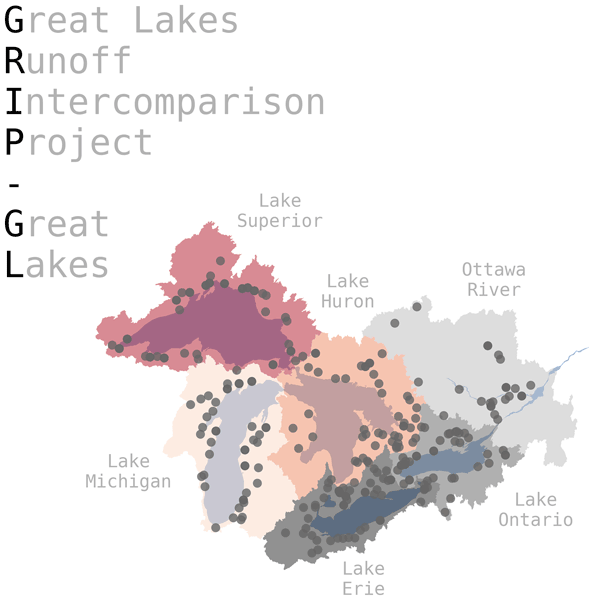
Juliane Mai, Hongren Shen, Bryan A. Tolson, Étienne Gaborit, Richard Arsenault, James R. Craig, Vincent Fortin, Lauren M. Fry, Martin Gauch, Daniel Klotz, Frederik Kratzert, Nicole O'Brien, Daniel G. Princz, Sinan Rasiya Koya, Tirthankar Roy, Frank Seglenieks, Narayan K. Shrestha, André G. T. Temgoua, Vincent Vionnet, and Jonathan W. Waddell
Hydrol. Earth Syst. Sci., 26, 3537–3572, https://doi.org/10.5194/hess-26-3537-2022, https://doi.org/10.5194/hess-26-3537-2022, 2022
Short summary
Short summary
Model intercomparison studies are carried out to test various models and compare the quality of their outputs over the same domain. In this study, 13 diverse model setups using the same input data are evaluated over the Great Lakes region. Various model outputs – such as streamflow, evaporation, soil moisture, and amount of snow on the ground – are compared using standardized methods and metrics. The basin-wise model outputs and observations are made available through an interactive website.
Cited articles
Apel, H., Vorogushyn, S., and Merz, B.: Brief communication: Impact forecasting could substantially improve the emergency management of deadly floods: case study July 2021 floods in Germany, Nat. Hazards Earth Syst. Sci., 22, 3005–3014, https://doi.org/10.5194/nhess-22-3005-2022, 2022. a
Aristizabal, F., Salas, F., Petrochenkov, G., Grout, T., Avant, B., Bates, B., Spies, R., Chadwick, N., Wills, Z., and Judge, J.: Extending height above nearest drainage to model multiple fluvial sources in flood inundation mapping applications for the U.S. national water model, Water Resour. Res., 59, e2022WR032039, https://doi.org/10.1029/2022WR032039, 2023. a, b, c, d
Bates, P. D.: Flood inundation prediction, Annu. Rev. Fluid Mech., 54, 287–315, https://doi.org/10.1146/annurev-fluid-030121-113138, 2022. a
Chicco, D.: Ten quick tips for machine learning in computational biology, Biodata Min., 10, 35, https://doi.org/10.1186/s13040-017-0155-3, 2017. a
Chlumsky, R., Craig, J., and Tolson, B.: Blackbird source code and supporting data sets for benchmarking study, Zenodo [code], https://doi.org/10.5281/zenodo.15042083, 2025. a, b
Cian, F., Marconcini, M., and Ceccato, P.: Normalized difference flood index for rapid flood mapping: taking advantage of EO big data, Remote Sens. Environ., 209, 712–730, https://doi.org/10.1016/j.rse.2018.03.006, 2018. a
Diehl, R. M., Gourevitch, J. D., Drago, S., and Wemple, B. C.: Improving flood hazard datasets using a low-complexity, probabilistic floodplain mapping approach, PLoS One, 16, 1–20, https://doi.org/10.1371/journal.pone.0248683, 2021. a, b
Fohringer, J., Dransch, D., Kreibich, H., and Schröter, K.: Social media as an information source for rapid flood inundation mapping, Nat. Hazards Earth Syst. Sci., 15, 2725–2738, https://doi.org/10.5194/nhess-15-2725-2015, 2015. a
Follum, M. L.: AutoRoute Rapid Flood Inundation Model, Tech. rep., Coastal and Hydraulics Laboratory (US), Engineer Research and Development Center (US), https://hdl.handle.net/11681/1999 (last access: 25 March 2025), 2013. a
Frame, J. M., Nair, T., Sunkara, V., Popien, P., Chakrabarti, S., Anderson, T., Leach, N. R., Doyle, C., Thomas, M., and Tellman, B.: Rapid inundation mapping using the U.S. national water model, satellite observations, and a convolutional neural network, Geophys. Res. Lett., 51, e2024GL109424, https://doi.org/10.1029/2024GL109424, 2024. a
Ghimire, E., Sharma, S., and Lamichhane, N.: Evaluation of one-dimensional and two-dimensional HEC-RAS models to predict flood travel time and inundation area for flood warning system, ISH Journal of Hydraulic Engineering, 28, 110–126, 2022. a
Gilleland, E. and Katz, R. W.: extRemes 2.0: an extreme value analysis package in R, J. Stat. Softw., 72, 1–39, https://doi.org/10.18637/jss.v072.i08, 2016. a
Hamidi, E., Peter, B. G., Muñoz, D. F., Moftakhari, H., and Moradkhani, H.: Fast flood extent monitoring with SAR change detection using Google Earth engine, IEEE T. Geosci. Remote, 61, 1–19, https://doi.org/10.1109/TGRS.2023.3240097, 2023. a
Hashim, S., Suhana Mokhtar, E., Ikhwan Abdul Halim, A., Mohd Naim Wan Mohd, W., Aizam Adnan, N., and Pradhan, B.: Cross section intervals of flood intervals of flood inundation mapping at ungauged area, IOP Conference Series. Earth and Environmental Science, 620, 12003, https://doi.org/10.1088/1755-1315/620/1/012003, 2021. a
Henstra, D., Minano, A., and Thistlethwaite, J.: Communicating disaster risk? An evaluation of the availability and quality of flood maps, Nat. Hazards Earth Syst. Sci., 19, 313–323, https://doi.org/10.5194/nhess-19-313-2019, 2019. a
Heron Hydrologic: Blackbird, Heron Hydrologic [code], https://heronhydrologic.ca/blackbird/ (last access: 25 March 2025), 2025. a
Hulsing, H., Smith, W., and Cobb, E. D.: Velocity-Head Coefficients in Open Channels, Tech. rep., United States Geological Survey, https://doi.org/10.3133/wsp1869C, 1966. a
Hydrologic Engineering Center: HEC-RAS User's Manual version 6.4, https://www.hec.usace.army.mil/confluence/rasdocs/rasum/latest (last access: 25 March 2025), 2023. a
Jafarzadegan, K., Moradkhani, H., Pappenberger, F., Moftakhari, H., Bates, P., Abbaszadeh, P., Marsooli, R., Ferreira, C., Cloke, H. L., Ogden, F., and Duan, Q.: Recent advances and new frontiers in riverine and coastal flood modeling, Rev. Geophys., 61, e2022RG000788, https://doi.org/10.1029/2022RG000788, 2023. a, b, c
Kabir, S., Patidar, S., Xia, X., Liang, Q., Neal, J., and Pender, G.: A deep convolutional neural network model for rapid prediction of fluvial flood inundation, J. Hydrol., 590, 125481, https://doi.org/10.1016/j.jhydrol.2020.125481, 2020. a
Lhomme, J., Sayers, P., Gouldby, B., Samuels, P., Wills, M., and Mulet-Marti, J.: Recent development and application of a rapid flood spreading method, in: Flood Risk Management: Research and Practice, 1st Edn., CRC Press, UK, https://www.taylorfrancis.com/books/edit/10.1201/9780203883 (last access: 25 March 2025), 2009. a
Li, Z., Wang, C., Emrich, C. T., and Guo, D.: A novel approach to leveraging social media for rapid flood mapping: a case study of the 2015 South Carolina floods, Cartogr. Geogr. Inf. Sc., 45, 97–110, 2018. a
Li, Z., Duque, F. Q., Grout, T., Bates, B., and Demir, I.: Comparative analysis of performance and mechanisms of flood inundation map generation using height above nearest drainage, Environ. Model. Softw., 159, 105565, https://doi.org/10.1016/j.envsoft.2022.105565, 2023. a
Lin, L., Tang, C., Liang, Q., Wu, Z., Wang, X., and Zhao, S.: Rapid urban flood risk mapping for data-scarce environments using social sensing and region-stable deep neural network, J. Hydrol., 617, 128758, https://doi.org/10.1016/j.jhydrol.2022.128758, 2023. a
Lindsay, J. B.: The practice of DEM stream burning revisited, Earth Surf. Proc. Land., 41, 658–668, https://doi.org/10.1002/esp.3888, 2016. a
Md Ali, A., Di Baldassarre, G., and Solomatine, D. P.: Testing different cross-section spacing in 1D hydraulic modelling: a case study on Johor River, Malaysia, Hydrolog. Sci. J., 60, 351–360, 2015. a
Morvan, H., Knight, D., Wright, N., Tang, X., and Crossley, A.: The concept of roughness in fluvial hydraulics and its formulation in 1D, 2D and 3D numerical simulation models, J. Hydrol., 46, 191–208, https://doi.org/10.1080/00221686.2008.9521855, 2008. a
Najafi, H., Shrestha, P. K., Rakovec, O., Apel, H., Vorogushyn, S., Kumar, R., Thober, S., Merz, B., and Samaniego, L.: High-resolution impact-based early warning system for riverine flooding, Nat. Commun., 15, 3726–3726, 2024. a
Nobre, A., Cuartas, L., Hodnett, M., Rennó, C., Rodrigues, G., Silveira, A., Waterloo, M., and Saleska, S.: Height above the nearest drainage – a hydrologically relevant new terrain model, J. Hydrol., 404, 13–29, 2011. a
Rennó, C. D., Nobre, A. D., Cuartas, L. A., Soares, J. V., Hodnett, M. G., Tomasella, J., and Waterloo, M. J.: HAND, a new terrain descriptor using SRTM-DEM: mapping terra-firme rainforest environments in Amazonia, Remote Sens. Environ., 112, 3469–3481, https://doi.org/10.1016/j.rse.2008.03.018, 2008. a
Roussel, J.-R. and Auty, D.: Airborne LiDAR Data Manipulation and Visualization for Forestry Applications, r package version 4.1.1, CRAN [code], https://cran.r-project.org/package=lidR (last access: 25 March 2025), 2024. a
Roussel, J.-R., Auty, D., Coops, N. C., Tompalski, P., Goodbody, T. R., Meador, A. S., Bourdon, J.-F., de Boissieu, F., and Achim, A.: lidR: An R package for analysis of Airborne Laser Scanning (ALS) data, Remote Sens. Environ., 251, 112061, https://doi.org/10.1016/j.rse.2020.112061, 2020. a
Sampson, C. C., Smith, A. M., Bates, P. D., Neal, J. C., Alfieri, L., and Freer, J. E.: A high-resolution global flood hazard model, Water Resour. Res., 51, 7358–7381, 2015. a
Shaeri Karimi, S., Saintilan, N., Wen, L., and Valavi, R.: Application of machine learning to model wetland inundation patterns across a large semiarid floodplain, Water Resour. Res., 55, 8765–8778, https://doi.org/10.1029/2019WR024884, 2019. a
Steinhausen, M., Paprotny, D., Dottori, F., Sairam, N., Mentaschi, L., Alfieri, L., Lüdtke, S., Kreibich, H., and Schröter, K.: Drivers of future fluvial flood risk change for residential buildings in Europe, Global Environ. Chang., 76, 102559, https://doi.org/10.1016/j.gloenvcha.2022.102559, 2022. a
Tavares da Costa, R., Manfreda, S., Luzzi, V., Samela, C., Mazzoli, P., Castellarin, A., and Bagli, S.: A web application for hydrogeomorphic flood hazard mapping, Environ. Model. Softw., 118, 172–186, 2019. a
Teng, J., Vaze, J., Dutta, D., and Marvanek, S.: Rapid inundation modelling in large floodplains using LiDAR DEM, Water Resour. Manag., 29, 2619–2636, 2015. a
Thayer, J. B.: Downstream regime relations for single-thread channels, River. Res. Appl., 33, 182–186, https://doi.org/10.1002/rra.3053, 2017. a
Tripathy, P. and Malladi, T.: Global flood mapper: a novel Google Earth engine application for rapid flood mapping using Sentinel-1 SAR, Nat. Hazards, 114, 1341–1363, 2022. a
Wilkerson, G. V. and Parker, G.: Physical basis for quasi-universal relationships describing bankfull hydraulic geometry of sand-bed rivers, J. Hydrol., 137, 739–753, https://doi.org/10.1061/(ASCE)HY.1943-7900.0000352, 2011. a
Yang, J., Townsend, R. D., and Daneshfar, B.: Applying the HEC-RAS model and GIS techniques in river network floodplain delineation, Can. J. Civil. Eng., 33, 19–28, 2006. a
Zheng, X., Maidment, D. R., Tarboton, D. G., Liu, Y. Y., and Passalacqua, P.: GeoFlood: large-scale flood inundation mapping based on high-resolution terrain analysis, Water Resour. Res., 54, 10,013–10,033, https://doi.org/10.1029/2018WR023457, 2018a. a, b
Zhou, Y., Wu, W., Nathan, R., and Wang, Q. J.: Deep learning-based rapid flood inundation modeling for flat floodplains with complex flow paths, Water Resour. Res., 58, e2022WR033214, https://doi.org/10.1029/2022WR033214, 2022. a
Short summary
We aim to improve mapping of floods and present a new method for hydraulic modelling that uses a combination of novel geospatial analysis and existing hydraulic modelling approaches. This method is wrapped into a modelling software called Blackbird. We compared Blackbird with two other existing options for flood mapping and found that the Blackbird model outperformed both. The Blackbird model has the potential to support real-time and large-scale flood mapping applications in the future.
We aim to improve mapping of floods and present a new method for hydraulic modelling that uses a...


