
Articles | Volume 18, issue 24
https://doi.org/10.5194/gmd-18-10077-2025
© Author(s) 2025. This work is distributed under
the Creative Commons Attribution 4.0 License.
the Creative Commons Attribution 4.0 License.
https://doi.org/10.5194/gmd-18-10077-2025
© Author(s) 2025. This work is distributed under
the Creative Commons Attribution 4.0 License.
the Creative Commons Attribution 4.0 License.
Development and technical paper
| 
16 Dec 2025
Development and technical paper |
| 16 Dec 2025
| 16 Dec 2025
Improvement of near-surface wind speed modeling through refined aerodynamic roughness length in high-roughness surface regions: implementation and validation in the Weather Research and Forecasting (WRF) model version 4.0
Jiamin Wang
Ministry of Education Key Laboratory for Earth System Modeling, Department of Earth System Science, Institute for Global Change Studies, Tsinghua University, Beijing 100084, China

Ministry of Education Key Laboratory for Earth System Modeling, Department of Earth System Science, Institute for Global Change Studies, Tsinghua University, Beijing 100084, China
Renewables Research Center of Huairou Laboratory, Beijing 101499, China
Jiarui Liu
Ministry of Education Key Laboratory for Earth System Modeling, Department of Earth System Science, Institute for Global Change Studies, Tsinghua University, Beijing 100084, China
National Tibetan Plateau Data Center, State Key Laboratory of Tibetan Plateau Earth System, Environment and Resources, Institute of Tibetan Plateau Research, Chinese Academy of Sciences, Beijing 100101, China
Xiaogang Ma
National Institute of Natural Hazards, Ministry of Emergency Management of China, Beijing 100085, China
Wenjun Tang
National Tibetan Plateau Data Center, State Key Laboratory of Tibetan Plateau Earth System, Environment and Resources, Institute of Tibetan Plateau Research, Chinese Academy of Sciences, Beijing 100101, China
Ling Yuan
China State Shipbuilding Corporation Haizhuang Windpower Co., Ltd., Chongqing 401123, China
Zuhuan Ren
Ministry of Education Key Laboratory for Earth System Modeling, Department of Earth System Science, Institute for Global Change Studies, Tsinghua University, Beijing 100084, China
Related authors
No articles found.
Xu Zhou, Binbin Wang, Xiaogang Ma, Zhu La, and Kun Yang
The Cryosphere, 18, 4589–4605, https://doi.org/10.5194/tc-18-4589-2024, https://doi.org/10.5194/tc-18-4589-2024, 2024
Short summary
Short summary
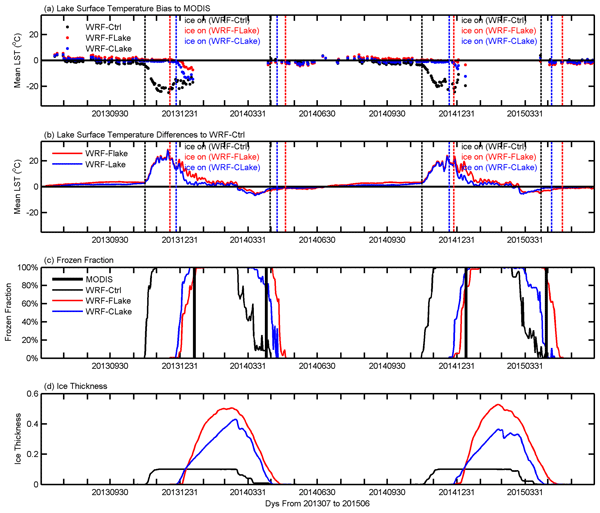
The simulation of the ice phenology of Nam Co by WRF is investigated. Compared with the default model, improving the key lake schemes, such as water surface roughness length for heat fluxes and the shortwave radiation transfer for lake ice, can better simulate the lake ice phenology. The still existing errors in the spatial patterns of lake ice phenology imply that challenges still exist in modelling key lake and non-lake physics such as grid-scale water circulation and snow-related processes.
Gaoyun Wang, Rong Fu, Yizhou Zhuang, Paul A. Dirmeyer, Joseph A. Santanello, Guiling Wang, Kun Yang, and Kaighin McColl
Atmos. Chem. Phys., 24, 3857–3868, https://doi.org/10.5194/acp-24-3857-2024, https://doi.org/10.5194/acp-24-3857-2024, 2024
Short summary
Short summary
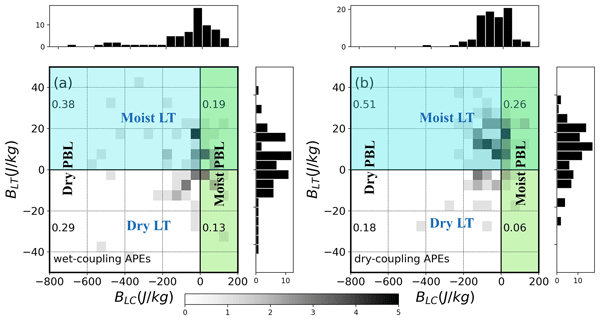
This study investigates the influence of lower-tropospheric humidity on land–atmosphere coupling (LAC) during warm seasons in the US Southern Great Plains. Using radiosonde data and a buoyancy model, we find that elevated LT humidity is crucial for generating afternoon precipitation events under dry soil conditions not accounted for by conventional LAC indices. This underscores the importance of considering LT humidity in understanding LAC over dry soil during droughts in the SGP.
Ling Yuan, Xuelong Chen, Yaoming Ma, Cunbo Han, Binbin Wang, and Weiqiang Ma
Earth Syst. Sci. Data, 16, 775–801, https://doi.org/10.5194/essd-16-775-2024, https://doi.org/10.5194/essd-16-775-2024, 2024
Short summary
Short summary
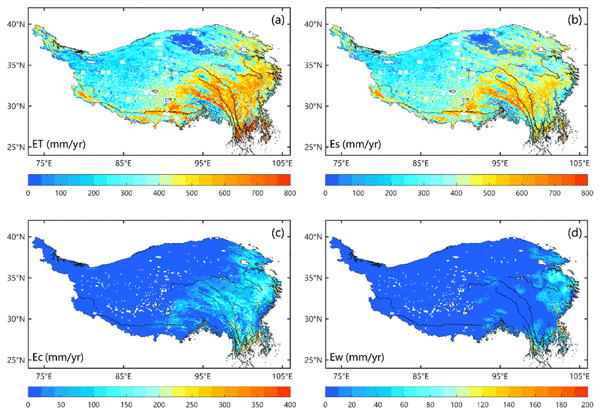
Accurately monitoring and understanding the spatial–temporal variability of evapotranspiration (ET) components over the Tibetan Plateau (TP) remains difficult. Here, 37 years (1982–2018) of monthly ET component data for the TP was produced, and the data are consistent with measurements. The annual average ET for the TP was about 0.93 (± 0.037) × 103 Gt yr−1. The rate of increase of the ET was around 0.96 mm yr−1. The increase in the ET can be explained by warming and wetting of the climate.
Wenjun Tang, Junmei He, Jingwen Qi, and Kun Yang
Earth Syst. Sci. Data, 15, 4537–4551, https://doi.org/10.5194/essd-15-4537-2023, https://doi.org/10.5194/essd-15-4537-2023, 2023
Short summary
Short summary
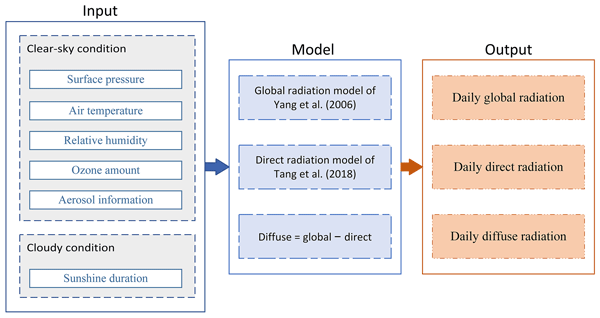
In this study, we have developed a dense station-based, long-term dataset of daily surface solar radiation in China with high accuracy. The dataset consists of estimates of global, direct and diffuse radiation at 2473 meteorological stations from the 1950s to 2021. Validation indicates that our station-based radiation dataset clearly outperforms the satellite-based radiation products. Our dataset will contribute to climate change research and solar energy applications in the future.

Yaozhi Jiang, Kun Yang, Youcun Qi, Xu Zhou, Jie He, Hui Lu, Xin Li, Yingying Chen, Xiaodong Li, Bingrong Zhou, Ali Mamtimin, Changkun Shao, Xiaogang Ma, Jiaxin Tian, and Jianhong Zhou
Earth Syst. Sci. Data, 15, 621–638, https://doi.org/10.5194/essd-15-621-2023, https://doi.org/10.5194/essd-15-621-2023, 2023
Short summary
Short summary
Our work produces a long-term (1979–2020) high-resolution (1/30°, daily) precipitation dataset for the Third Pole (TP) region by merging an advanced atmospheric simulation with high-density rain gauge (more than 9000) observations. Validation shows that the produced dataset performs better than the currently widely used precipitation datasets in the TP. This dataset can be used for hydrological, meteorological and ecological studies in the TP.
Yaozhi Jiang, Kun Yang, Hua Yang, Hui Lu, Yingying Chen, Xu Zhou, Jing Sun, Yuan Yang, and Yan Wang
Hydrol. Earth Syst. Sci., 26, 4587–4601, https://doi.org/10.5194/hess-26-4587-2022, https://doi.org/10.5194/hess-26-4587-2022, 2022
Short summary
Short summary
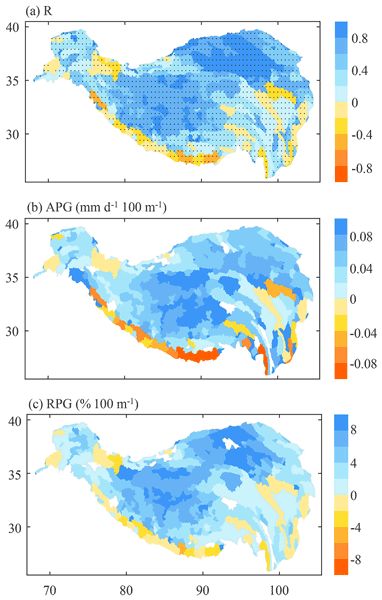
Our study quantified the altitudinal precipitation gradients (PGs) over the Third Pole (TP). Most sub-basins in the TP have positive PGs, and negative PGs are found in the Himalayas, the Hengduan Mountains and the western Kunlun. PGs are positively correlated with wind speed but negatively correlated with relative humidity. In addition, PGs tend to be positive at smaller spatial scales compared to those at larger scales. The findings can assist precipitation interpolation in the data-sparse TP.
Wenjun Tang, Jun Qin, Kun Yang, Yaozhi Jiang, and Weihao Pan
Earth Syst. Sci. Data, 14, 2007–2019, https://doi.org/10.5194/essd-14-2007-2022, https://doi.org/10.5194/essd-14-2007-2022, 2022
Short summary
Short summary
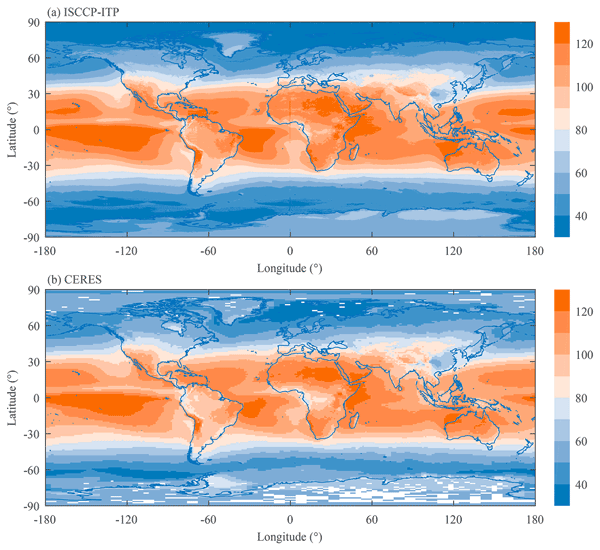
Photosynthetically active radiation (PAR) is a fundamental physiological variable for research in the ecological, agricultural, and global change fields. In this study, we produced a 35-year high-resolution global gridded PAR dataset. Compared with the well-known global satellite-based PAR product of the Earth's Radiant Energy System (CERES), our PAR product was found to be a more accurate dataset with higher resolution.

Jianping Guo, Jian Zhang, Kun Yang, Hong Liao, Shaodong Zhang, Kaiming Huang, Yanmin Lv, Jia Shao, Tao Yu, Bing Tong, Jian Li, Tianning Su, Steve H. L. Yim, Ad Stoffelen, Panmao Zhai, and Xiaofeng Xu
Atmos. Chem. Phys., 21, 17079–17097, https://doi.org/10.5194/acp-21-17079-2021, https://doi.org/10.5194/acp-21-17079-2021, 2021
Short summary
Short summary
The planetary boundary layer (PBL) is the lowest part of the troposphere, and boundary layer height (BLH) is the depth of the PBL and is of critical importance to the dispersion of air pollution. The study presents the first near-global BLH climatology by using high-resolution (5-10 m) radiosonde measurements. The variations in BLH exhibit large spatial and temporal dependence, with a peak at 17:00 local solar time. The most promising reanalysis product is ERA-5 in terms of modeling BLH.
Cited articles
Beljaars, A., Brown, A. R., and Wood, N: A new parametrization of turbulent orographic form drag, Q. J. Roy. Meteorol. Soc., 130, 1327–1347, https://doi.org/10.1256/qj.03.73, 2004.
Beijing Normal University Global Change Data Archive: Leaf Area Index (LAI), Beijing Normal University Global Change Data Archive [data set], http://globalchange.bnu.edu.cn/research/laiv061 (last access: 24 March 2022), 2022.
Bottema, M. and Mestayer, P. G.: Urban roughness mapping – Validation techniques and some first results, J. Wind Eng. Indust. Aerodynam., 74–76, 163–173, https://doi.org/10.1016/S0167-6105(98)00014-2, 1998.
Breiman, L.: Random forests, Mach. Learn., 45, 5–32, https://doi.org/10.1023/A:1010933404324, 2001.
Chen, F., Kusaka, H., Bornstein, R., Ching, J., Grimmond, C. S. B., Grossman-Clarke, S., Loridan, T., Manning, K. W., Martilli, A., Miao, S., Sailor, D., Salamanca, F. P., Taha, H., Tewari, M., Wang, X., Wyszogrodzki, A. A., and Zhang, C.: The integrated WRF/urban modelling system: development, evaluation, and applications to urban environmental problems, Int. J. Climatol., 31, 273–288, https://doi.org/10.1002/joc.2158, 2011.
China meteorological data service centre: Daily Timed Data from automated weather stations in China, China meteorological data service centre [data set], http://data.cma.cn/en/?r=data/detail&dataCode=A.0012.0001 (last access: 6 May 2023), 2023.
Danielson, J. J. and Gesch, D. B.: Global multi-resolution terrain elevation data 2010 (GMTED2010), no. 2011-1073, US Geological Survey, https://doi.org/10.3133/ofr20111073, 2011.
Didan, K.: MODIS/Terra Vegetation Indices Monthly L3 Global 1 km SIN Grid V061, NASA EOSDIS Land Processes Distributed Active Archive Center [data set], https://doi.org/10.5067/MODIS/MOD13A3.061, 2021.
Di Nicola, F., Brattich, E., and Di Sabatino, S.: A new approach for roughness representation within urban dispersion models, Atmos. Environ., 283, 119181, https://doi.org/10.1016/j.atmosenv.2022.119181, 2022.
DiMiceli, C., Sohlberg, R., and Townshend, J.: MODIS/Terra Vegetation Continuous Fields Yearly L3 Global 250 m SIN Grid V061, NASA EOSDIS Land Processes Distributed Active Archive Center [data set], https://doi.org/10.5067/MODIS/MOD44B.061, 2022.
Draxl, C., Worsnop, R. P., Xia, G., Pichugina, Y., Chand, D., Lundquist, J. K., Sharp, J., Wedam, G., Wilczak, J. M., and Berg, L. K.: Mountain waves can impact wind power generation, Wind Energ. Sci., 6, 45–60, https://doi.org/10.5194/wes-6-45-2021, 2021.
Duan, G. and Takemi, T.: Predicting urban surface roughness aerodynamic parameters using random forest, J. Appl. Meteorol. Clim., 60, 999–1018, https://doi.org/10.1175/JAMC-D-20-0266.1, 2021.
Dudhia, J.: Numerical study of convection observed during the winter monsoon experiment using a mesoscale two-dimensional model, J. Atmos. Sci., 46, 3077–3107, https://doi.org/10.1175/1520-0469(1989)046<3077:NSOCOD>2.0.CO;2, 1989.
Duplyakin, D., Zisman, S., Phillips, C., and Tinnesand, H.: Bias characterization, vertical interpolation, and horizontal interpolation for distributed wind siting using mesoscale wind resource estimates, NREL/TP-2C00-78412, NREL – National Renewable Energy Laboratory, Golden, CO, USA, https://doi.org/10.2172/1760659, 2021.
Ge, C., Yan, J., Song, W., Zhang, H., Wang, H., Li, Y., and Liu, Y.: Middle-term wind power forecasting method based on long-span NWP and microscale terrain fusion correction, Renew. Energy, 240, 122123, https://doi.org/10.1016/j.renene.2024.122123, 2025.
Grell, G. A. and Freitas, S. R.: A scale and aerosol aware stochastic convective parameterization for weather and air quality modeling, Atmos. Chem. Phys., 14, 5233–5250, https://doi.org/10.5194/acp-14-5233-2014, 2014.
Grimmond, C. S. B. and Oke, T. R.: Aerodynamic properties of urban areas derived from analysis of surface form, J. Appl. Meteorol. Clim., 38, 1262–1292, https://doi.org/10.1175/1520-0450(1999)038<1262:APOUAD>2.0.CO;2, 1999.
Grimmond, C. S. B., King, T. S., Roth, M., and Oke, T. R.: Aerodynamic roughness of urban areas derived from wind observations, Bound.-Lay. Meteorol., 89, 1–24, https://doi.org/10.1023/A:1001525622213, 1998.
Hadavi, M. and Pasdarshahri, H.: Quantifying impacts of wind speed and urban neighborhood layout on the infiltration rate of residential buildings, Sustain. Cities Soc., 53, 101887, https://doi.org/10.1016/j.scs.2019.101887, 2020.
Han, Z., Zhou, B., Xu, Y., Wu, J., and Shi, Y.: Projected changes in haze pollution potential in China: an ensemble of regional climate model simulations, Atmos. Chem. Phys., 17, 10109–10123, https://doi.org/10.5194/acp-17-10109-2017, 2017.
Hersbach, H., Bell, B., Berrisford, P., Hirahara, S., Horányi, A., Muñoz-Sabater, J., Nicolas, J., Peubey, C., Radu, R., Schepers, D., Simmons, A., Soci, C., Abdalla, S., Abellan, X., Balsamo, G., Bechtold, P., Biavati, G., Bidlot, J., Bonavita, M., De Chiara, G., Dahlgren, P., Dee, D., Diamantakis, M., Dragani, R., Flemming, J., Forbes, R., Fuentes, M., Geer, A., Haimberger, L., Healy, S., Hogan, R. J., Hólm, E., Janisková, M., Keeley, S., Laloyaux, P., Lopez, P., Lupu, C., Radnoti, G., de Rosnay, P., Rozum, I., Vamborg, F., Villaume, S., and Thépaut, J.-N.: The ERA5 global reanalysis, Q. J. Roy. Meteorol. Soc., 146, 1999–2049, https://doi.org/10.1002/qj.3803, 2020.
Hersbach, H., Bell, B., Berrisford, P., Biavati, G., Horányi, A., Muñoz Sabater, J., Nicolas, J., Peubey, C., Radu, R., Rozum, I., Schepers, D., Simmons, A., Soci, C., Dee, D., and Thépaut, J.-N.: ERA5 monthly averaged data on single levels from 1940 to present, Copernicus Climate Change Service (C3S) Climate Data Store (CDS) [data set], https://doi.org/10.24381/cds.f17050d7, 2023a.
Hersbach, H., Bell, B., Berrisford, P., Biavati, G., Horányi, A., Muñoz Sabater, J., Nicolas, J., Peubey, C., Radu, R., Rozum, I., Schepers, D., Simmons, A., Soci, C., Dee, D., and Thépaut, J.-N.: ERA5 hourly data on single levels from 1940 to present, Copernicus Climate Change Service (C3S) Climate Data Store (CDS) [data set], https://doi.org/10.24381/cds.adbb2d47, 2023b.
Hersbach, H., Bell, B., Berrisford, P., Biavati, G., Horányi, A., Muñoz Sabater, J., Nicolas, J., Peubey, C., Radu, R., Rozum, I., Schepers, D., Simmons, A., Soci, C., Dee, D., and Thépaut, J.-N.: ERA5 hourly data on pressure levels from 1940 to present, Copernicus Climate Change Service (C3S) Climate Data Store (CDS) [data set], https://doi.org/10.24381/cds.bd0915c6, 2023c.
Hong, S. Y., Noh, Y., and Dudhia, J.: A new vertical diffusion package with an explicit treatment of entrainment processes, Mon. Weather Rev., 134, 2318–2341, https://doi.org/10.1175/MWR3199.1, 2006.
Hu, X., Shi, L., Lin, L., and Magliulo, V.: Improving surface roughness lengths estimation using machine learning algorithms, Agr. Forest Meteorol., 287, 107956, https://doi.org/10.1016/j.agrformet.2020.107956, 2020.
Ishugah, T. F., Li, Y., Wang, R. Z., and Kiplagat, J. K.: Advances in wind energy resource exploitation in urban environment: A review, Renew. Sustain. Energy Rev., 37, 613–626, https://doi.org/10.1016/j.rser.2014.05.053, 2014.
Jarvis, A., Reuter, H. I., Nelson, A., and Guevara, E.: Hole-filled SRTM for the globe Version 4, CGIAR-CSI SRTM 90 m Database [data set], http://srtm.csi.cgiar.org (last access: 8 November 2023), 2008.
Jiménez, P. A. and Dudhia, J.: Improving the representation of resolved and unresolved topographic effects on surface wind in the WRF model, J. Appl. Meteorol. Clim., 51, 300–316, https://doi.org/10.1175/JAMC-D-11-084.1, 2012.
Kammen, D. M. and Sunter, D. A.: City-integrated renewable energy for urban sustainability, Science, 352, 922–928, https://doi.org/10.1126/science.aad9302, 2016.
Kanda, M., Inagaki, A., Miyamoto, T., Gryschka, M., and Raasch, S.: A new aerodynamic parametrization for real urban surfaces, Bound.-Lay. Meteorol., 148, 357–377, https://doi.org/10.1007/s10546-013-9818-x, 2013.
Kim, G., Lee, J., Lee, M. I., and Kim, D.: Impacts of urbanization on atmospheric circulation and aerosol transport in a coastal environment simulated by the WRF-Chem coupled with urban canopy model, Atmos. Environ., 249, 118253, https://doi.org/10.1016/j.atmosenv.2021.118253, 2021.
Li, D., Liao, W., Rigden, A. J., Liu, X., Wang, D., Malyshev, S., and Shevliakova, E.: Urban heat island: Aerodynamics or imperviousness?, Sci. Adv., 5, eaau4299, https://doi.org/10.1126/sciadv.aau4299, 2019.
Li, X., Yu, L., and Chen, X.: New insights into urbanization based on global mapping and analysis of human settlements in the rural-urban continuum, figshare [data set], https://doi.org/10.6084/m9.figshare.21716357.v6, 2022.
Li, X., Yu, L., and Chen, X.: New insights into urbanization based on global mapping and analysis of human settlements in the rural-urban continuum, Land, 12, 1607, https://doi.org/10.3390/land12081607, 2023.
Li, Y., Sun, P. P., Li, A., and Deng, Y.: Wind effect analysis of a high-rise ancient wooden tower with a particular architectural profile via wind tunnel test, Int. J. Archit. Herit., 17, 518–537, https://doi.org/10.1080/15583058.2021.1938748, 2021.
Li, Z., Song, L., Ma, H., Xiao, J., Wang, K., and Chen, L.: Observed surface wind speed declining induced by urbanization in East China, Clim. Dynam., 50, 735–749, https://doi.org/10.1007/s00382-017-3637-6, 2018.
Lian, J., Wu, L., Bréon, F.-M., Broquet, G., Vautard, R., Zaccheo, T. S., Dobler, J., and Ciais, P.: Evaluation of the WRF-UCM mesoscale model and ECMWF global operational forecasts over the Paris region in the prospect of tracer atmospheric transport modeling, Elem. Sci. Anth., 6, 64, https://doi.org/10.1525/elementa.319, 2018.
Lin, W., Yuan, H., Dong, W., Zhang, S., Liu, S., Wei, N., Lu, X., Wei, Z., Hu, Y., and Dai, Y.: Reprocessed MODIS version 6.1 leaf area index dataset and its evaluation for land surface and climate modeling, Remote Sens., 15, 1780, https://doi.org/10.3390/rs15071780, 2023.
Liu, J., Gao, Z., Wang, L., Li, Y., and Gao, C. Y.: The impact of urbanization on wind speed and surface aerodynamic characteristics in Beijing during 1991–2011, Meteorol. Atmos. Phys., 130, 311–324, https://doi.org/10.1007/s00703-017-0519-8, 2018.
Liu, Z., He, C., Zhou, Y., and Wu, J.: How much of the world's land has been urbanized, really? A hierarchical framework for avoiding confusion, Landsc. Ecol., 29, 763–771, https://doi.org/10.1007/s10980-014-0034-y, 2014.
Luu, L. N., van Meijgaard, E., Philip, S. Y., Kew, S. F., de Baar, J. H. S., and Stepek, A.: Impact of surface roughness changes on surface wind speed over western Europe: A study with the regional climate model RACMO, J. Geophys. Res.-Atmos., 128, e2022JD038426, https://doi.org/10.1029/2022JD038426, 2023.
Macdonald, R. W., Griffiths, R. F., and Hall, D. J.: An improved method for the estimation of surface roughness of obstacle arrays, Atmos. Environ., 32, 1857–1864, https://doi.org/10.1016/S1352-2310(97)00403-2, 1998.
Manju, N., Balakrishnan, R., and Mani, N.: Assimilative capacity and pollutant dispersion studies for the industrial zone of Manali, Atmos. Environ., 36, 3461–3471, https://doi.org/10.1016/S1352-2310(02)00306-0, 2002.
Mlawer, E. J., Taubman, S. J., Brown, P. D., Iacono, M. J., and Clough, S. A.: Radiative transfer for inhomogeneous atmospheres: RRTM, a validated correlated-k model for the longwave, J. Geophys. Res., 102, 16663–16682, https://doi.org/10.1029/97JD00237, 1997.
Monin, A. S. and Obukhov, A. M.: Osnovnye zakonomernosti turbulentnogo peremesivanija v prizemnon sloe atmosfery (Basic laws of turbulent mixing in the atmosphere near the ground), Dokl. Akad. Nauk SSSR, 151, 1963–1987, 1954.
NASA EOSDIS: MODIS/Terra Vegetation Continuous Fields Yearly L3 Global 250 m SIN Grid V061, NASA EOSDIS [data set], https://search.earthdata.nasa.gov/search/granules?p=C2565805839-LPCLOUD&pg[0][v]=f&pg[0][gsk]=-start_date&q=MOD44B&tl=1733462795.688!3!!&lat=-0.140625 (last access: 3 October 2024), 2024a.
NASA EOSDIS: MODIS/Terra Vegetation Indices Monthly L3 Global 1 km SIN Grid V061, NASA EOSDIS [data set], https://search.earthdata.nasa.gov/search/granules?p=C2327962326-LPCLOUD&pg[0][v]=f&pg[0][gsk]=-start_date&q=MOD13A3&tl=1732851935.718!3!!&lat=-0.140625 (last access: 22 September 2024), 2024b.
National Centers for Environmental Prediction/National Weather Service/NOAA/US Department of Commerce: NCEP FNL Operational Model Global Tropospheric Analyses, continuing from July 1999, updated daily, Research Data Archive at the National Center for Atmospheric Research, Computational and Information Systems Laboratory [data set], https://doi.org/10.5065/D6M043C6, 2025.
Niu, G. Y., Yang, Z. L., and Mitchell, K. E.: The community Noah land surface model with multiparameterization options (Noah-MP): 1. Model description and evaluation with local-scale measurements, J. Geophys. Res.-Atmos., 116, D12109, https://doi.org/10.1029/2010JD015139, 2011.
Peng, Z., Tang, R., Jiang, Y., Liu, M., and Li, Z. L.: Global estimates of 500 m daily aerodynamic roughness length from MODIS data, ISPRS J. Photogram. Remote Sens., 183, 336–351, https://doi.org/10.1016/j.isprsjprs.2021.11.015, 2022.
Peng, Z., Tang, R., Liu, M., Jiang, Y., and Li, Z. L.: Coupled estimation of global 500 m daily aerodynamic roughness length, zero-plane displacement height and canopy height, Agr. Forest Meteorol., 342, 109754, https://doi.org/10.1016/j.agrformet.2023.109754, 2023.
Raupach, M. R.: Drag and drag partition on rough surfaces, Bound.-Lay. Meteorol., 60, 375–395, https://doi.org/10.1007/BF00155203, 1992.
Raupach, M. R.: Simplified expressions for vegetation roughness length and zero-plane displacement as functions of canopy height and area index, Bound.-Lay. Meteorol., 71, 211–216, https://doi.org/10.1007/BF00709229, 1994.
Roy, P., Chen, L. W. A., Chen, Y. T., Ahmad, S., Khan, E., and Buttner, M.: Pollen dispersion and deposition in real-world urban settings: A computational fluid dynamic study, Aerosol Sci. Eng., 7, 543–555, https://doi.org/10.1007/s41810-023-00198-1, 2023.
Salamanca, F., Zhang, Y., Barlage, M., Chen, F., Mahalov, A., and Miao, S.: Evaluation of the WRF-urban modeling system coupled to Noah and Noah-MP land surface models over a semiarid urban environment, J. Geophys. Res.-Atmos., 123, 2387–2408, https://doi.org/10.1002/2018JD028377, 2018.
Shen, C., Shen, A., Cui, Y., Chen, X., Liu, Y., Fan, Q., Chan, P., Tian, C., Wang, C., Lan, J., Gao, M., Li, X., and Wu, J.: Spatializing the roughness length of heterogeneous urban underlying surfaces to improve the WRF simulation – part 1: A review of morphological methods and model evaluation, Atmos. Environ., 270, 118874, https://doi.org/10.1016/j.atmosenv.2021.118874, 2022.
Shen, G., Zheng, S., Jiang, Y., Zhou, W., and Zhu, D.: An improved method for calculating urban ground roughness considering the length and angle of upwind sector, Build. Environ., 266, 112144, https://doi.org/10.1016/j.buildenv.2024.112144, 2024.
Skamarock, W. C., Klemp, J. B., Dudhia, J., Gill, D. O., Liu, Z., Berner, J., Wang, W., Powers, J. G., Duda, M. G., Barker, D. M., and Huang, X.-Y.: A description of the advanced research WRF model version 4 Rep (Vol. 145), National Center for Atmos Res National Center for Atmospheric Research, https://doi.org/10.5065/1DFH-6P97, 2019.
Stathopoulos, T., Alrawashdeh, H., Al-Quraan, A., Blocken, B., Dilimulati, A., Paraschivoiu, M., and Pilay, P.: Urban wind energy: Some views on potential and challenges, J. Wind Eng. Indust. Aerodynam., 179, 146–157, https://doi.org/10.1016/j.jweia.2018.05.018, 2018.
Stull, R. B.: An introduction to boundary layer meteorology, Springer Science & Business Media, ISBN 978-90-277-2769-5, 1988.
Tanentzap, A. J., Taylor, P. A., Yan, N. D., and Salmon, J. R.: On Sudbury-area wind speeds – a tale of forest regeneration, J. Appl Meteorol. Clim., 46, 1645–1654, https://doi.org/10.1175/JAM2552.1, 2007.
Tasneem, Z., Noman, A. A., Das, S. K., Saha, D. K., Islam, M. R., Ali, M. F., Badal, M. F. R., Ahamed, M. H., Moyeen, S. I., and Alam, F.: An analytical review on the evaluation of wind resource and wind turbine for urban application: Prospect and challenges, Dev. Built Environ., 4, 100033, https://doi.org/10.1016/j.dibe.2020.100033, 2020.
Tewari, M., Chen, F., and Kusaka, H.: Implementation and evaluation of a single-layer urban canopy model in WRF/Noah, in: Proceedings of the WRF Users' Workshop, NCAR, Boulder, CO, USA, https://www2.mmm.ucar.edu/wrf/users/workshops/WS2006/abstracts/Session05/5_6_Tewari.pdf (last access: 20 October 2025), 2006.
Thompson, G., Field, P. R., Rasmussen, R. M., and Hall, W. D.: Explicit forecasts of winter precipitation using an improved bulk microphysics scheme. Part II: implementation of a new snow parameterization, Mon. Weather Rev., 136, 5095–5115, https://doi.org/10.1175/2008MWR2387.1, 2008.
Wang, J.: Codes for manuscript “Improvement of near-surface wind speed modeling through refined aerodynamic roughness length in high-roughness surface regions: implementation and validation in the Weather Research and Forecasting (WRF) model version 4.0”, Zenodo [code], https://doi.org/10.5281/zenodo.15108200, 2025.
Wang, J. and Hu, X.-M.: Evaluating the performance of WRF urban schemes and PBL schemes over Dallas-Fort Worth during a dry summer and a wet summer, J. Appl. Meteorol. Clim., 60, 779–798, https://doi.org/10.1175/JAMC-D-19-0195.1, 2021.
Wang, J., Yang, K., Yuan, L., Liu, J., Peng, Z., Ren, Z., and Zhou, X.: Deducing aerodynamic roughness length from abundant anemometer tower data to inform wind resource modeling, Geophys. Res. Lett., 51, e2024GL111056, https://doi.org/10.1029/2024GL111056, 2024.
Watts, C. J., Chehbouni, A., Rodriguez, J. C., Kerr, Y. H., Hartogensis, O., and de Bruin, H. A. R.: Comparison of sensible heat flux estimates using AVHRR with scintillometer measurements over semi-arid grassland in northwest Mexico, Agr. Forest Meteorol., 105, 81–89, https://doi.org/10.1016/S0168-1923(00)00188-X, 2000.
Wever, N.: Quantifying trends in surface roughness and the effect on surface wind speed observations, J. Geophys. Res.-Atmos., 117, D11101, https://doi.org/10.1029/2011JD017118, 2012.
Wieringa, J.: Representative roughness parameters for homogeneous terrain, Bound.-Layer Meteorol., 63, 323-363, 1993.
Winckler, J., Reick, C. H., Bright, R. M., and Pongratz, J.: Importance of surface roughness for the local biogeophysical effects of deforestation, J. Geophys. Res.-Atmos., 124, 8605–8618, https://doi.org/10.1029/2018JD030127, 2019.
Wong, C. C. and Liu, C. H.: Pollutant plume dispersion in the atmospheric boundary layer over idealized urban roughness, Bound.-Lay. Meteorol., 147, 281–300, https://doi.org/10.1007/s10546-012-9785-7, 2013.
Wu, J., Zha, J., Zhao, D., and Yang, Q.: Effects of surface friction and turbulent mixing on long-term changes in the near-surface wind speed over the eastern China plain from 1981 to 2010, Clim. Dynam., 51, 1–15, https://doi.org/10.1007/s00382-017-4012-3, 2017.
Yuan, H., Dai, Y., Xiao, Z., Ji, D., and Shangguan, W.: Reprocessing the MODIS leaf area index products for land surface and climate modelling, Remote Sens. Environ., 115, 1171–1187, https://doi.org/10.1016/j.rse.2011.01.001, 2011.
Zhang, F., Sha, M., Wang, G., Li, Z., and Shao, Y.: Urban aerodynamic roughness length mapping using multitemporal SAR data, Adv. Meteorol., 2017, 8958926, https://doi.org/10.1155/2017/8958926, 2017.
Zhang, Z. and Wang, K.: Quantifying and adjusting the impact of urbanization on the observed surface wind speed over China from 1985 to 2017, Fundam. Res., 1, 785–791, https://doi.org/10.1016/j.fmre.2021.09.006, 2021.
Zhang, Z., Wang, K., Chen, D., Li, J., and Robert, D.: Increase in surface friction dominates the observed surface wind speed decline during 1973–2014 in the northern hemisphere lands, J. Climate, 32, 7421–7435, https://doi.org/10.1175/JCLI-D-18-0691.1, 2019.
Zhao, L., Lee, X., Smith, R. B., and Oleson, K.: Strong contributions of local background climate to urban heat islands, Nature, 511, 216–219, https://doi.org/10.1038/nature13462, 2014.
Zhou, X., Yang, K., and Wang, Y.: Implementation of a turbulent orographic form drag scheme in WRF and its application to the Tibetan Plateau, Clim. Dynam., 50, 2443–2455, https://doi.org/10.1007/s00382-017-3677-y, 2018.
Short summary
We set out to improve the accuracy of near-surface wind simulations in areas where buildings and tall vegetation have made the ground surface very rough. Through a clever use of differences between weather station measurements and reanalysis data, we estimated more realistic surface roughness values and created a new high-resolution map for China. This map greatly improves wind speed simulations and supports better decisions in wind-related fields.
We set out to improve the accuracy of near-surface wind simulations in areas where buildings and...


