Articles | Volume 18, issue 24
https://doi.org/10.5194/gmd-18-10053-2025
© Author(s) 2025. This work is distributed under
the Creative Commons Attribution 4.0 License.
https://doi.org/10.5194/gmd-18-10053-2025
© Author(s) 2025. This work is distributed under
the Creative Commons Attribution 4.0 License.
WIce-FOAM 1.0: coupled dynamic and thermodynamic modelling of heterogeneous sea ice and waves using OpenFOAM-v2306

Rutger Marquart
CORRESPONDING AUTHOR
Department of Oceanography, University of Cape Town, Cape Town, South Africa
Marine and Antarctic Research Centre for Innovation and Sustainability, Cape Town, South Africa
Alberto Alberello
School of Engineering, Mathematics & Physics, University of East Anglia, Norwich, United Kingdom
Alfred Bogaers
Ex Mente Technologies, Pretoria, South Africa
Department of Mechanical and Aeronautical Engineering, University of Pretoria, Pretoria, South Africa
Francesca De Santi
Institute of Applied Mathematics and Information Technologies of the National Research Council of Italy, Milan, Italy
Marcello Vichi
Department of Oceanography, University of Cape Town, Cape Town, South Africa
Marine and Antarctic Research Centre for Innovation and Sustainability, Cape Town, South Africa
Related authors
No articles found.
Xianghui Dong, Qingxiang Liu, Stefan Zieger, Alberto Alberello, Ali Abdolali, Jian Sun, Kejian Wu, and Alexander V. Babanin
Geosci. Model Dev., 18, 5801–5823, https://doi.org/10.5194/gmd-18-5801-2025, https://doi.org/10.5194/gmd-18-5801-2025, 2025
Short summary
Short summary
Ocean surface wave research is vital for coastal management, marine ecology, and ocean engineering. This study simulates waves along the Australian coast using advanced physical and numerical schemes. Model verification with altimeter and buoy data shows good performance. A two-step parameterization improves accuracy in the complex Great Barrier Reef. This study will help us better understand coastal wave climates and assess sea states, enabling us to better develop, protect, and use the sea.
Ashleigh Womack, Alberto Alberello, Marc de Vos, Alessandro Toffoli, Robyn Verrinder, and Marcello Vichi
The Cryosphere, 18, 205–229, https://doi.org/10.5194/tc-18-205-2024, https://doi.org/10.5194/tc-18-205-2024, 2024
Short summary
Short summary
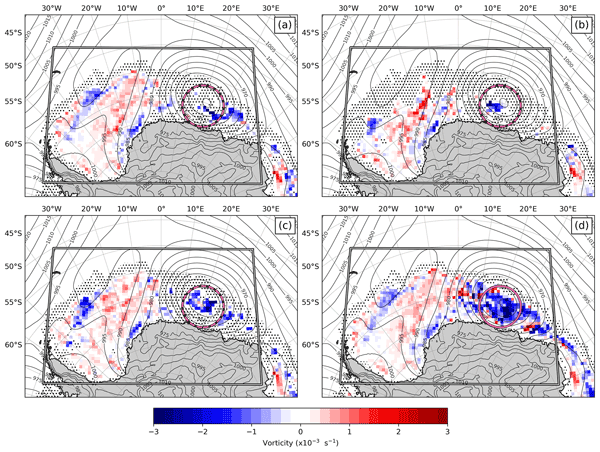
Synoptic events have a significant influence on the evolution of Antarctic sea ice. Our current understanding of the interactions between cyclones and sea ice remains limited. Using two ensembles of buoys, deployed in the north-eastern Weddell Sea region during winter and spring of 2019, we show how the evolution and spatial pattern of sea ice drift and deformation in the Antarctic marginal ice zone were affected by the balance between atmospheric and oceanic forcing and the local ice.
Marcello Vichi
The Cryosphere, 16, 4087–4106, https://doi.org/10.5194/tc-16-4087-2022, https://doi.org/10.5194/tc-16-4087-2022, 2022
Short summary
Short summary
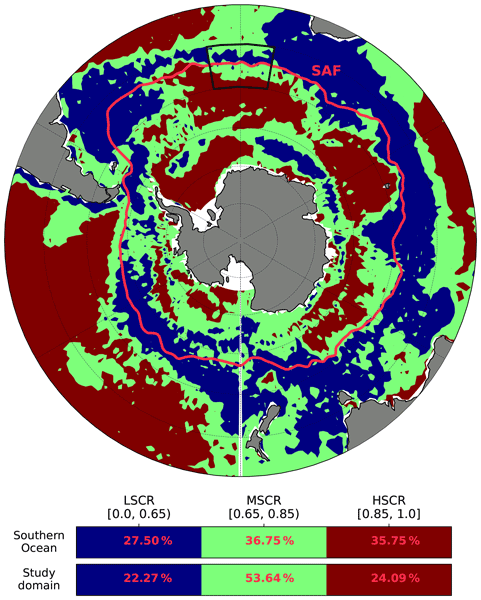
The marginal ice zone (MIZ) in the Antarctic is the largest in the world ocean. Antarctic sea ice has large year-to-year changes, and the MIZ represents its most variable component. Processes typical of the MIZ have also been observed in fully ice-covered ocean and are not captured by existing diagnostics. A new statistical method has been shown to address previous limitations in assessing the seasonal cycle of MIZ extent and to provide a probability map of sea ice state in the Southern Ocean.
Laique M. Djeutchouang, Nicolette Chang, Luke Gregor, Marcello Vichi, and Pedro M. S. Monteiro
Biogeosciences, 19, 4171–4195, https://doi.org/10.5194/bg-19-4171-2022, https://doi.org/10.5194/bg-19-4171-2022, 2022
Short summary
Short summary
Based on observing system simulation experiments using a mesoscale-resolving model, we found that to significantly improve uncertainties and biases in carbon dioxide (CO2) mapping in the Southern Ocean, it is essential to resolve the seasonal cycle (SC) of the meridional gradient of CO2 through high frequency (at least daily) observations that also span the region's meridional axis. We also showed that the estimated SC anomaly and mean annual CO2 are highly sensitive to seasonal sampling biases.
Sebastian Skatulla, Riesna R. Audh, Andrea Cook, Ehlke Hepworth, Siobhan Johnson, Doru C. Lupascu, Keith MacHutchon, Rutger Marquart, Tommy Mielke, Emmanuel Omatuku, Felix Paul, Tokoloho Rampai, Jörg Schröder, Carina Schwarz, and Marcello Vichi
The Cryosphere, 16, 2899–2925, https://doi.org/10.5194/tc-16-2899-2022, https://doi.org/10.5194/tc-16-2899-2022, 2022
Short summary
Short summary
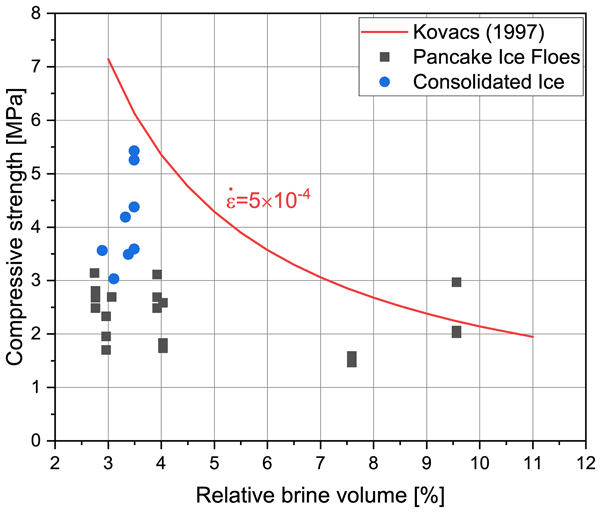
First-year sea ice has been sampled at the advancing outer edge of the Antarctic marginal ice zone (MIZ) along the Good Hope Line. Ice cores were extracted from five pancake ice floes and subsequently analysed for their physical and mechanical properties. Of particular interest was elucidating the transition of ice composition within the MIZ in terms of differences in mechanical stiffness and strength properties as linked to physical and textural characteristics at early-stage ice formation.
Jill Brouwer, Alexander D. Fraser, Damian J. Murphy, Pat Wongpan, Alberto Alberello, Alison Kohout, Christopher Horvat, Simon Wotherspoon, Robert A. Massom, Jessica Cartwright, and Guy D. Williams
The Cryosphere, 16, 2325–2353, https://doi.org/10.5194/tc-16-2325-2022, https://doi.org/10.5194/tc-16-2325-2022, 2022
Short summary
Short summary
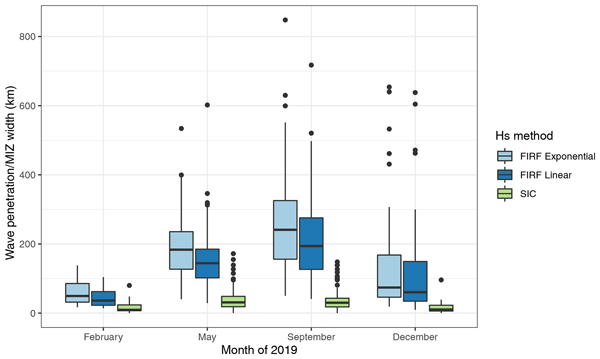
The marginal ice zone is the region where ocean waves interact with sea ice. Although this important region influences many sea ice, ocean and biological processes, it has been difficult to accurately measure on a large scale from satellite instruments. We present new techniques for measuring wave attenuation using the NASA ICESat-2 laser altimeter. By measuring how waves attenuate within the sea ice, we show that the marginal ice zone may be far wider than previously realised.
Wayne de Jager and Marcello Vichi
The Cryosphere, 16, 925–940, https://doi.org/10.5194/tc-16-925-2022, https://doi.org/10.5194/tc-16-925-2022, 2022
Short summary
Short summary
Ice motion can be used to better understand how weather and climate change affect the ice. Antarctic sea ice extent has shown large variability over the observed period, and dynamical features may also have changed. Our method allows for the quantification of rotational motion caused by wind and how this may have changed with time. Cyclonic motion dominates the Atlantic sector, particularly from 2015 onwards, while anticyclonic motion has remained comparatively small and unchanged.
Sebastian Landwehr, Michele Volpi, F. Alexander Haumann, Charlotte M. Robinson, Iris Thurnherr, Valerio Ferracci, Andrea Baccarini, Jenny Thomas, Irina Gorodetskaya, Christian Tatzelt, Silvia Henning, Rob L. Modini, Heather J. Forrer, Yajuan Lin, Nicolas Cassar, Rafel Simó, Christel Hassler, Alireza Moallemi, Sarah E. Fawcett, Neil Harris, Ruth Airs, Marzieh H. Derkani, Alberto Alberello, Alessandro Toffoli, Gang Chen, Pablo Rodríguez-Ros, Marina Zamanillo, Pau Cortés-Greus, Lei Xue, Conor G. Bolas, Katherine C. Leonard, Fernando Perez-Cruz, David Walton, and Julia Schmale
Earth Syst. Dynam., 12, 1295–1369, https://doi.org/10.5194/esd-12-1295-2021, https://doi.org/10.5194/esd-12-1295-2021, 2021
Short summary
Short summary
The Antarctic Circumnavigation Expedition surveyed a large number of variables describing the dynamic state of ocean and atmosphere, freshwater cycle, atmospheric chemistry, ocean biogeochemistry, and microbiology in the Southern Ocean. To reduce the dimensionality of the dataset, we apply a sparse principal component analysis and identify temporal patterns from diurnal to seasonal cycles, as well as geographical gradients and
hotspotsof interaction. Code and data are open access.
Marzieh H. Derkani, Alberto Alberello, Filippo Nelli, Luke G. Bennetts, Katrin G. Hessner, Keith MacHutchon, Konny Reichert, Lotfi Aouf, Salman Khan, and Alessandro Toffoli
Earth Syst. Sci. Data, 13, 1189–1209, https://doi.org/10.5194/essd-13-1189-2021, https://doi.org/10.5194/essd-13-1189-2021, 2021
Short summary
Short summary
The Southern Ocean has a profound impact on the Earth's climate system. Its strong winds, intense currents, and fierce waves are critical components of the air–sea interface. The scarcity of observations in this remote region hampers the comprehension of fundamental physics, the accuracy of satellite sensors, and the capabilities of prediction models. To fill this gap, a unique data set of simultaneous observations of winds, surface currents, and ocean waves in the Southern Ocean is presented.
Felix Paul, Tommy Mielke, Carina Nisters, Jörg Schröder, Tokoloho Rampai, Sebastian Skatulla, Riesna Audh, Ehlke Hepworth, Marcello Vichi, and Doru C. Lupascu
The Cryosphere Discuss., https://doi.org/10.5194/tc-2020-362, https://doi.org/10.5194/tc-2020-362, 2021
Preprint withdrawn
Short summary
Short summary
Frazil ice, consisting of loose disc-shaped ice crystals, is the very first sea ice that forms in the annual cycle in the marginal ice zone (MIZ) of the Antarctic. A sufficient number of frazil ice crystals forms the surface grease ice layer taking a fundamental role in the freezing processes in the MIZ. As soon as the ocean waves are damped, a closed ice cover can form. The viscous properties of frazil ice, which have a crucial influence on the growth of sea ice in the MIZ are investigated.
Mark Hague and Marcello Vichi
Biogeosciences, 18, 25–38, https://doi.org/10.5194/bg-18-25-2021, https://doi.org/10.5194/bg-18-25-2021, 2021
Short summary
Short summary
This paper examines the question of what causes the rapid spring growth of microscopic marine algae (phytoplankton) in the ice-covered ocean surrounding Antarctica. One prominent hypothesis proposes that the melting of sea ice is the primary cause, while our results suggest that this is only part of the explanation. In particular, we show that phytoplankton are able to start growing before the sea ice melts appreciably, much earlier than previously thought.
Cited articles
Alberello, A., Onorato, M., Bennetts, L., Vichi, M., Eayrs, C., MacHutchon, K., and Toffoli, A.: Brief communication: Pancake ice floe size distribution during the winter expansion of the Antarctic marginal ice zone, The Cryosphere, 13, 41–48, https://doi.org/10.5194/tc-13-41-2019, 2019. a
Alberello, A., Bennetts, L., Heil, P., Eayrs, C., Vichi, M., MacHutchon, K., Onorato, M., and Toffoli, A.: Drift of pancake ice floes in the winter Antarctic marginal ice zone during polar cyclones, J. Geophys. Res.-Oceans, 125, e2019JC015418, https://doi.org/10.1029/2019JC015418, 2020. a
Asplin, M. G., Galley, R., Barber, D. G., and Prinsenberg, S.: Fracture of summer perennial sea ice by ocean swell as a result of Arctic storms, J. Geophys. Res.-Oceans, 117, C06025, https://doi.org/10.1029/2011JC007221, 2012. a
Åströ, J., Robertsen, F., Haapala, J., Polojärvi, A., Uiboupin, R., and Maljutenko, I.: A large-scale high-resolution numerical model for sea-ice fragmentation dynamics, The Cryosphere, 18, 2429–2442, https://doi.org/10.5194/tc-18-2429-2024, 2024. a
Barthélemy, A., Fichefet, T., and Goosse, H.: Spatial heterogeneity of ocean surface boundary conditions under sea ice, Ocean Model., 102, 82–98, 2016. a
Day, N. S., Bennetts, L. G., O'Farrell, S. P., Alberello, A., and Montiel, F.: Analysis of the Antarctic marginal ice zone based on unsupervised classification of standalone sea ice model data, J. Geophys. Res.-Oceans, 129, e2024JC020953, https://doi.org/10.1029/2024JC020953, 2024. a
de Carolis, G., Olla, P., and Pignagnoli, L.: Effective viscosity of grease ice in linearized gravity waves, J. Fluid Mech., 535, 369–381, 2005. a
Diamond, R., Sime, L. C., Holmes, C. R., and Schroeder, D.: CMIP6 models rarely simulate Antarctic winter sea-ice anomalies as large as observed in 2023, Geophys. Res. Lett., 51, e2024GL109265, https://doi.org/10.1029/2024GL109265, 2024. a
Dumont, D.: Marginal ice zone dynamics: history, definitions and research perspectives, Philos. T. Roy. Soc.. A, 380, 20210253, https://doi.org/10.1098/rsta.2021.0253, 2022. a
Eberhard, U., Seybold, H. J., Floriancic, M., Bertsch, P., Jiménez-Martínez, J., Andrade Jr., J. S., and Holzner, M.: Determination of the effective viscosity of non-Newtonian fluids flowing through porous media, Front. Phys., 7, 71, https://doi.org/10.3389/fphy.2019.00071, 2019. a, b
Fang, Y., Yao, J., Wu, T., Wu, F., and Li, J.: Improved Simulation of Antarctic Sea Ice by Parameterized Thickness of New Ice in a Coupled Climate Model, Geophys. Res. Lett., 51, e2024GL110166, https://doi.org/10.1029/2024GL110166, 2024. a
Ferziger, J. H., Perić, M., and Street, R. L.: Computational methods for fluid dynamics, Springer, https://doi.org/10.1007/978-3-319-99693-6, 2019. a
Galindo-Rosales, F., Rubio-Hernandez, F., and Angermann, L.: Numerical simulation in steady flow of non-Newtonian fluids in pipes with circular cross-section, Numerical Simulations–Examples and Applications in Computational Fluid Dynamics, 20, 3–23, 2010. a
Gilbert, E. and Holmes, C.: 2023's Antarctic sea ice extent is the lowest on record, Weather, 79, 46–51, https://doi.org/10.1002/wea.4518, 2024. a
Hauswirth, S. C., Bowers, C. A., Fowler, C. P., Schultz, P. B., Hauswirth, A. D., Weigand, T., and Miller, C. T.: Modeling cross model non-Newtonian fluid flow in porous media, J. Contam. Hydrol., 235, 103708, https://doi.org/10.1016/j.jconhyd.2020.103708, 2020. a
Herman, A.: Discrete-Element bonded-particle Sea Ice model DESIgn, version 1.3a – model description and implementation, Geosci. Model Dev., 9, 1219–1241, https://doi.org/10.5194/gmd-9-1219-2016, 2016. a
Hersbach, H., Bell, B., Berrisford, P., Biavati, G., Horányi, A., Muñoz Sabater, J., Nicolas, J., Peubey, C., Radu, R., Rozum, I., Schepers, D., Simmons, A., Soci, C., Dee, D., and Thépaut, J.-N.: ERA5 hourly data on single levels from 1940 to present, Copernicus Climate Change Service (C3S) Climate Data Store (CDS) [data set], https://doi.org/10.24381/cds.adbb2d47, 2023a. a, b
Hersbach, H., Bell, B., Berrisford, P., Biavati, G., Horányi, A., Muñoz Sabater, J., Nicolas, J., Peubey, C., Radu, R., Rozum, I., Schepers, D., Simmons, A., Soci, C., Dee, D., and Thépaut, J.-N.: ERA5 hourly data on pressure levels from 1940 to present, Copernicus Climate Change Service (C3S) Climate Data Store (CDS), [data set], https://doi.org/10.24381/cds.bd0915c6, 2023b. a, b
Holthuijsen, L. H.: Waves in oceanic and coastal waters, Cambridge University Press, ISBN 9780521129954, 2010. a
Hunke, E. C., Lipscomb, W. H., Turner, A. K., Jeffery, N., and Elliott, S.: CICE: The Los Alamos Sea ice model documentation and software user’s manual version 5.1 LA-CC-06-012, T-3 Fluid Dynamics Group, Los Alamos National Laboratory, Zenodo, https://doi.org/10.5281/zenodo.16992790, 2015. a, b
Hutchings, J. K., Jasak, H., and Laxon, S. W.: A strength implicit correction scheme for the viscous-plastic sea ice model, Ocean Model., 7, 111–133, 2004. a
Iovino, D., Selivanova, J., Masina, S., and Cipollone, A.: The Antarctic Marginal Ice Zone and Pack Ice Area in CMEMS GREP Ensemble Reanalysis Product, Front. Earth Sci., 10, 745274, https://doi.org/10.3389/feart.2022.745274, 2022. a, b
Johnson, S., Audh, R. R., Jager, W. D., Matlakala, B., Vichi, M., Womack, A., and Rampai, T.: Physical and morphological properties of first-year Antarctic sea ice in the spring marginal ice zone of the Atlantic-Indian sector, J. Glaciol., 69, 1351–1364, https://doi.org/10.1017/jog.2023.21, 2023. a
Leppäranta, M.: The drift of sea ice, Springer Science & Business Media, https://doi.org/10.1007/978-3-642-04683-4, 2011. a
Leppäranta, M. and Hibler III, W.: The role of plastic ice interaction in marginal ice zone dynamics, J. Geophys. Res.-Oceans, 90, 11899–11909, 1985. a
Lytle, V. I. and Ackley, S. F.: Snow-ice growth: a fresh-water flux inhibiting deep convection in the Weddell Sea, Antarctica, Ann. Glaciol., 33, 45–50, https://doi.org/10.3189/172756401781818752, 2001. a
Mackie, S., Langhorne, P. J., Heorton, H. D., Smith, I. J., Feltham, D. L., and Schroeder, D.: Sea ice formation in a coupled climate model including grease ice, J. Adv. Model. Earth Syst., 12, e2020MS002103, https://doi.org/10.1029/2020MS002103, 2020. a
Marquart, R., Bogaers, A., Skatulla, S., Alberello, A., Toffoli, A., Schwarz, C., and Vichi, M.: A computational fluid dynamics model for the small-scale dynamics of wave, ice floe and interstitial grease ice interaction, Fluids, 6, 176, https://doi.org/10.3390/fluids6050176, 2021. a, b, c, d, e, f, g, h
Marquart, R., Bogaers, A., Skatulla, S., Alberello, A., Toffoli, A., and Schwarz, C.: Small-scale computational fluid dynamics modelling of the wave induced ice floe-grease ice interaction in the Antarctic marginal ice zone, Cold Reg. Sci. Technol., 219, 104108, https://doi.org/10.1016/j.coldregions.2023.104108, 2023. a, b, c, d, e, f, g, h, i
Marquart, R., Alberello, A., Bogaers, A., De Santi, F., and Vichi, M.: WIce-FOAM 1.0: Code and data availability, Zenodo [code and data set], https://doi.org/10.5281/zenodo.16681435, 2025a. a
Marquart, R., Alberello, A., Bogaers, A., De Santi, F., and Vichi, M.: Simulation results on the evolution of sea ice thickness and shear viscosity, University of Cape Town, Media, ZivaHub [video], https://doi.org/10.25375/uct.28956746.v1, 2025b. a
Medina, H., Beechook, A., Saul, J., Porter, S., Aleksandrova, S., and Benjamin, S.: Open source computational fluid dynamics using OpenFOAM, in: Royal Aeronautical Society, General Aviation Conference, London, https://doi.org/10.13140/RG.2.1.1930.9843, 2015. a
Newyear, K. and Martin, S.: A comparison of theory and laboratory measurements of wave propagation and attenuation in grease ice, J. Geophys. Res.-Oceans, 102, 25091–25099, 1997. a
Nose, T., Waseda, T., Kodaira, T., and Inoue, J.: On the coagulated pancake ice formation: Observation in the refreezing Chukchi Sea and comparison to the Antarctic consolidated pancake ice, Polar Sci., 27, 100622, https://doi.org/10.1016/j.polar.2020.100622, 2021. a
Paul, F., Mielke, T., Schwarz, C., Schröder, J., Rampai, T., Skatulla, S., Audh, R. R., Hepworth, E., Vichi, M., and Lupascu, D. C.: Frazil Ice in the Antarctic Marginal Ice Zone, J. Mar. Sci. Eng., 9, 647, https://doi.org/10.3390/jmse9060647, 2021. a, b
Paul, F., Schwarz, C., Audh, R. R., Bluhm, J., Johnson, S., MacHutchon, K., Mielke, T., Mishra, A., Rampai, T., Ricken, T., Schwarz, A., Skatulla, S., Thom, A., Verrinder, R., Schr der, J. r., Vichi, M., and Lupascu, D. C.: Sea ice mechanics, Comput. Meth. Mater. Sci., 23, https://doi.org/10.7494/cmms.2023.3.0816, 2023. a
Roenby, J., Bredmose, H., and Jasak, H.: A computational method for sharp interface advection, Roy. Soc. Open Sci., 3, 160405, https://doi.org/10.1098/rsos.160405, 2016. a
Rousset, C., Vancoppenolle, M., Madec, G., Fichefet, T., Flavoni, S., Barthélemy, A., Benshila, R., Chanut, J., Levy, C., Masson, S., and Vivier, F.: The Louvain-La-Neuve sea ice model LIM3.6: global and regional capabilities, Geosci. Model Dev., 8, 2991–3005, https://doi.org/10.5194/gmd-8-2991-2015, 2015. a
Saiki, R., Mitsudera, H., Fujisaki-Manome, A., Kimura, N., Ukita, J., Toyota, T., and Nakamura, T.: Mechanism of ice-band pattern formation caused by resonant interaction between sea ice and internal waves in a continuously stratified ocean, Prog. Oceanogr., 190, 102474, https://doi.org/10.1016/j.pocean.2020.102474, 2021. a
Selivanova, J., Iovino, D., and Vichi, M.: Limited benefits of increased spatial resolution for sea ice in HighResMIP simulations, Geophys. Res. Lett., 51, e2023GL107969, https://doi.org/10.1029/2023GL107969, 2024. a
Skatulla, S., Audh, R. R., Cook, A., Hepworth, E., Johnson, S., Lupascu, D. C., MacHutchon, K., Marquart, R., Mielke, T., Omatuku, E., Paul, F., Rampai, T., Schröder, J., Schwarz, C., and Vichi, M.: Physical and mechanical properties of winter first-year ice in the Antarctic marginal ice zone along the Good Hope Line, The Cryosphere, 16, 2899–2925, https://doi.org/10.5194/tc-16-2899-2022, 2022. a, b
Smedsrud, L. H. and Martin, T.: Grease ice in basin-scale sea-ice ocean models, Ann. Glaciol., 56, 295–306, 2015. a
Sun, S. and Solomon, A.: Suitability of the CICE sea ice model for seasonal prediction and positive impact of CryoSat-2 ice thickness initialization, The Cryosphere, 18, 3033–3048, https://doi.org/10.5194/tc-18-3033-2024, 2024. a
Tersigni, I., Alberello, A., Messori, G., Vichi, M., Onorato, M., and Toffoli, A.: High-Resolution Thermal Imaging in the Antarctic Marginal Ice Zone: Skin Temperature Heterogeneity and Effects on Heat Fluxes, Earth Space Sci., 10, e2023EA003078, https://doi.org/10.1029/2023EA003078, 2023. a
Thomson, J.: Wave propagation in the marginal ice zone: connections and feedback mechanisms within the air–ice–ocean system, Philos. T. Roy. Soc. A, 380, 20210251, https://doi.org/10.1098/rsta.2021.0251, 2022. a
Thomson, J. and Rogers, W. E.: Swell and sea in the emerging Arctic Ocean, Geophys. Res. Lett., 41, 3136–3140, 2014. a
Tison, J.-L., Maksym, T., Fraser, A. D., Corkill, M., Kimura, N., Nosaka, Y., Nomura, D., Vancoppenolle, M., Ackley, S., Stammerjohn, S., Wauthy, S., Linden, F. V. D., Carnat, G., Sapart, C., Jong, J. D., Fripiat, F., and Delille, B.: Physical and biological properties of early winter Antarctic sea ice in the Ross Sea, Ann. Glaciol., 1–19, https://doi.org/10.1017/aog.2020.43, 2020. a
Vichi, M.: An indicator of sea ice variability for the Antarctic marginal ice zone, The Cryosphere, 16, 4087–4106, https://doi.org/10.5194/tc-16-4087-2022, 2022. a
Vichi, M.: SCALE-WIN22 Cruise Report, Zenodo [Tech. rep.], https://doi.org/10.5281/zenodo.7902557, 2023. a, b
Wadhams, P., Aulicino, G., Parmiggiani, F., Persson, P. O. G., and Holt, B.: Pancake Ice Thickness Mapping in the Beaufort Sea From Wave Dispersion Observed in SAR Imagery, J. Geophys. Res.-Oceans, 123, 2213–2237, https://doi.org/10.1002/2017JC013003, 2018. a, b
Wang, J., Luo, H., Yu, L., Li, X., Holland, P. R., and Yang, Q.: The impacts of combined SAM and ENSO on seasonal Antarctic sea ice changes, J. Climate, 36, 3553–3569, 2023. a
Weiss, J.: Drift, Deformation, and Fracture of Sea Ice: A Perspective Across Scales, SpringerBriefs in Earth Sciences, Springer Netherlands, Dordrecht, ISBN 978-94-007-6201-5, https://doi.org/10.1007/978-94-007-6202-2, 2013. a
Zhang, J.: Sea ice properties in high-resolution sea ice models, J. Geophys. Res.-Oceans, 126, e2020JC016686, https://doi.org/10.1029/2020JC016686, 2021. a
Short summary
This study developed a kilometre-scale sea-ice model in OpenFOAM that couples dynamic and thermodynamic processes for two types of ice, solid-like ice floes and fluid-like grease ice, under wave forcing. This model can help to improve data input for large-scale sea-ice models. Results show a linear relationship between the proportion of ice floes in the field and the overall viscosity. Additionally, we found that viscosity responds nonlinearly to the inclusion of thermodynamic sea-ice growth.
This study developed a kilometre-scale sea-ice model in OpenFOAM that couples dynamic and...