
Articles | Volume 18, issue 23
https://doi.org/10.5194/gmd-18-9417-2025
© Author(s) 2025. This work is distributed under
the Creative Commons Attribution 4.0 License.
the Creative Commons Attribution 4.0 License.
https://doi.org/10.5194/gmd-18-9417-2025
© Author(s) 2025. This work is distributed under
the Creative Commons Attribution 4.0 License.
the Creative Commons Attribution 4.0 License.
Development and technical paper
| 
03 Dec 2025
Development and technical paper |
| 03 Dec 2025
| 03 Dec 2025
Data clustering to optimise the representativity of observational data in air quality data assimilation: a case study with EURAD-IM (version 5.9.1 DA)
Alexander Hermanns
Forschungszentrum Jülich, Institute of Climate and Energy Systems – Troposphere (ICE-3), Jülich, 52425, Germany
Faculty of Mathematics and Natural Sciences, University of Cologne, 50923 Cologne, Germany
Anne Caroline Lange
Forschungszentrum Jülich, Institute of Climate and Energy Systems – Troposphere (ICE-3), Jülich, 52425, Germany
Julia Kowalski
Faculty of Mechanical Engineering, RWTH Aachen University, 52062 Aachen, Germany
Hendrik Fuchs
Forschungszentrum Jülich, Institute of Climate and Energy Systems – Troposphere (ICE-3), Jülich, 52425, Germany
Faculty of Mathematics and Natural Sciences, University of Cologne, 50923 Cologne, Germany

Forschungszentrum Jülich, Institute of Climate and Energy Systems – Troposphere (ICE-3), Jülich, 52425, Germany
Related authors
No articles found.
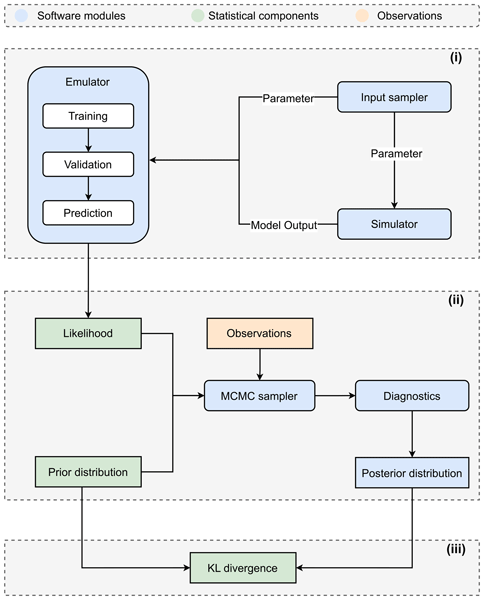
V. Mithlesh Kumar, Anil Yildiz, and Julia Kowalski
Nonlin. Processes Geophys., 33, 425–453, https://doi.org/10.5194/npg-33-425-2026, https://doi.org/10.5194/npg-33-425-2026, 2026
Short summary
Short summary
The reliability of Bayesian calibration depends on the quality and availability of observational data. But are we choosing the right data? We address this question by measuring the information gained during calibration to quantify how data selection influences the Bayesian calibration of physics-based landslide runout models. We find that more data does not always yield better results – observations that capture the dynamics governed by a parameter are more effective for its calibration.
Duong H. Do, Astrid Kerkweg, Yarê Baker, Birger Bohn, Hendrik Fuchs, Quanfu He, Thorsten Hohaus, Sungah Kang, Timo Kirfel, Finja Löher, Niklas Diepenthal, Anke C. Nölscher, Anna Novelli, Alexander Pschera, Felix Wieser, Sören R. Zorn, Andreas Wahner, and Domenico Taraborrelli
EGUsphere, https://doi.org/10.5194/egusphere-2026-4522, https://doi.org/10.5194/egusphere-2026-4522, 2026
Short summary
Short summary
This work builds a chamber simulation tool that mimics how air chemistry changes inside laboratory reactors, including injected gases, changing light, gas and liquid reactions, wall effects, and dilution. Tests in several chambers reproduced measured changes in reactive species, nitrogen compounds, and ozone, and helped capture how organic particles form. The same chemistry can be reused in larger, global air simulations to assess real-world impact.
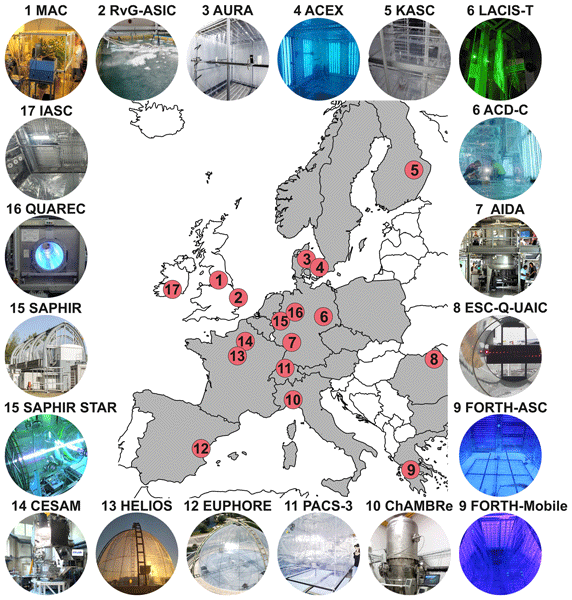
Hendrik Fuchs, Niklas Illmann, Amalia Muñoz, Mila Ródenas, Bénédicte Picquet-Varrault, M. Rami Alfarra, Cecilia Arsene, Iustinian G. Bejan, David M. Bell, Merete Bilde, Alexander Böhmländer, Mixtli Campos-Pineda, Mathieu Cazaunau, Patrice Coll, Véronique Daële, Claudia Di Biagio, Michael Flynn, Paola Formenti, Hartmut Herrmann, Kristina Höhler, Thorsten Hohaus, Matthew S. Johnson, Eija Juurola, Niku Kivekäs, Jan Kaiser, Christos Kaltsonoudis, Paolo Laj, Dario Massabò, Federico Mazzei, Gordon McFiggans, Max R. McGillen, Abdelwahid Mellouki, Peter Mettke, Ottmar Möhler, Falk Mothes, Dennis Niedermeier, Anna Novelli, Romeo I. Olariu, Spyros N. Pandis, Iulia Patroescu-Klotz, Rosa Maria Petracca Altieri, Paolo Prati, Claudiu Roman, Albert A. Ruth, Harald Saathoff, Silvio Schmalfuß, Frank Stratmann, Virginia Vernocchi, Aristeidis Voliotis, Jens Voigtländer, Annele Virtanen, Andreas Wahner, Robert Wagner, John Wenger, Sören Zorn, Peter Wiesen, and Jean-Francois Doussin
Atmos. Meas. Tech., 19, 4165–4199, https://doi.org/10.5194/amt-19-4165-2026, https://doi.org/10.5194/amt-19-4165-2026, 2026
Short summary
Short summary
Atmospheric simulation chambers enable experiments to be conducted under controlled conditions, improving our understanding of, and ability to predict, changes in the composition of the atmosphere. This is important for assessing air quality and its effects on human health, climate, the environment, and the economy. This paper describes the chambers of the European ACTRIS research infrastructure and discusses topics and directions that can be addressed in future chamber experiments.
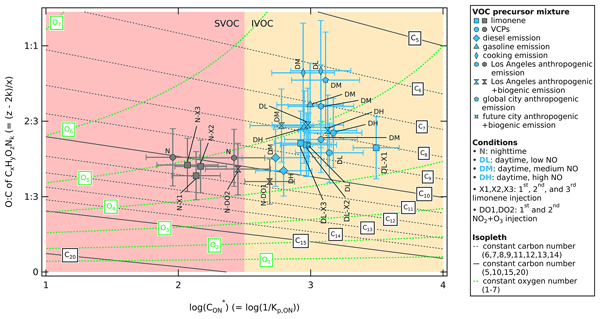
Farhan R. Nursanto, Quanfu He, Sophia van de Wouw, Annika Zanders, Thorsten Hohaus, Willem S. J. Kroese, Robert Wegener, Max Gerrit Adam, Benjamin Winter, René Dubus, Lukas Kesper, Franz Rohrer, Yuwei Wang, Emily Matthews, Aristeidis Voliotis, Thomas J. Bannan, Gordon McFiggans, Hugh Coe, Yizhen Wu, Milan Roska, Manjula Canagaratna, Mitch Alton, Matthew M. Coggon, Chelsea E. Stockwell, Kelvin H. Bates, Eva Y. Pfannerstill, Sören R. Zorn, Hui Wang, Matthieu Riva, Sebastien Perrier, Boxing Yang, Lu Liu, Anna Novelli, Michelle Färber, Hendrik Fuchs, Andrea Carolina Marcillo Lara, Achim Grasse, Christian Wesolek, Ralf Tillmann, Rupert Holzinger, Maarten C. Krol, Georgios I. Gkatzelis, and Juliane L. Fry
Atmos. Chem. Phys., 26, 8425–8453, https://doi.org/10.5194/acp-26-8425-2026, https://doi.org/10.5194/acp-26-8425-2026, 2026
Short summary
Short summary
Urban air contains reactive gases that can form organic nitrate particles and carry nitrogen oxides pollution far from cities. We recreated urban emissions in a large atmospheric chamber and observed their reactions under day and night conditions. We found that these emissions form organic nitrate particles similar to those from natural sources, with higher amounts and heavier particles at night, making nitrogen pollution longer lived and likely to travel further before depositing on ecosystems.

Alexandros Milousis, Susanne M. C. Scholz, Hendrik Fuchs, Alexandra P. Tsimpidi, and Vlassis A. Karydis
Atmos. Chem. Phys., 26, 571–605, https://doi.org/10.5194/acp-26-571-2026, https://doi.org/10.5194/acp-26-571-2026, 2026
Short summary
Short summary
Nitrate aerosol has become a dominant atmospheric component, surpassing sulfate in aerosol composition. However, its simulation remains challenging due to complex formation processes and regional variability. We use the EMAC model to assess key factors in nitrate predictions. Increasing grid resolution, reducing dinitrogen pentoxide hydrolysis uptake, and refining emissions improve model performance, although seasonal and diurnal discrepancies persist, requiring further refinement.
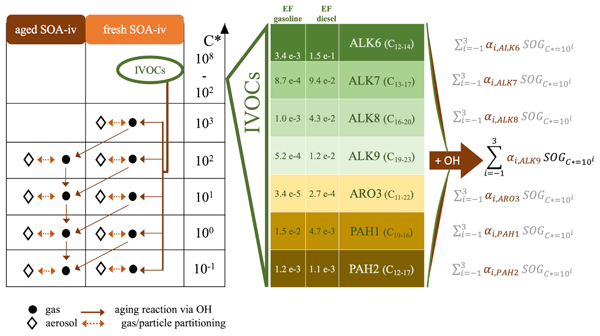
Susanne M. C. Scholz, Vlassis A. Karydis, Georgios I. Gkatzelis, Hendrik Fuchs, Spyros N. Pandis, and Alexandra P. Tsimpidi
Geosci. Model Dev., 18, 10119–10142, https://doi.org/10.5194/gmd-18-10119-2025, https://doi.org/10.5194/gmd-18-10119-2025, 2025
Short summary
Short summary
We studied how pollution from cars and trucks contributes to tiny airborne particles that affect air quality and climate. These particles, called secondary organic aerosols, were often underestimated in global models. By improving how certain overlooked emissions from fuel use are represented in our model, we found that their impact is much larger than previously thought. Our results suggest that road traffic plays a far greater role in global air pollution than earlier estimates showed.
Lu Liu, Thorsten Hohaus, Andreas Hofzumahaus, Frank Holland, Hendrik Fuchs, Ralf Tillmann, Birger Bohn, Stefanie Andres, Zhaofeng Tan, Franz Rohrer, Vlassis A. Karydis, Vaishali Vardhan, Philipp Franke, Anne C. Lange, Anna Novelli, Benjamin Winter, Changmin Cho, Iulia Gensch, Sergej Wedel, Andreas Wahner, and Astrid Kiendler-Scharr
Atmos. Chem. Phys., 25, 16189–16213, https://doi.org/10.5194/acp-25-16189-2025, https://doi.org/10.5194/acp-25-16189-2025, 2025
Short summary
Short summary
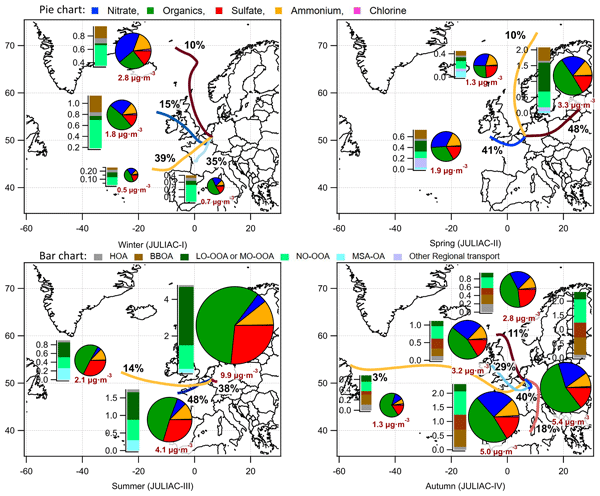
We measured air particles at a rural site in Germany over a year to understand how their sources and properties change with the seasons. Particles from natural sources peaked in summer, especially during heatwaves, while those from burning activities like residential heating and wildfires dominated in colder months. Winds carrying air from other regions also influenced particle levels. These findings link air quality to climate change and energy transitions.
Augustin Colette, Gaëlle Collin, François Besson, Etienne Blot, Vincent Guidard, Frédérik Meleux, Adrien Royer, Valentin Petiot, Claire Miller, Oihana Fermond, Alizé Jeant, Mario Adani, Joaquim Arteta, Anna Benedictow, Robert Bergström, Dene Bowdalo, Jorgen Brandt, Gino Briganti, Ana C. Carvalho, Jesper Heile Christensen, Florian Couvidat, Ilaria D'Elia, Massimo D'Isidoro, Hugo Denier van der Gon, Gaël Descombes, Enza Di Tomaso, John Douros, Jeronimo Escribano, Henk Eskes, Hilde Fagerli, Yalda Fatahi, Johannes Flemming, Elmar Friese, Lise Frohn, Michael Gauss, Camilla Geels, Guido Guarnieri, Marc Guevara, Antoine Guion, Jonathan Guth, Risto Hänninen, Kaj Hansen, Ulas Im, Ruud Janssen, Marine Jeoffrion, Mathieu Joly, Luke Jones, Oriol Jorba, Evgeni Kadantsev, Michael Kahnert, Jacek W. Kaminski, Rostislav Kouznetsov, Richard Kranenburg, Jeroen Kuenen, Anne Caroline Lange, Joachim Langner, Victor Lannuque, Francesca Macchia, Astrid Manders, Mihaela Mircea, Agnes Nyiri, Miriam Olid, Carlos Pérez García-Pando, Yuliia Palamarchuk, Antonio Piersanti, Blandine Raux, Miha Razinger, Lennard Robertson, Arjo Segers, Martijn Schaap, Pilvi Siljamo, David Simpson, Mikhail Sofiev, Anders Stangel, Joanna Struzewska, Carles Tena, Renske Timmermans, Thanos Tsikerdekis, Svetlana Tsyro, Svyatoslav Tyuryakov, Anthony Ung, Andreas Uppstu, Alvaro Valdebenito, Peter van Velthoven, Lina Vitali, Zhuyun Ye, Vincent-Henri Peuch, and Laurence Rouïl
Geosci. Model Dev., 18, 6835–6883, https://doi.org/10.5194/gmd-18-6835-2025, https://doi.org/10.5194/gmd-18-6835-2025, 2025
Short summary
Short summary
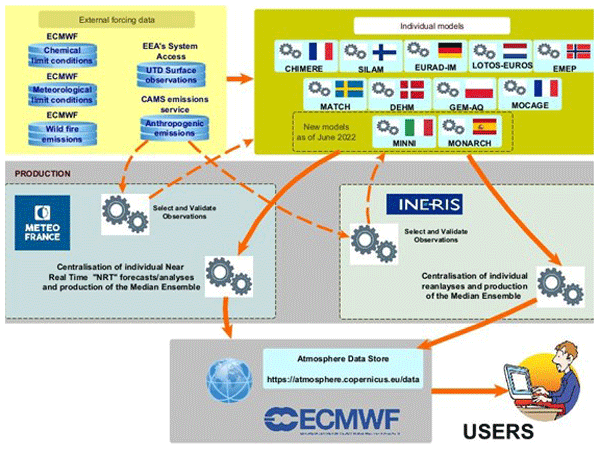
The Copernicus Atmosphere Monitoring Service – Regional Production delivers daily forecasts, analyses, and reanalyses of air quality in Europe. The service relies on a distributed modelling production by 11 leading European modelling teams following stringent requirements with an operational design that has no equivalent in the world. All the products are free, open, and quality-assured and disseminated with a high level of reliability.
Michael Rolletter, Andreas Hofzumahaus, Anna Novelli, Andreas Wahner, and Hendrik Fuchs
Atmos. Chem. Phys., 25, 3481–3502, https://doi.org/10.5194/acp-25-3481-2025, https://doi.org/10.5194/acp-25-3481-2025, 2025
Short summary
Short summary
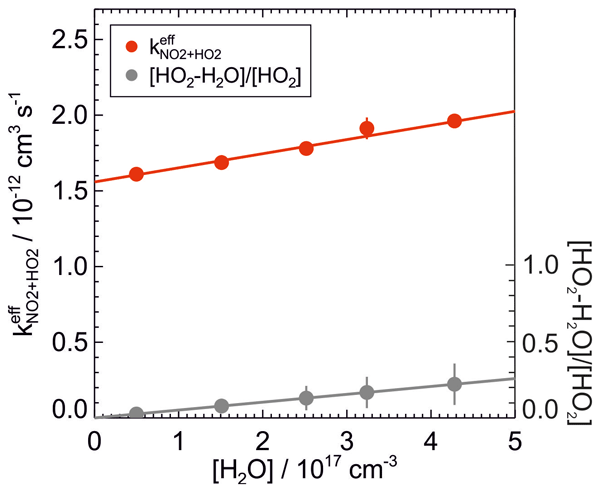
Highly accurate rate coefficients of termolecular reactions between OH and HO2 radicals and reactive nitrogen oxides were measured for conditions in the lower troposphere, providing improved constraints on recommended values. No dependence on water vapour was found except for the HO2+NO2 reaction, which can be explained by an enhanced rate coefficient of the NO2 reaction with the water complex of the HO2 radical.
Hendrik Fuchs, Aaron Stainsby, Florian Berg, René Dubus, Michelle Färber, Andreas Hofzumahaus, Frank Holland, Kelvin H. Bates, Steven S. Brown, Matthew M. Coggon, Glenn S. Diskin, Georgios I. Gkatzelis, Christopher M. Jernigan, Jeff Peischl, Michael A. Robinson, Andrew W. Rollins, Nell B. Schafer, Rebecca H. Schwantes, Chelsea E. Stockwell, Patrick R. Veres, Carsten Warneke, Eleanor M. Waxman, Lu Xu, Kristen Zuraski, Andreas Wahner, and Anna Novelli
Atmos. Meas. Tech., 18, 881–895, https://doi.org/10.5194/amt-18-881-2025, https://doi.org/10.5194/amt-18-881-2025, 2025
Short summary
Short summary
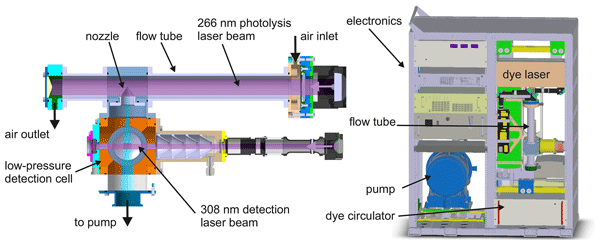
Significant improvements have been made to the instruments used to measure OH reactivity, which is equivalent to the sum of air pollutant concentrations. Accurate and precise measurements with a high time resolution have been achieved, allowing use on aircraft, as demonstrated during flights in the USA.
Hassnae Erraji, Philipp Franke, Astrid Lampert, Tobias Schuldt, Ralf Tillmann, Andreas Wahner, and Anne Caroline Lange
Atmos. Chem. Phys., 24, 13913–13934, https://doi.org/10.5194/acp-24-13913-2024, https://doi.org/10.5194/acp-24-13913-2024, 2024
Short summary
Short summary
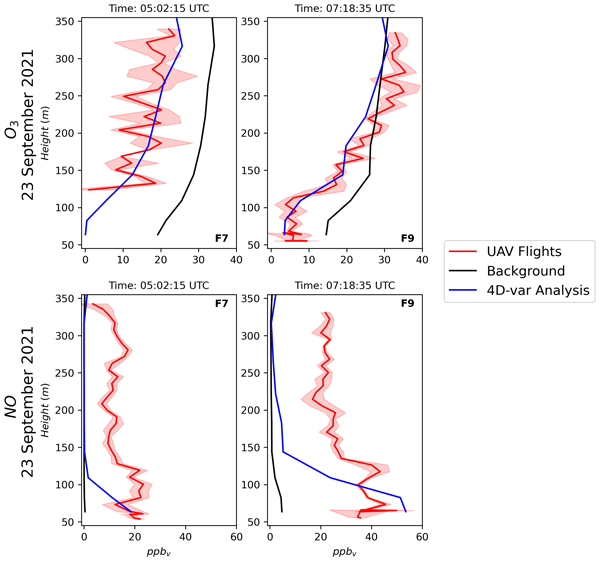
Four-dimensional variational data assimilation allows for the simultaneous optimisation of initial values and emission rates by using trace-gas profiles from drone observations in a regional air quality model. Assimilated profiles positively impact the representation of air pollutants in the model by improving their vertical distribution and ground-level concentrations. This case study highlights the potential of drone data to enhance air quality analyses including local emission evaluation.
Florian Berg, Anna Novelli, René Dubus, Andreas Hofzumahaus, Frank Holland, Andreas Wahner, and Hendrik Fuchs
Atmos. Chem. Phys., 24, 13715–13731, https://doi.org/10.5194/acp-24-13715-2024, https://doi.org/10.5194/acp-24-13715-2024, 2024
Short summary
Short summary
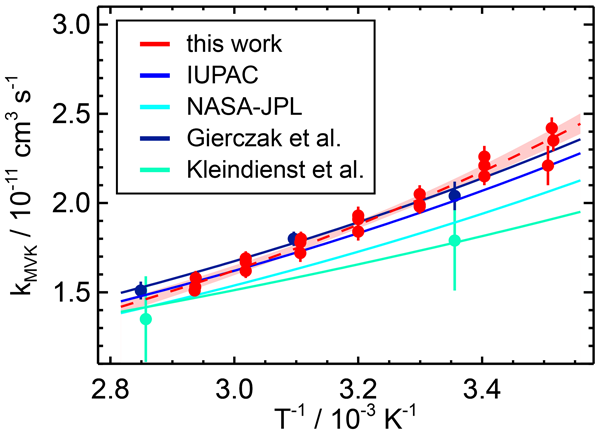
This study reports temperature-dependent rate coefficients of the reaction of atmospherically relevant hydrocarbons from biogenic sources (methyl vinyl ketones and monoterpenes) and anthropogenic sources (alkanes and aromatics). Measurements were done at atmospheric conditions (ambient pressure and temperature range) in air.

Matthias Rauter and Julia Kowalski
Geosci. Model Dev., 17, 6545–6569, https://doi.org/10.5194/gmd-17-6545-2024, https://doi.org/10.5194/gmd-17-6545-2024, 2024
Short summary
Short summary
Snow avalanches can form large powder clouds that substantially exceed the velocity and reach of the dense core. Only a few complex models exist to simulate this phenomenon, and the respective hazard is hard to predict. This work provides a novel flow model that focuses on simple relations while still encapsulating the significant behaviour. The model is applied to reconstruct two catastrophic powder snow avalanche events in Austria.
Felix Wieser, Rolf Sander, Changmin Cho, Hendrik Fuchs, Thorsten Hohaus, Anna Novelli, Ralf Tillmann, and Domenico Taraborrelli
Geosci. Model Dev., 17, 4311–4330, https://doi.org/10.5194/gmd-17-4311-2024, https://doi.org/10.5194/gmd-17-4311-2024, 2024
Short summary
Short summary
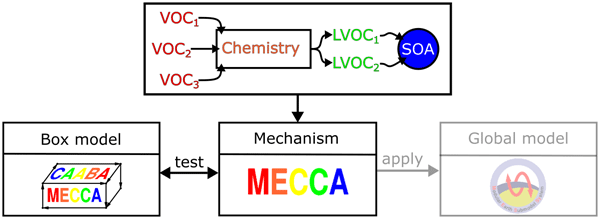
The chemistry scheme of the atmospheric box model CAABA/MECCA is expanded to achieve an improved aerosol formation from emitted organic compounds. In addition to newly added reactions, temperature-dependent partitioning of all new species between the gas and aqueous phases is estimated and included in the pre-existing scheme. Sensitivity runs show an overestimation of key compounds from isoprene, which can be explained by a lack of aqueous-phase degradation reactions and box model limitations.
Jacky Y. S. Pang, Florian Berg, Anna Novelli, Birger Bohn, Michelle Färber, Philip T. M. Carlsson, René Dubus, Georgios I. Gkatzelis, Franz Rohrer, Sergej Wedel, Andreas Wahner, and Hendrik Fuchs
Atmos. Chem. Phys., 23, 12631–12649, https://doi.org/10.5194/acp-23-12631-2023, https://doi.org/10.5194/acp-23-12631-2023, 2023
Short summary
Short summary
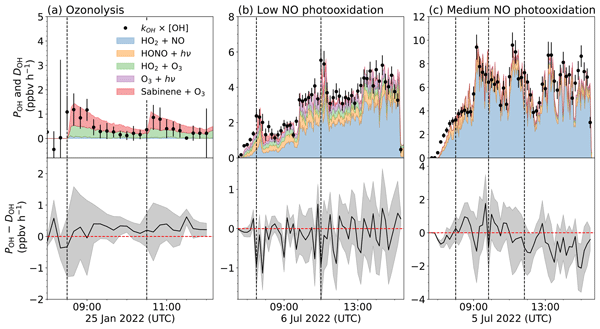
In this study, the oxidations of sabinene by OH radicals and ozone were investigated with an atmospheric simulation chamber. Reaction rate coefficients of the OH-oxidation reaction at temperatures between 284 to 340 K were determined for the first time in the laboratory by measuring the OH reactivity. Product yields determined in chamber experiments had good agreement with literature values, but discrepancies were found between experimental yields and expected yields from oxidation mechanisms.
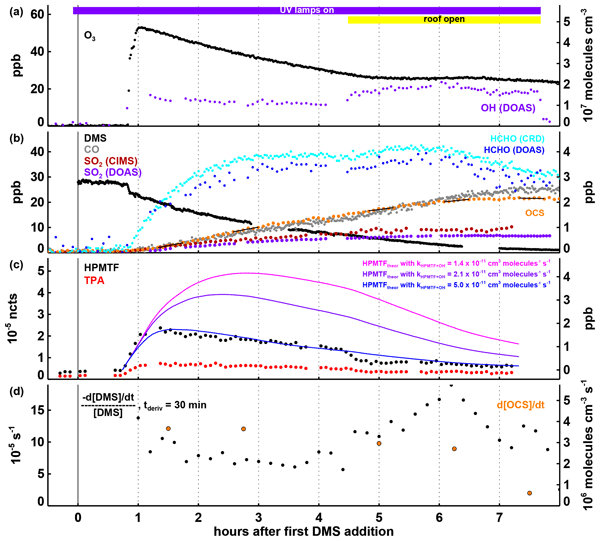
Marc von Hobe, Domenico Taraborrelli, Sascha Alber, Birger Bohn, Hans-Peter Dorn, Hendrik Fuchs, Yun Li, Chenxi Qiu, Franz Rohrer, Roberto Sommariva, Fred Stroh, Zhaofeng Tan, Sergej Wedel, and Anna Novelli
Atmos. Chem. Phys., 23, 10609–10623, https://doi.org/10.5194/acp-23-10609-2023, https://doi.org/10.5194/acp-23-10609-2023, 2023
Short summary
Short summary
The trace gas carbonyl sulfide (OCS) transports sulfur from the troposphere to the stratosphere, where sulfate aerosols are formed that influence climate and stratospheric chemistry. An uncertain OCS source in the troposphere is chemical production form dimethyl sulfide (DMS), a gas released in large quantities from the oceans. We carried out experiments in a large atmospheric simulation chamber to further elucidate the chemical mechanism of OCS production from DMS.
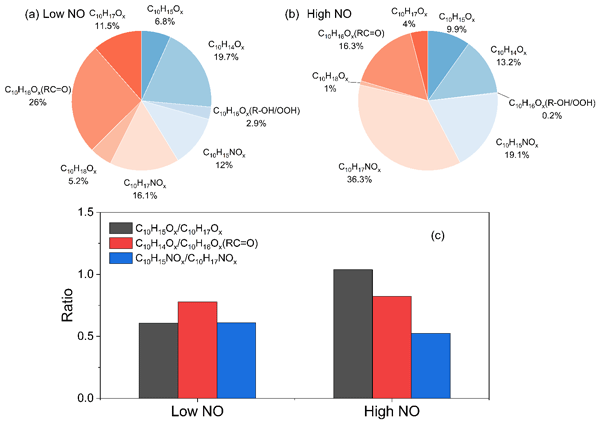
Hao Luo, Luc Vereecken, Hongru Shen, Sungah Kang, Iida Pullinen, Mattias Hallquist, Hendrik Fuchs, Andreas Wahner, Astrid Kiendler-Scharr, Thomas F. Mentel, and Defeng Zhao
Atmos. Chem. Phys., 23, 7297–7319, https://doi.org/10.5194/acp-23-7297-2023, https://doi.org/10.5194/acp-23-7297-2023, 2023
Short summary
Short summary
Oxidation of limonene, an element emitted by trees and chemical products, by OH, a daytime oxidant, forms many highly oxygenated organic molecules (HOMs), including C10-20 compounds. HOMs play an important role in new particle formation and growth. HOM formation can be explained by the chemistry of peroxy radicals. We found that a minor branching ratio initial pathway plays an unexpected, significant role. Considering this pathway enables accurate simulations of HOMs and other concentrations.
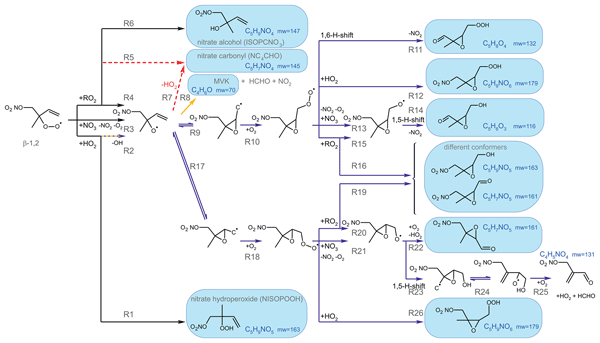
Philip T. M. Carlsson, Luc Vereecken, Anna Novelli, François Bernard, Steven S. Brown, Bellamy Brownwood, Changmin Cho, John N. Crowley, Patrick Dewald, Peter M. Edwards, Nils Friedrich, Juliane L. Fry, Mattias Hallquist, Luisa Hantschke, Thorsten Hohaus, Sungah Kang, Jonathan Liebmann, Alfred W. Mayhew, Thomas Mentel, David Reimer, Franz Rohrer, Justin Shenolikar, Ralf Tillmann, Epameinondas Tsiligiannis, Rongrong Wu, Andreas Wahner, Astrid Kiendler-Scharr, and Hendrik Fuchs
Atmos. Chem. Phys., 23, 3147–3180, https://doi.org/10.5194/acp-23-3147-2023, https://doi.org/10.5194/acp-23-3147-2023, 2023
Short summary
Short summary
The investigation of the night-time oxidation of the most abundant hydrocarbon, isoprene, in chamber experiments shows the importance of reaction pathways leading to epoxy products, which could enhance particle formation, that have so far not been accounted for. The chemical lifetime of organic nitrates from isoprene is long enough for the majority to be further oxidized the next day by daytime oxidants.
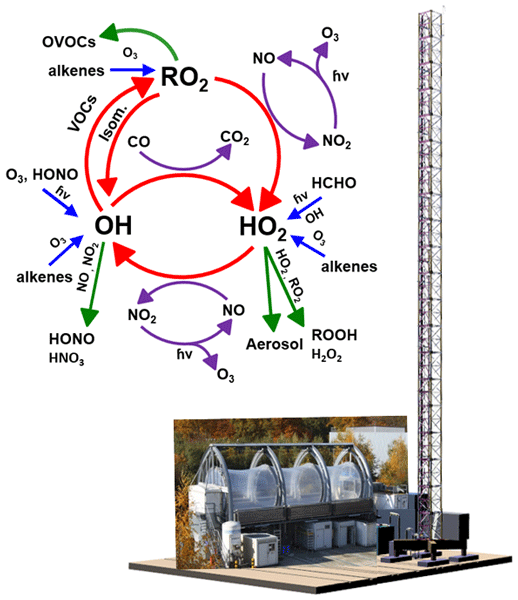
Changmin Cho, Hendrik Fuchs, Andreas Hofzumahaus, Frank Holland, William J. Bloss, Birger Bohn, Hans-Peter Dorn, Marvin Glowania, Thorsten Hohaus, Lu Liu, Paul S. Monks, Doreen Niether, Franz Rohrer, Roberto Sommariva, Zhaofeng Tan, Ralf Tillmann, Astrid Kiendler-Scharr, Andreas Wahner, and Anna Novelli
Atmos. Chem. Phys., 23, 2003–2033, https://doi.org/10.5194/acp-23-2003-2023, https://doi.org/10.5194/acp-23-2003-2023, 2023
Short summary
Short summary
With this study, we investigated the processes leading to the formation, destruction, and recycling of radicals for four seasons in a rural environment. Complete knowledge of their chemistry is needed if we are to predict the formation of secondary pollutants from primary emissions. The results highlight a still incomplete understanding of the paths leading to the formation of the OH radical, which has been observed in several other environments as well and needs to be further investigated.

Zhaofeng Tan, Hendrik Fuchs, Andreas Hofzumahaus, William J. Bloss, Birger Bohn, Changmin Cho, Thorsten Hohaus, Frank Holland, Chandrakiran Lakshmisha, Lu Liu, Paul S. Monks, Anna Novelli, Doreen Niether, Franz Rohrer, Ralf Tillmann, Thalassa S. E. Valkenburg, Vaishali Vardhan, Astrid Kiendler-Scharr, Andreas Wahner, and Roberto Sommariva
Atmos. Chem. Phys., 22, 13137–13152, https://doi.org/10.5194/acp-22-13137-2022, https://doi.org/10.5194/acp-22-13137-2022, 2022
Short summary
Short summary
During the 2019 JULIAC campaign, ClNO2 was measured at a rural site in Germany in different seasons. The highest ClNO2 level was 1.6 ppbv in September. ClNO2 production was more sensitive to the availability of NO2 than O3. The average ClNO2 production efficiency was up to 18 % in February and September and down to 3 % in December. These numbers are at the high end of the values reported in the literature, indicating the importance of ClNO2 chemistry in rural environments in midwestern Europe.
Yindong Guo, Hongru Shen, Iida Pullinen, Hao Luo, Sungah Kang, Luc Vereecken, Hendrik Fuchs, Mattias Hallquist, Ismail-Hakki Acir, Ralf Tillmann, Franz Rohrer, Jürgen Wildt, Astrid Kiendler-Scharr, Andreas Wahner, Defeng Zhao, and Thomas F. Mentel
Atmos. Chem. Phys., 22, 11323–11346, https://doi.org/10.5194/acp-22-11323-2022, https://doi.org/10.5194/acp-22-11323-2022, 2022
Short summary
Short summary
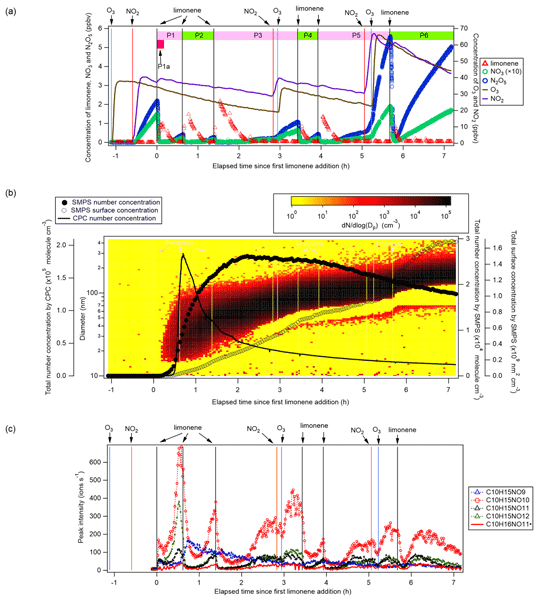
The oxidation of limonene, a common volatile emitted by trees and chemical products, by NO3, a nighttime oxidant, forms many highly oxygenated organic molecules (HOM), including C10-30 compounds. Most of the HOM are second-generation organic nitrates, in which carbonyl-substituted C10 nitrates accounted for a major fraction. Their formation can be explained by chemistry of peroxy radicals. HOM, especially low-volatile ones, play an important role in nighttime new particle formation and growth.
Jacky Yat Sing Pang, Anna Novelli, Martin Kaminski, Ismail-Hakki Acir, Birger Bohn, Philip T. M. Carlsson, Changmin Cho, Hans-Peter Dorn, Andreas Hofzumahaus, Xin Li, Anna Lutz, Sascha Nehr, David Reimer, Franz Rohrer, Ralf Tillmann, Robert Wegener, Astrid Kiendler-Scharr, Andreas Wahner, and Hendrik Fuchs
Atmos. Chem. Phys., 22, 8497–8527, https://doi.org/10.5194/acp-22-8497-2022, https://doi.org/10.5194/acp-22-8497-2022, 2022
Short summary
Short summary
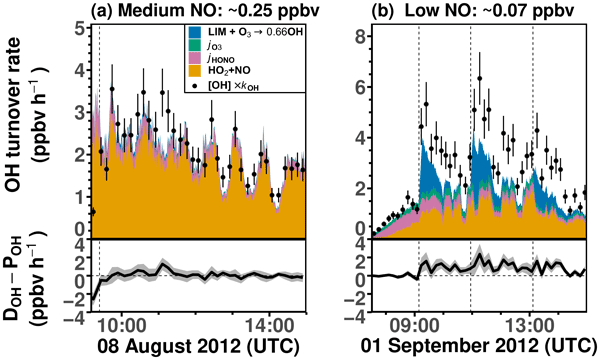
This study investigates the radical chemical budget during the limonene oxidation at different atmospheric-relevant NO concentrations in chamber experiments under atmospheric conditions. It is found that the model–measurement discrepancies of HO2 and RO2 are very large at low NO concentrations that are typical for forested environments. Possible additional processes impacting HO2 and RO2 concentrations are discussed.
Ralf Tillmann, Georgios I. Gkatzelis, Franz Rohrer, Benjamin Winter, Christian Wesolek, Tobias Schuldt, Anne C. Lange, Philipp Franke, Elmar Friese, Michael Decker, Robert Wegener, Morten Hundt, Oleg Aseev, and Astrid Kiendler-Scharr
Atmos. Meas. Tech., 15, 3827–3842, https://doi.org/10.5194/amt-15-3827-2022, https://doi.org/10.5194/amt-15-3827-2022, 2022
Short summary
Short summary
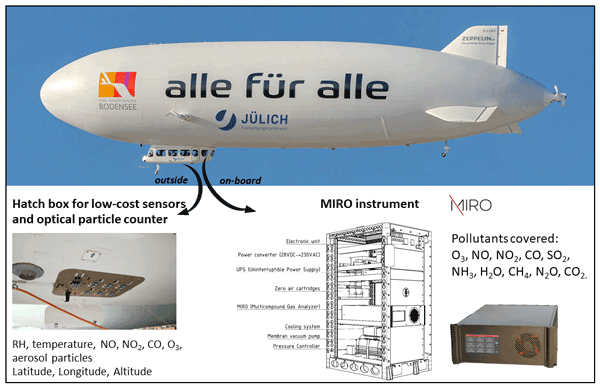
We report in situ measurements of air pollutant concentrations within the planetary boundary layer on board a Zeppelin in Germany. The low costs of commercial flights provide an affordable and efficient method to improve our understanding of changes in emissions in space and time. The experimental setup expands the capabilities of this platform and provides insights into primary and secondary pollution observations and planetary boundary layer dynamics which determine air quality significantly.
Clara Betancourt, Timo T. Stomberg, Ann-Kathrin Edrich, Ankit Patnala, Martin G. Schultz, Ribana Roscher, Julia Kowalski, and Scarlet Stadtler
Geosci. Model Dev., 15, 4331–4354, https://doi.org/10.5194/gmd-15-4331-2022, https://doi.org/10.5194/gmd-15-4331-2022, 2022
Short summary
Short summary
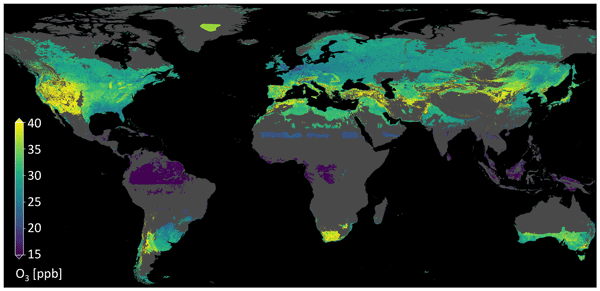
Ozone is a toxic greenhouse gas with high spatial variability. We present a machine-learning-based ozone-mapping workflow generating a transparent and reliable product. Going beyond standard mapping methods, this work combines explainable machine learning with uncertainty assessment to increase the integrity of the produced map.
Konstantin Schürholt, Julia Kowalski, and Henning Löwe
The Cryosphere, 16, 903–923, https://doi.org/10.5194/tc-16-903-2022, https://doi.org/10.5194/tc-16-903-2022, 2022
Short summary
Short summary
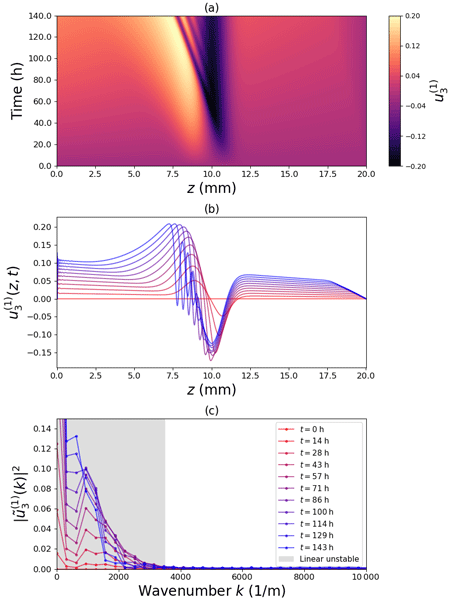
This companion paper deals with numerical particularities of partial differential equations underlying 1D snow models. In this first part we neglect mechanical settling and demonstrate that the nonlinear coupling between diffusive transport (heat and vapor), phase changes and ice mass conservation contains a wave instability that may be relevant for weak layer formation. Numerical requirements are discussed in view of the underlying homogenization scheme.

Philipp Franke, Anne Caroline Lange, and Hendrik Elbern
Geosci. Model Dev., 15, 1037–1060, https://doi.org/10.5194/gmd-15-1037-2022, https://doi.org/10.5194/gmd-15-1037-2022, 2022
Short summary
Short summary
The paper proposes an ensemble-based analysis framework (ESIAS-chem) for time- and altitude-resolved volcanic ash emission fluxes and their uncertainty. The core of the algorithm is an ensemble Nelder–Mead optimization algorithm accompanied by a particle filter update. The performed notional experiments demonstrate the high accuracy of ESIAS-chem in analyzing the vertically resolved volcanic ash in the atmosphere. Further, the system is in general able to estimate the emission fluxes properly.

Anna Simson, Henning Löwe, and Julia Kowalski
The Cryosphere, 15, 5423–5445, https://doi.org/10.5194/tc-15-5423-2021, https://doi.org/10.5194/tc-15-5423-2021, 2021
Short summary
Short summary
This companion paper deals with numerical particularities of partial differential equations underlying one-dimensional snow models. In this second part we include mechanical settling and develop a new hybrid (Eulerian–Lagrangian) method for solving the advection-dominated ice mass conservation on a moving mesh alongside Eulerian diffusion (heat and vapor) and phase changes. The scheme facilitates a modular and extendable solver strategy while retaining controls on numerical accuracy.
Zhaofeng Tan, Luisa Hantschke, Martin Kaminski, Ismail-Hakki Acir, Birger Bohn, Changmin Cho, Hans-Peter Dorn, Xin Li, Anna Novelli, Sascha Nehr, Franz Rohrer, Ralf Tillmann, Robert Wegener, Andreas Hofzumahaus, Astrid Kiendler-Scharr, Andreas Wahner, and Hendrik Fuchs
Atmos. Chem. Phys., 21, 16067–16091, https://doi.org/10.5194/acp-21-16067-2021, https://doi.org/10.5194/acp-21-16067-2021, 2021
Short summary
Short summary
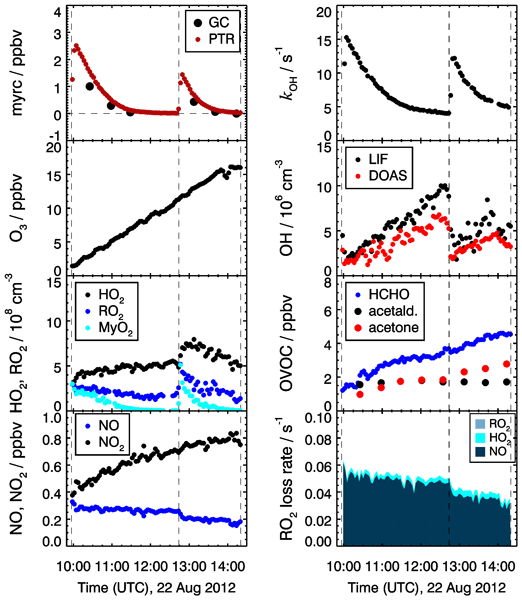
The photo-oxidation of myrcene, a monoterpene species emitted by plants, was investigated at atmospheric conditions in the outdoor simulation chamber SAPHIR. The chemical structure of myrcene is partly similar to isoprene. Therefore, it can be expected that hydrogen shift reactions could play a role as observed for isoprene. In this work, their potential impact on the regeneration efficiency of hydroxyl radicals is investigated.
Cited articles
Beyer, K., Goldstein, J., Ramakrishnan, R., and Shaft, U.: When Is “Nearest Neighbor” Meaningful?, in: Database Theory – ICDT'99, edited by Beeri, C. and Buneman, P., Springer Berlin Heidelberg, Berlin, Heidelberg, 217–235, ISBN 978-3-540-49257-3, 1999. a
Borge, R., Jung, D., Lejarraga, I., de la Paz, D., and Cordero, J. M.: Assessment of the Madrid region air quality zoning based on mesoscale modelling and k-means clustering, Atmospheric Environment, 287, 119258, https://doi.org/10.1016/j.atmosenv.2022.119258, 2022. a
Breiman, L.: Random Forests, Machine Learning, 45, 5–32, https://doi.org/10.1023/A:1010933404324, 2001. a
Carro-Calvo, L., Ordóñez, C., García-Herrera, R., and Schnell, J. L.: Spatial clustering and meteorological drivers of summer ozone in Europe, Atmospheric Environment, 167, 496–510, https://doi.org/10.1016/j.atmosenv.2017.08.050, 2017. a
Colette, A., Collin, G., Besson, F., Blot, E., Guidard, V., Meleux, F., Royer, A., Petiot, V., Miller, C., Fermond, O., Jeant, A., Adani, M., Arteta, J., Benedictow, A., Bergström, R., Bowdalo, D., Brandt, J., Briganti, G., Carvalho, A. C., Christensen, J. H., Couvidat, F., D'Elia, I., D'Isidoro, M., Denier van der Gon, H., Descombes, G., Di Tomaso, E., Douros, J., Escribano, J., Eskes, H., Fagerli, H., Fatahi, Y., Flemming, J., Friese, E., Frohn, L., Gauss, M., Geels, C., Guarnieri, G., Guevara, M., Guion, A., Guth, J., Hänninen, R., Hansen, K., Im, U., Janssen, R., Jeoffrion, M., Joly, M., Jones, L., Jorba, O., Kadantsev, E., Kahnert, M., Kaminski, J. W., Kouznetsov, R., Kranenburg, R., Kuenen, J., Lange, A. C., Langner, J., Lannuque, V., Macchia, F., Manders, A., Mircea, M., Nyiri, A., Olid, M., Pérez García-Pando, C., Palamarchuk, Y., Piersanti, A., Raux, B., Razinger, M., Robertson, L., Segers, A., Schaap, M., Siljamo, P., Simpson, D., Sofiev, M., Stangel, A., Struzewska, J., Tena, C., Timmermans, R., Tsikerdekis, T., Tsyro, S., Tyuryakov, S., Ung, A., Uppstu, A., Valdebenito, A., van Velthoven, P., Vitali, L., Ye, Z., Peuch, V.-H., and Rouïl, L.: Copernicus Atmosphere Monitoring Service – Regional Air Quality Production System v1.0, Geosci. Model Dev., 18, 6835–6883, https://doi.org/10.5194/gmd-18-6835-2025, 2025. a
De Souza Fernandes Duarte, E., Franke, P., Lange, A. C., Friese, E., Juliano da Silva Lopes, F., João da Silva, J., Souza dos Reis, J., Landulfo, E., Santos e Silva, C. M., Elbern, H., and Hoelzemann, J. J.: Evaluation of atmospheric aerosols in the metropolitan area of São Paulo simulated by the regional EURAD-IM model on high-resolution, Atmospheric Pollution Research, 12, 451–469, https://doi.org/10.1016/j.apr.2020.12.006, 2021. a
Elbern, H., Strunk, A., Schmidt, H., and Talagrand, O.: Emission rate and chemical state estimation by 4-dimensional variational inversion, Atmos. Chem. Phys., 7, 3749–3769, https://doi.org/10.5194/acp-7-3749-2007, 2007. a, b, c
Erraji, H., Franke, P., Lampert, A., Schuldt, T., Tillmann, R., Wahner, A., and Lange, A. C.: The potential of drone observations to improve air quality predictions by 4D-Var, Atmos. Chem. Phys., 24, 13913–13934, https://doi.org/10.5194/acp-24-13913-2024, 2024. a
Flemming, J., Stern, R., and Yamartino, R. J.: A new air quality regime classification scheme for O3, NO 2, SO2 and PM10 observations sites, Atmospheric Environment, 39, https://doi.org/10.1016/j.atmosenv.2005.06.039, 2005. a
Forgy, E.: Cluster Analysis of Multivariate Data: Efficiency versus Interpretability of Classification, Biometrics, 21, 768–769, 1965. a
Fovell, R. G. and Fovell, M.-Y. C.: Climate Zones of the Conterminous United States Defined Using Cluster Analysis, Journal of Climate, 6, 2103–2135, http://www.jstor.org/stable/26198599, 1993. a
Franke, P., Lange, A. C., and Elbern, H.: Particle-filter-based volcanic ash emission inversion applied to a hypothetical sub-Plinian Eyjafjallajökull eruption using the Ensemble for Stochastic Integration of Atmospheric Simulations (ESIAS-chem) version 1.0, Geosci. Model Dev., 15, 1037–1060, https://doi.org/10.5194/gmd-15-1037-2022, 2022. a
Franke, P., Lange, A. C., Steffens, B., Pozzer, A., Wahner, A., and Kiendler-Scharr, A.: European air quality in view of the WHO 2021 guideline levels: Effect of emission reductions on air pollution exposure, Elementa: Science of the Anthropocene, 12, 00127, https://doi.org/10.1525/elementa.2023.00127, 2024. a
Gauss, M., Mortier, A., Blake, L., Valdebenito, A., Negri, C., Petiot, V., Joly, M., Fermond, O., Douros, J., Tsikerdekis, A., Eskes, H. J., Bennouna, Y., Thouret, V., Meleux, F., Raux, B., Ung, A., Sofiev, M., and Palamarchuk, J.: Documentation for the Evaluation and Quality Control (EQC) of the CAMS regional services – Status 2024, https://atmosphere.copernicus.eu/sites/default/files/custom-uploads/EQC-regional/CAMS283_2021SC2_D83.4.1.1-2024_202407_v2.pdf (last access: 10 July 2025), 2024. a
Govender, P. and Sivakumar, V.: Application of k-means and hierarchical clustering techniques for analysis of air pollution: A review (1980–2019), Atmospheric Pollution Research, 11, 40–56, https://doi.org/10.1016/j.apr.2019.09.009, 2020. a
Hermanns, A.: KSC – Observational Data Clustering Preprocessor, Zenodo [code], https://doi.org/10.5281/zenodo.14711881, 2025. a, b, c
Ignaccolo, R., Ghigo, S., and Giovenali, E.: Analysis of air quality monitoring networks by functional clustering, Environmetrics, 19, 672–686, 2008. a
Inness, A., Ades, M., Agustí-Panareda, A., Barré, J., Benedictow, A., Blechschmidt, A.-M., Dominguez, J. J., Engelen, R., Eskes, H., Flemming, J., Huijnen, V., Jones, L., Kipling, Z., Massart, S., Parrington, M., Peuch, V.-H., Razinger, M., Remy, S., Schulz, M., and Suttie, M.: The CAMS reanalysis of atmospheric composition, Atmos. Chem. Phys., 19, 3515–3556, https://doi.org/10.5194/acp-19-3515-2019, 2019. a
Joly, M. and Peuch, V.-H.: Objective classification of air quality monitoring sites over Europe, Atmospheric Environment, 47, 111–123, https://doi.org/10.1016/j.atmosenv.2011.11.025, 2012. a, b, c
Jülich Supercomputing Centre: JUWELS Cluster and Booster: Exascale Pathfinder with Modular Supercomputing Architecture at Juelich Supercomputing Centre, Journal of Large-scale Research Facilities, 7, https://doi.org/10.17815/jlsrf-7-183, 2021. a
Kracht, O., Santiago, J. L., Martin, F., Piersanti, A., Cremona, G., Righini, G., Vitali, L., Delaney, K., Basu, B., Ghosh, B., Spangl, W., Brendle, C., Latikka, J., Kousa, A., Parjala, E., Meretoja, M., Malherbe, L., Letinois, L., Beauchamp, M., Lenartz, F., Hutsemekers, V., Nguyen, L., Hoogerbrugge, R., Eneroth, K., Silvergren, S., Hooyberghs, H., Viaene, P., Maiheu, B., Janssen, S., Roet, D., and Gerboles, M.: First outcomes of the fairmode & aquila intercomparison exercise on spatial representativeness, in: 18. International Conference on Harmonisation within Atmospheric Dispersion Modelling for Regulatory Purposes (HARMO 18), edited by: Di Sabatino, S., Trini Castelli, S., and Brattich, E., Bologne, Italy, 355–359, https://ineris.hal.science/ineris-01863209, 2017. a
Li, J., Hendricks, J., Righi, M., and Beer, C. G.: An aerosol classification scheme for global simulations using the K-means machine learning method, Geosci. Model Dev., 15, 509–533, https://doi.org/10.5194/gmd-15-509-2022, 2022. a
Liu, L., Hohaus, T., Franke, P., Lange, A. C., Tillmann, R., Fuchs, H., Tan, Z., Rohrer, F., Karydis, V., He, Q., Vardhan, V., Andres, S., Bohn, B., Holland, F., Winter, B., Wedel, S., Novelli, A., Hofzumahaus, A., Wahner, A., and Kiendler-Scharr, A.: Observational evidence reveals the significance of nocturnal chemistry in seasonal secondary organic aerosol formation, npj Climate and Atmospheric Science, 7, 1–11, https://doi.org/10.1038/s41612-024-00747-6, 2024. a
Lyapina, O., Schultz, M. G., and Hense, A.: Cluster analysis of European surface ozone observations for evaluation of MACC reanalysis data, Atmos. Chem. Phys., 16, 6863–6881, https://doi.org/10.5194/acp-16-6863-2016, 2016. a
Ma, M., Chen, Y., Ding, F., Pu, Z., and Liang, X.: The representativeness of air quality monitoring sites in the urban areas of a mountainous city, Journal of Meteorological Research, 33, 236–250, 2019. a
MacQueen, J.: Some methods for classification and analysis of multivariate observations, in: Proceedings of the Fifth Symposium on Math,Statistics, and Probability, University of California Press, 1, 281–297, https://api.semanticscholar.org/CorpusID:6278891 (last access: 18 November 2025), 1967. a
Marécal, V., Peuch, V.-H., Andersson, C., Andersson, S., Arteta, J., Beekmann, M., Benedictow, A., Bergström, R., Bessagnet, B., Cansado, A., Chéroux, F., Colette, A., Coman, A., Curier, R. L., Denier van der Gon, H. A. C., Drouin, A., Elbern, H., Emili, E., Engelen, R. J., Eskes, H. J., Foret, G., Friese, E., Gauss, M., Giannaros, C., Guth, J., Joly, M., Jaumouillé, E., Josse, B., Kadygrov, N., Kaiser, J. W., Krajsek, K., Kuenen, J., Kumar, U., Liora, N., Lopez, E., Malherbe, L., Martinez, I., Melas, D., Meleux, F., Menut, L., Moinat, P., Morales, T., Parmentier, J., Piacentini, A., Plu, M., Poupkou, A., Queguiner, S., Robertson, L., Rouïl, L., Schaap, M., Segers, A., Sofiev, M., Tarasson, L., Thomas, M., Timmermans, R., Valdebenito, Á., van Velthoven, P., van Versendaal, R., Vira, J., and Ung, A.: A regional air quality forecasting system over Europe: the MACC-II daily ensemble production, Geosci. Model Dev., 8, 2777–2813, https://doi.org/10.5194/gmd-8-2777-2015, 2015. a
Nappo, C. J., Caneill, J. Y., Furman, R. W., Gifford, F. A., Kaimal, J. C., Kramer, M. L., Lockhart, T. J., Pendergast, M. M., Pielke, R. A., Randerson, D., Shreffler, J. H., and Wyngaard, J. C.: The Workshop on the Representativeness of Meteorological Observations, June 1981, Boulder, Colo., Bulletin of the American Meteorological Society, 63, 761–764, http://www.jstor.org/stable/26222836, 1982. a
Nowak-Brzezińska, A. and Gaibei, I.: How the Outliers Influence the Quality of Clustering?, Entropy, 24, https://doi.org/10.3390/e24070917, 2022. a
Peel, M. C., Finlayson, B. L., and McMahon, T. A.: Updated world map of the Köppen-Geiger climate classification, Hydrol. Earth Syst. Sci., 11, 1633–1644, https://doi.org/10.5194/hess-11-1633-2007, 2007. a
Peuch, V.-H., Engelen, R., Rixen, M., Dee, D., Flemming, J., Suttie, M., Ades, M., Agustí-Panareda, A., Ananasso, C., Andersson, E., Armstrong, D., Barré, J., Bousserez, N., Dominguez, J. J., Garrigues, S., Inness, A., Jones, L., Kipling, Z., Letertre-Danczak, J., Parrington, M., Razinger, M., Ribas, R., Vermoote, S., Yang, X., Simmons, A., de Marcilla, J. G., and Thépaut, J.-N.: The Copernicus Atmosphere Monitoring Service: From Research to Operations, Bulletin of the American Meteorological Society, 103, E2650–E2668, https://doi.org/10.1175/BAMS-D-21-0314.1, 2022. a
Piersanti, A., Vitali, L., Righini, G., Cremona, G., and Ciancarella, L.: Spatial representativeness of air quality monitoring stations: A grid model based approach, Atmospheric Pollution Research, 6, 953–960, https://doi.org/10.1016/j.apr.2015.04.005, 2015. a
Rousseeuw, P. J.: Silhouettes: A graphical aid to the interpretation and validation of cluster analysis, Journal of Computational and Applied Mathematics, 20, 53–65, https://doi.org/10.1016/0377-0427(87)90125-7, 1987. a
Skamarock, W., Klemp, J., Dudhia, J., Gill, D., Barker, D., Duda, M., Huang, X.-Y., Wang, W., and Powers, J.: A Description of the Advanced Research WRF Version 3, https://doi.org/10.13140/RG.2.1.2310.6645, 2008. a
Su, L., Gao, C., Ren, X., Zhang, F., Cao, S., Zhang, S., Chen, T., Liu, M., Ni, B., and Liu, M.: Understanding the spatial representativeness of air quality monitoring network and its application to PM2.5 in the mainland China, Geoscience Frontiers, 13, 101370, https://doi.org/10.1016/j.gsf.2022.101370, 2022. a
Tillmann, R., Gkatzelis, G. I., Rohrer, F., Winter, B., Wesolek, C., Schuldt, T., Lange, A. C., Franke, P., Friese, E., Decker, M., Wegener, R., Hundt, M., Aseev, O., and Kiendler-Scharr, A.: Air quality observations onboard commercial and targeted Zeppelin flights in Germany – a platform for high-resolution trace-gas and aerosol measurements within the planetary boundary layer, Atmos. Meas. Tech., 15, 3827–3842, https://doi.org/10.5194/amt-15-3827-2022, 2022. a
Wang, X., Wang, S., Zhang, S., Gu, C., Tanvir, A., Zhang, R., and Zhou, B.: Clustering Analysis on Drivers of O3 Diurnal Pattern and Interactions with Nighttime NO3 and HONO, Atmosphere, 13, https://doi.org/10.3390/atmos13020351, 2022. a
World Health Organization: WHO global air quality guidelines: particulate matter (PM2.5 and PM10), ozone, nitrogen dioxide, sulfur dioxide and carbon monoxide, World Health Organization, ISBN 9789240034228, 2021. a
Short summary
For air quality analyses, data assimilation models split available data into assimilation and validation data sets. The former is used to generate the analysis, the latter to verify the simulations. A preprocessor classifying the observations by the data characteristics is developed based on clustering algorithms. The assimilation and validation data sets are compiled by equally allocating data of each cluster. The resulting improvement of the analysis is evaluated with an air quality model.
For air quality analyses, data assimilation models split available data into assimilation and...


